Spices & Dried Aromatics
Cinnamon
Also: cassia cinnamon, Chinese cinnamon, Saigon cinnamon, Cinnamomum cassia, Cinnamomum aromaticum
The world's most beloved warm spice — assertive, sweet-woody heat with a camphor edge that anchors everything from Persian stews to French pastries and American pies.
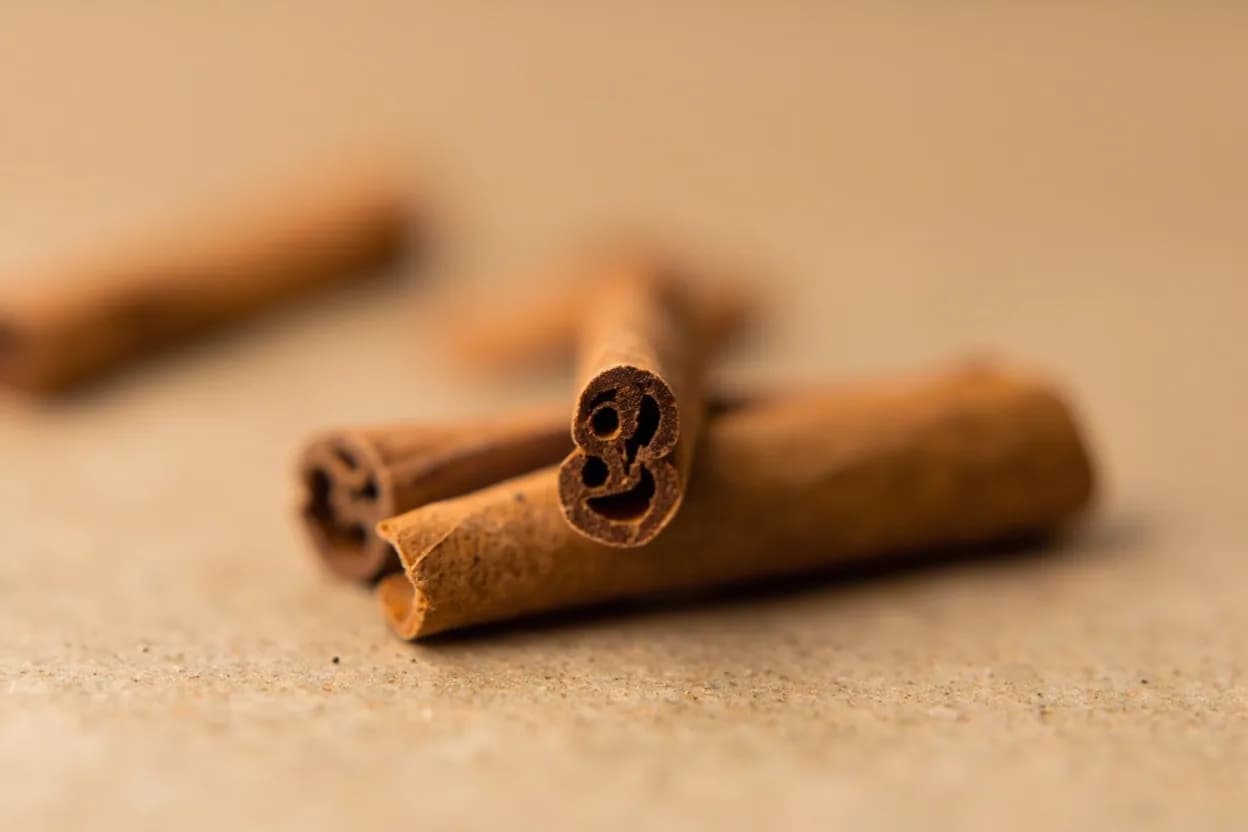
What the English-speaking world calls 'cinnamon' is almost universally cassia (Cinnamomum cassia or C. aromaticum), the thick, hard bark harvested from trees native to southern China and Vietnam. Cassia's flavor is bolder and more pungent than Ceylon cinnamon (canela): its dominant compound is cinnamaldehyde at high concentrations, giving it the characteristic sharp-sweet heat and a faintly camphor-like undertone. Saigon (Vietnamese) cassia is the most intense; Korintje (Indonesian) is milder and is the standard commercial grade. Cinnamon's warming, pervasive character has made it indispensable across entirely unrelated cooking traditions — Persian khoresh, Moroccan tagine, Greek pastitsio, Chai, American apple pie, Scandinavian kanelbullar, Sri Lankan curry — a span of cultural adoption rivaled by almost no other spice.
In photos
Flavour profile
Classic pairings
- AppleAmerican / British
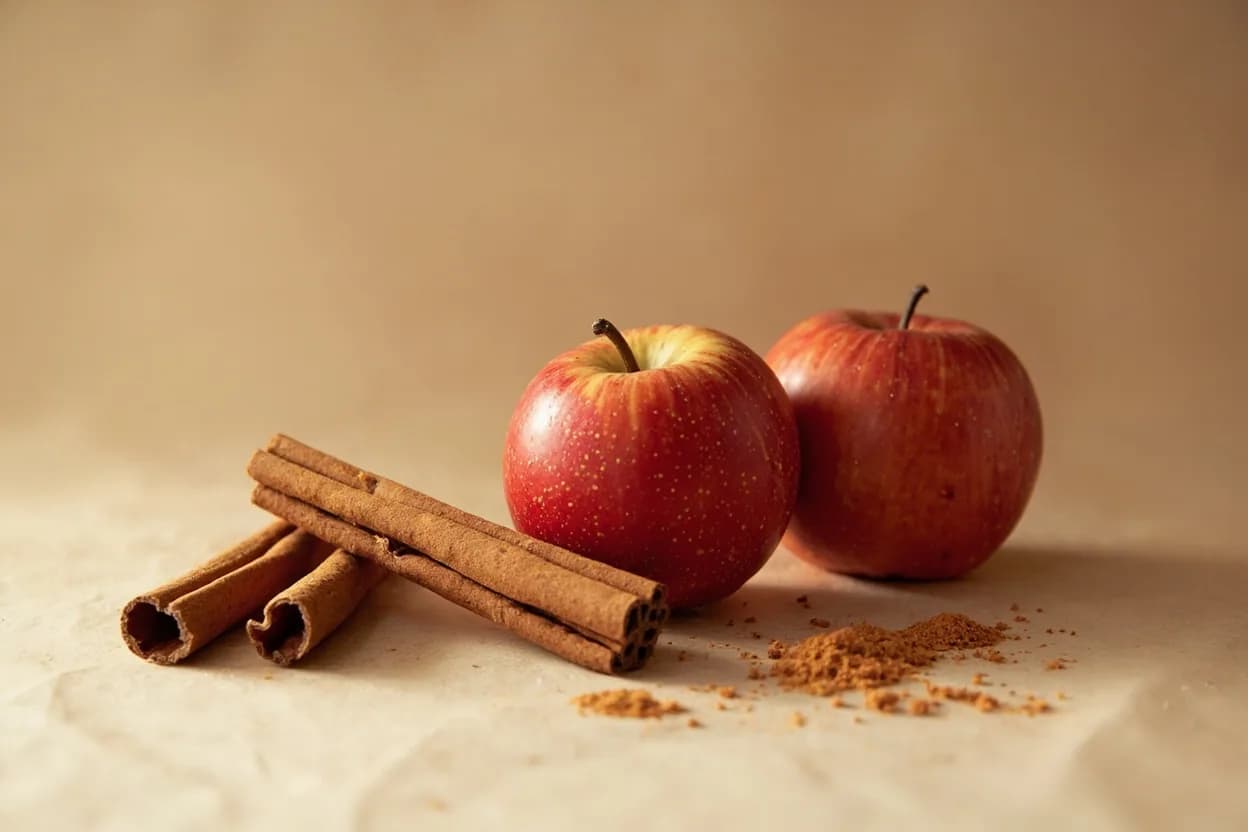
One of the most iconic pairings in Western food: apple's malic acid and stone-fruit esters are amplified by cinnamon's warm sweetness; together they form the flavor gestalt of Anglo-American autumn baking.
- Lamb (Persian khoresh)Persian / Iranian
In khoresh-e-fesenjān and khoresh-e-ghormeh-sabzi, cinnamon subdues the gaminess of lamb and integrates dried fruit, walnut, and herb into a coherent aromatic whole — a Persian pairing traced to Sassanid cooking manuals.
- CoffeeTurkish / Middle Eastern / Ethiopian
Ground cinnamon enhances coffee's own woody, slightly bitter character; in Turkish and Middle Eastern coffee preparation, a cinnamon stick is brewed with the grounds, adding warmth without sweetness.
- Dark chocolateMexican / global
Cinnamon's cinnamaldehyde resonates with cacao's pyrazine bitterness, warming and sweetening without sugar; essential in Mexican mole and widely used in Aztec-inspired chocolate confectionery.
- Cardamom and black pepper (chai spice blend)Indian
In masala chai, cinnamon is the warm backbone around which ginger's heat, cardamom's camphor, clove's eugenol, and black pepper's piperine orbit; it bridges the sweet milk and the tannin of black tea.
- HoneyGreek / North African / global
Honey's floral complexity and natural sweetness marry cinnamon's warmth in a pairing found from Greek baklava to North African pastry; the combination has ancient medicinal and culinary overlap.
- Minced meat (Moroccan kefta, Greek pastitsio, Lebanese kibbeh)Moroccan / Greek / Lebanese
A pinch of cinnamon in spiced ground meat is the signature trick of the eastern Mediterranean and North Africa; it rounds the iron-rich grassiness of beef or lamb and harmonizes with allspice and onion.
- Pumpkin and winter squashAmerican / Moroccan
Cinnamon activates the vegetable sweetness of squash by thermally amplifying its beta-carotene aroma compounds; it is the anchor of both North American pumpkin pie spice and Moroccan k'ra bisla.
Adventurous pairings
- Red wine (braised short ribs or coq au vin variant)
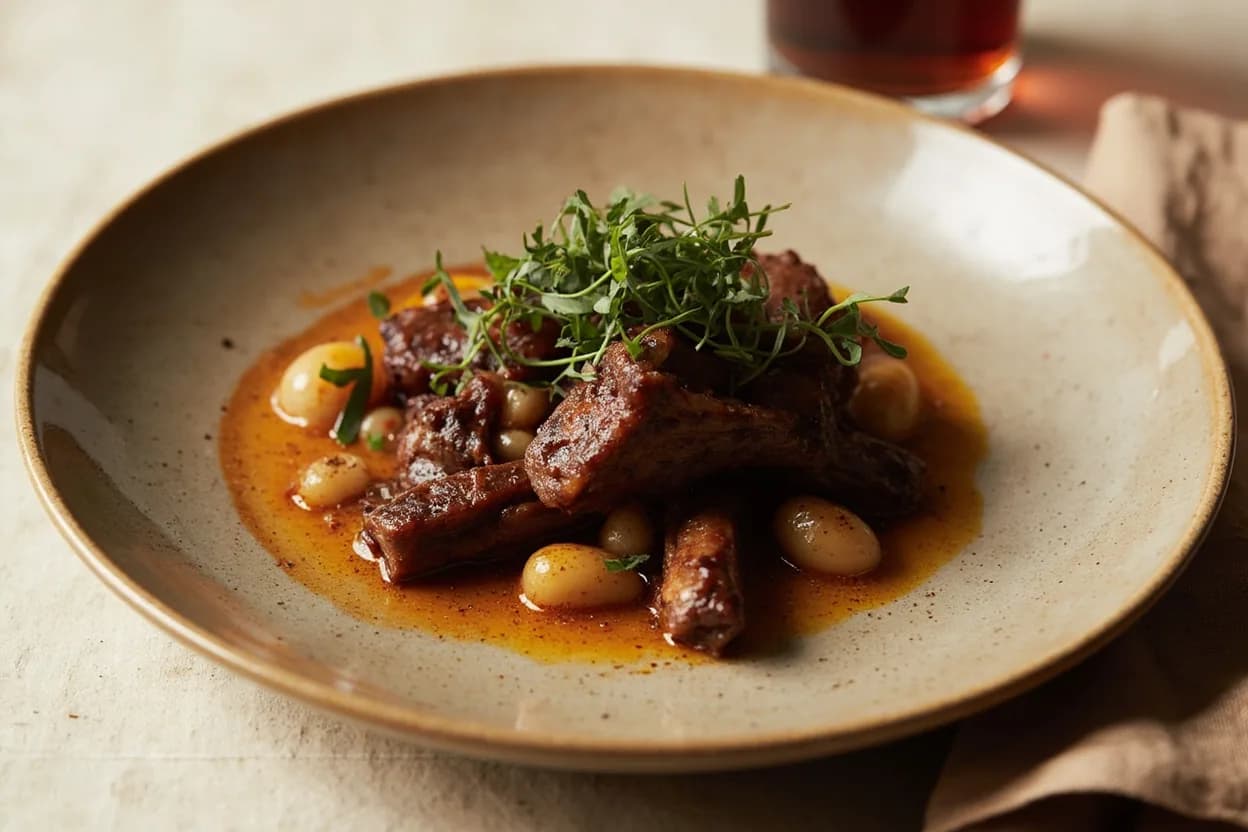
A single cinnamon stick added to a red wine braise echoes the spice's natural occurrence in wine's own tannin aromatics; it deepens the fruit notes and adds a subtle Eastern-Mediterranean character.
- Eggplant
In Turkish imam bayildi and Greek moussaka, cinnamon in the tomato-onion filling neutralizes eggplant's slightly bitter solanine undertones and adds an unexpected sweetness that bridges the vegetable's creamy flesh.
- Scotch whisky
A Highland or Speyside malt already carries vanilla and dried-fruit barrel notes that resonate with cinnamon's profile; a homemade cinnamon-bark infusion over 24-48 hours yields a warming digestif.
In composed salads or dessert pairings, cinnamon's sweetness counterbalances the pungent lactic sharpness of a Roquefort or Gorgonzola; drizzle cinnamon honey over a cheese board.
- Tomato (slow-cooked sauce)
A Sicilian pasta al cinghiale (wild boar ragu) and Greek makaronia me kima both use cinnamon in tomato sauce; the spice brightens acidity and adds warmth that suggests a far longer cook.
Tread carefully
- Delicate white fish (sole, flounder)avoid
Cinnamon's assertive warmth obliterates the subtle, clean marine sweetness of delicate white fish; better spices for these proteins are dill, lemon zest, and white pepper.
- Fresh green herbs (basil, tarragon)avoid
Cinnamon's dominant cinnamaldehyde clashes with the bright anise-methyl-chavicol character of fresh basil and tarragon; the result is a muddled, medicinal flavor.
- High-acid vinegar dressingsavoid
Strong acidity volatilizes cinnamaldehyde quickly, creating a harsh, astringent top note rather than warmth; in vinaigrettes, cinnamon's use is better confined to very small quantities or paired with fruit elements.
How to use it
- Toast whole sticks briefly in a dry pan before grinding to deepen woody caramel notes
- Add a whole stick to braising liquid or simmering grains; remove before serving to avoid bitterness from overextraction
- Bloom ground cinnamon in hot butter or oil at the start of a dish to volatilize its esters into the fat
- Use cassia sticks to stir hot drinks, releasing oils slowly into the liquid
- Layer with fat-soluble spices (clove, star anise) in an oil-based tadka or tempering step
- For baking, use freshly ground cinnamon within 6 months of purchase — pre-ground loses its camphor brightness quickly
Appears in
Related flavours
Ceylon cinnamon — softer, more floral, lower coumarin; the preferred variety in Mexican, Sri Lankan, and Central American cooking
- Clove
Shares eugenol overtone with cinnamon; the two are co-anchors of both masala chai and European spiced-wine blends
- Cardamom
Cinnamon's most frequent partner in Middle Eastern and South Asian spice blends; cardamom's citrus-camphor note counterpoints cinnamon's sweetness
Both are bark/seed spices with sweet warmth; used together in Chinese five-spice and Vietnamese pho broth
- Nutmeg
Cinnamon and nutmeg together define pumpkin pie spice and béchamel-adjacent winter-spice profiles
References
- 1.Harold McGee, 'On Food and Cooking' (2004)
- 2.Samin Nosrat, 'Salt, Fat, Acid, Heat' (2017)
- 3.Claudia Roden, 'The New Book of Middle Eastern Food' (2000)
- 4.Paula Wolfert, 'The Food of Morocco' (2011)
- 5.Yotam Ottolenghi & Sami Tamimi, 'Jerusalem' (2012)
- 6.Toni Tipton-Martin, 'Jubilee' (2019) — spice use in African-American Southern cooking
Confidence: high
Notes
The Cassia Question
The distinction between 'true' cinnamon (Ceylon/canela, C. verum) and cassia (C. cassia, C. aromaticum) matters for both flavor and health. Cassia contains significantly higher levels of coumarin, a compound that in large quantities may stress the liver. For everyday cooking in moderate amounts this is not a concern, but for medicinal preparations or very high-volume consumption (daily cinnamon supplements), Ceylon is the clinically safer choice. For bold flavor in baking and spiced drinks, cassia is often preferred.
Why Cinnamon Works in Meat
The use of cinnamon in savory meat dishes — widespread from Greece to Morocco to Iran — surprises Western cooks accustomed to its sweet applications. The mechanism is straightforward: cinnamaldehyde suppresses the perception of iron-heavy off-notes in cooked red meat, while simultaneously amplifying caramelized Maillard-browning aromas. The result reads as 'rich and complex' rather than 'sweet.'