Spices & Dried Aromatics
Star Anise
Also: Illicium verum, badian, Chinese star anise, ba jiao
The star-shaped pod whose bold, sweet licorice aroma anchors Chinese braises, Vietnamese pho, and mulled wine with equal authority.
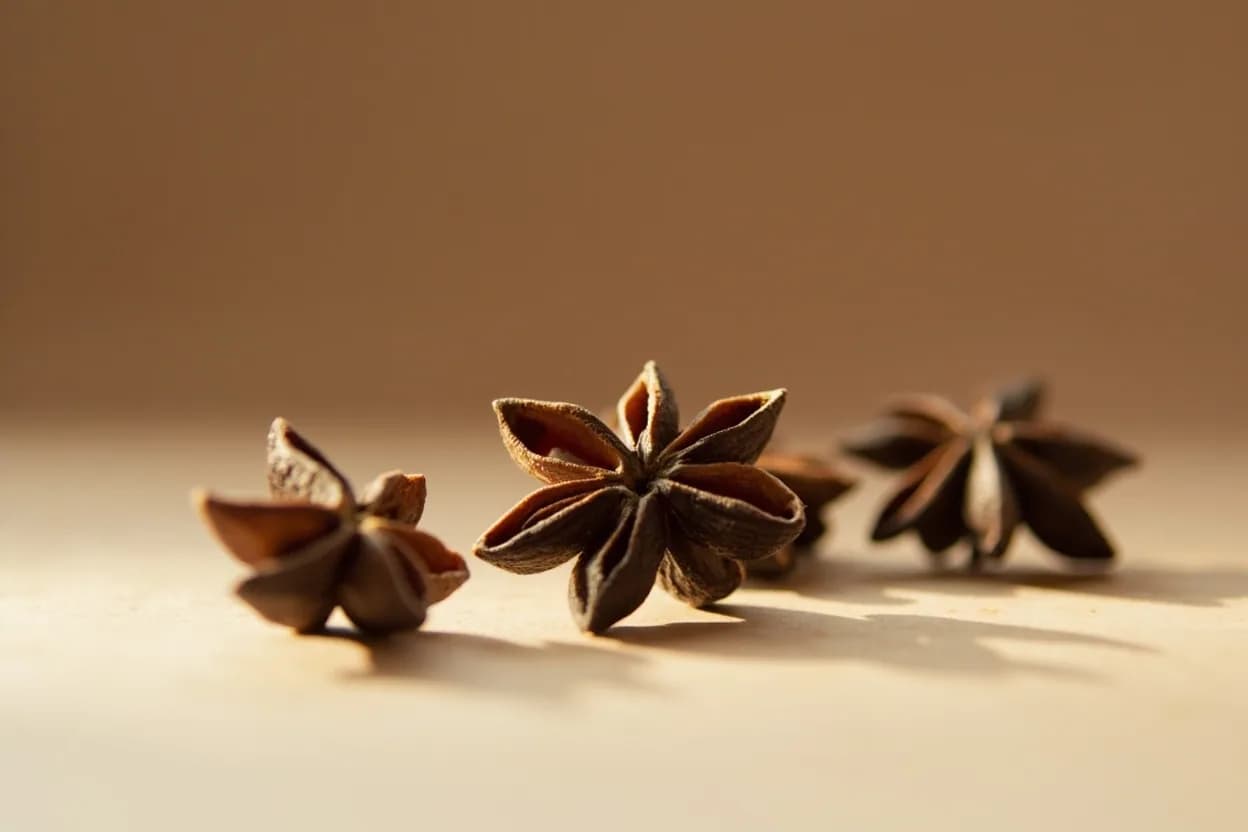
Star anise is the dried fruit of Illicium verum, a small evergreen tree native to southwestern China and northeastern Vietnam. Each fruit opens into an eight-pointed star enclosing a single glossy seed. Its dominant aromatic compound, trans-anethole, is the same molecule responsible for the flavor of anise seed and European pastis — yet star anise delivers it with far greater intensity and a warm, slightly spicy depth. Unlike the delicate seeds of anise or fennel, star anise is robust enough to survive hours of braising, slowly surrendering its oils to fat and liquid.
In photos
Flavour profile
Classic pairings
- Beef bones and oxtailVietnamese
Star anise is indispensable in pho bo — hours of simmering with charred ginger and onion creates Vietnam's most iconic broth, the anise holding the meaty depth in check.
- Pork bellyChinese
In Shanghainese hong shao rou (red-braised pork belly), star anise penetrates the fatty layers, its licorice sweetness balancing the rich soy-sugar glaze.
- Red wineFrench / German
A cornerstone of European mulled wine (glühwein, vin chaud), where star anise's sweetness softens tannins and unites with clove and cinnamon.
- DuckChinese / French
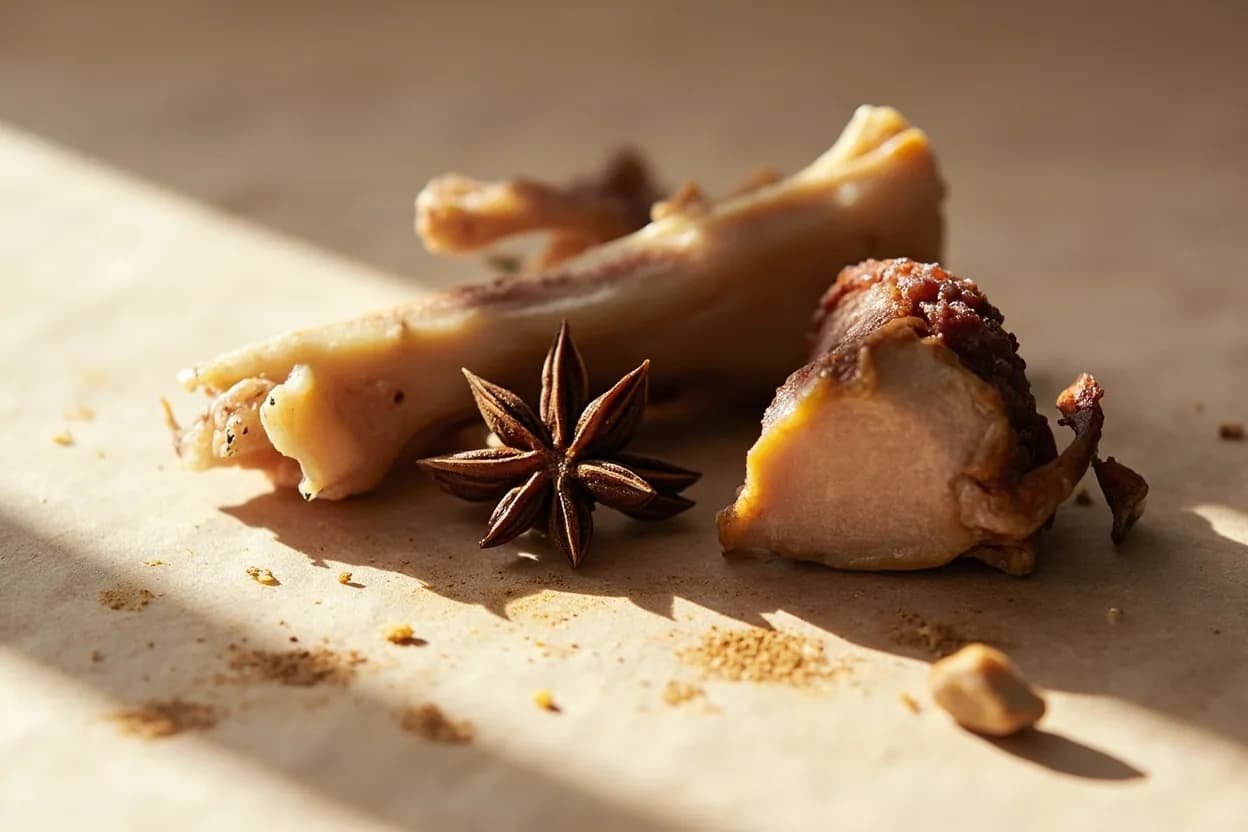
Star anise's penetrating sweetness cuts through rendered duck fat; appears in Cantonese master-stock duck and French duck confit with five-spice.
- Cassia barkChinese
The two always appear together in Chinese braises and five-spice blends — licorice and camphor-cinnamon are complementary aromatics that define the lu shui profile.
- Soy sauceChinese
Star anise's sweetness and umami-rich soy are the foundational pairing of Chinese master stock; together they deepen braises and lacquer meats.
- Citrus peel (orange, mandarin)French / Cantonese
The floral top notes of dried citrus peel complement star anise's licorice base without competing, a pairing used in mulled wine and Cantonese braises alike.
Adventurous pairings
- Strawberries
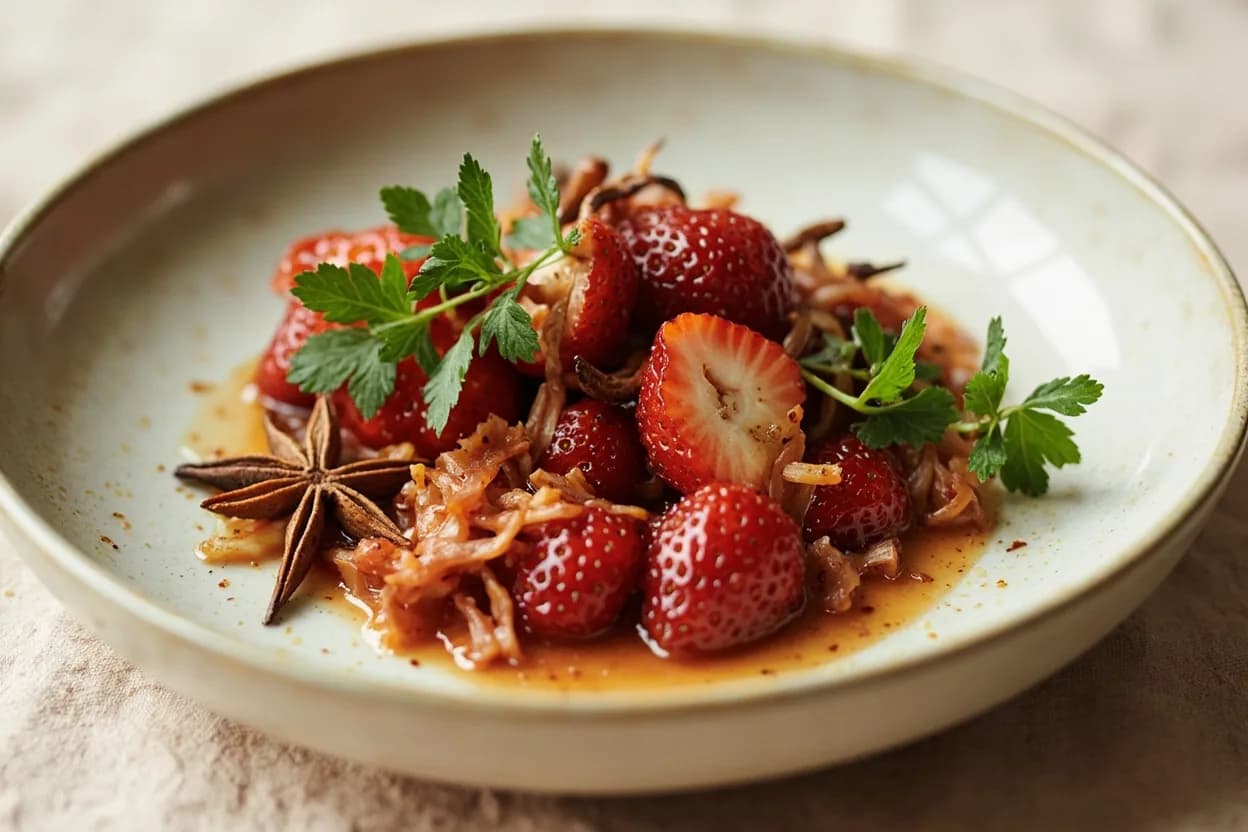
A brief maceration with crushed star anise and sugar deepens strawberry's methyl anthranilate 'grape' notes and adds perfume — classic in French pastry.
- Mussels
Star anise in a white wine–butter mussel broth introduces a Marseillaise pastis dimension that amplifies the shellfish's natural brininess.
- Dark rum
Infused in aged rum, star anise's sweetness and resinous depth create a spiced base for cocktails with far more complexity than commercial spiced rums.
- Butternut squash
Roasted squash soup finished with star anise oil bridges sweet vegetable and warm spice; the anethole mirrors the squash's own faint anise note.
Middle Eastern-inflected braises pairing star anise with cumin and pomegranate molasses give slow-cooked lamb an unexpected but coherent aromatic range.
Tread carefully
- Mild freshwater fish (tilapia, catfish)avoid
Star anise's bold anethole overwhelms delicate white fish; ginger and scallion are the correct aromatic pairing for these proteins.
- Tarragonavoid
Tarragon already provides anethole-dominant flavor; stacking star anise creates a one-dimensional, medicinal anise overload.
- Coconut milk (light applications)avoid
In creamy, subtle coconut preparations (Thai panna cotta, coconut soup), star anise's intensity dominates; lemongrass or kaffir lime leaf are preferable.
How to use it
- Toast whole pods in a dry pan for 60 seconds to volatilize surface oils before adding to stocks or braises
- Char alongside ginger and onion directly over flame for pho — the char tempers sweetness and adds smoky depth
- Crack pods open to release the seeds for faster oil extraction in quick-cook applications
- Add whole to braising liquid at the start; remove after 90 minutes to prevent bitterness from over-extraction
- Grind with other five-spice components in a spice grinder immediately before use
- Infuse in neutral oil at low heat (60–70°C) for a finishing oil for dumplings or noodles
Appears in
Related flavours
Constant companion in five-spice and Chinese braises; together they define the warm-anise-sweet archetype
Shares the anethole compound; a softer, more vegetal cousin that can extend star anise in European contexts
Paired in five-spice and Sichuan ma la preparations; the numbing citrus note offsets star anise's sweetness
References
- 1.On Food and Cooking — Harold McGee
- 2.Pho: The Vietnamese Cookbook — Andrea Nguyen
- 3.Every Grain of Rice — Fuchsia Dunlop
- 4.Flavor Bible — Karen Page & Andrew Dornenburg
Confidence: high
Notes
Japanese star anise (shikimi) — do not substitute
Illicium anisatum, sold in Japan for temple use, is toxic. It resembles true star anise (Illicium verum) but has more pointed, irregular pods. Culinary star anise comes from China or Vietnam only. Do not use Japanese star anise in food.
Anethole chemistry
Trans-anethole is roughly 13 times sweeter than sucrose by weight, which explains why star anise contributes perceived sweetness to braises even without added sugar. This also means it can partially replace sugar in certain spiced preparations.