Spice Blends
Five-Spice Powder
Also: ng heung fan, wu xiang fen, Chinese five spice, five spice
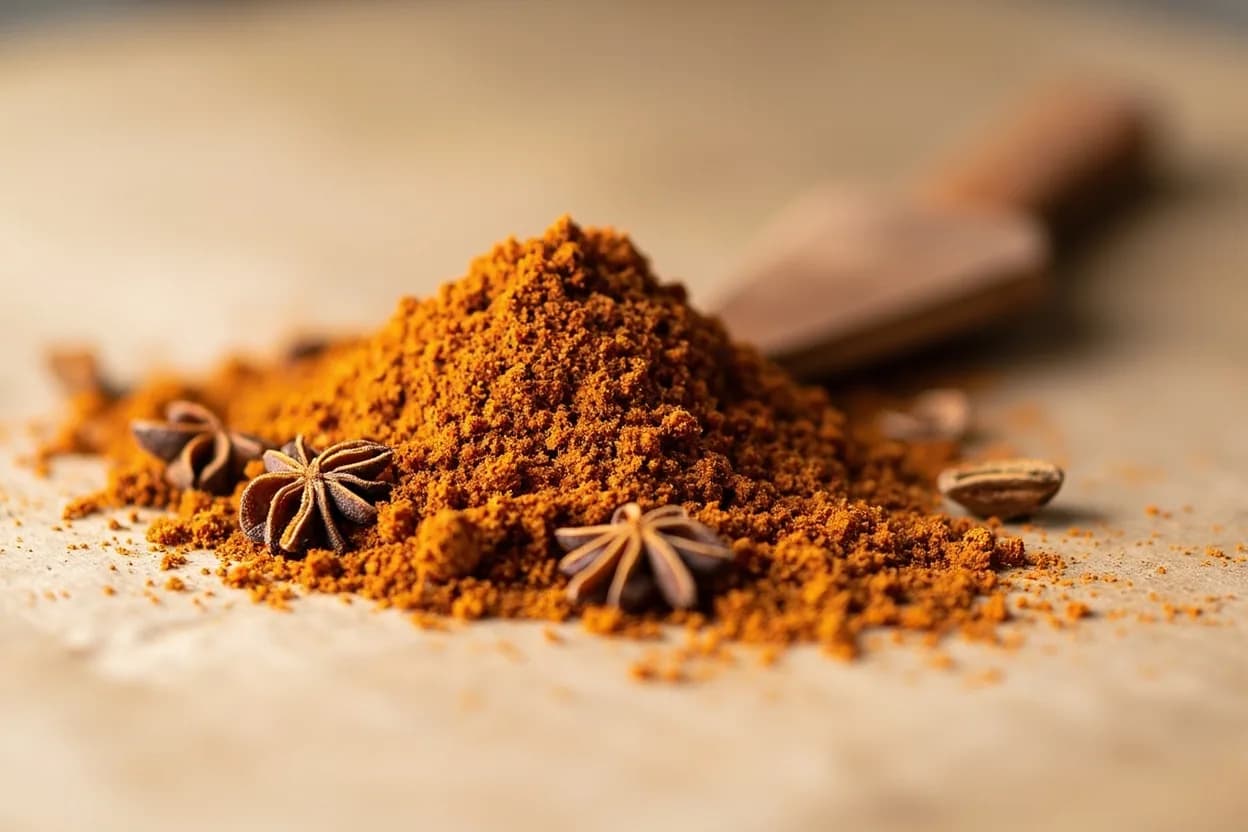
China's foundational spice blend — star anise, cassia, clove, Sichuan pepper, and fennel — balancing all five classical flavor registers in a single aromatic powder.
Five-spice powder (wu xiang fen) is a ground blend of five aromatics traditionally representing the five classical Chinese flavor elements: sweet (star anise, cassia), sour (sometimes dried tangerine peel substituting for one component), bitter (clove), salty (Sichuan pepper's mineral quality), and pungent (fennel or ginger). The canonical five are star anise, cassia bark, cloves, Sichuan peppercorn, and fennel seed, though regional variants substitute dried ginger, licorice root, or tangerine peel. The blend produces an effect greater than any single spice: warm, sweet, anise-forward with a camphor backbone, floral clove counterpoint, and a faint tingling finish from the peppercorn.
In photos
Flavour profile
Classic pairings
- Pork (roasted or BBQ)Cantonese
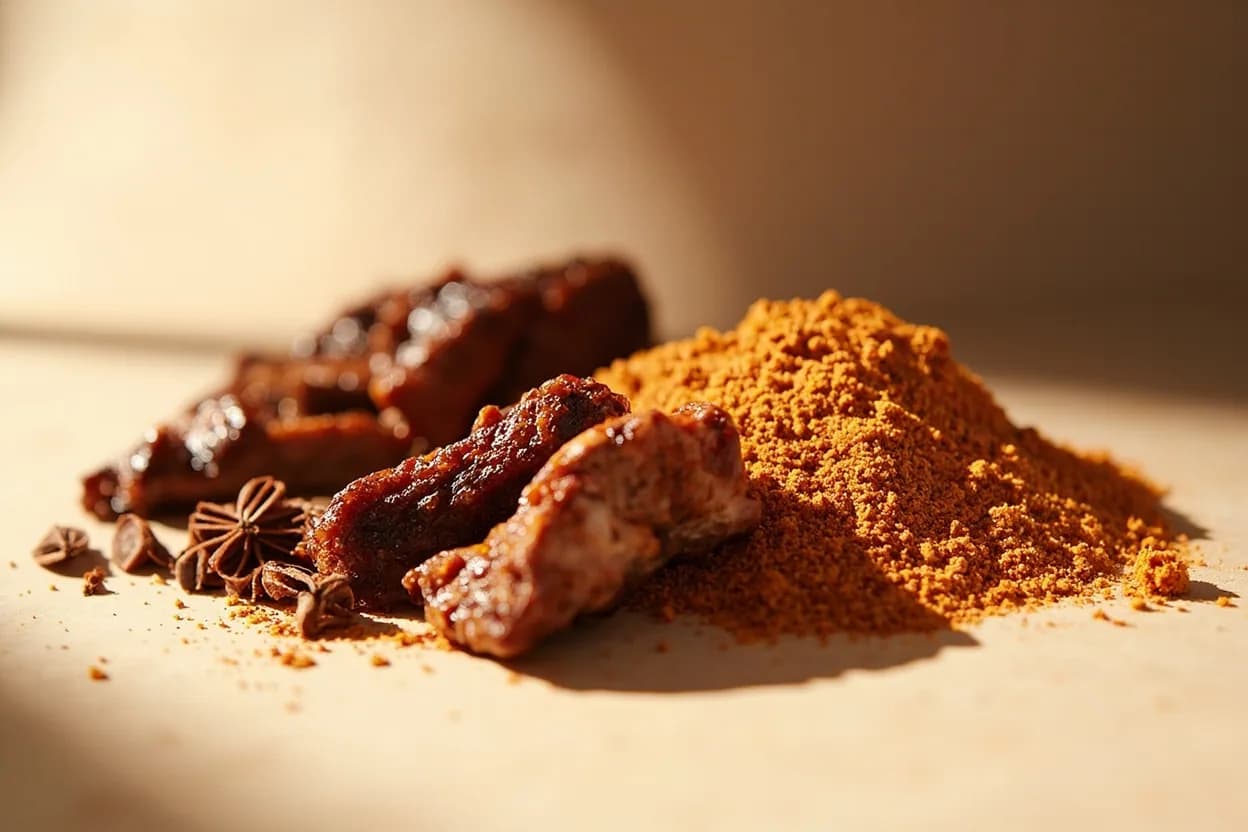
The defining pairing — char siu (Cantonese BBQ pork) marinates in five-spice, honey, and soy, where the blend's sweetness caramelizes into lacquer over high heat.
- DuckCantonese
Cantonese roast duck and Peking-adjacent preparations rub the skin with five-spice before roasting; fat carries the aromatics through the meat and crisps the skin.
- Soy sauce and hoisinCantonese
In marinades and dipping sauces, five-spice integrates with fermented soy's umami and hoisin's sweet-savory depth, creating the classic Cantonese BBQ flavor base.
- Tofu (firm, fried)Chinese
Five-spice is pressed into tofu before frying for a crisp, aromatic crust; the bland protein acts as a canvas that showcases the blend's full complexity.
- Hard-boiled eggsChinese
Tea eggs (cha ye dan) simmer in five-spice, soy, and black tea, absorbing complex warmth through cracked shells — street food found across China.
- Butternut squash and sweet potatoChinese-American
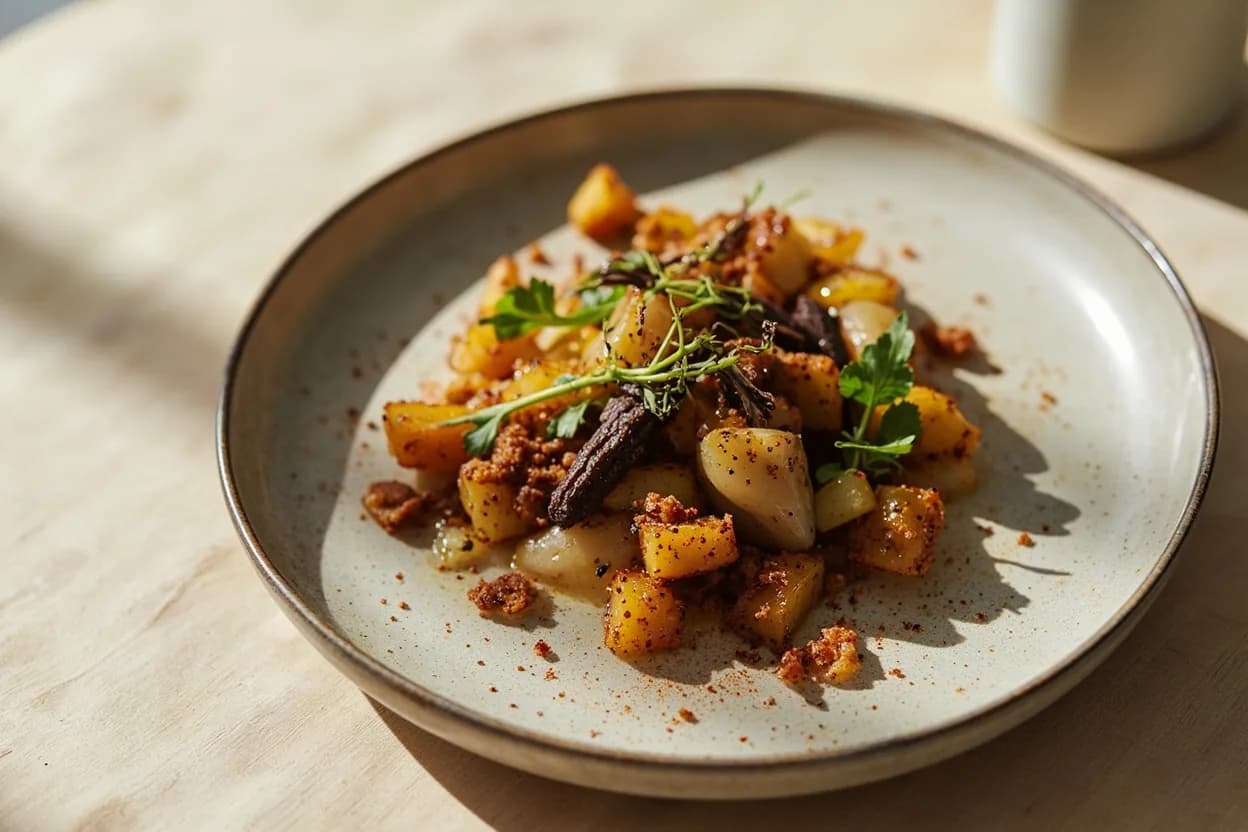
Sweet, starchy vegetables absorb five-spice beautifully in roasting; the blend's anise sweetness mirrors and amplifies root vegetable sugars.
Adventurous pairings
- Dark chocolate (70%+)
Five-spice in chocolate ganache, truffles, or brownies adds a layered warmth — the clove and cassia align with chocolate's own phenolic bitterness, while star anise lifts it.
- Lamb ribs
Rubbing lamb ribs with five-spice and Chinese sesame paste before grilling bridges the Middle Eastern and Chinese spice traditions; the gaminess of lamb handles the blend's intensity.
- Pear and apple compote
A pinch of five-spice in poached pear or apple compote adds depth that simple cinnamon can't replicate; the anise and fennel amplify the fruit's own fragrance.
- Salted caramel
Five-spice salted caramel is a Sichuan-influenced pastry technique: the blend's warmth and tingle amplify the contrast between sweet caramel and salt.
- Beef short rib (sous vide or slow braise)
A small amount of five-spice in a red wine braise for short ribs bridges French-Chinese technique — the blend softens into the wine's tannins over long cooking.
Tread carefully
- Delicate seafood (lobster, crab, sole)avoid
Five-spice's aromatics are too bold for delicate shellfish or white fish — the clove and cassia will overpower the oceanic sweetness entirely.
- European cream sauces (béchamel, velouté)avoid
The anise and camphor components conflict with dairy-fat-based classical French sauces — they introduce jarring medicinal notes rather than harmonizing.
- Over-application to any proteinavoid
Five-spice is potent; more than ¼ teaspoon per portion makes the dish taste medicinal. It is a seasoning, not a base.
How to use it
- Rub onto pork or duck skin 24 hours before roasting to allow aromatics to penetrate
- Bloom briefly in hot oil (10–15 seconds) before adding protein or liquid to activate the volatile compounds
- Use as a finishing powder dusted on fried foods (Taiwanese popcorn chicken) immediately before serving
- Add in small quantities (¼ tsp) to marinades — it is concentrated, not a bulk spice
- Toast whole component spices separately, then grind together for superior freshness vs. commercial pre-ground
Appears in
Related flavours
Largest single contributor to five-spice's aroma profile; the two are essentially the same flavor family
Provides five-spice its camphor-spice warmth and resinous backbone
The numbing component that distinguishes five-spice from simple cinnamon-anise blends
References
- 1.Every Grain of Rice — Fuchsia Dunlop
- 2.The Chinese Kitchen — Eileen Yin-Fei Lo
- 3.On Food and Cooking — Harold McGee
- 4.Asian Tofu — Andrea Nguyen
Confidence: high
Notes
Regional variation
Cantonese blends tend toward sweeter, anise-forward profiles with stronger cassia. Shanghainese five-spice often includes dried tangerine peel for a citrus-bitter edge. Some Fujian variants add white pepper. Commercial five-spice blends vary widely in proportions — grinding your own from whole spices produces a significantly more aromatic, less dusty result.
Storage
Pre-ground five-spice loses potency within three to six months. Store in an airtight tin away from heat and light. Whole component spices stored separately and ground to order will remain at full strength for 12–18 months.