Spices & Dried Aromatics
Cassia Bark
Also: Chinese cinnamon, Cinnamomum cassia, rou gui, cassia cinnamon
The bold, camphor-edged bark that anchors Chinese braises and master stocks with a spicy warmth true cinnamon can't match.
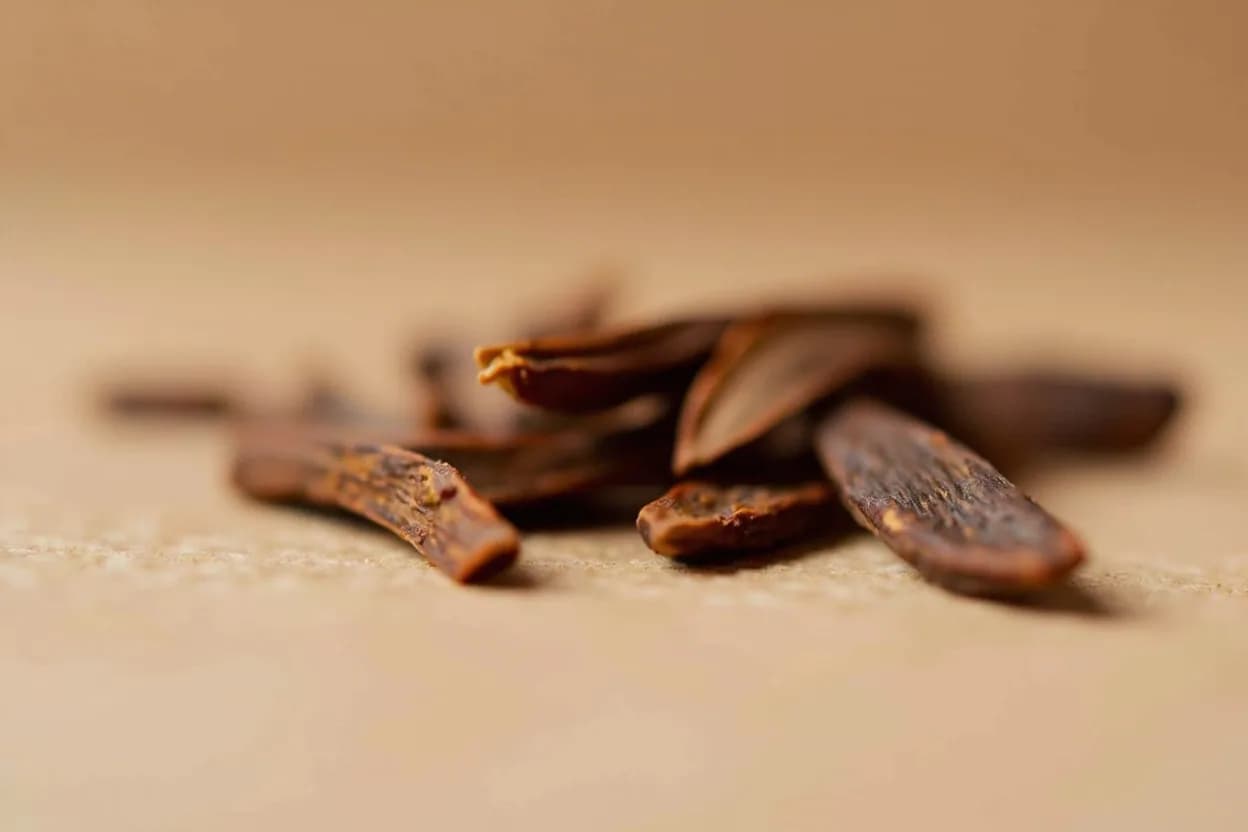
Cassia bark is the dried inner bark of Cinnamomum cassia, a tree native to southern China. It is thicker, rougher, and more intensely flavored than Ceylon cinnamon, with a pronounced spicy-sweet heat underscored by camphor and a woody, slightly astringent finish. Most 'cinnamon' sold in the United States, Australia, and China is in fact cassia. In Chinese cooking, it appears as large curled quills dropped whole into braises, master stocks (lu shui), and spice blends, where it releases its oils slowly without dissolving.
In photos
Flavour profile
Classic pairings
- Soy sauceChinese
The umami salinity of soy tempers cassia's astringency and creates the foundational flavor of lu shui (master stock) and red-braised pork.
- Star aniseChinese / Vietnamese
Together they form the two most important notes in five-spice powder and pho spice bundles — sweet-camphor meets sweet-licorice for aromatic depth.
- Pork bellyChinese
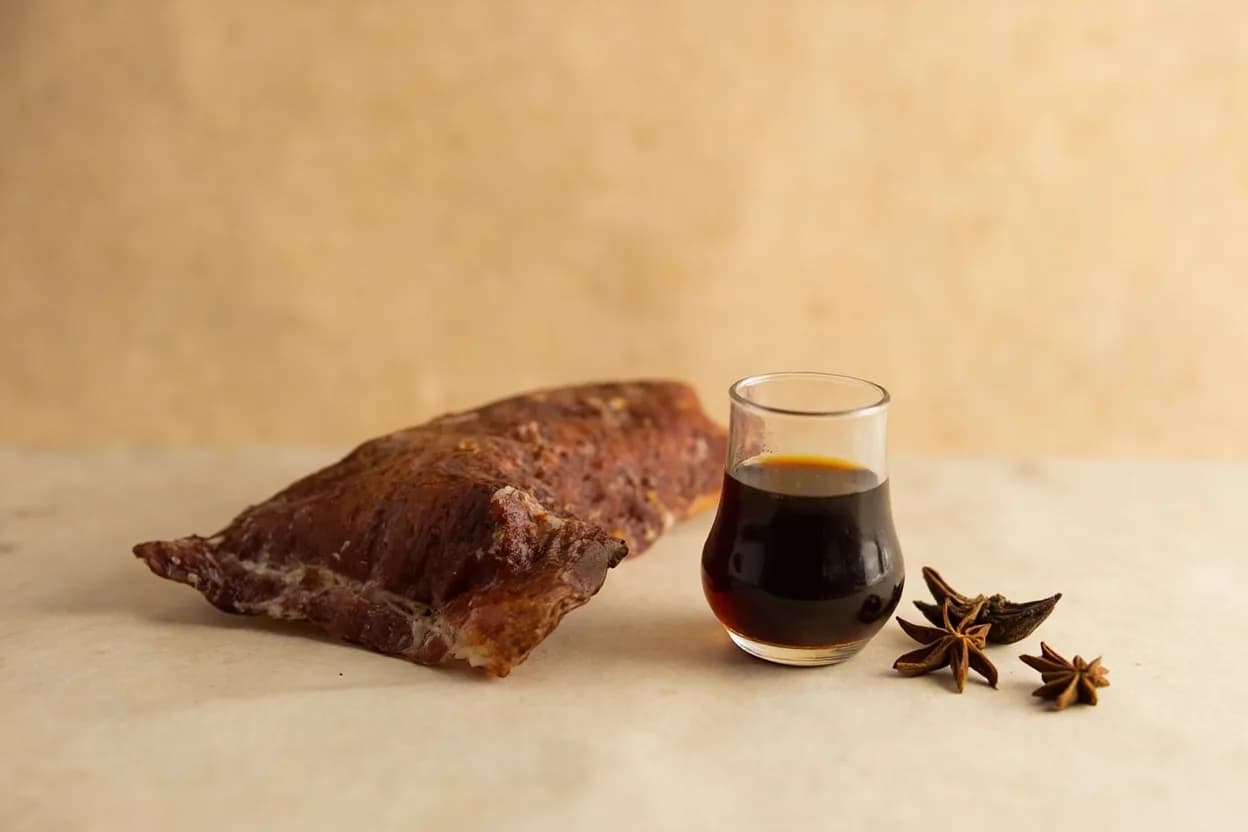
Long-braised fatty pork absorbs cassia's warmth; the rendered fat carries the spice oils throughout hong shao rou (red-braised pork belly).
- Shaoxing rice wineChinese
The oxidative, slightly sweet wine provides acidity that balances cassia's heat and helps deglaze braise pots.
- Dried mandarin peel (chen pi)Cantonese
Bitter citrus peel cuts through fat while its floral bitterness offsets cassia's camphor, a classic pairing in Cantonese slow-braises.
- Dark sugar (rock sugar or muscovado)Chinese
Caramelized rock sugar coats braised meats with lacquer; its molasses depth echoes cassia's own brown-sugar register.
- Dried chiliSichuan
Sichuan mapo tofu and la wei braises layer cassia with dried chilies for a heat that is simultaneously round and piercing.
Adventurous pairings
- Dark chocolate (70%+)
Cassia's camphor edge and spicy heat provide a more aggressive backbone than Ceylon cinnamon, amplifying bitterness in mole negro or spiced ganache.
- Lamb shoulder
North African and Middle Eastern cuisines use cassia (not Ceylon) in ras el hanout and slow lamb braises — the gaminess of mutton meets the bark's resinous warmth head-on.
- Coffee (espresso or cold brew)
A small piece of cassia steeped in cold brew adds a spiced camphor note that amplifies roasty bitterness without sweetening the drink.
- Duck confit
The high fat content of duck confit absorbs cassia oil beautifully; a Chinese-French pairing where the bark replaces thyme in the curing mix.
Pungent, funky blue cheese paired with cassia-honey creates a sweet-resinous-funky triangle that works on a cheese board or in a warm vinaigrette.
Tread carefully
- Delicate seafood (sole, scallops, white fish)avoid
Cassia's camphor intensity overwhelms delicate oceanic flavors; use ginger or white pepper instead.
- Fresh herbs (basil, tarragon, chervil)avoid
The volatile oils in cassia chemically crowd out the high, floral notes of fresh herbs — they will simply disappear.
- Ceylon cinnamon substitution in equal measureavoid
Cassia contains significantly more cinnamaldehyde and coumarin — substituting 1:1 in delicate European pastry will over-spice and potentially introduce bitterness.
How to use it
- Dry-toast whole quills briefly before adding to a braise to open up the oils without burning
- Add whole to master stock (lu shui) at the start of cooking; remove before serving
- Grind to powder with other five-spice components immediately before use for maximum aroma
- Infuse in warm oil or lard as an aromatic base for Sichuan slow-cooking
- Use in spice bundles tied in cheesecloth for stocks where clarity matters
Appears in
Related flavours
The other dominant aromatic in five-spice; consistently paired with cassia in Chinese braises
Together with cassia they define the numbing-spice register of Sichuan cuisine
- Clove
A five-spice co-member; shares eugenol warmth, creating a spice-on-spice harmony in complex braises
References
- 1.On Food and Cooking — Harold McGee
- 2.The Food of China — E.N. Anderson
- 3.Land of Fish and Rice — Fuchsia Dunlop
- 4.Flavor Bible — Karen Page & Andrew Dornenburg
Confidence: high
Notes
Cassia vs. Ceylon
True Ceylon cinnamon (Cinnamomum verum) is softer, paler, and more floral, with far less coumarin. For delicate European baking, Ceylon is preferable. For Chinese braises and five-spice, cassia is not a substitute — it is the correct ingredient. Labeling laws differ by country; in much of the world 'cinnamon' on a supermarket shelf is cassia.
Coumarin note
Cassia contains significant coumarin, which the EU limits in food products. For everyday culinary use the quantities are inconsequential, but high-dose cassia supplements or therapeutic use warrants attention.