Spice Blends
Chaat Masala
Also: chaat masala, chat masala, Indian street food spice mix
India's most electrifying condiment spice — tangy black salt, amchur, and cumin — that makes anything it touches simultaneously more sour, salty, earthy, and alive.
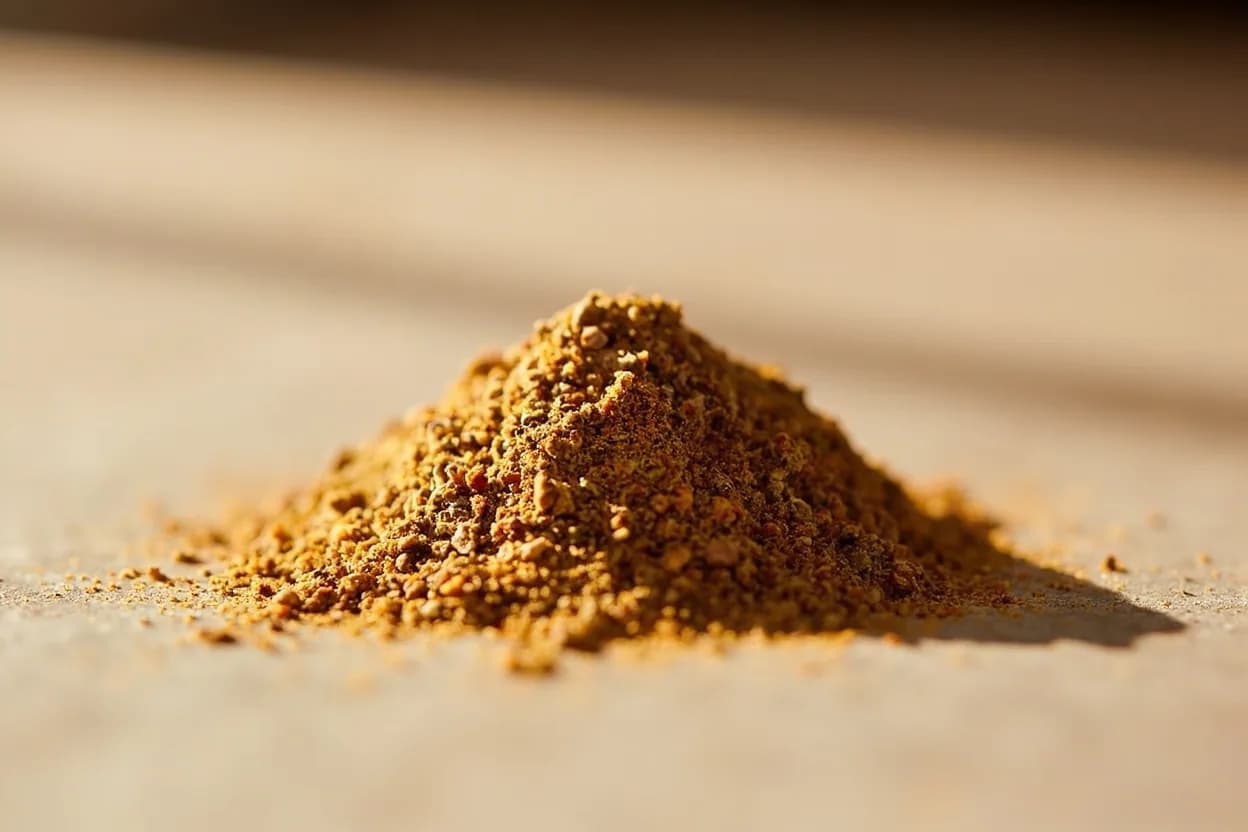
Chaat masala is a pungent, tangy spice blend foundational to Indian street food (chaat). Unlike warming blends such as garam masala, chaat masala is not a cooking spice but an aggressive finishing seasoning, scattered over food at the moment of serving. Its character is defined by three key components: amchur (dried unripe mango powder, providing sour fruitiness), kala namak or black salt (volcanic rock salt with a sulfurous, egg-like umami), and roasted cumin (earthy, smoky). Additional components typically include coriander, dried ginger, red chili, ajwain, and asafoetida. The result is a blend that is simultaneously sour, salty, earthy, pungent, and faintly spicy — it makes flavors pop rather than adding warmth.
In photos
Flavour profile
Classic pairings
- Fried snacks (samosas, pakoras, papri)North Indian street food
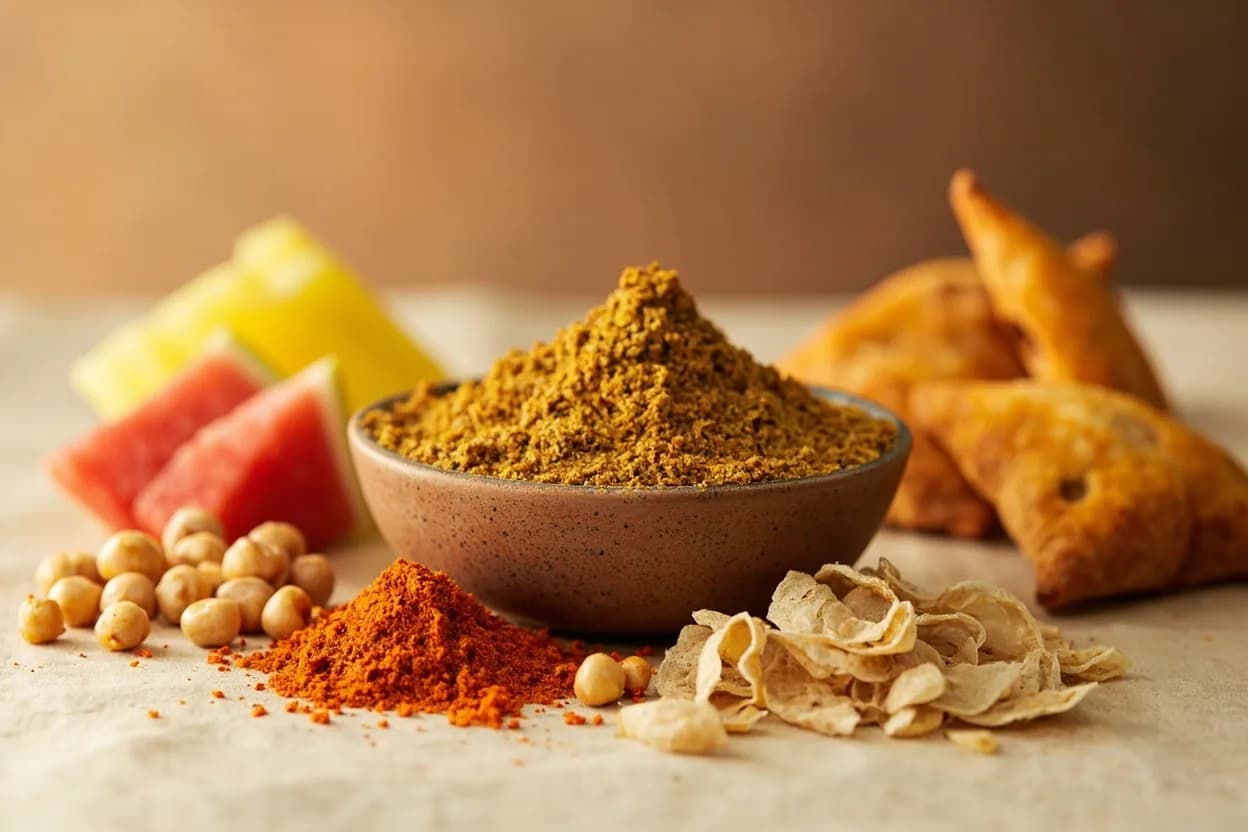
Scattered over just-fried samosas or papri, chaat masala turns hot, salty, oily street food into a fully dimensional snack — the sourness cutting through fat, the kala namak deepening umami.
- Fresh fruit (mango, guava, pineapple, watermelon)North Indian / Pakistani
Fruit chaat is one of India's great street foods: chaat masala over ripe fruit transforms sweetness into a sweet-sour-savory experience that is genuinely addictive — the kala namak provides the unexpected savory bridge.
- Chickpeas (chole / chana)North Indian
Aloo chana chaat — boiled chickpeas and potato tossed with tamarind chutney and chaat masala — is the archetype of the whole chaat category, where every component exists to be amplified by this blend.
- Tamarind chutneyNorth Indian
Chaat masala and tamarind chutney are natural allies — both are sour, but the amchur in the blend compounds the tamarind's tartness for a layered acidity rather than simple sharpness.
- Yogurt (dahi)North Indian
Dahi-based chaats (dahi puri, dahi bhalle) scatter chaat masala over cool yogurt; the kala namak and amchur make the dairy taste richer and more complex.
- Corn on the cob (bhutta)Indian street food
Grilled roadside corn rubbed with lime, red chili, and chaat masala is a Mumbai street staple — the smoky char, citrus acid, and kala namak umami work in a direct triangle.
Adventurous pairings
- Avocado
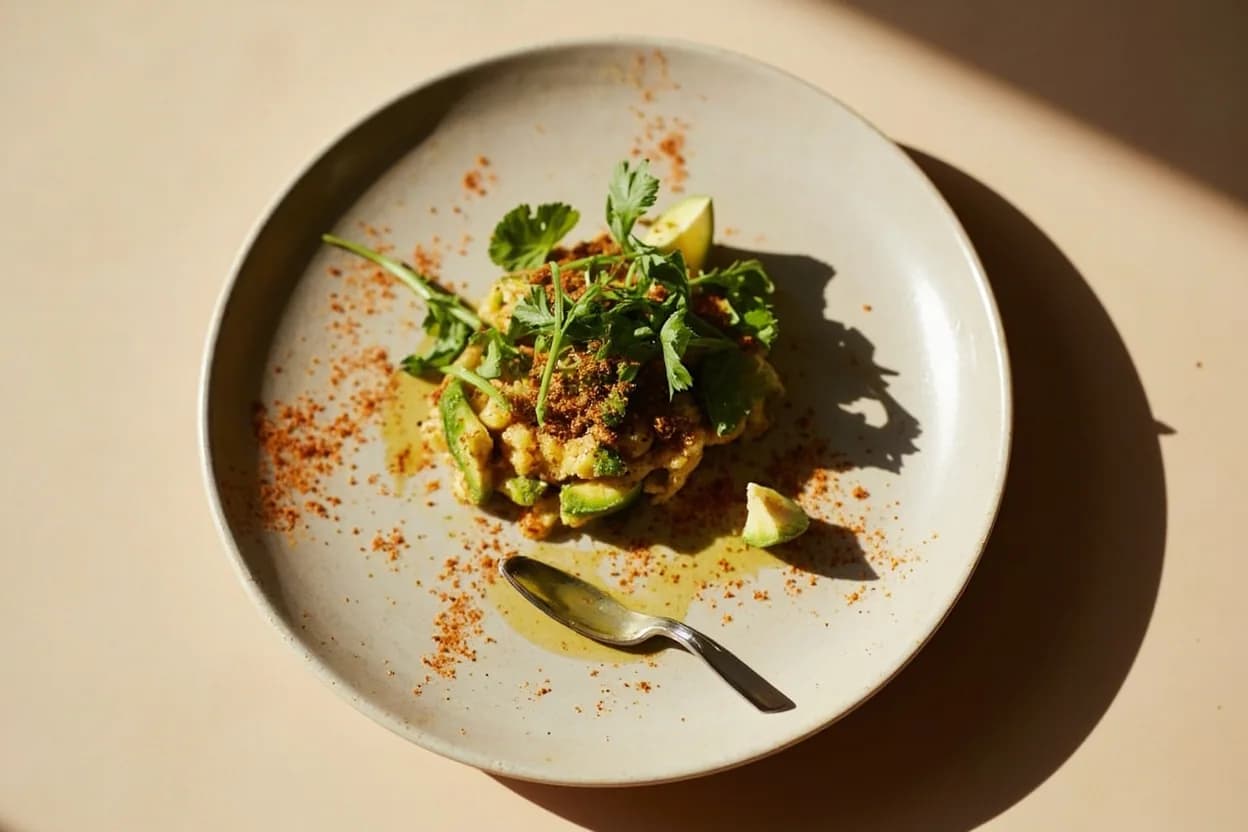
Chaat masala over sliced avocado — instead of salt and lemon — produces a South Asian bruschetta moment: the kala namak provides the salt and the amchur the acid, while asafoetida adds an allium undertone.
- Popcorn
Tossed with butter over hot popcorn, chaat masala outperforms most flavored coatings: the sour-salty-earthy notes hit every register that makes snack food compulsive.
- Grilled pineapple
A pinch of chaat masala over char-grilled pineapple amplifies both the caramelized sweetness and the tropical acidity, with the sulfurous kala namak adding an unexpected umami dimension.
- Cucumber and lime cocktail (gin-based)
A pinch of chaat masala on the rim of a gin and cucumber cocktail introduces the kala namak-amchur combination as a savory counterpoint to citrus — more interesting than a standard salt rim.
Substituting chaat masala for standard salt and paprika in deviled eggs creates an Anglo-Indian hybrid where the kala namak doubles the egg's own sulfurous depth.
Tread carefully
- Cooked into dishes at high heatavoid
Chaat masala is a raw finishing blend — cooking it destroys the volatile sour compounds (amchur) and makes the kala namak harsh; always add at the table or after cooking.
- Red meat in large quantitiesavoid
The sulfurous kala namak and sharp amchur can clash with the iron-rich, bloody notes of rare beef or lamb — these proteins need salt and heat, not tanginess.
- Dairy desserts (panna cotta, ice cream base)avoid
Kala namak's sulfurous edge becomes unpleasantly chemical in neutral cream desserts; cardamom or saffron are better dairy partners.
How to use it
- Scatter over finished dishes at the moment of serving — never cook into the recipe
- Mix into yogurt just before dressing a chaat for an even distribution rather than uneven bursts of sourness
- Rim cocktail glasses in the same manner as celery salt or tajin for savory applications
- Combine with lime juice to make a quick dressing for fruit salad — the acid doubles the amchur's tartness
- Use in marinades for grilled vegetables where tanginess is desired without additional liquid
- Add to butter or ghee post-cooking and drizzle over corn, flatbreads, or roasted vegetables
Appears in
Related flavours
Natural companion in chaat — both are sour and amplify each other; tamarind chutney is present in almost every chaat dish alongside chaat masala
Complementary but opposite in function — garam masala warms and perfumes while cooking, chaat masala sours and sharpens as a finish
- Kala Namak (Black Salt)
The most distinctive individual component; can be used alone for the same sulfurous umami note when full chaat masala flavor is too complex
References
- 1.Chaat: Recipes from the Kitchens, Markets, and Railways of India — Maneet Chauhan & Jody Eddy
- 2.Indian-ish — Priya Krishna
- 3.The Spice Kitchen — Kiran Jai
- 4.Madhur Jaffrey's Indian Cooking — Madhur Jaffrey
Confidence: high
Notes
Kala namak: the secret weapon
Kala namak (Himalayan black salt, despite the name) is a volcanic rock salt containing hydrogen sulfide, which gives it a distinctive egg-like, sulfurous umami. It turns pinkish-grey when ground. This is what makes chaat masala uniquely savory and what distinguishes it from simple sour blends. It is also used in vegan egg preparations (tofu scramble, chickpea omelets) precisely because it approximates egg's own sulfurous notes.
Chaat masala vs. amchur alone
Amchur (dried mango powder) provides sourness but not the full chaat experience. Chaat masala's distinguishing character comes from the kala namak and asafoetida working together. If only sourness is needed, amchur alone or a squeeze of lime is cleaner; chaat masala is the right choice when layered complexity — sour, savory, pungent, and earthy together — is the goal.