Spice Blends
Garam Masala
Also: garam masala, warm spice blend, Indian spice mix
North India's aromatic finishing blend — cinnamon, cardamom, clove, black pepper, and cumin — added at the end of cooking to perfume a dish rather than build its base.
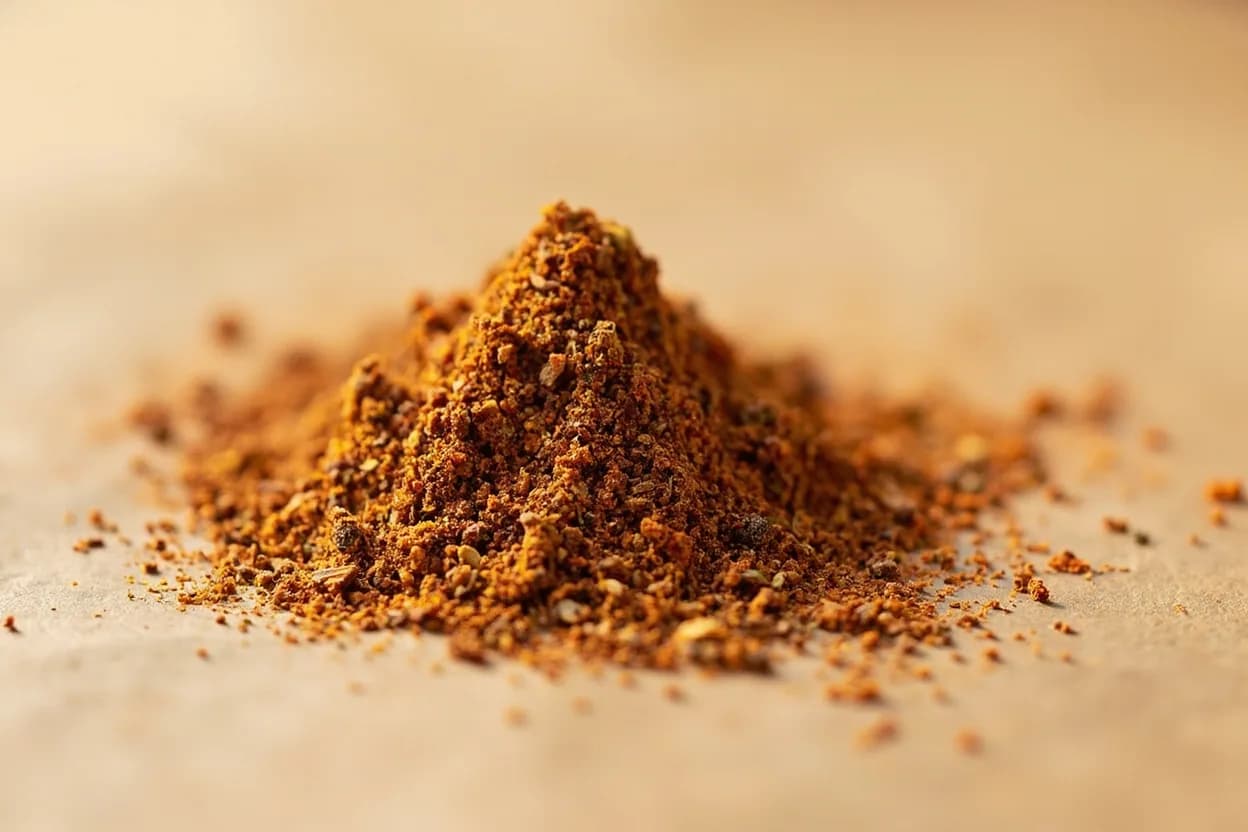
Garam masala (literally 'hot spice mixture', where 'hot' refers to the Ayurvedic warming quality, not chili heat) is the signature finishing spice blend of North Indian cooking. Unlike curry powder, it is not a base but an aromatic finish: added in the last 30 seconds of cooking or scattered over a finished dish, it deposits a fragrant cloud of warm, complex aromatics. The canonical Punjabi and Mughal blend includes green cardamom, cinnamon (or cassia), cloves, black pepper, cumin, and coriander, but every household and every cook maintains a personal formula — bay leaf, nutmeg, mace, black cardamom, fennel, and dried rose petals all make legitimate appearances.
In photos
Flavour profile
Classic pairings
- Chicken (bone-in, skin-on)North Indian / Punjabi
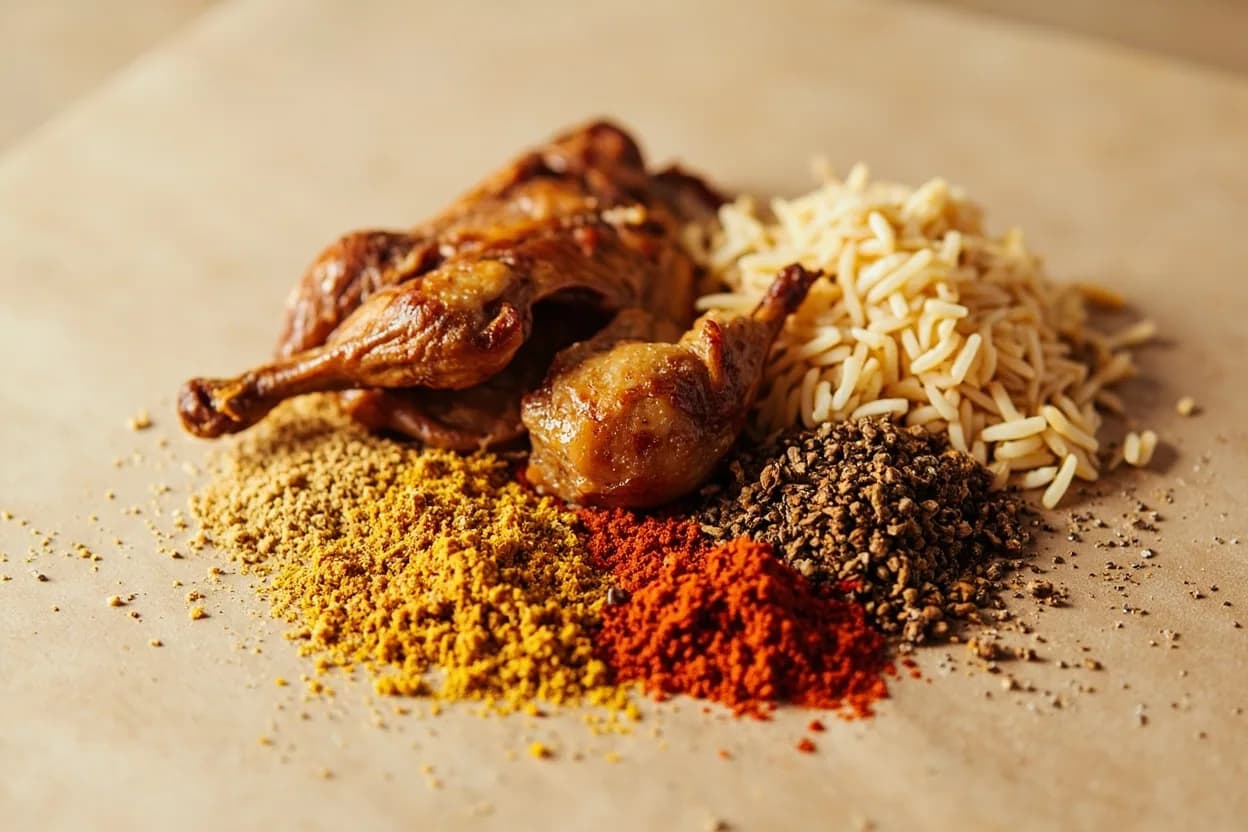
The archetype: murgh makhani (butter chicken) and chicken tikka masala both finish with garam masala, which permeates the yogurt-marinated meat and tomato-cream sauce.
- Ghee (clarified butter)North Indian
Blooming garam masala in ghee in the final 30 seconds of a dal or sabzi releases the fat-soluble aromatic compounds for maximum fragrance — the tarka technique.
- Basmati riceMughlai / North Indian
Whole spice versions of garam masala (cinnamon stick, cardamom pods, cloves) are bloomed in ghee at the start of biryani and pilau; the blend perfumes every grain.
- Lamb (slow-braised)Kashmiri / Mughlai
Rogan josh, nihari, and korma all use garam masala as a final aromatic — the gaminess of lamb takes the warmth without being overwhelmed.
- Tomato and onion masala baseNorth Indian
The classic North Indian base of sautéed onion, ginger, garlic, and tomato is finished with garam masala — added late so the aromatics don't cook out.
- Lentils (dal)North Indian
Tarka dal finishes with garam masala in ghee, fried together and poured over the lentils — the sizzle and cloud of steam carries the spice through the bowl.
- PaneerNorth Indian
Palak paneer, paneer makhani, and kadai paneer all depend on garam masala's floral warmth to elevate fresh cheese from bland to aromatic.
Adventurous pairings
- Dark chocolate mousse
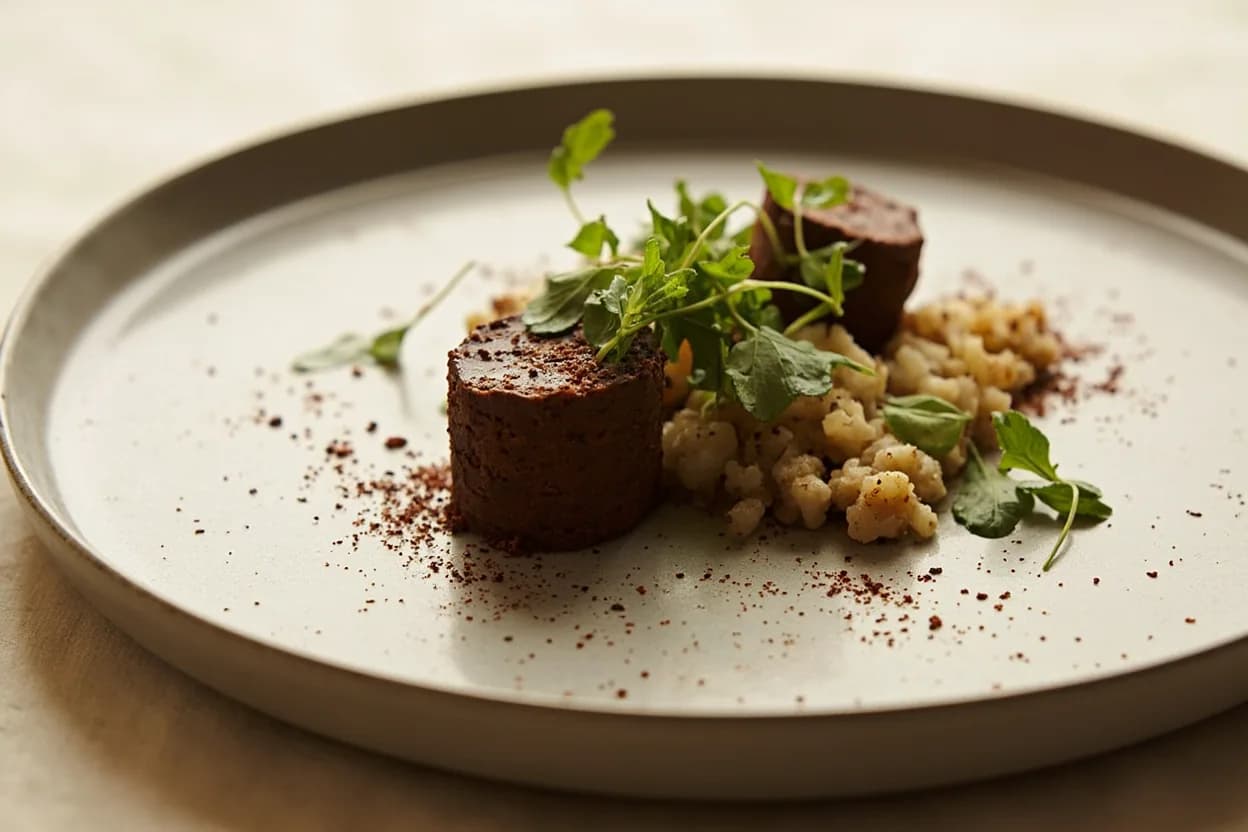
A quarter teaspoon of garam masala in bittersweet chocolate mousse introduces cinnamon, cardamom, and clove that mirror the spice notes already present in high-quality cacao.
- Roasted cauliflower
Garam masala tossed with cauliflower, oil, and a squeeze of lemon before roasting: the Maillard browning amplifies the spice's warmth; a common restaurant bridge between Indian technique and European vegetables.
- Bourbon or rye whiskey
Garam masala-infused simple syrup in an Old Fashioned or sour introduces cardamom and clove that mirror the oak and vanilla already in the barrel-aged spirit.
- Sweet potato
The earthy sweetness of roasted sweet potato takes garam masala with coconut milk for an Anglo-Indian soup that sits between a squash bisque and a North Indian curry.
Infused into cream before setting, garam masala produces a spiced custard that is more nuanced than simple cinnamon — cardamom and clove add floral-bitter complexity.
Tread carefully
- Adding at the start of long cookingavoid
Garam masala's volatile aromatic compounds (cardamom, clove) evaporate with prolonged heat — add in the last 30–60 seconds or off the heat for maximum effect.
- Seafood (light preparations)avoid
The clove and cinnamon in garam masala overwhelm the clean sweetness of shrimp or fish in simple preparations; coastal Indian fish curries use more selective spicing (mustard seed, curry leaf, kokum).
- European butter sauces (beurre blanc, hollandaise)avoid
Garam masala's earthiness and warmth create dissonant medicinal notes against neutral dairy fat in classical French contexts — these are incompatible flavor registers.
How to use it
- Add in the last 30 seconds of sautéing, or directly to a finished dish, to preserve volatile aromatics
- Bloom whole spice equivalents (cardamom pods, cinnamon stick, cloves) in ghee at the start of biryani rice
- Use as a dry rub component for tandoor-marinated meats, combined with yogurt and ginger-garlic paste
- Toast and grind fresh in small batches — commercial pre-ground loses the cardamom top notes within weeks
- Scatter over raita, dal, or finished curry as a visual and aromatic finish just before serving
Appears in
Related flavours
A contrasting blend: where garam masala warms and perfumes, chaat masala sours and sharpens — they are rarely used together
The most aromatic single component of garam masala; can substitute for the whole blend in dessert applications
Provides the earthy foundation of garam masala; also used independently as a tempering spice alongside the blend
References
- 1.Prashad: Cooking with Indian Masters — J. Inder Singh Kalra
- 2.Indian-ish — Priya Krishna
- 3.The Art of Indian Vegetarian Cooking — Yamuna Devi
- 4.Flavor Bible — Karen Page & Andrew Dornenburg
- 5.On Food and Cooking — Harold McGee
Confidence: high
Notes
Regional variation
There is no single canonical garam masala. Punjabi blends are heavier on cumin and coriander. Kashmiri versions rely on large black cardamom and dried ginger for a smoky-cool character. Bengali five-spice (panch phoron) is technically a separate tradition. Mughlai court cooking introduced rose petals, mace, and nutmeg for an opulent floral blend used in korma. When a recipe calls for garam masala without regional qualification, assume a Punjabi-style blend.
Garam masala vs. curry powder
These are not interchangeable. Curry powder is a British-Indian invention designed as a single-step seasoning; it includes turmeric for color and is added early to cook into the base. Garam masala contains no turmeric, builds no color, and is a finishing aromatic added late. Substituting one for the other changes both the visual and flavor character of a dish.