Cheeses
Paneer
Also: Indian cottage cheese, chenna (Bengal), surti paneer
India's answer to fresh cheese: a non-melting, acid-set curd with a mild, milky neutrality that absorbs whatever surrounds it.
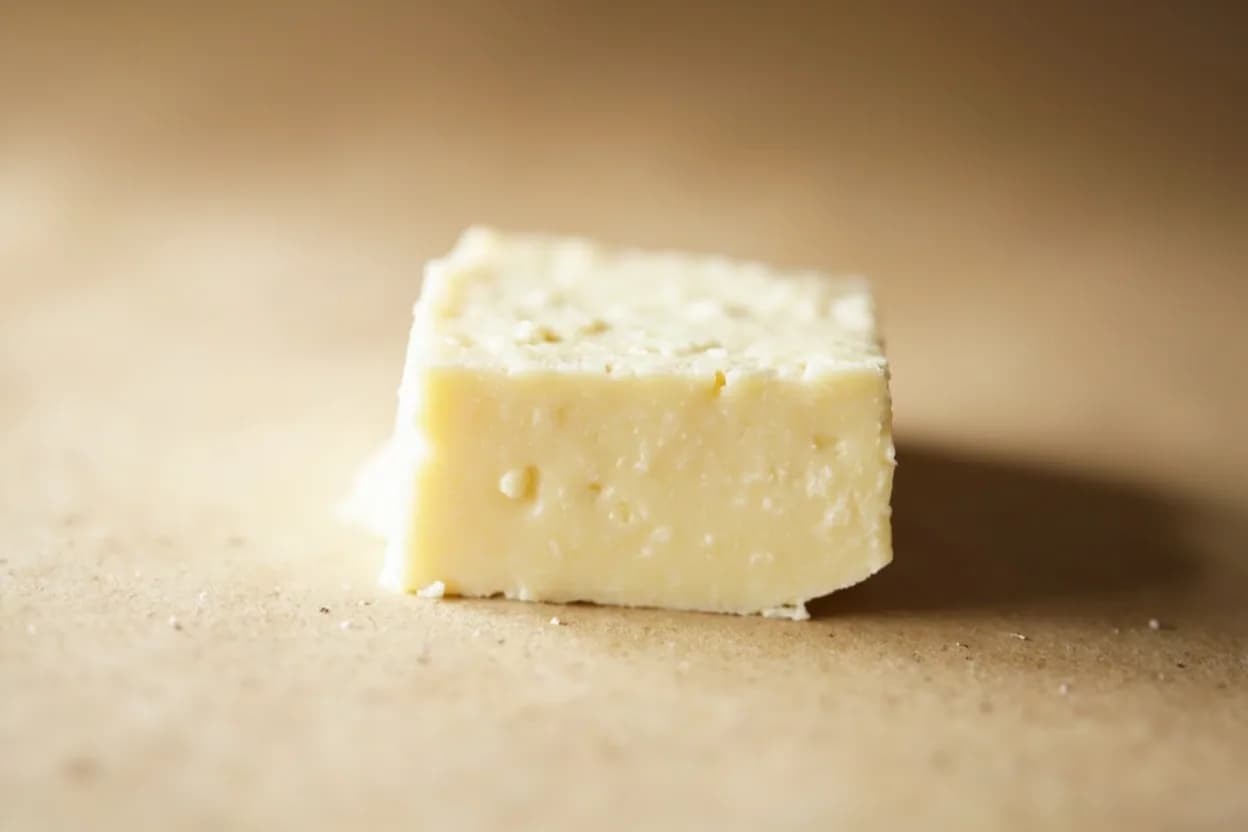
Paneer is a fresh, unaged, acid-coagulated cheese made by curdling hot whole milk with an acidulant — vinegar, lemon juice, or whey — then pressing the drained curds into a firm, sliceable block. It does not melt under heat: the acid coagulation (rather than rennet) produces a protein matrix that remains firm when fried or grilled, developing a golden crust while retaining a moist, milky interior. Its flavor is intentionally neutral — clean milk with a faint lactic brightness — making it function as a protein and textural vehicle for bold spice-forward sauces and marinades. Fat content varies by milk used (typically 20–25% on a wet basis), but buffalo-milk paneer is richer and whiter.
In photos
Flavour profile
Classic pairings
- Spinach (palak)Indian (North)
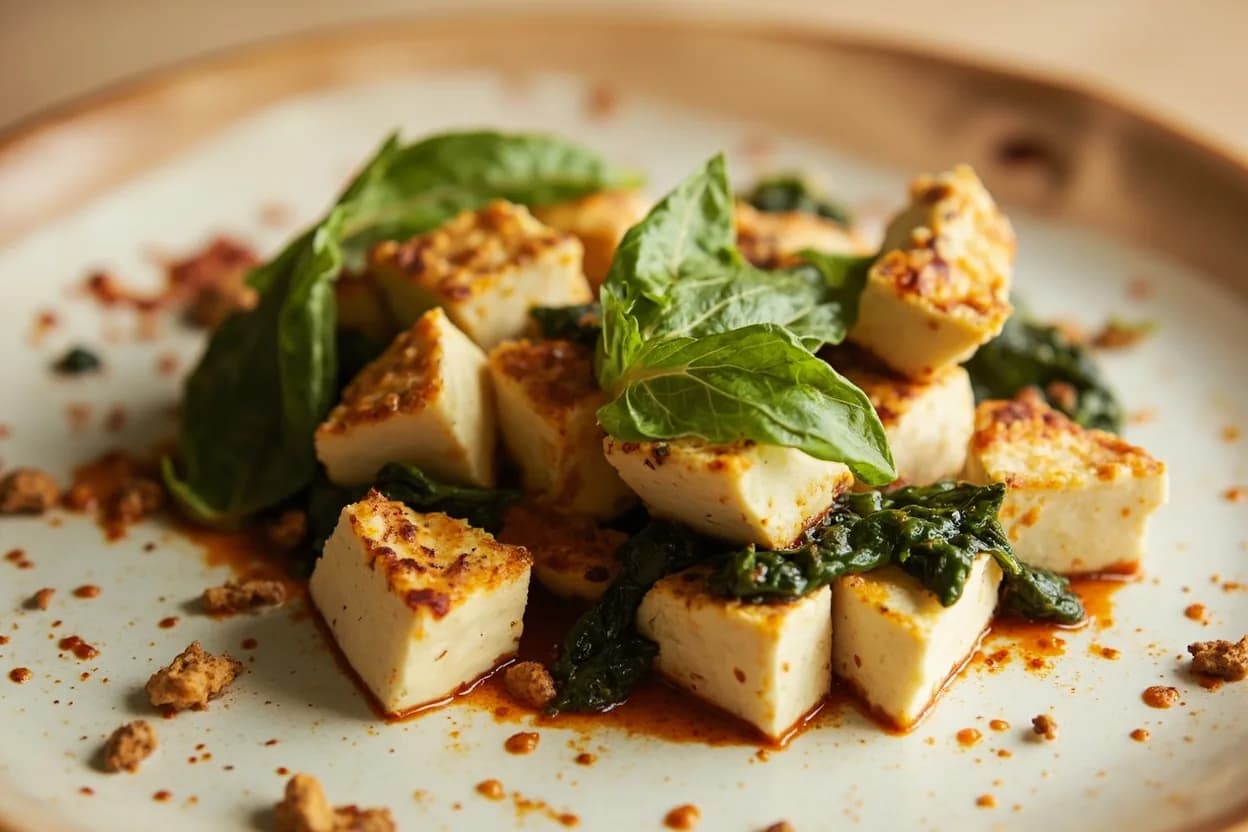
The foundational pairing — pureed spinach's earthy, slightly bitter depth and vivid color contrast the white, neutral cubes; the fat in paneer smooths out the green's astringency.
- Tomato-onion-cream sauce (makhani base)Indian (Punjabi)
Butter, cream, and tomato make paneer butter masala: the cheese absorbs the tangy, sweet-spiced sauce while retaining its chew. One of the most widely made paneer preparations globally.
- Tandoor marinade (yogurt, garam masala, Kashmiri chili)Indian (Punjabi/Mughal)
The cheese's ability to hold shape under high dry heat makes it ideal for tandoor cooking; the yogurt marinade tenderizes the exterior and carries spice into the crust.
- Cumin (jeera)Indian
Whole cumin seeds bloomed in ghee are the baseline tadka for almost every paneer preparation; nutty, earthy cumin aromatics bind to the neutral fat of the cheese.
- Green peas (matar)Indian (North)
Matar paneer is a home-cooking staple; the sweet, starchy pop of peas against the cheese's chew is a textural contrast as satisfying as it is simple.
- Fenugreek (kasuri methi)Indian
Dried fenugreek leaves crushed into a creamy sauce introduce a bitter-maple complexity that transforms a simple paneer dish; classic in restaurant-style shahi paneer.
- GheeIndian
Paneer fried in ghee (rather than oil) acquires a nutty, butterscotch crust from the milk solids; ghee's fat also carries fat-soluble spice compounds more efficiently into the cheese.
Adventurous pairings
- Soy sauce and sesame oil (Indo-Chinese style)
Indo-Chinese cuisine — a real regional tradition in Calcutta and Mumbai — uses paneer in place of tofu in chilli paneer: wok-tossed with bell peppers, soy, and vinegar. The cheese handles the heat and absorbs salty-umami depth.
- Za'atar and olive oil
Thyme-sesame-sumac za'atar rubbed over paneer slabs and pan-seared bridges South Asian and Levantine traditions; the cheese's neutrality is as receptive to za'atar as it is to garam masala.
Tart-sweet molasses glazed over grilled paneer creates a char-and-tang effect analogous to tamarind; works well in a chaat-style dish with chutney and chat masala.
- Smoked paprika and honey
Griddled paneer marinated in smoked pimentón and honey — a Western shortcut that echoes the sweetness and smoky char of a tandoor finish, approachable for a home oven.
- Miso and ginger
White miso dissolved in sesame oil as a marinade adds fermented umami depth that mimics aged dairy without competing with paneer's own fresh-milk character.
Tread carefully
- Very prolonged simmering in watery saucesavoid
Extended boiling causes the pressed curd to become rubbery and spongy — texture degrades past the point of eating pleasure. Add paneer in the final 5–10 minutes only.
- Strong blue or aged cheeses on the same boardavoid
Paneer's selling point is its neutrality and freshness; serving alongside Roquefort or aged Cheddar simply erases it from the palate — there is no interaction.
- Lemon juice in excessavoid
Because paneer is already acid-set, further acidulation in cooking (aggressive lemon finishing) creates a grainy, slightly curdled texture rather than brightening the dish.
How to use it
- Press between towels under a heavy weight for 30–60 minutes for a firmer, drier block that fries without breaking
- Soak in warm salted water for 20 minutes after frying to keep the interior moist when finishing in sauce
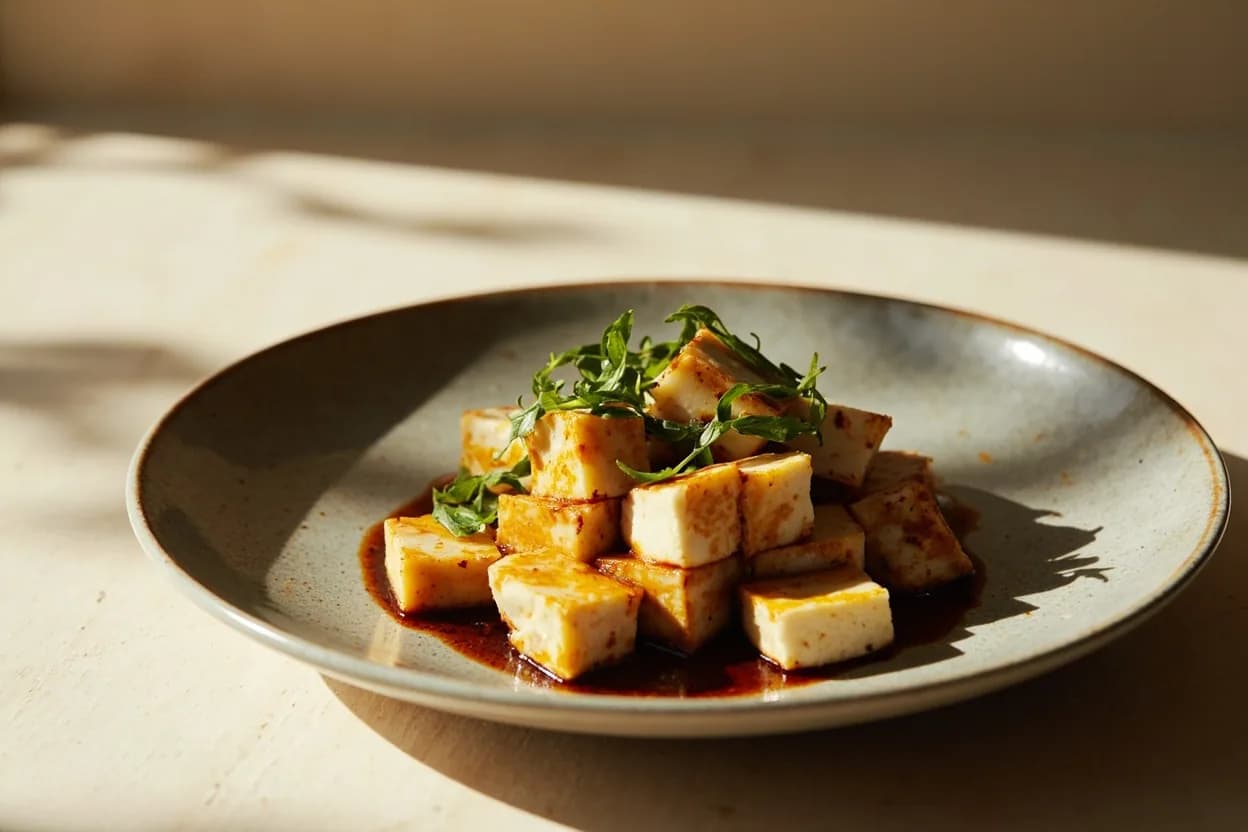
- Shallow-fry cut cubes in ghee or neutral oil until golden on each face before adding to sauce — this prevents the cheese from disintegrating and adds textural contrast
- Marinate in spiced yogurt and skewer for tandoori paneer tikka — the marinade should coat generously and be refrigerated at least 2 hours
- Crumble (paneer bhurji) for a scrambled-egg-like texture in a spiced egg-style preparation
Appears in
Related flavours
Cyprus-origin brined cheese with the same non-melting, grill-friendly property — firmer and saltier, but used in identical applications (skewers, pan-sears, salads).
- Extra-firm tofu
The closest functional analog in plant-based cooking — similarly neutral, non-melting, and absorptive; shares nearly all paneer's technique and pairing logic.
- Queso blanco
Latin American fresh, acid-set pressed cheese with the same non-melting quality; an accessible pantry substitute in North American kitchens.
References
- 1.Indian-ish: Recipes and Antics from a Modern American Family — Priya Krishna (Houghton Mifflin Harcourt, 2019)
- 2.The Complete Indian Regional Cookbook — Mridula Baljekar (Lorenz Books, 2014)
- 3.Madhur Jaffrey's Indian Cooking — Madhur Jaffrey (Barron's, 1983)
- 4.On Food and Cooking — Harold McGee (Scribner, 2004)
Confidence: high
Notes
Making paneer at home
Bring 2 liters of whole milk to a near-boil, add 3 tablespoons of white vinegar or lemon juice while stirring, let the curds form for 5 minutes, then strain through muslin. Pressing for 1 hour with 2 kg weight gives a firm, slice-able block. The result is incomparably fresher than any commercial product.
Why paneer doesn't melt
Unlike rennet-coagulated cheeses, acid-coagulation denatures the whey proteins (lactalbumin and lactoglobulin) along with the caseins. This creates a protein matrix that cross-links under heat rather than liquifying — the same reason scrambled eggs don't melt back to liquid. It is structurally irreversible, which is precisely what makes it so useful for high-heat cooking.