Fats, Pastes & Condiments
Ghee
Also: clarified butter (brown), usli ghee, desi ghee, samneh, samn baladi
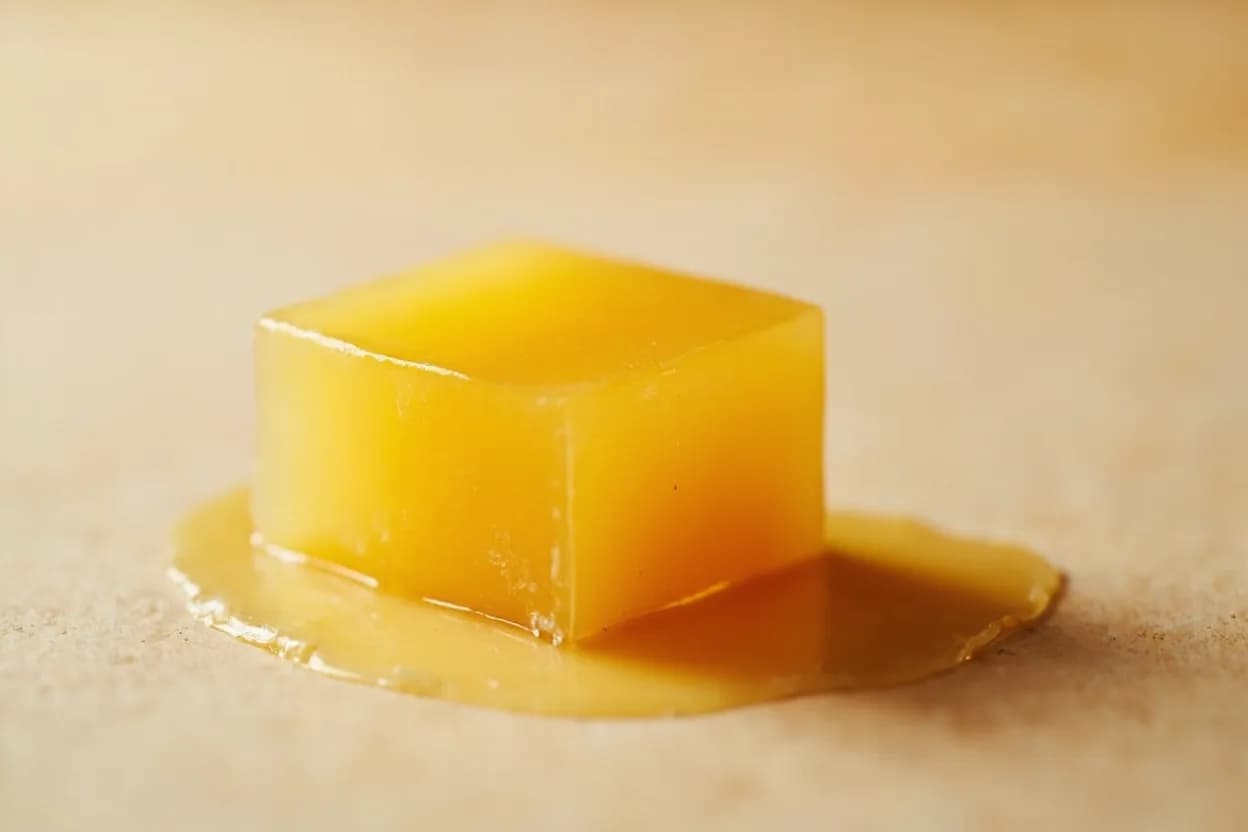
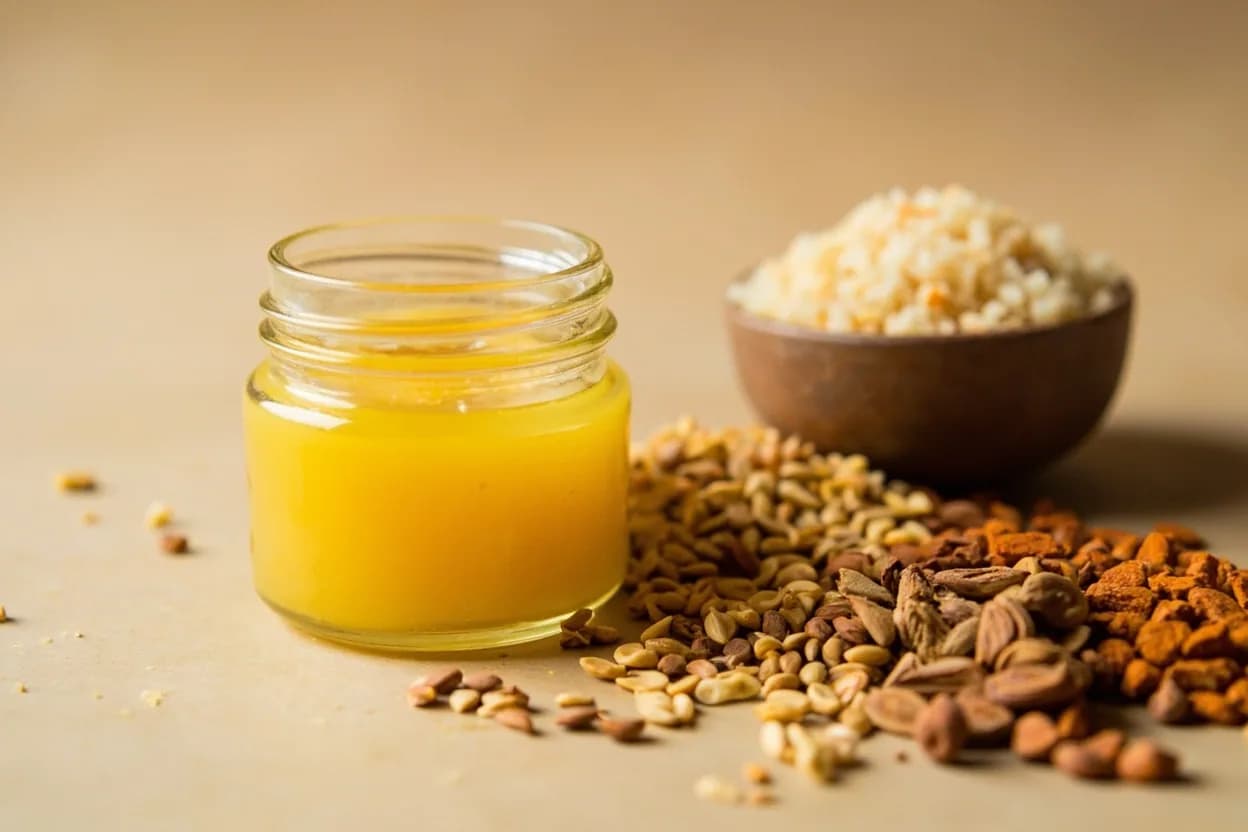
Butter distilled to its richest self: all water and milk solids cooked away, leaving a golden fat that smells of toffee and carries the heat of a continent's cuisine.
Ghee is clarified butter from which all water and milk solids have been removed by prolonged gentle cooking, during which the milk proteins and sugars undergo the Maillard reaction, producing a characteristic brown-butter (beurre noisette) complexity before the solids are strained out. The result is a pure golden fat — shelf-stable, smoke-point around 250°C (482°F) — that smells unmistakably of toasted hazelnuts, caramel, and grass-fed dairy. Desi ghee (made from cultured, churned butter of buffalo or cow milk) carries additional lactic and slightly tangy notes absent from European-style clarified butter. It is the primary cooking fat of the Indian subcontinent, widely used in Arab, Iranian, Ethiopian (niter kibbeh is a spiced cousin), and East African kitchens.
In photos
Flavour profile
Classic pairings
- Basmati rice (in biryani)Indian (Mughal)
Ghee drizzled into layered biryani during dum cooking perfumes each grain; its high smoke point prevents burning while the nutty fat absorbs saffron and spice volatiles.
- Dal (lentils)Indian (North, South)
The tarka — a smoking ghee tempering of cumin, mustard seeds, dried chili, and garlic — is the defining finish for any dal; ghee carries spice volatiles instantly into the lentils.
- Cumin seeds (jeera)Indian
Whole cumin bloomed in hot ghee is perhaps the most fundamental flavor-building step in Indian cooking; ghee's fat acts as the solvent that extracts and amplifies cumin's terpenoid aromatics.
- Flatbreads (roti, paratha, chapati)Indian, Pakistani
A smear of ghee on hot flatbread immediately after coming off the tawa is both texture (soft, pliable) and flavor (nutty warmth); the tradition spans the entire subcontinent.
- Cardamom and cinnamon (in sweets)Indian
Ghee is the fat in most Indian mithai (halwa, ladoo, barfi); its caramel depth harmonizes with warm spices in a way that neutral oil cannot, uniting sugar and aromatics.
- Garlic and ginger (as a curry base)Indian
Ginger-garlic paste fried in ghee is the aromatic foundation of countless North Indian curries; the fat tempers raw pungency and develops the paste's sweetness before liquid is added.
- PaneerIndian
Paneer seared in ghee develops a golden, slightly crunchy crust while the fat's nuttiness complements the cheese's mild lactic tang; excess fat absorbed gives the cubes a rich, almost buttery quality.
- Pumpkin and winter squashIndian, Afghan
Roasting squash in ghee produces a deeply caramelized surface that amplifies squash's own natural sweetness; the pairing appears in Afghani and North Indian winter cooking.
Adventurous pairings
- Miso (white or red)
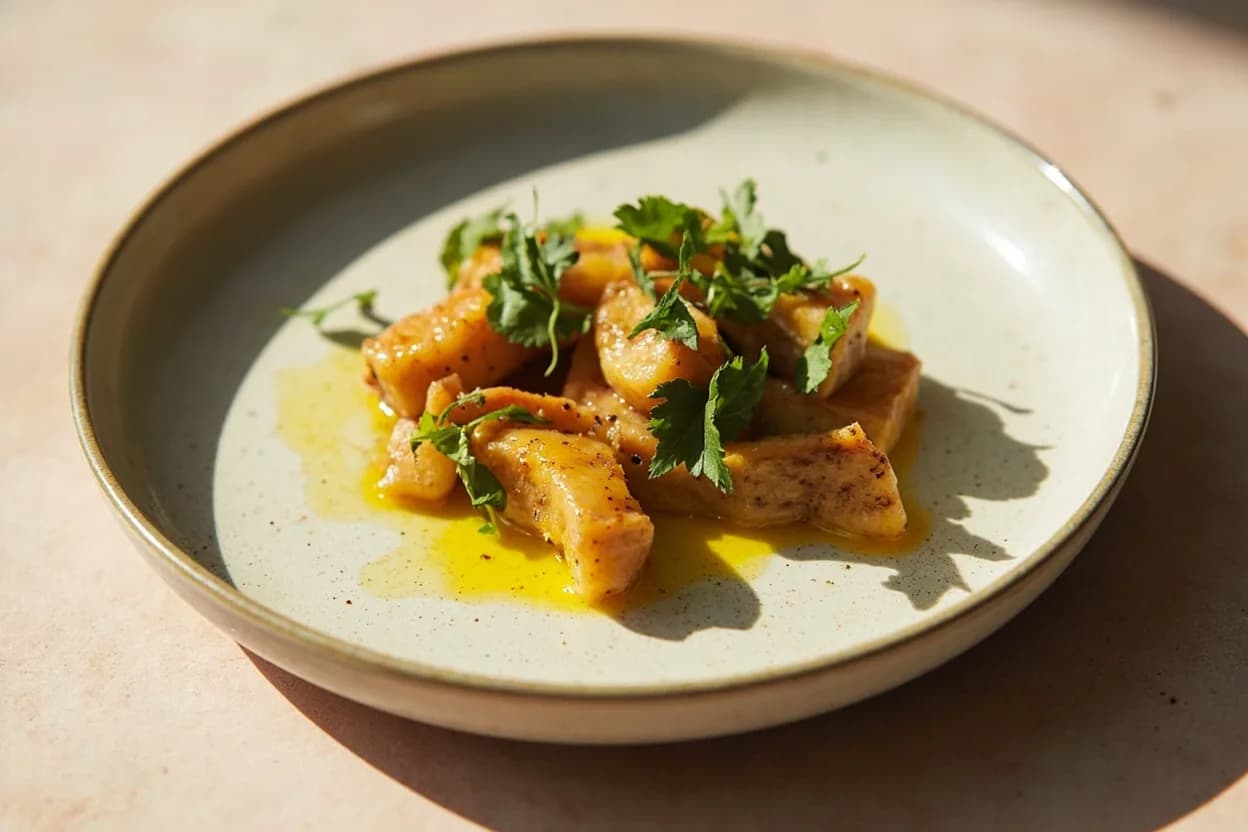
Brushing miso thinned with ghee onto salmon or chicken before roasting layers Japanese fermented umami with Indian-adjacent browned-butter depth — a pan-Asian hybrid with remarkable coherence.
Ghee's toasted caramel notes interact synergistically with cacao's roasted bitterness; substituting ghee for butter in a chocolate cake or fondant adds a subtle nuttiness that reads as depth, not otherness.
A beurre noisette-style preparation can substitute ghee for butter, finishing with aged sherry vinegar; the acid cuts ghee's richness while amplifying its caramel dimension in a pan sauce for duck or pork.
- Coffee (Ethiopian)
In Ethiopian coffee ceremony tradition, a small amount of spiced niter kibbeh (ghee-based) is sometimes added to coffee; the fat carries aromatic compounds and softens coffee's bitterness.
- Smoked paprika
Ghee infused with smoked paprika at low heat is a powerful tarka alternative for finishing scrambled eggs, roasted potatoes, or corn; the fat carries pimentón's carotenoids and smoke volatiles brilliantly.
Tread carefully
- Delicate fresh herbs (basil, chervil) added earlyavoid
Ghee's high smoke point is an asset for high-heat cooking, but adding tender herbs to hot ghee destroys them instantly; add fresh herbs off heat or use hardier aromatics (bay, thyme) for infusion.
- Extra-virgin olive oil (as a blend)avoid
EVOO's grassy, peppery phenols fight ghee's caramel nuttiness; the two fats exist in different flavor worlds and blending them produces a confused result better solved by choosing one.
- Very delicate white fish at high heatavoid
Ghee's nutty intensity overwhelms the mineral subtlety of sole, turbot, or skate; a neutral oil or European-style beurre meunière suits those proteins better.
How to use it
- Bloom whole spices (cumin, mustard seeds, curry leaves) in ghee before adding aromatics — the tarka technique that founds Indian cooking
- Use as a 1:1 substitute for butter in any high-heat application (searing, roasting) where smoke point matters
- Make a ghee-based compound: infuse with black pepper, garlic, and thyme, cool, and use as a steak finishing fat
- Drizzle over rice, dal, or lentils immediately before serving for a finishing richness (melt-and-drizzle)
- Use as the fat in laminated dough (paratha, malabar parotta) for flavor and flakiness
Appears in
Related flavours
- Brown Butter (Beurre Noisette)
Western equivalent flavor profile — same Maillard chemistry, but with residual milk solids and water.
- Coconut Oil
South Indian alternative fat for tempering; different flavor (tropical vs. dairy) but similar function.
- Mustard Seeds
Canonical tarka partner; seeds pop in hot ghee and release sulfurous nuttiness.
Infused into warm ghee to distribute its color and aroma evenly through biryani and sweets.
References
- 1.Iyer, Raghavan. 660 Curries. Workman Publishing, 2008
- 2.Singh, Vivek. The Cinnamon Club Cookbook. Absolute Press, 2003
- 3.McGee, Harold. On Food and Cooking: The Science and Lore of the Kitchen. Scribner, 2004
- 4.Sharma, Nik. The Flavor Equation. Chronicle Books, 2020
Confidence: high
Notes
Desi ghee vs. commercial ghee
Traditional desi ghee is made from cultured cream or yogurt-based butter (makhan), producing a lightly tangy, complex fat. Commercial ghee made from sweet cream butter is blander. For cooking where ghee's flavor matters (dal tarka, halwa), seek out grass-fed or cultured-butter ghee.
Lactose and casein
Properly made ghee removes essentially all lactose and casein, making it tolerable for many people with dairy sensitivities. This, alongside Ayurvedic tradition attributing ghee with digestive benefits, has driven its adoption in modern Western wellness cooking.