Spices & Dried Aromatics
Gesho (Ethiopian Hops)
Also: gesho, Ethiopian hops, Rhamnus prinoides, gésho, African buckthorn
A bitter, hop-like Ethiopian shrub that gives tej its signature resinous edge and berbere blends their aromatic backbone.
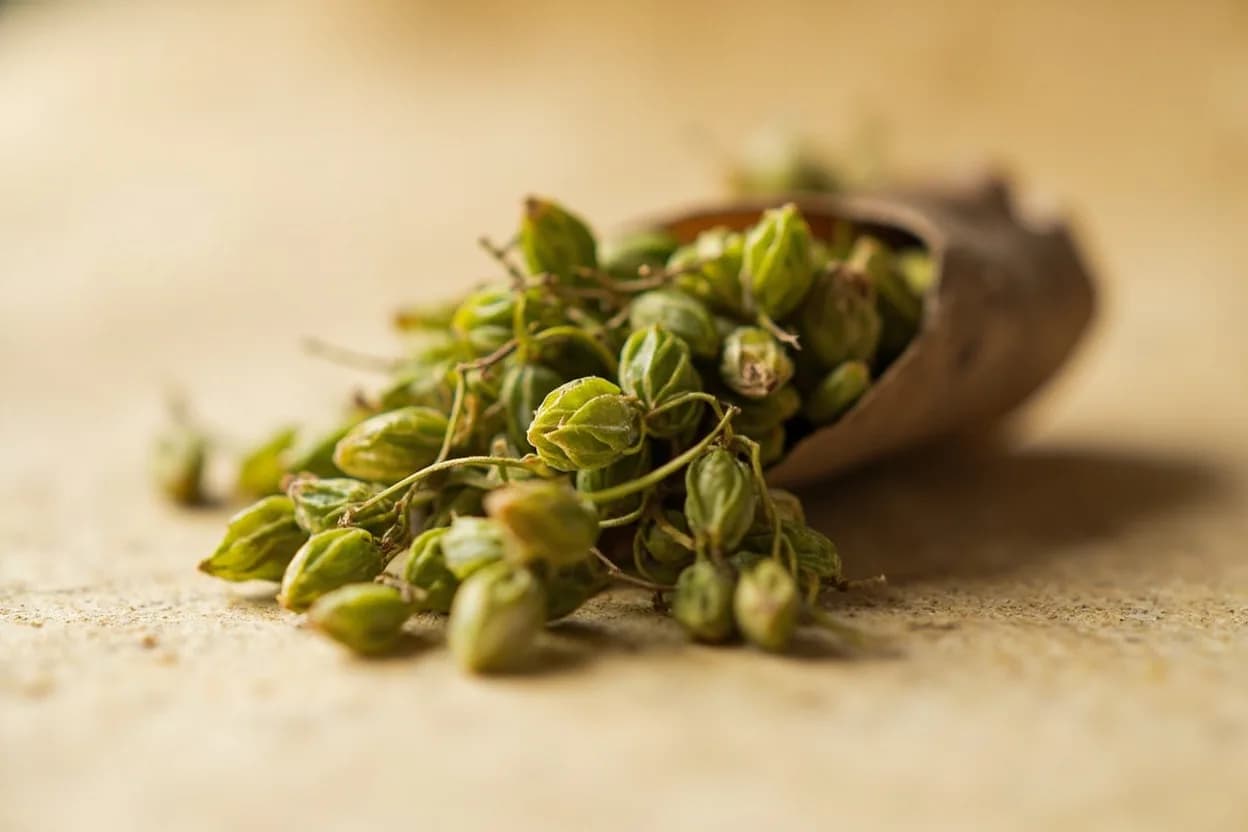
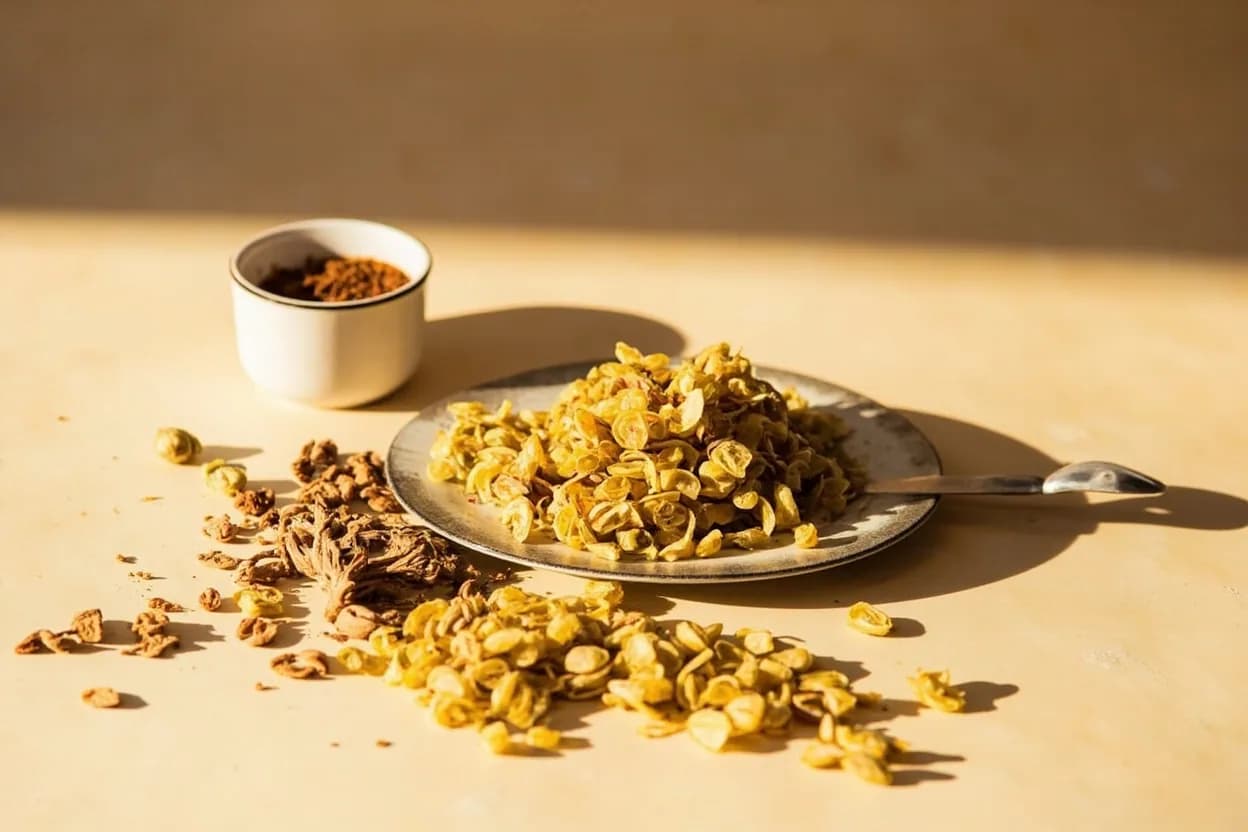
Gesho (Rhamnus prinoides) is a thorny shrub native to East Africa and parts of the Arabian Peninsula. The dried stems, leaves, and twigs are used as a bittering and flavouring agent in Ethiopian and Eritrean cooking and brewing. In tej (Ethiopian honey wine), gesho plays the role that hops play in beer — introducing bitterness that balances sweetness and acting as a preservative. Its flavour is distinctly hop-like, with resinous, herbal bitterness, notes of dried eucalyptus and pine, and a clean, astringent finish. Gesho also appears in dry spice blends and flavoured butters.
In photos

Flavour profile
Classic pairings
- Honey (tej base)Ethiopian
Gesho's bitterness is the essential counterweight to honey's sweetness in tej; without it the wine is flat and cloying — together they achieve the canonical balance of Ethiopian honey wine.
- Niter kibbeh (Ethiopian spiced clarified butter)Ethiopian
Gesho stems are simmered in the butter-making process, contributing resinous bitterness that offsets niter kibbeh's rich spice blend and gives the finished butter greater complexity.
- Berbere spice blendEthiopian
Gesho leaves appear in some regional berbere formulations, where their bitterness anchors the fenugreek and dried chilli heat and prevents the blend from reading as purely sweet-spicy.
- Lentils (misir wot)Ethiopian
The earthy, dense texture of red lentils absorbs gesho's bitter herbal notes during long simmering; the bitterness resolves into background complexity in the finished dish.
- Lamb and muttonEthiopian / Eritrean
Gesho's resinous bite cuts through the fat of lamb in stewed preparations; it performs the same palate-cleansing role that rosemary plays in European lamb cookery.
- FenugreekEthiopian
A natural spice-blend partner: fenugreek's maple-bitter note and gesho's resinous bitterness are in the same register but distinct enough to add dimension rather than redundancy.
- Tej (fermented honey wine)Ethiopian
Gesho is the defining ingredient of tej — its bitterness and antimicrobial properties regulate fermentation and define the drink's character.
Adventurous pairings
- Dark IPA or imperial stout
Gesho's hop-like bitterness is a natural analogue to brewer's hops; infusing dried stems in a homebrewed stout or using gesho-infused butter on a beer-braised short rib bridges Ethiopian and craft-brewing traditions.
- Aged goat cheese
The funky, lactic tang of aged chèvre and gesho's herbal bitterness create a complex contrast — a gesho-infused honey drizzled over strong goat cheese is both unexpected and coherent.
- Dark chocolate (70%+)
Gesho's resinous bitterness aligns with the tannins of high-percentage chocolate; steeping gesho in warm cream before making a ganache introduces a quietly Ethiopian aromatic.
- Chicory or radicchio
Pairing two bitter elements requires balance — a gesho-infused dressing over a bitter greens salad, sweetened with honey and cut with citrus, creates a tej-inspired flavour arc on a plate.
Tread carefully
- Delicate sweet dessertsavoid
Gesho's pronounced bitterness will dominate any dessert with subtle sweetness; it requires either strong counterweights (honey, chocolate) or savoury context.
- Fresh, raw in large quantitiesavoid
Raw gesho leaves are intensely bitter and astringent — always simmer or infuse to moderate the intensity before incorporating into a dish.
- Cream-heavy pasta saucesavoid
Gesho has no affinity with neutral dairy; its herbal bitterness produces a medicinal, discordant note in cream-based contexts without the spice or umami to bridge them.
How to use it
- Steep dried stems in warm honey-water for tej fermentation — remove after the desired bitterness is achieved
- Simmer gesho stems in butter during niter kibbeh production, then strain out before use
- Use dried and powdered leaves as a dry spice in berbere-style blends
- Infuse in warm oil or clarified butter, then strain — a rapid way to extract the resinous aroma for sauces
- Always strain or remove gesho before serving — the woody stems and leaves are not eaten
Appears in
Related flavours
- Hops (Humulus lupulus)
The functional and aromatic analogue in global brewing; gesho occupies an equivalent bittering role in Ethiopian fermentation.
A spice-blend companion in Ethiopian cooking; both contribute bitterness, and they appear together in berbere and wot bases.
- Tej (honey wine)
Gesho is definitionally part of tej — the two cannot be separated; understanding gesho requires understanding tej.
References
- 1.Legends of the African Grill — Virginia Burke
- 2.Ethiopia: Recipes and Traditions from the Horn of Africa — Yohanis Gebreyesus
- 3.The Oxford Companion to Beer — Garrett Oliver (ed.) — entry on African traditional fermented beverages
Confidence: high
Notes
The Ethiopian hops analogy
The comparison to hops (Humulus lupulus) is functional rather than botanical — gesho and hops belong to entirely different plant families. However, both serve as bittering and preserving agents in fermented beverages, and the parallel is genuine enough that craft brewers outside Ethiopia have experimented with gesho as a hops substitute.
Sourcing
Gesho is available dried (whole stems or powder) at Ethiopian and Eritrean grocery stores and online. It is rarely found in mainstream supermarkets. Whole dried stems keep for over a year; ground gesho loses potency within a few months.