Spices & Dried Aromatics
Fenugreek
Also: Methi (seed), Shanbalileh, Uluva, Abesh
A bitter-sweet seed with a haunting maple-caramel aroma that defines South Asian curries, Ethiopian berbere, and imitation maple flavouring alike.
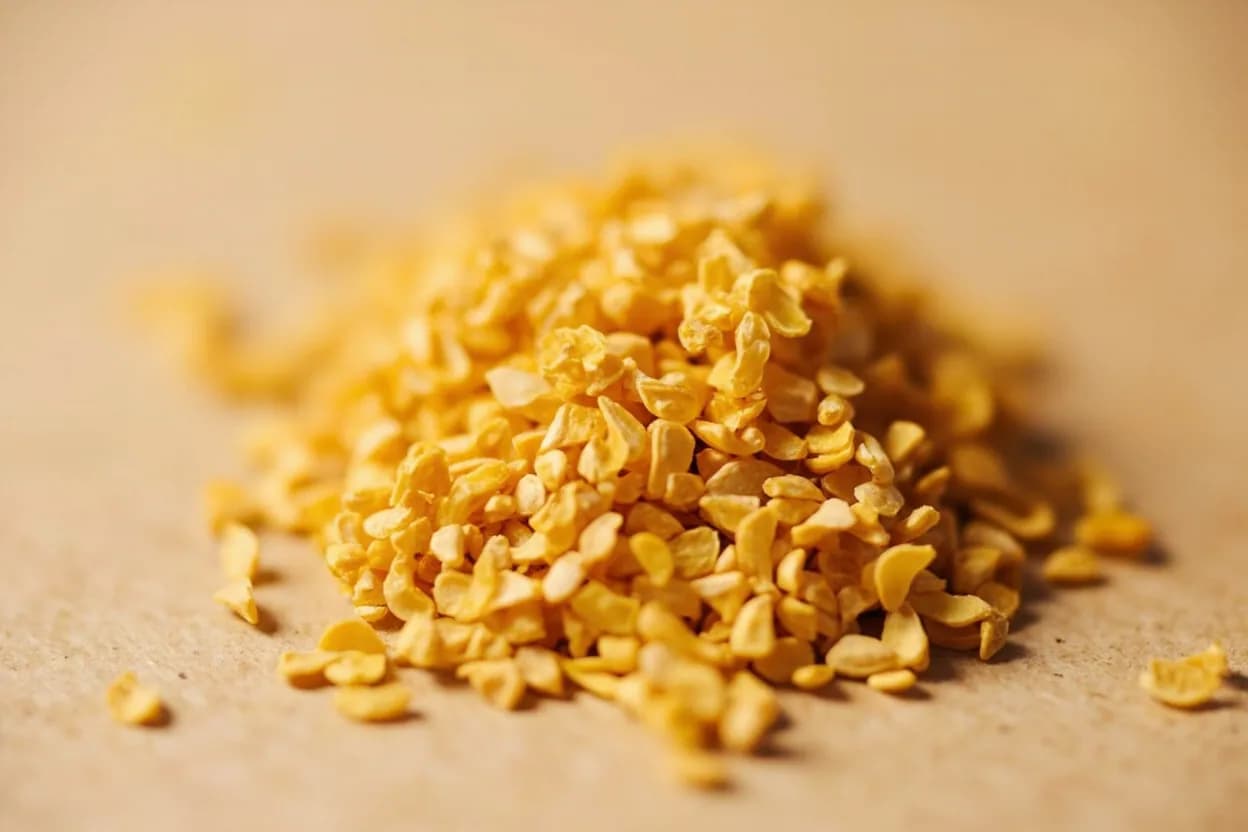
Fenugreek (Trigonella foenum-graecum) is an annual legume whose small, amber, hard-cornered seeds carry one of the most distinctive aromatic profiles in the spice world. The primary compound, sotolon, is the same molecule responsible for maple syrup's aroma at high concentrations and caramel-fenugreek at lower ones. Raw seeds are fiercely bitter; brief dry-toasting converts some of the harsh alkaloids and softens the bitterness while unlocking the sweet-maple depth. Widely used in seed form in South Asian tempering (tadka), as a powder in Ethiopian berbere and mitmita, and as a key structural spice in pickle masalas.
In photos
Flavour profile
Classic pairings
- PotatoesNorth Indian
The bitterness of fenugreek contrasts with potato's starchy neutrality; aloo methi is one of North India's most beloved dry-fried dishes, the seeds or fresh leaves crisped in mustard oil.
- Lamb and goatSouth Asian
Fenugreek's maple-bitter depth stands up to the richness of slow-braised goat or lamb; central to Pakistani karahi and many Rajasthani curries.
- TomatoesIndian
Tomato's acidity tempers fenugreek's bitterness while its sweetness echoes the maple note; the combination anchors the base of many Indian restaurant gravies.
- Mustard seedSouth Indian
A classic tadka duo across South and East India — both seeds are added to hot oil together, the pungency of mustard and the bitterness of fenugreek creating a sharp aromatic foundation.
- Berbere spice blendEthiopian
Fenugreek is a structural component of Ethiopian berbere, where it moderates the heat of chiles and provides the sweet-bitter bass note that defines the blend's complexity.
- Flatbreads (methi thepla, puri)Indian
Seeds or dried leaf ground into whole-wheat dough give Gujarati thepla and many roti variants a bitter aromatic character that pairs brilliantly with yogurt and pickle.
- Yogurt and buttermilkIndian
The slight acidity of dairy cuts fenugreek's bitterness elegantly; raita with fenugreek-spiced lentils or kadhi (yogurt curry) are prime examples.
Adventurous pairings
Because sotolon is the aromatic compound shared by both, combining fenugreek-spiced savoury foods with a drizzle of real maple syrup creates a resonant doubling effect — works powerfully in a maple-fenugreek glaze for pork or squash.
- Bitter chocolate (85%+)
The bitterness in fenugreek aligns with, rather than clashes against, high-cacao chocolate; a pinch in a dark-chocolate mole or spiced truffle ganache adds an intriguing camphor-sweet depth.
- Aged cheese (Gruyère, aged Gouda)
Fenugreek's caramel-maple note echoes the same sotolon-driven nuttiness found in aged cheeses; in the Netherlands, kanterkaas is intentionally flavoured with fenugreek seeds.
- Sweet potato
Sweet potato's natural sweetness and slight earthiness are amplified by fenugreek's maple note in a way that creates an almost confection-like depth in roasted preparations.
- Bourbon whiskey (as a marinade flavour)
Bourbon's own caramel-vanilla-maple character (from barrel aging) harmonises with fenugreek's sotolon note; a fenugreek-bourbon glaze for ribs or salmon bridges the two resonantly.
Tread carefully
- Delicate seafood (sole, scallops)avoid
Fenugreek's assertive bitterness and persistent aroma completely overwhelm delicate sweet-sea flavours; reserve it for robust proteins and legumes.
- Green salads / raw preparationsavoid
Raw fenugreek seeds are extremely bitter and hard; they should always be toasted, cooked, or sprouted before consumption and are unsuitable as a raw garnish.
- Light cream sauces (béchamel)avoid
Fenugreek's maple-bitter intensity dominates neutral dairy-based sauces and is very difficult to balance; the result typically reads as medicinal.
How to use it
- Dry-toast seeds briefly in a dry skillet until they turn one shade darker and smell of maple — do not let them go dark brown or bitterness becomes harsh
- Temper whole seeds in hot oil or ghee (tadka) at the start of a dish; they pop and release oil in the first 30 seconds
- Grind toasted seeds fine for curry powders, spice pastes, and berbere — the hardness of the seed requires a powerful grinder
- Soak seeds overnight to reduce bitterness; sprouted fenugreek seeds are milder and suitable as a vegetable
- Add late (as kasuri methi / dried leaf) for a gentler, more aromatic effect without dominant bitterness
Appears in
Related flavours
The dried leaf form of the same plant — milder, more aromatic, less bitter; the two are used at different stages of the same dish in North Indian cooking
- Mustard Seed
Frequent tadka partner; the two seeds complement each other's bitterness and pungency in South Indian tempering
Together with fenugreek in panch phoron and many curry bases — cumin's earthiness softens fenugreek's maple-bitter edge
Nearly always used alongside fenugreek in South Asian preparations; turmeric's mild earthiness and golden colour are neutral foils to fenugreek's assertive character
References
- 1.The Oxford Companion to Food — Alan Davidson
- 2.Spices, Salt and Aromatics in the English Kitchen — Elizabeth David
- 3.Indian Food: A Historical Companion — K.T. Achaya
- 4.The Flavor Bible — Karen Page & Andrew Dornenburg
Confidence: high
Notes
The sotolon connection
Sotolon (3-hydroxy-4,5-dimethyl-2(5H)-furanone) is the molecule that gives fenugreek, maple syrup, and aged rum their characteristic aroma. Understanding this allows cooks to deliberately create layered maple-sweet savoury dishes by combining these ingredients — a technique exploited knowingly in fine-dining meat glazes.
Medicinal use and dosing
Fenugreek has been used in Ayurvedic and Unani medicine for millennia as a galactagogue and blood-sugar moderator. Seeds consumed in gram quantities (as supplements) can cause body odour to smell of maple — harmless but worth knowing when advising guests.