Fermented Pastes & Sauces
Fermented Black Bean (Douchi)
Also: douchi (豆豉), salted black beans, tochi, black bean paste (simplified), dried fermented black beans
China's oldest condiment — wrinkled, salt-cured black soybeans with a complex, earthy umami that anchors Cantonese stir-fries and Sichuan classics alike.
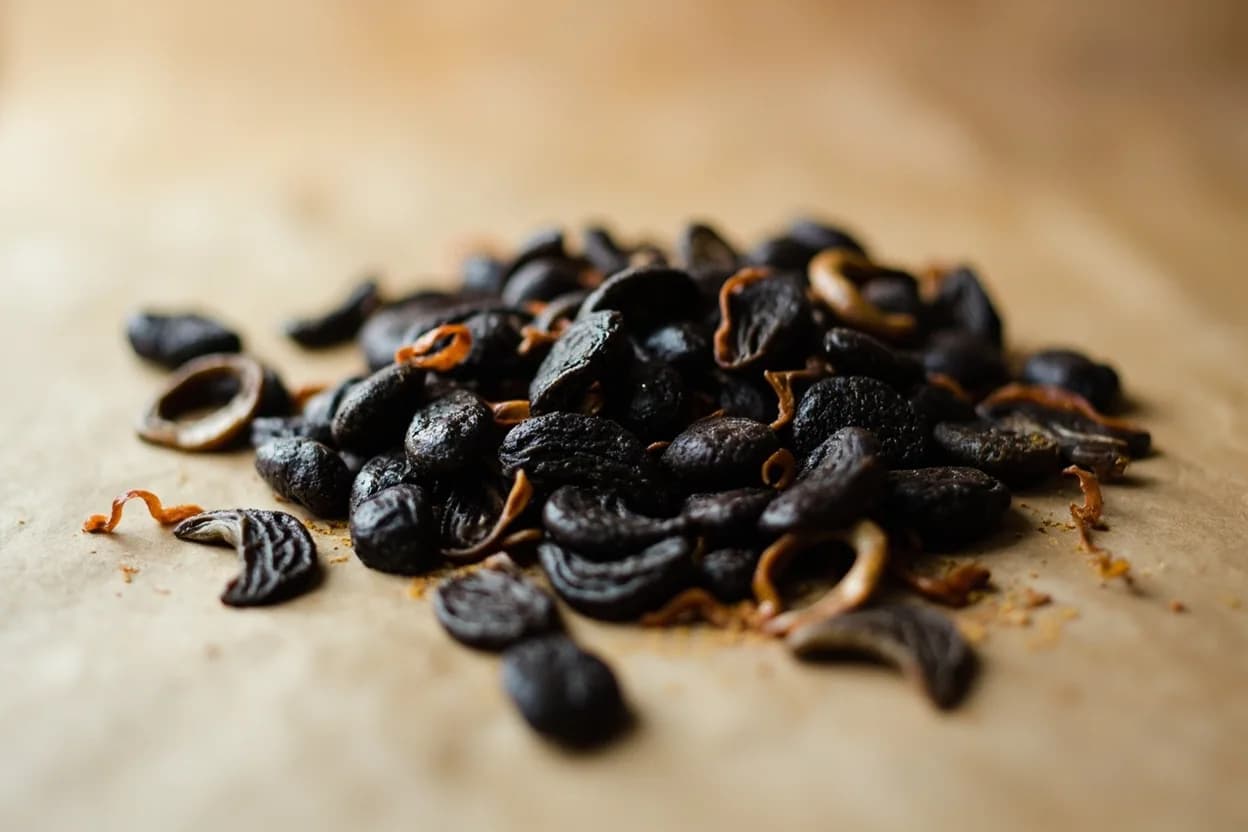
Douchi are black soybeans (or occasionally yellow soybeans) that have been cooked, inoculated with mould (Aspergillus or Mucor), then salted and dried or packed for months or years. The result is an intensely savoury, earthy, pungent condiment with a complex fermented character. Texturally they range from firm and slightly chewy to almost paste-like when aged. Flavour is: deeply umami, with a salty, meaty, slightly funky and musky depth, mild bitterness, and a long, warming finish. Douchi is used as a flavouring agent — chopped, crushed, or rinsed — not eaten by the spoonful. It is one of the oldest fermented condiments in Chinese culinary history, referenced in Han Dynasty texts.
In photos
Flavour profile
Classic pairings
- Steamed fish (sea bass, garoupa)Cantonese
The definitive Cantonese technique: douchi, ginger, and soy steamed over fish, then finished with sizzling hot oil. The fermented beans provide savoury depth that soy sauce alone cannot.
- Tofu (mapo doufu)Sichuanese
Mapo tofu's iconic sauce is built on douchi (black bean paste or whole beans), doubanjiang, and Sichuan pepper — the douchi provides base umami while the doubanjiang provides heat and complexity.
- Pork spare ribsCantonese
Douchi pork spare ribs (豉汁排骨) are a dim sum staple: the beans are crushed and rubbed into the ribs, intensifying and deepening the pork's savoury character during steaming.
- GarlicCantonese / Sichuanese
Douchi and garlic are almost always used together — both are pungent and savoury, and garlic's aromatic volatiles carry and lighten the earthier, musky base of the fermented beans.
- Bitter melon (bitter gourd)Cantonese
Stir-fried bitter melon with douchi is a beloved Cantonese pairing — the bitterness of the gourd and the earthy salt of the beans are complementary bitter notes, not clashing ones.
- Clams / musselsCantonese
Shellfish stir-fried with douchi and ginger is a classic Cantonese seafood preparation — the brine of the shellfish and the fermented soybean depth reinforce each other.
- GingerCantonese
Ginger's sharp, clean heat cuts through douchi's earthiness and lifts the whole aroma — they are almost always cooked together as an aromatic base.
Adventurous pairings
- Grilled eggplant (aubergine)
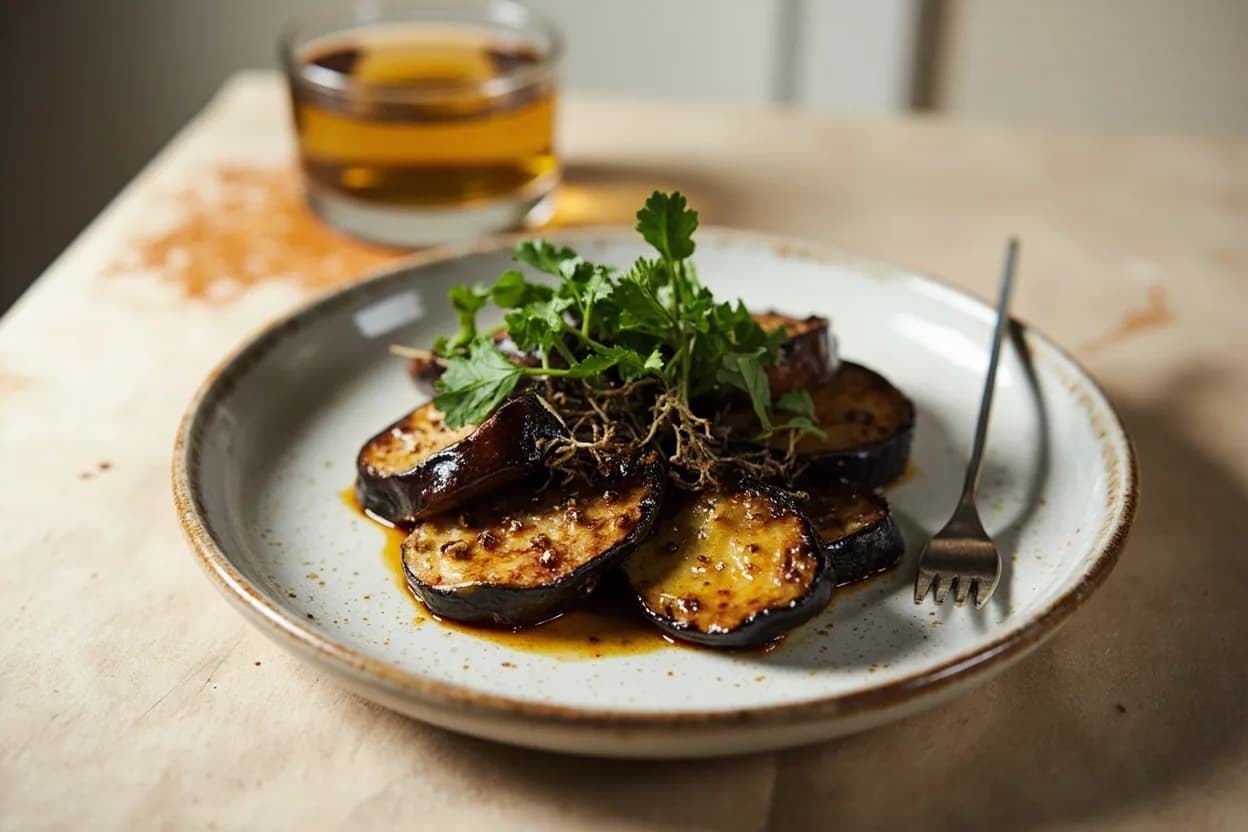
Charred eggplant's smoky, sweet flesh absorbs a douchi-garlic-oil dressing spectacularly — a modern Chinese-influenced preparation that borrows from Middle Eastern babaganoush logic.
- Eggs
Douchi scrambled eggs or a douchi egg-drop soup achieve an extraordinary savoury depth — the yolk's lecithin carries and distributes the fermented flavour throughout the dish.
- Pasta (long noodles, bucatini)
Used as a base for a Chinese-Italian fusion pasta sauce — douchi, garlic, dried chilli, and olive oil applied to spaghetti or bucatini mirrors the logic of the Italian southern anchovy-garlic-chilli pasta but with a different umami register.
- Lamb
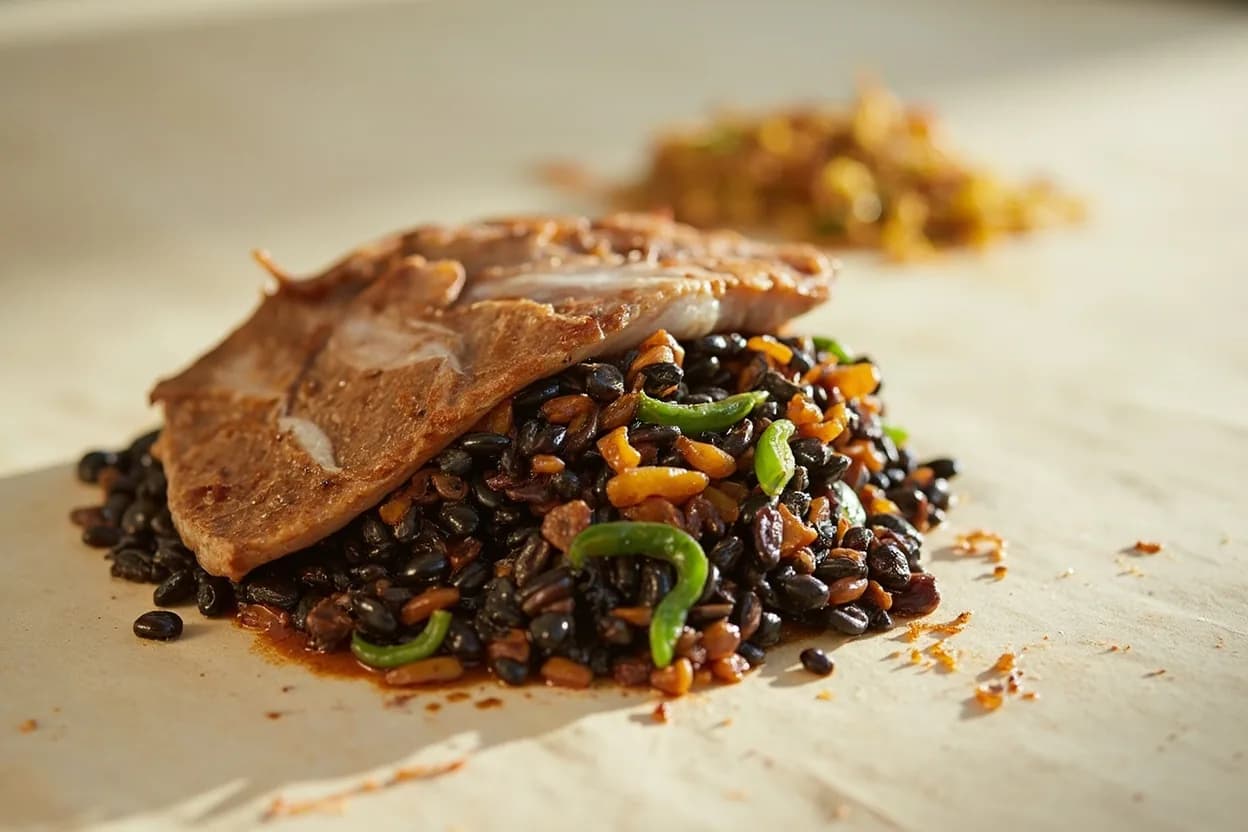
Lamb's lanolin fat and gamey depth can hold up to douchi's earthiness — a Chinese northwest (Xinjiang-influenced) approach uses fermented black bean in braised lamb with cumin and chilli.
- Avocado
A modern fusion approach — douchi bruised into a dressing with rice wine vinegar and sesame oil over sliced avocado: the fat of the avocado smooths the salt-funk while the freshness contrasts.
Tread carefully
- Delicate fresh herbs (cilantro used as primary)avoid
Douchi's aggressive savoury-earthy character masks and flattens the brightness of delicate fresh herbs; add herbs only at the end and in generous quantity to reassert them.
- Subtle white wine sauces (beurre blanc, velouté)avoid
The fermented funk and salt of douchi will completely dominate and destabilise delicate French butter-wine emulsions — these flavour worlds do not meet.
- Sweetened dishes (teriyaki-style)avoid
While douchi tolerates a little sweetness (as in mapo tofu), heavy sugar coatings overwhelm its complex umami character and reduce it to flat saltiness.
How to use it
- Rinse lightly under cold water and chop or crush before use to reduce salinity and release more aroma
- Fry in oil for 30–60 seconds before adding other aromatics — blooming activates and deepens the fermented flavour
- Use whole for steamed dishes where they will soften and perfume the steam (as in steamed fish and spare ribs)
- Mash with garlic and oil into a quick paste as an all-purpose stir-fry base
- Add to braising liquids near the start of long-cooked dishes for deep background umami
- Combine with doubanjiang (Sichuan chilli bean paste) in a 1:2 ratio for a complete Sichuan-style flavour base
Appears in
Related flavours
- Doubanjiang (Sichuan chilli bean paste)
Frequently combined with douchi — doubanjiang adds chilli-fermented heat; douchi adds pure savoury depth without the spice
Another Cantonese umami condiment often used in the same dishes — oyster sauce is sweeter and less complex; douchi is earthier and more pungent
- Miso (shiro/aka)
Japanese fermented soybean equivalent — douchi's Chinese cousin; shared glutamate depth, different production method and texture
References
- 1.Every Grain of Rice: Simple Chinese Home Cooking — Fuchsia Dunlop (Bloomsbury, 2012)
- 2.Land of Plenty: A Treasury of Authentic Sichuan Cooking — Fuchsia Dunlop (W. W. Norton, 2003)
- 3.The Food of China — E. N. Anderson (Yale University Press, 1988)
Confidence: high
Notes
History and provenance
Douchi appears in Han Dynasty Chinese texts (around 200 BCE) and is among humanity's oldest recorded fermented condiments. The production tradition is strongest in Hunan, Guangdong, and Sichuan provinces, where different regional styles exist. Yangjiang, Guangdong, produces the most widely exported variety — the Yangjiang black beans found in most Western Chinatown markets.
Not the same as black bean paste
Jarred 'black bean sauce' and 'black bean garlic paste' are pre-seasoned commercial preparations that contain douchi along with sugar, garlic, soy, and oil. They can substitute for convenience but carry additional sweetness and less complexity than rinsed whole douchi. For purist Cantonese cooking, always start from whole dried fermented beans.