Aromatics & Roots
Garlic
Also: Allium sativum, ail, aglio, ajo, knoblauch
The world's most universal aromatic—pungent raw, sweet roasted, silky confit, and the foundation of almost every savory cuisine on earth.
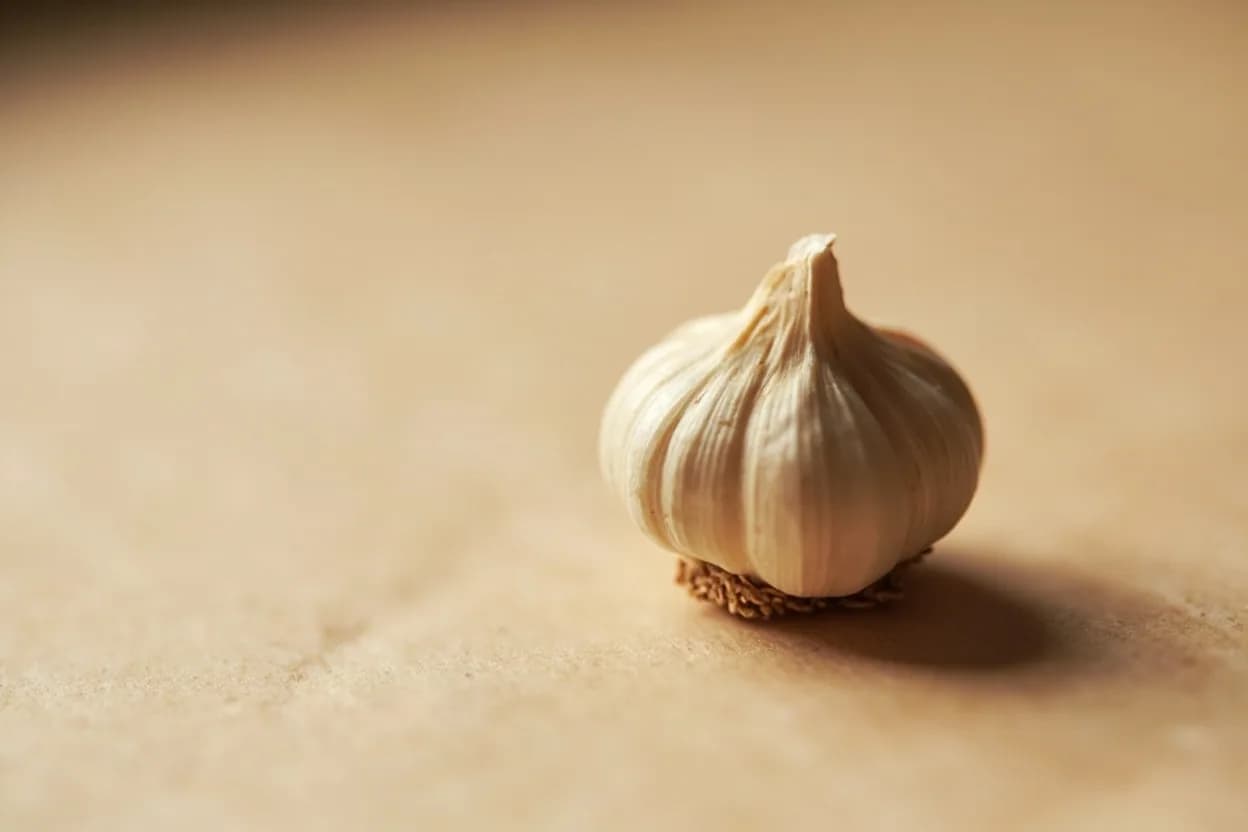
Garlic is a bulbous allium whose flavor changes radically with preparation. Raw, crushed garlic produces allicin—a sulfur compound with sharp, pungent heat—via enzymatic reaction. That same garlic, slowly roasted or confited in oil, converts harsh sulfur compounds to sweet, caramelized, nutty ones through Maillard reactions and slow hydrolysis. Sautéed briefly in oil, it lands in the middle: golden, mellow, savory, and fragrant. This spectrum of a single ingredient from fierce to gentle makes garlic the most versatile aromatic in global cooking—present in some form in virtually every cuisine from Korean doenjang-jjigae to Italian aglio e olio to Provençal aioli to Georgian khachapuri.
In photos
Flavour profile
Classic pairings
- Olive oilItalian / Spanish / Provençal
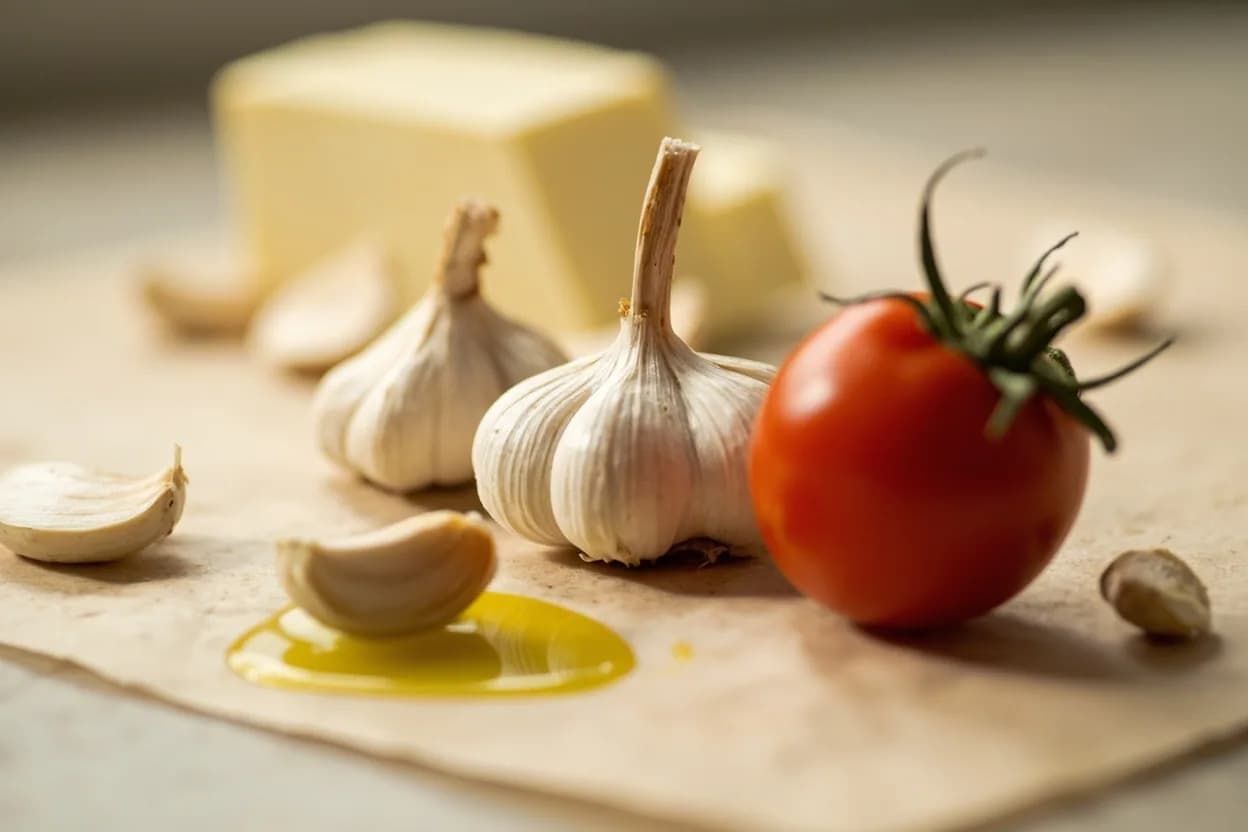
The foundational pairing of Mediterranean cooking: soffritto, aglio e olio, aioli, alioli. Fat carries garlic's fat-soluble volatiles and mellows its edge.
- TomatoItalian / Spanish / Middle Eastern
Glutamates in tomato and garlic's sulfur compounds are mutually amplifying; every pasta sauce, shakshuka, and Spanish sofrito depends on this duo.
- ButterFrench / Indian / American
Garlic butter is global—from French escargots to Indian tadka (browned in ghee) to American steakhouse finishing butter. Dairy fat tames the pungency.
- LemonGreek / North African / Middle Eastern
Acid brightens garlic's richness; the pairing is the structural DNA of skordalia, gremolata, chermoula, and countless dressings.
- ChiliChinese / Korean / Thai / Indonesian
Garlic and chili together form the backbone of virtually every Asian stir-fry, sambal, and hot sauce. The two are amplifying—heat highlights savory depth.
- RosemaryItalian / Provençal
The classic herb pairing for lamb, roast chicken, and focaccia; rosemary's camphorous pine notes cut through garlic's sulfur without competing.
- LambMiddle Eastern / Greek / French
Garlic's pungency is one of the few aromatics strong enough to stand against lamb's lanolin-heavy fat; the pairing is ancient and global (Middle Eastern, Greek, French).
- GingerIndian / Chinese / Korean
The essential allium-rhizome duo of South and East Asian cooking; together they form the base of countless curries, stir-fries, and broths.
Adventurous pairings
- Honey
Fermented garlic in honey (a pantry staple across Korea and traditional European apothecary) produces a pungent-sweet syrup used in glazes, dressings, and shots.
Roasted garlic and dark chocolate share deep Maillard notes; adventurous chocolatiers have used roasted garlic in 70%+ ganaches where it reads as an earthy, mysterious depth.
- Strawberry
Black garlic's sweet, balsamic character harmonizes with strawberry's acid-sugar balance in a vinaigrette or macerated berry preparation—the approach of modernist kitchens.
In some North African and Middle Eastern traditions, garlic appears in spice rubs for lamb alongside coffee; roasted bitterness and garlic umami amplify each other in dry rubs.
Raw garlic and tahini in hummus is foundational; roasted garlic deepens the pairing further, creating a nutty-savory dip that needs no other seasoning.
Tread carefully
- Very delicate white fish (Dover sole, sea bream ceviche)avoid
Raw garlic's allicin aggressively masks the oceanic sweetness of delicate fish; lemon, dill, or shallot serve these preparations better.
- Fine aged white Burgundy / Champagne pairingsavoid
Strongly sulfurous raw garlic and mineral-driven sparkling wines fight on the same aromatic channel; the wine's complexity is obliterated.
How to use it
- Mince and rest 10 minutes before adding to raw applications—allicin continues forming after cutting, maximizing pungency.
- Add to cold oil and heat slowly together (Chinese pai gu method) to infuse without burning.
- Roast whole heads cut-side-down at 200°C for 40 minutes; squeezed-out paste is sweet, spreadable, and mild enough to eat alone.
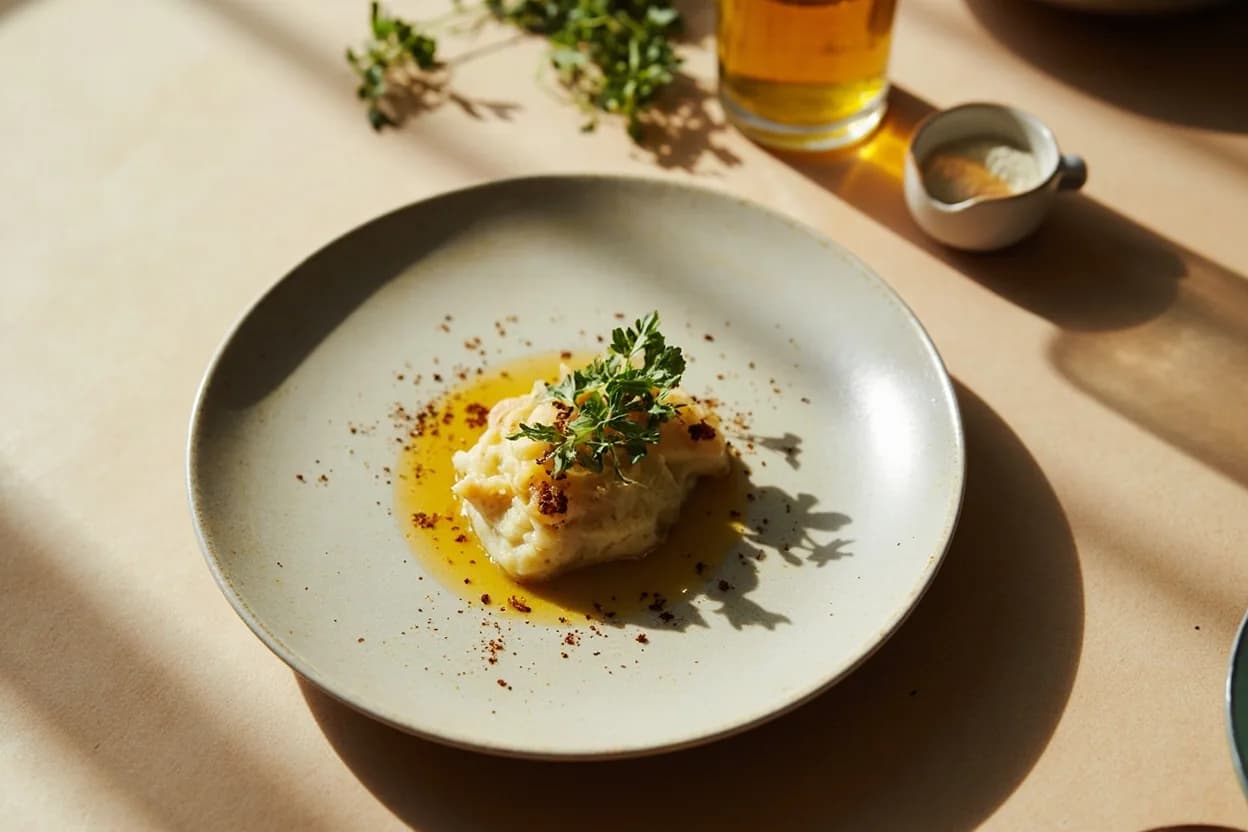
- Confit in olive oil at 80–90°C for 1 hour for silky, translucent cloves with no raw bite; the oil becomes a priceless garlic oil.
- Grate on a Microplane for the finest, most evenly dispersed raw garlic in dressings, aioli, and marinades.
- Blooming in ghee or oil is the standard Indian tadka technique: cook momentarily until fragrant and golden—not burnt, which turns bitter.
Appears in
Related flavours
More delicate allium that can replace garlic in preparations where subtlety is needed; shares the allium flavor family.
Fermented garlic with all pungency cooked out; sweet, umami, balsamic—a transformed version of the same ingredient.
- Onion
Garlic and onion are the two pillars of virtually every savory mirepoix, soffritto, or aromatic base; they build depth together.
References
- 1.On Food and Cooking — Harold McGee
- 2.The Flavor Bible — Karen Page & Andrew Dornenburg
- 3.Salt, Fat, Acid, Heat — Samin Nosrat
- 4.Garlic and Sapphires — Ruth Reichl
Confidence: high
Notes
Raw vs. cooked: two entirely different ingredients
The allicin in raw garlic is produced only when cell walls are broken—and it begins converting immediately. A gentle sauté transforms it into milder diallyl disulfide and polysulfides. Slow roasting converts pungent sulfur compounds to sweet, nutty ones via Maillard chemistry. A cook who treats garlic as a single ingredient misses most of its range.
The 10-minute rule for raw applications
Letting crushed or minced garlic rest for 10 minutes before adding heat or acid allows allicin formation to complete; then the acid 'locks' the level, preserving that raw punch in vinaigrettes and ceviche. This is why pressing garlic into a cold dressing and waiting yields more flavor than adding it to warm oil first.