Aromatics & Roots
Black Garlic
Also: fermented garlic, aged garlic, ajo negro
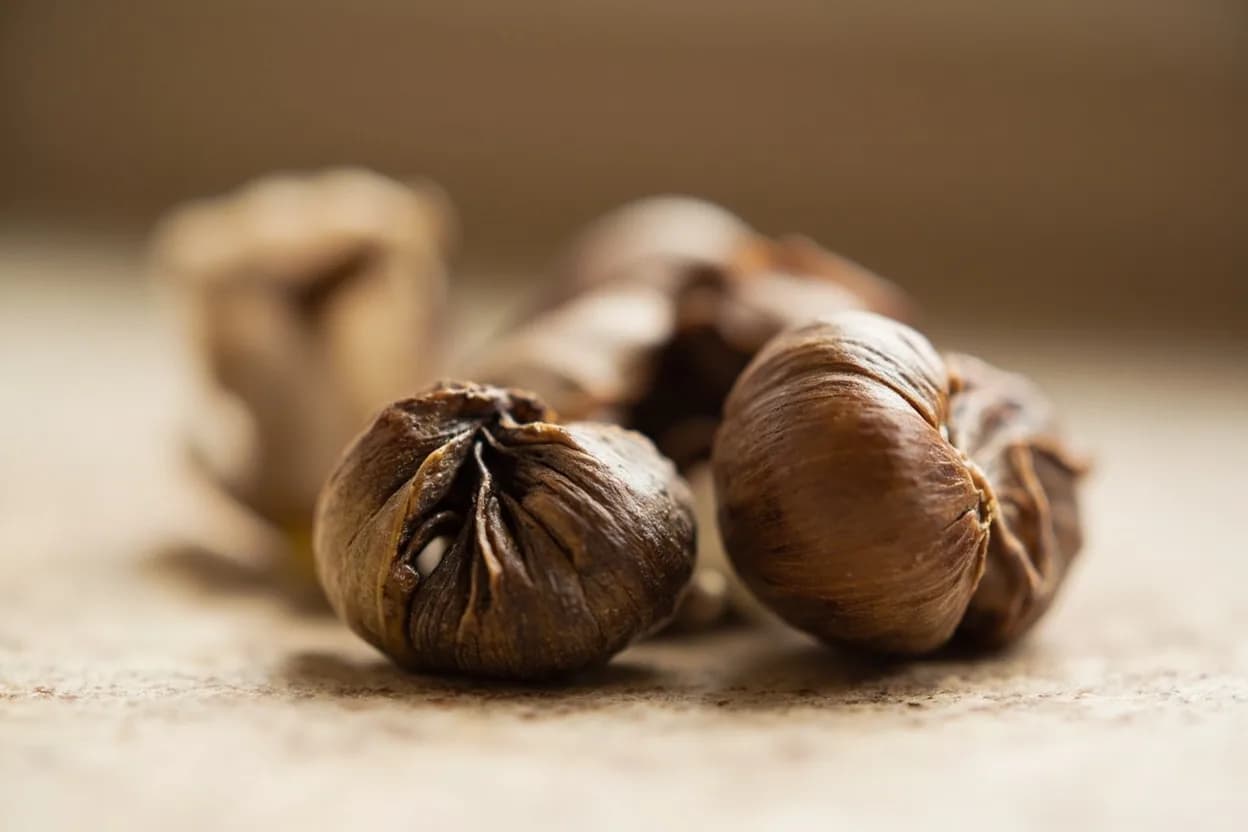
Garlic transformed by slow heat into something sweet, molasses-dark, and deeply umami—with none of its raw pungency.
Black garlic is produced by holding whole garlic bulbs at 60–80°C in high humidity for several weeks to months—a controlled Maillard and Amadori reaction process (not fermentation in the microbial sense, despite the common name). The result is a dramatic transformation: sharp allicin converts to S-allyl cysteine and other stable compounds, eliminating raw pungency entirely. The cloves turn inky black, the texture becomes dense and chewy like a soft dried fruit, and the flavor develops into a complex sweet-savory profile with notes of molasses, balsamic vinegar, tamarind, and dark dried fruit. Umami is pronounced. Black garlic originated in Korea (fermented black garlic) and is now produced across East Asia, Spain (ajo negro), and increasingly globally. It requires no cooking to use.
In photos
Flavour profile
Classic pairings
- Steak and red meatModern Western / Korean barbecue
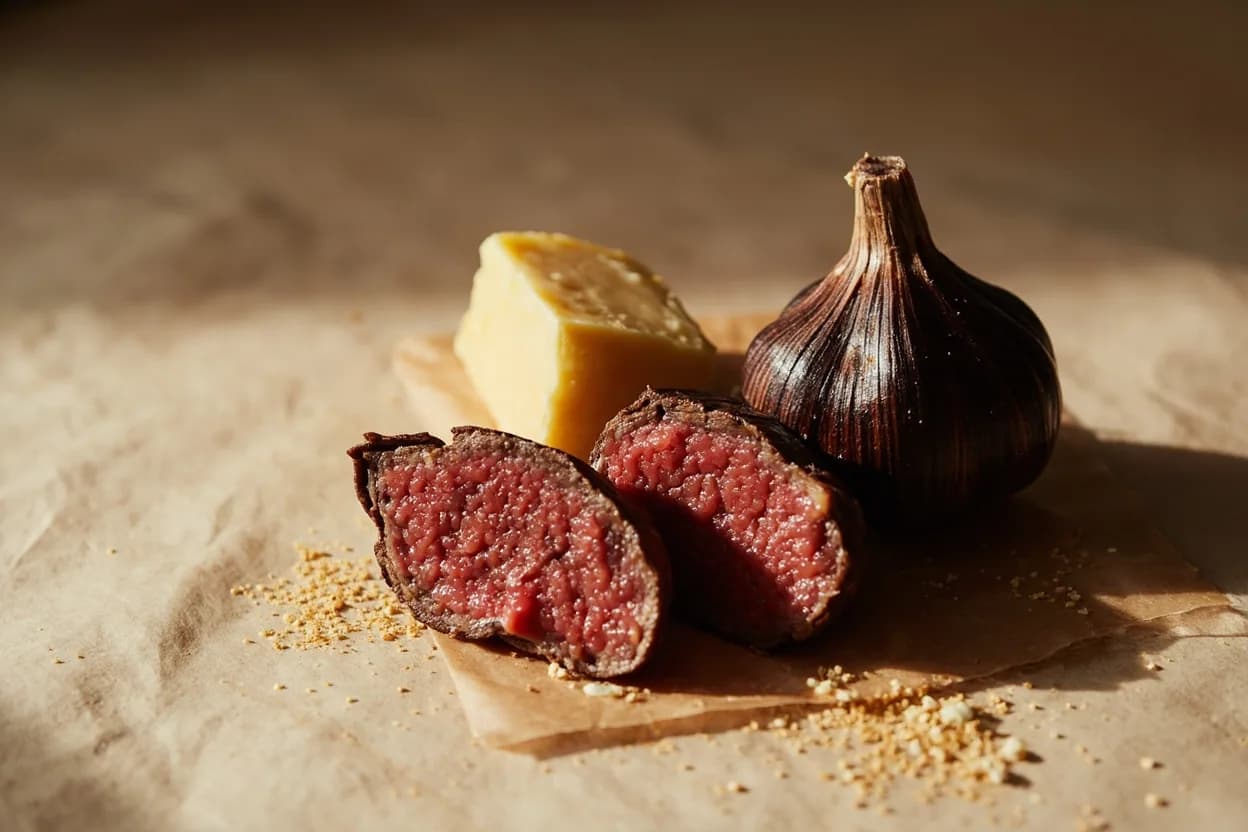
Black garlic's molasses-umami depth amplifies the Maillard crust on beef; it works as a compound butter, aioli, or purée swiped under or over grilled steak.
- ButterModern European
Mashed into softened butter with thyme and flaky salt, black garlic creates one of the most versatile compound butters—equally at home on bread, steak, or roasted vegetables.
- TahiniModern / Middle Eastern
Sesame's roasted bitterness and black garlic's sweet-umami work like a yin-yang; the combination produces a compelling dip or dressing that needs little else.
- MushroomsModern / Italian / Japanese
Both are glutamate-rich and earthy; black garlic stirred into mushroom risotto, ramen broth, or a mushroom cream sauce creates extraordinary layered umami.
- Aged cheeses (Parmigiano, aged Manchego)Modern
Crystalline, intensely savory aged cheeses share the Maillard and amino acid depth of black garlic; a black garlic vinaigrette over a cheese plate or stirred into a fondue is revelatory.
- MisoModern / Japanese-fusion
Two fermented umami bombs whose combined depth far exceeds their parts; used together in glazes, marinades, and dressings for chicken, salmon, and tofu.
Adventurous pairings
- Strawberry
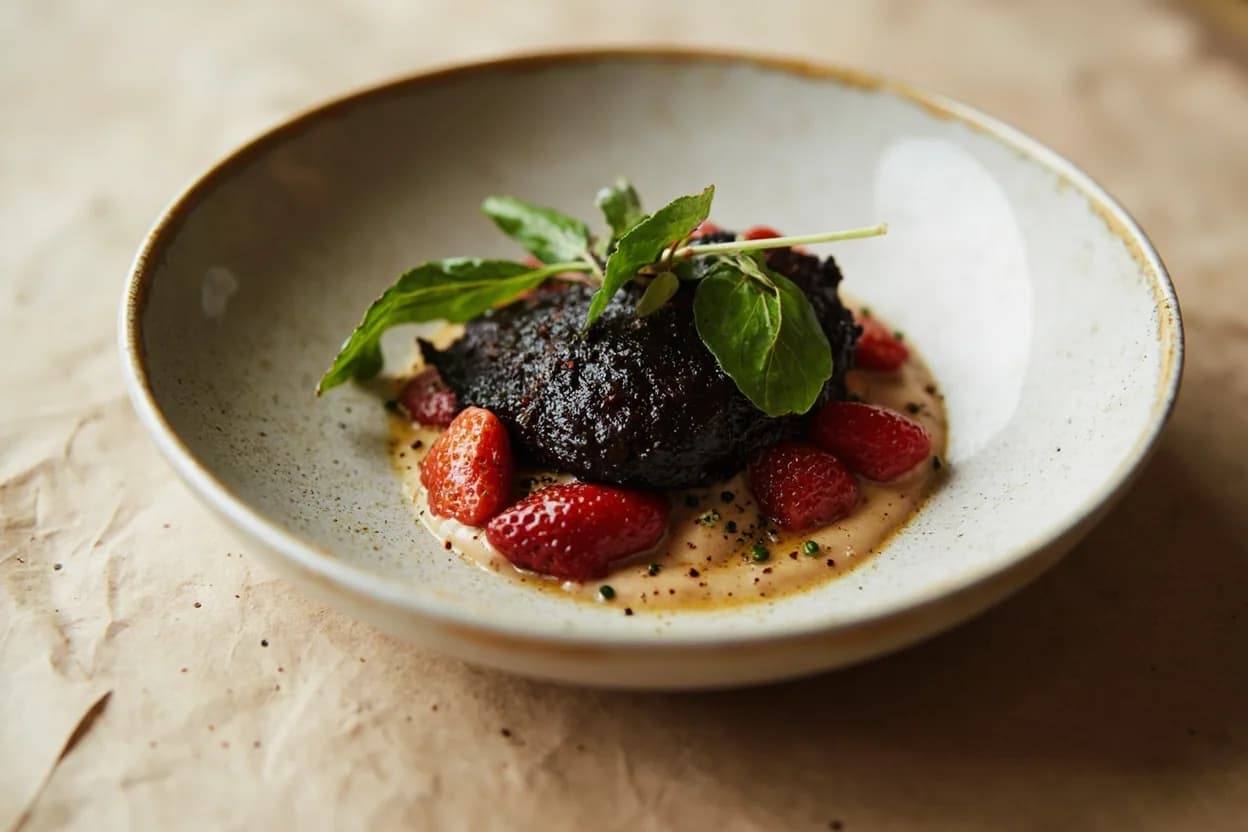
Black garlic's balsamic-sweet character resonates with strawberry's acid-sugar fragrance; a black garlic vinaigrette over macerated strawberries or in a strawberry salad with burrata is a modern-kitchen surprise.
Both share Maillard-derived bitterness, fudge sweetness, and deep color; black garlic ganache or truffle centers have appeared in modernist pastry.
- Vanilla ice cream
A black garlic caramel sauce spooned over vanilla ice cream provides a savory-sweet-umami counterpoint that reads as 'complex' rather than 'garlicky'—a restaurant dessert move.
Both are fermented, umami-dense, and deeply colored; combining them in a glaze for chicken wings or salmon doubles the savory signal without either dominating.
- Citrus (blood orange, lemon)
Acid lifts black garlic's dense, heavy sweetness; a black garlic-citrus vinaigrette has the brightness of a fresh dressing with unexpected savory depth.
Tread carefully
- Delicate herb sauces (béarnaise, salsa verde)avoid
Black garlic's intensity overwhelms the finesse of fresh herb sauces; its deep sweet-umami clashes with the bright, acidic structure these sauces depend on.
- Fresh, delicate seafood (raw oysters, sashimi)avoid
The molasses depth and umami density of black garlic mask the oceanic freshness that makes raw seafood worth eating.
- Aggressively sweet dessertsavoid
In overtly sweet applications (frosting, very sugary cakes), the savory-umami edge of black garlic reads as off-note rather than intriguing—it needs some contrast to land.
How to use it
- Smash cloves into a fine paste with the flat of a knife—they soften easily without a garlic press.
- Purée with olive oil, lemon, and salt for a ready-made black garlic aioli that keeps refrigerated for two weeks.
- Stir a single clove into finished risotto, pasta sauce, or ramen broth for a background umami layer that no one will identify as garlic.
- Make compound butter by mashing 4–6 cloves into 125g softened butter with thyme; roll in cling film, refrigerate, slice to order.
- Add whole cloves to a braise liquid in the last hour; they dissolve into silky richness without any harsh garlic note.
- Use as a pizza topping partner with mozzarella and roasted tomato—the sweetness and smoke harmonize where raw garlic would clash.
Appears in
Related flavours
The same ingredient before transformation; raw garlic is pungent and sharp while black garlic is sweet, umami, and mild—a study in cooking chemistry.
- Balsamic vinegar
Shares the sweet-sour-deep profile of aged reduction; can substitute for or amplify black garlic's balsamic notes in dressings.
Black garlic's dried-fruit acidity closely mirrors tamarind's sour-sweet depth; they share pairing contexts in meat glazes and dipping sauces.
References
- 1.The Flavor Bible — Karen Page & Andrew Dornenburg
- 2.Modernist Cuisine — Nathan Myhrvold et al.
- 3.On Food and Cooking — Harold McGee
- 4.Fermentation as Metaphor — Sandor Ellix Katz
Confidence: high
Notes
Not actually fermented
Despite the common label 'fermented black garlic,' the transformation is primarily driven by Maillard reactions and enzymatic activity under controlled heat and humidity—not microbial fermentation. No bacteria or yeast are involved. The distinction matters: black garlic does not have the probiotic properties of truly fermented foods, though its S-allyl cysteine concentration is higher than raw garlic and may have antioxidant benefits.
Korean origins and global spread
Black garlic emerged in Korean cuisine and traditional medicine in the early 2000s under the name heukmanil, initially marketed for health benefits. Its culinary potential was picked up by modernist chefs in Europe and North America around 2010, and it has since become a staple in restaurant pantries globally—particularly favored as a way to add garlic depth to dishes where raw garlic's pungency would be unwelcome.