Spices & Dried Aromatics
Black Cardamom
Also: Amomum subulatum, badi elaichi, kali elaichi, Nepal cardamom, brown cardamom
The smoky, camphor-breathed giant of Indian whole spices — essential to biryanis and braises, never to desserts.
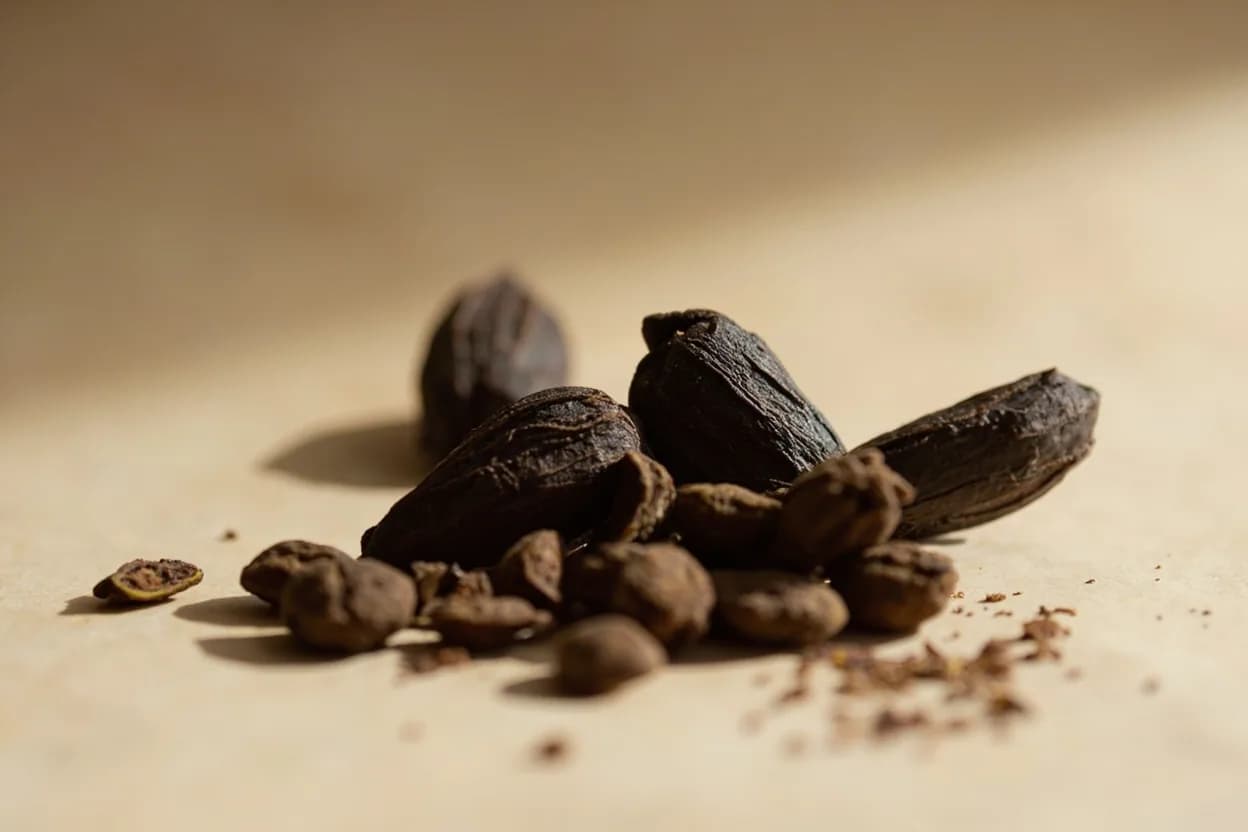
Black cardamom is the dried, smoke-cured pod of Amomum subulatum, a large cardamom species native to the eastern Himalayas. Unlike its green cousin, it is never used in sweets — its flavor is dominated by eucalyptus-camphor volatiles, charred smokiness from traditional wood-fire drying, and a cooling menthol finish with earthy bass notes. It appears predominantly in North Indian whole-spice blends (garam masala), biryanis, and long-braised meat dishes, where it functions as a structural bass note rather than a featured flavor.
In photos
Flavour profile
Classic pairings
- Basmati rice (biryani)North Indian / Mughal
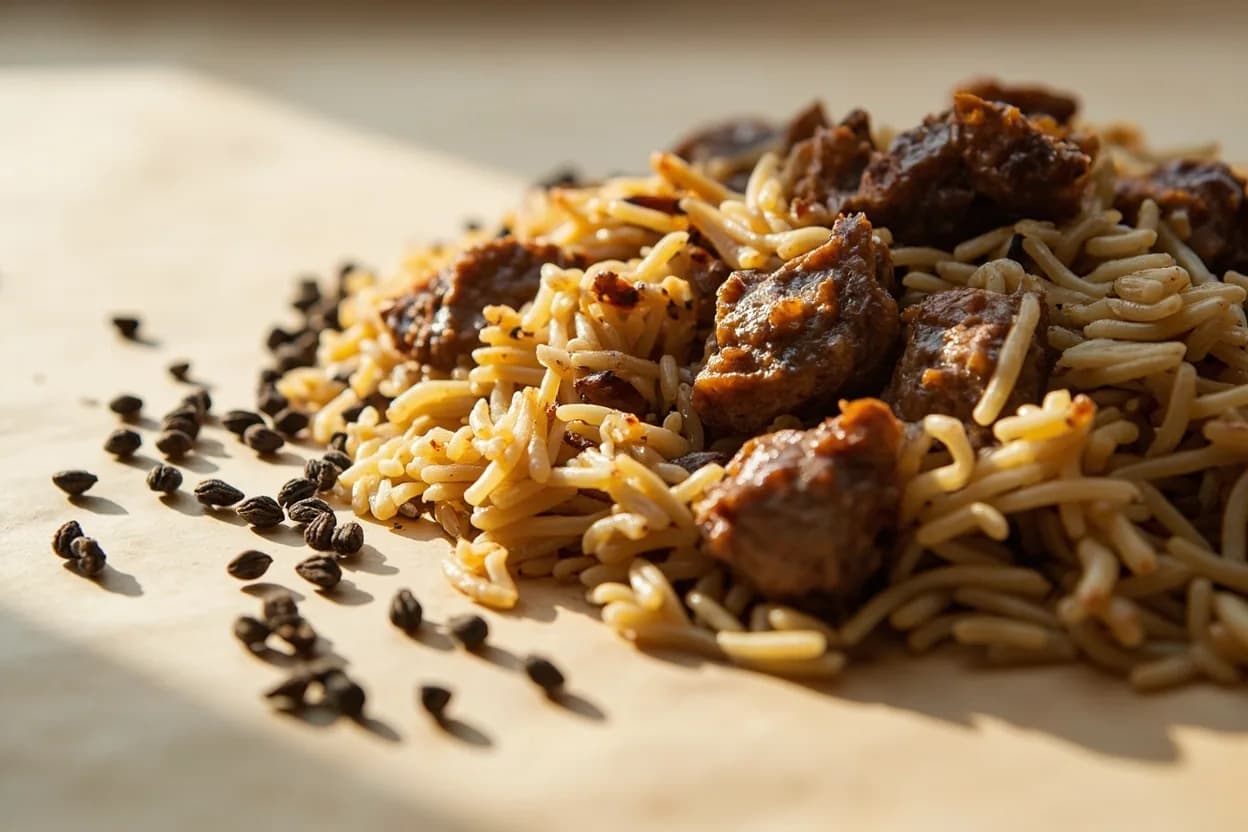
Black cardamom is a non-negotiable whole spice in dum biryani — bloomed in hot ghee, it infuses the rice with smoky-camphor depth that permeates the entire dish without appearing in individual bites.
- LambNorth Indian / Kashmiri
The camphor-smoke of black cardamom is uniquely suited to fatty, gamey lamb — it cuts through richness and complements the meat's mineral depth. Appears whole in rogan josh, nihari, and Kashmiri preparations.
- GheeIndian
Blooming whole black cardamom pods in ghee extracts the cineole-camphor compounds into the fat, creating an aromatic base that carries the spice's character through the entire dish.
- Whole clovesIndian / Pakistani
Black cardamom and cloves are paired in almost every North Indian whole-spice blend — both are resinous and powerful, and clove's eugenol warmth bridges the gap between black cardamom's smoke and the other aromatics.
- Chickpeas (chole)Punjabi
In Punjabi chole, black cardamom provides the smoky depth that distinguishes the authentic dish from pale imitations — the pod is simmered whole then discarded, leaving ghostly backbone flavor.
- Black lentils (dal makhani)North Indian
The long overnight simmer of dal makhani extracts the full smoky-camphor character of black cardamom into the creamy, buttery lentils, giving them their characteristic restaurant-quality depth.
- Cinnamon (cassia bark)Indian / Pakistani
The classic whole-spice pairing in garam masala and biryani: cassia's warm sweetness anchors and softens black cardamom's hard camphor edge, creating a more rounded aromatic profile.
Adventurous pairings
- Smoked meats
Black cardamom's wood-smoke drying amplifies and harmonizes with the char of smoked brisket or pulled pork — try grinding it into a spice rub alongside cumin and coriander for a South Asian-inflected barbecue crust.
- Dark beer (stout or porter)
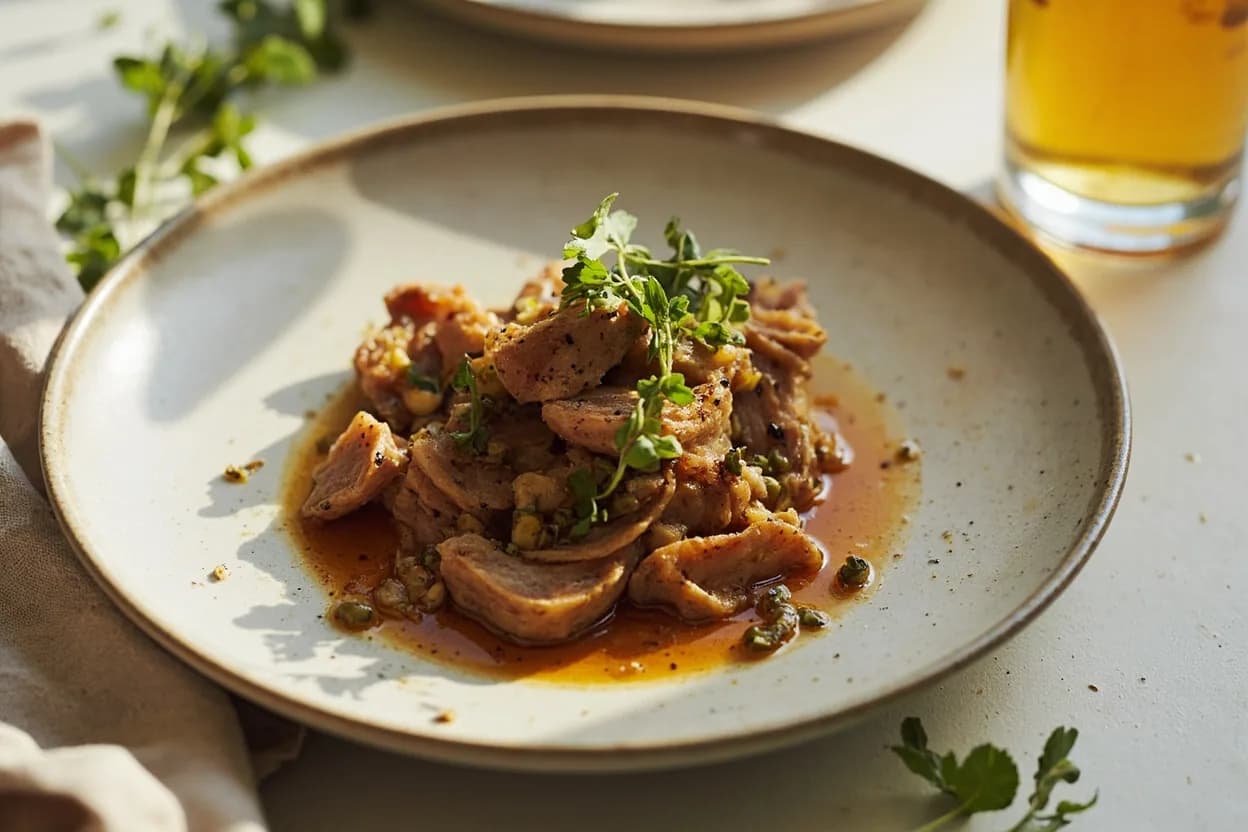
The roasted grain and slight bitterness of a stout mirrors black cardamom's char and camphor; steeping a cracked pod in imperial stout or porter reductions produces a complex glaze for duck or venison.
- Root vegetables (celeriac, parsnip)
Roasting celeriac with a cracked black cardamom pod introduces camphor-smoke notes that transform the vegetable's earthy sweetness into something far more complex and unexpected.
- Aged soy sauce or tamari
Black cardamom's umami-adjacent earthiness aligns with the deep fermented notes of aged soy — infuse in a reduction with star anise for a cross-cultural braising liquid.
Tread carefully
- Sweet desserts and pastriesavoid
Unlike green cardamom, black cardamom's camphor-smoke character is aggressively savory and medicinal — it turns desserts harsh and unpleasant. Never use interchangeably with green cardamom in sweets.
- Delicate fish and shellfishavoid
The penetrating camphor volatiles overwhelm the sweetness of prawns, scallops, or white fish — the spice simply bulldozes any subtlety in these proteins.
- Fresh salads and raw preparationsavoid
Black cardamom's character only fully develops through heat and time — raw or cold applications produce a harsh, medicinal taste rather than the rounded smokiness achieved through cooking.
How to use it
- Always use whole pods — lightly crush before adding to activate surface oils
- Bloom in hot ghee or oil for 30–60 seconds before adding other ingredients
- Simmer whole in biryanis and braises; remove before serving (it is not eaten whole)
- Grind seeds (not pods) for garam masala blends — use sparingly, it is overpowering
- Dry-toast whole pods on a tawa before grinding to intensify the smokiness
- Crack the pod and steep in hot stock or braising liquid to extract flavor without grinding
Appears in
Related flavours
The fragrant, sweet sibling — shares the cardamom family but occupies an entirely different flavor register and culinary domain (sweets vs. savory)
A distinct species with overlapping camphor notes but more citrus character; similarly used in savory stews and spice blends
- Cloves
The closest flavor companion in North Indian whole-spice cookery — both are resinous and powerful, used in the same contexts
Cassia or Ceylon cinnamon invariably accompanies black cardamom in biryani spice clusters and garam masala
References
- 1.The Flavor Bible — Karen Page & Andrew Dornenburg
- 2.Indian-ish — Priya Krishna
- 3.Spices, Salt and Aromatics in the English Kitchen — Elizabeth David
- 4.The Oxford Companion to Food — Alan Davidson
- 5.Biryani — Pratibha Karan
Confidence: high
Notes
Not a substitute for green cardamom
This is perhaps the most important thing to know about black cardamom: it cannot be swapped for green cardamom in any application. The two spices share a name and genus-level botanical family but virtually nothing else — black cardamom's camphor-smoke character would ruin a rice pudding or chai the same way green cardamom would be lost and inappropriate in a biryani. Treat them as entirely different spices.
The smoking process
The characteristic smokiness of black cardamom comes from traditional kiln or fire-drying of the pods after harvest, a process that chars the outer husk while preserving the seeds inside. The cineole (eucalyptol) content of the seeds is what produces the cooling-camphor effect, while the smoke adds a charred bass note unique among cardamom species.