Spices & Dried Aromatics
Green Cardamom
Also: Elettaria cardamomum, choti elaichi, true cardamom, chhoti elaichi, Guatemala cardamom
The queen of spices — intensely floral, citrus-warm, and sweet enough to bridge desserts and biryanis with equal authority.
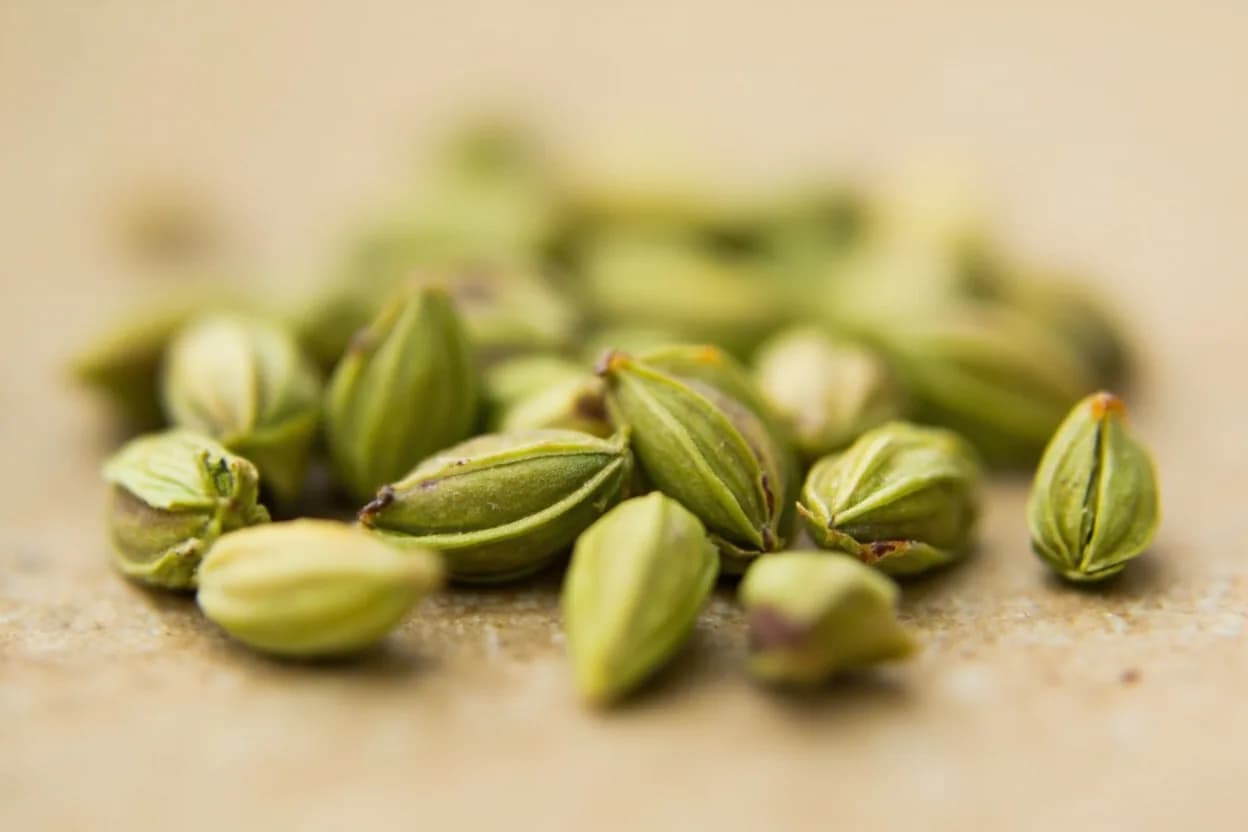
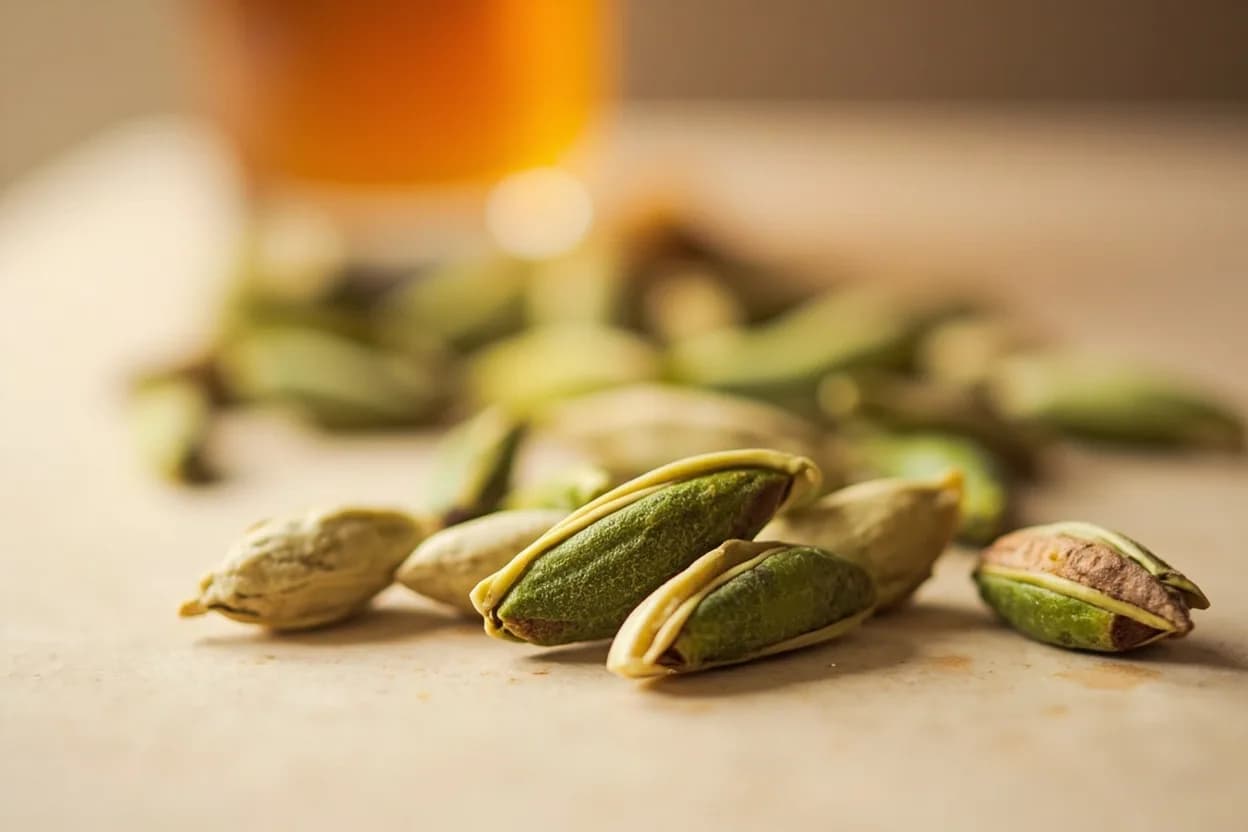
Green cardamom (Elettaria cardamomum) is the dried fruit of a ginger-family plant native to southern India's Western Ghats, now grown primarily in India, Guatemala, and Sri Lanka. Its small green pods contain clusters of dark seeds whose flavor is extraordinary: sweet, floral, and intensely aromatic with strong citrus-bergamot character, a warm spice undertone, and a clean eucalyptol finish. It is one of the world's most expensive spices by weight, used with discipline across South Asian, Middle Eastern, and Scandinavian cuisines in both sweet and savory applications.
In photos
Flavour profile
Classic pairings
- Chai (spiced tea)Indian
Green cardamom is the aromatic spine of masala chai — its floral-citrus warmth marries with ginger's heat, cinnamon's sweetness, and black tea's tannins to create the canonical Indian spiced tea.
- Rice (biryani and pulao)Mughal / North Indian
Whole green cardamom pods bloomed in ghee at the start of biryani perfume the rice with floral warmth — a Mughal technique that remains the backbone of Hyderabadi and Lucknowi biryani.
- Rose waterSouth Asian / Middle Eastern
The quintessential pairing in Middle Eastern and South Asian sweets — cardamom's bergamot-floral character amplifies rose water's fragrance without competing, creating layered perfumed depth in kheer, barfi, and gulab jamun.
- Coffee (qahwa and Turkish coffee)Middle Eastern / Gulf
In Arabian Gulf qahwa and throughout the Middle East, ground green cardamom is brewed directly with coffee — the floral spice cuts coffee's bitterness and adds a signature aromatic elegance.
- Butter and creamScandinavian
Cardamom's fat-soluble floral compounds bloom beautifully in dairy — it is the defining spice in Scandinavian cardamom buns (kardemummabullar) where it perfumes both the dough butter and the filling.
- PistachiosSouth Asian / Middle Eastern
The classic South Asian and Middle Eastern pairing — pistachio's green, resinous sweetness and cardamom's floral warmth create one of the great harmony combinations in confectionery, from kulfi to baklava.
- SaffronMughal / Persian
Saffron and cardamom are co-pillars of Mughal cuisine — saffron's honeyed metallic warmth and cardamom's floral-citrus create a paired aromatic register that appears in biryanis, kheers, and royal Indian sweets.
- Lamb (in slow-cooked korma)North Indian / Mughal
In korma and some biryani preparations, green cardamom's sweetness tempers lamb's gaminess, while its floral note lifts the richness of the cream or yogurt-based sauce.
Adventurous pairings
- Stone fruit (peach, apricot, plum)
Ground cardamom in stone-fruit jams, compotes, or tarts amplifies the fruit's floral-citrus register in ways that vanilla or cinnamon cannot — particularly transformative with roasted white peaches.
- White chocolate
White chocolate's vanilla-dairy sweetness provides a clean canvas for cardamom's floral intensity — infuse ground cardamom into white chocolate ganache or panna cotta for an unexpectedly elegant result.
- Cucumber
Both share a fresh, light volatile compound (aldehydes and terpenes); cardamom in a cucumber granita, lemonade, or raita elevates the vegetable's quiet sweetness into something more aromatic and complex.
- Aged Gruyère
The nutty, slightly sweet earthiness of aged Gruyère creates an unusual but successful dialogue with cardamom's floral warmth — a handful of ground cardamom in a cheese sauce or gougères produces surprising depth.
- Gin (cocktails and reductions)
Many botanical gins already include cardamom; reinforcing that note with fresh-ground seeds in a syrup or infusion produces a harmonious, elegant cocktail base.
Tread carefully
- Heavy red meat braisesavoid
Green cardamom's delicate floral notes are overpowered by robust red wine braises or assertive beef preparations — use black cardamom instead for these applications.
- Smoked or strongly charred foodsavoid
Smoke and char compete with and flatten cardamom's volatile floral compounds; the subtle perfume is lost entirely against aggressive smokiness.
- Vinegary or very acidic preparationsavoid
High acid degrades the terpene-based aromatic compounds in cardamom quickly — add at the end or use sparingly in heavily pickled or acidic dishes.
How to use it
- For whole-spice cooking: lightly crush pods to crack the husk before blooming in oil or ghee
- For baking and desserts: grind seeds alone (discard the papery husk) in a spice grinder just before use
- Infuse ground cardamom in warm cream or milk before adding to dessert bases — extracts aromatics fully
- Bloom whole pods at the very start of biryani in hot ghee before any other ingredient
- Store pods whole; ground cardamom loses volatiles within weeks — grind on demand
- A few seeds added to ground coffee just before brewing (not the pod) is the traditional Gulf method
Appears in
Related flavours
The smoky, camphor-forward savory counterpart — shares the cardamom name but occupies an entirely different culinary register
A larger species with more citrus and less floral sweetness; used in Ethiopian savory cooking where green cardamom rarely appears
The defining paired aromatic of Mughal cuisine — together they form the perfumed foundation of India's most luxurious rice and dessert traditions
Green cardamom's most natural companion in sweets — both are floral, both are used with restraint, and together they create layered perfumed depth
References
- 1.The Oxford Companion to Food — Alan Davidson
- 2.Jerusalem — Yotam Ottolenghi & Sami Tamimi
- 3.On Food and Cooking — Harold McGee
- 4.Prashad: Indian Vegetarian Cooking — Kaushy Patel
- 5.Spices: The History of a Temptation — Jack Turner
Confidence: high
Notes
The queen of spices
Black pepper is called the king of spices; green cardamom has long held the title of queen. The comparison is apt: where black pepper dominates with pungent heat, green cardamom rules through fragrance and complexity. It is one of the world's most expensive spices by weight, after saffron and vanilla, which explains why recipes specify it by the pod and cooks grind it on demand rather than buying it pre-ground.
Guatemala's dominance
Though native to India's Western Ghats, Guatemala now produces the majority of the world's green cardamom — a colonial-era introduction that has made the country the world's largest exporter. Indian-grown cardamom (particularly from Kerala) is generally considered superior in aromatic intensity and commands higher prices in specialist markets.