Spices & Dried Aromatics
Korarima (Ethiopian Cardamom)
Also: Aframomum corrorima, Ethiopian cardamom, false cardamom, korarima cardamom, enset cardamom
Ethiopia's native large cardamom — camphor-citrus with a forest-floor depth that anchors berbere, niter kibbeh, and the full spectrum of Ethiopian stews.
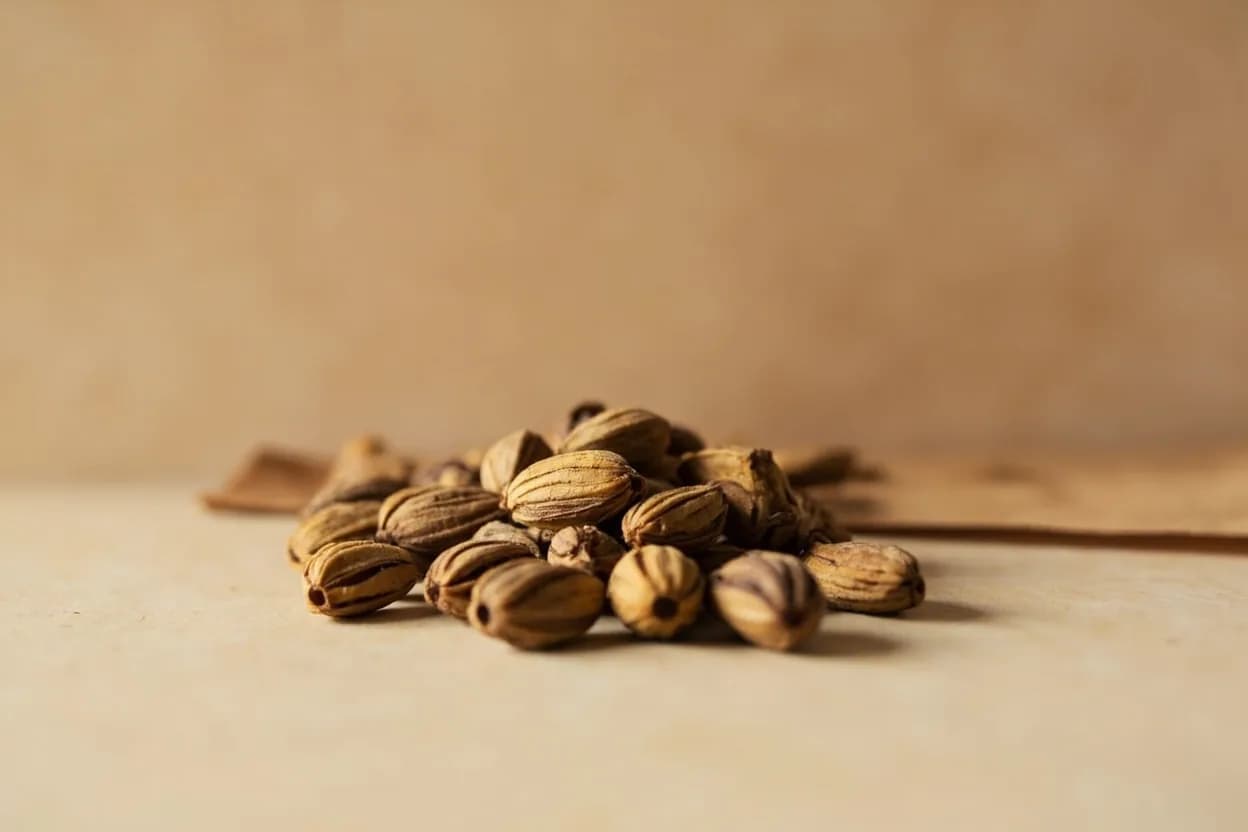
Korarima (Aframomum corrorima) is a large cardamom species indigenous to the highland forests of southwestern Ethiopia and Eritrea, where it grows wild and is also cultivated. The dried pods — larger and browner than green cardamom — contain small dark seeds with a distinctive flavor profile: citrus-bergamot freshness undercut by camphor, resin, and an earthy, almost forest-floor depth. It is the most important spice in Ethiopian cuisine, essential to berbere, mitmita, and niter kibbeh, and less well known internationally than its Indian cousins despite being a foundational flavor of a major culinary tradition.
In photos
Flavour profile
Classic pairings
- Berbere spice blendEthiopian
Korarima is a structural pillar of berbere — it provides the citrus-camphor top note that lifts the blend's heat and distinguishes Ethiopian berbere from other global chile-spice blends.
- Niter kibbeh (spiced clarified butter)Ethiopian
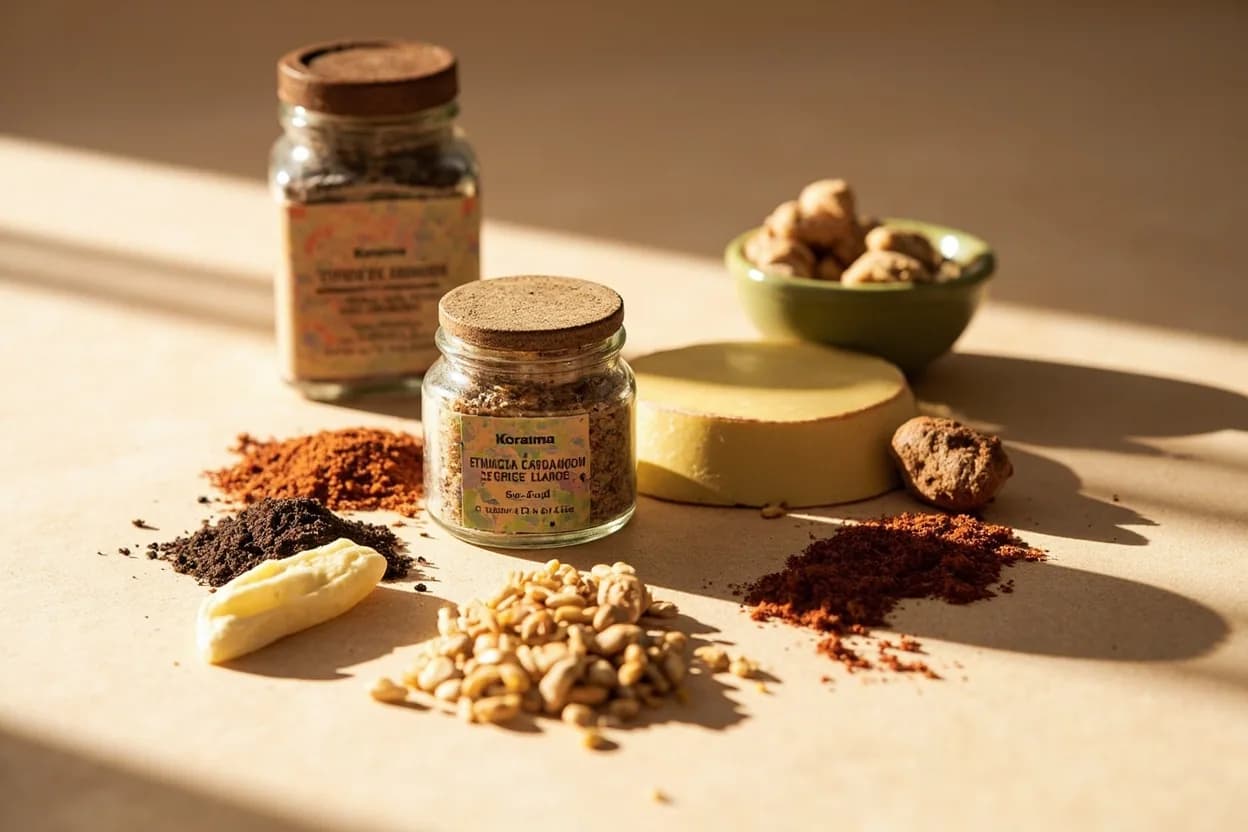
Korarima is simmered in niter kibbeh alongside black cumin, fenugreek, and onion — the spice's camphor-citrus character infuses the butter that seasons virtually every Ethiopian cooked dish.
- Lamb (tibs and stews)Ethiopian
Ethiopian lamb dishes rely on korarima's earthy-camphor note to anchor the richness of the meat — it appears in alicha (mild yellow stew) and more robustly spiced wat preparations.
- Lentils (misir wat)Ethiopian
The daily pulse stew of Ethiopia — korarima via berbere and niter kibbeh gives misir wat its characteristic depth that distinguishes Ethiopian red lentils from all other red lentil preparations worldwide.
- Coffee (Ethiopian coffee ceremony)Ethiopian
Korarima is the traditional spice addition to Ethiopian coffee, brewed directly in the jebena pot — the citrus-camphor note cuts coffee's bitterness and adds aromatic complexity in the same way green cardamom does in Arabic coffee.
- FenugreekEthiopian / Eritrean
In berbere and niter kibbeh, korarima and fenugreek are near-constant companions — fenugreek's bitter celery-maple note grounds and anchors korarima's more volatile citrus-camphor character.
- Chicken (doro wat)Ethiopian
The Ethiopian national dish depends on korarima alongside berbere and niter kibbeh — the spice's brightness lifts the long-braised chicken's richness and integrates with the hard-boiled eggs that accompany it.
Adventurous pairings
- Sweet potato
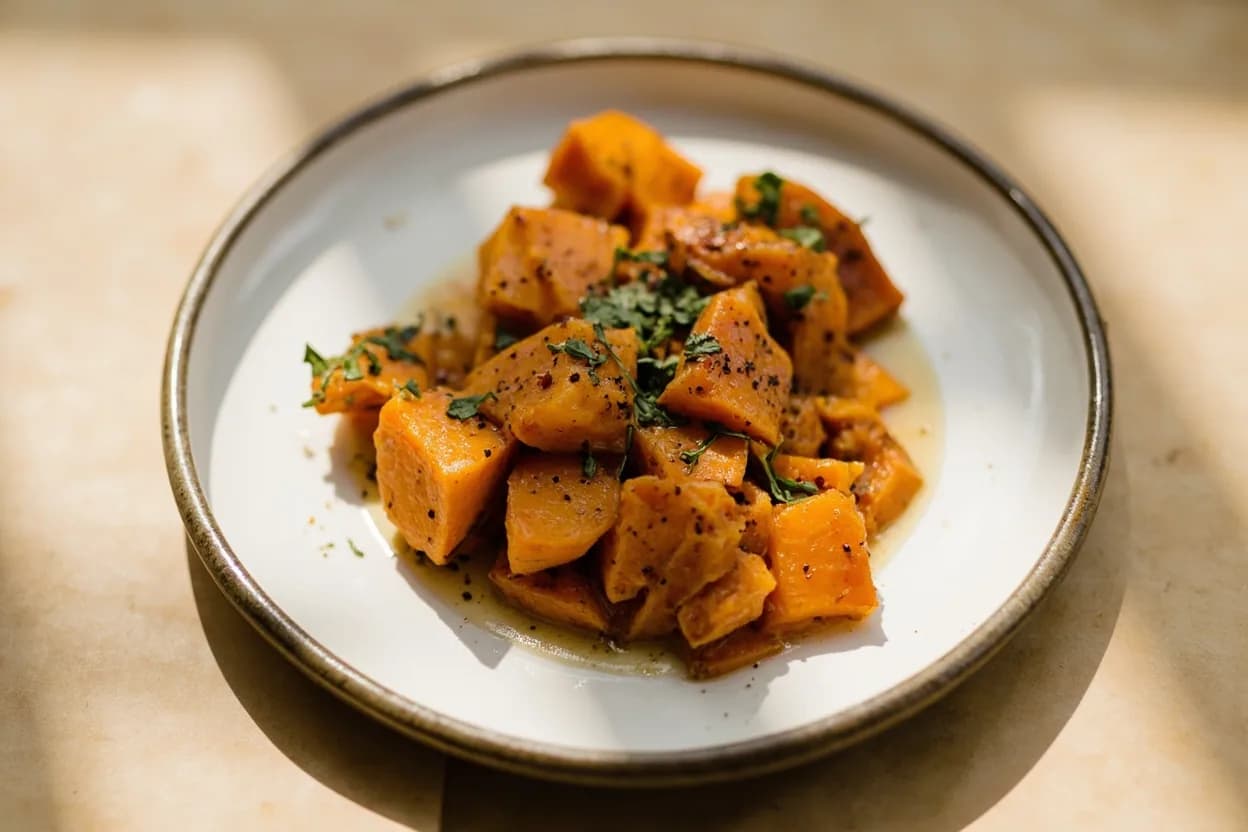
Korarima's citrus-camphor register cuts through the cloying sweetness of roasted sweet potato in a way that green cardamom does not — try it ground into a spice oil drizzled over roasted wedges.
- Dark honey (buckwheat or forest honey)
The earthiness of forest honey mirrors korarima's resinous, forest-floor depth; the combination makes an excellent glaze for poultry or a counterintuitive flavoring for a savory honey sauce.
- Aged goat cheese
Korarima's earthy resin and citrus top note find an unexpected partner in aged chèvre — the lactic tang and the spice's camphor create a complex, sophisticated board pairing or cheese-crust coating.
- Injera sourdough flatbread
While technically inseparable from Ethiopian food, korarima's interaction with injera's teff-sourdough ferment is worth understanding deliberately: the acidity of injera activates the spice's volatile citrus compounds, making each bite more aromatic.
Tread carefully
- Subtle European cream saucesavoid
Korarima's earthy-camphor intensity overpowers delicate beurre blanc or cream-based French sauces — the spice's resinous character has no anchoring counterpart in those preparations.
- Fruit-forward pastriesavoid
Unlike green cardamom, korarima's earthiness and camphor are too assertive for light fruit tarts or citrus cakes — the savory-resinous edge sits awkwardly in sweet, fruit-forward contexts.
How to use it
- Grind seeds (separated from the husk) into berbere or mitmita spice blends
- Simmer whole pods in clarified butter with aromatics when making niter kibbeh; strain out before use
- Toast whole pods in a dry pan before grinding to amplify the earthy-resinous depth
- Add seeds directly to Ethiopian coffee pot (jebena) during brewing in the traditional ceremony
- Use in the alicha (mild stew) spice base as the dominant aromatic in the absence of berbere
- Crack pods and steep in warm stock to add aromatic depth to braises without grinding
Appears in
Related flavours
The more widely known cousin — sweeter and more floral, used in South Asian and Middle Eastern cooking; not a direct substitute for korarima's earthier profile
Shares the camphor-resinous savory register; closer in culinary application to korarima than green cardamom, but comes from a different continent and spice tradition
Co-occurs in berbere blends; korarima provides the citrus-camphor lift while long pepper contributes slow-building resinous heat
Near-universal companion in Ethiopian cooking — the bitter, maple-celery earthiness of fenugreek grounds and complements korarima's citrus-camphor volatility
References
- 1.Feast: Food of the Islamic World — Anissa Helou
- 2.The Oxford Companion to Food — Alan Davidson
- 3.Culinaria Africa — Ingeborg Pils
- 4.Exotic Spices and Herbs — Tom Stobart
Confidence: high
Notes
Ethiopia's foundational spice
Korarima holds in Ethiopian cuisine the position that green cardamom holds in South Asian cooking and cumin holds in Mexican cooking — it is the characteristic background aromtic of an entire culinary tradition. Understanding Ethiopian food without korarima is impossible; it appears in the spiced butter that begins nearly every cooked dish, in the spice blend that defines the cuisine's heat, and in the coffee ceremony that is both a daily ritual and a social institution.
Distinguishing it from Indian cardamoms
Outside Ethiopia and Eritrea, korarima is frequently mislabeled as 'Ethiopian cardamom' and confused with Amomum subulatum (black cardamom) in international spice markets. The two are distinct: korarima has a more pronounced citrus character and a milder camphor note than black cardamom, and its earthiness is more vegetal and resinous than smoky. When a recipe specifically calls for korarima, the substitution of Indian black cardamom — while sometimes acceptable — will shift the flavor profile meaningfully.