Dried Fruits
Korean Pear
Also: Asian pear, nashi, bae, 배, apple pear, Pyrus pyrifolia
Crisp, juicy, and enzyme-rich — Korean pear tenderizes meat while adding a clean, honeyed sweetness to marinades and sauces.
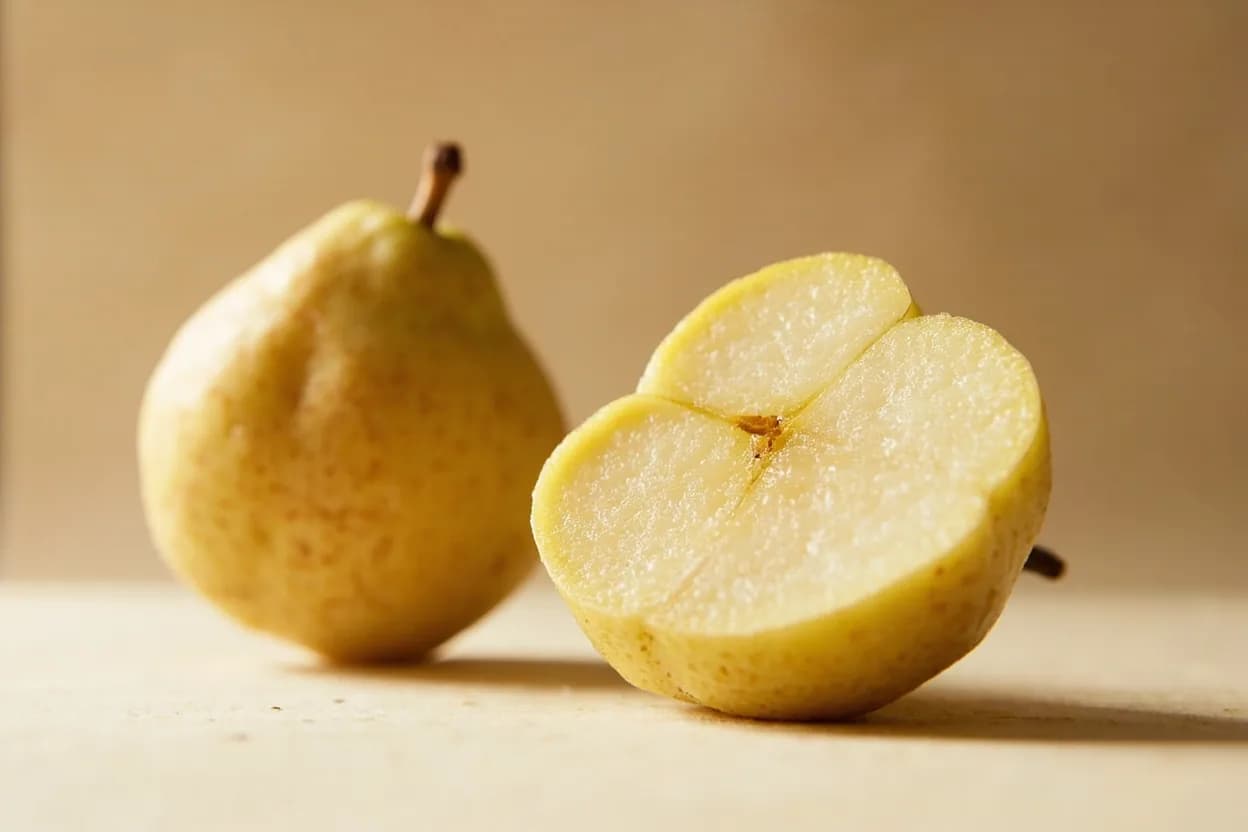
Korean pear (Pyrus pyrifolia) is a round, golden-skinned pear with a grainy-crisp texture that holds its shape even when ripe, unlike European pears. Its flavor is clean, mildly sweet, and refreshingly watery with floral overtones — far less aromatic than a Comice but more subtly complex than an apple. Crucially, it contains the enzyme protease which breaks down meat proteins, making grated pear the functional tenderizing backbone of Korean bulgogi and galbi marinades. Its juice dilutes marinades without overpowering other flavors.
In photos
Flavour profile
Classic pairings
- Soy sauceKorean
Pear's sweetness balances soy's salinity and umami in Korean marinades; the two are inseparable in bulgogi and galbi.
- GarlicKorean
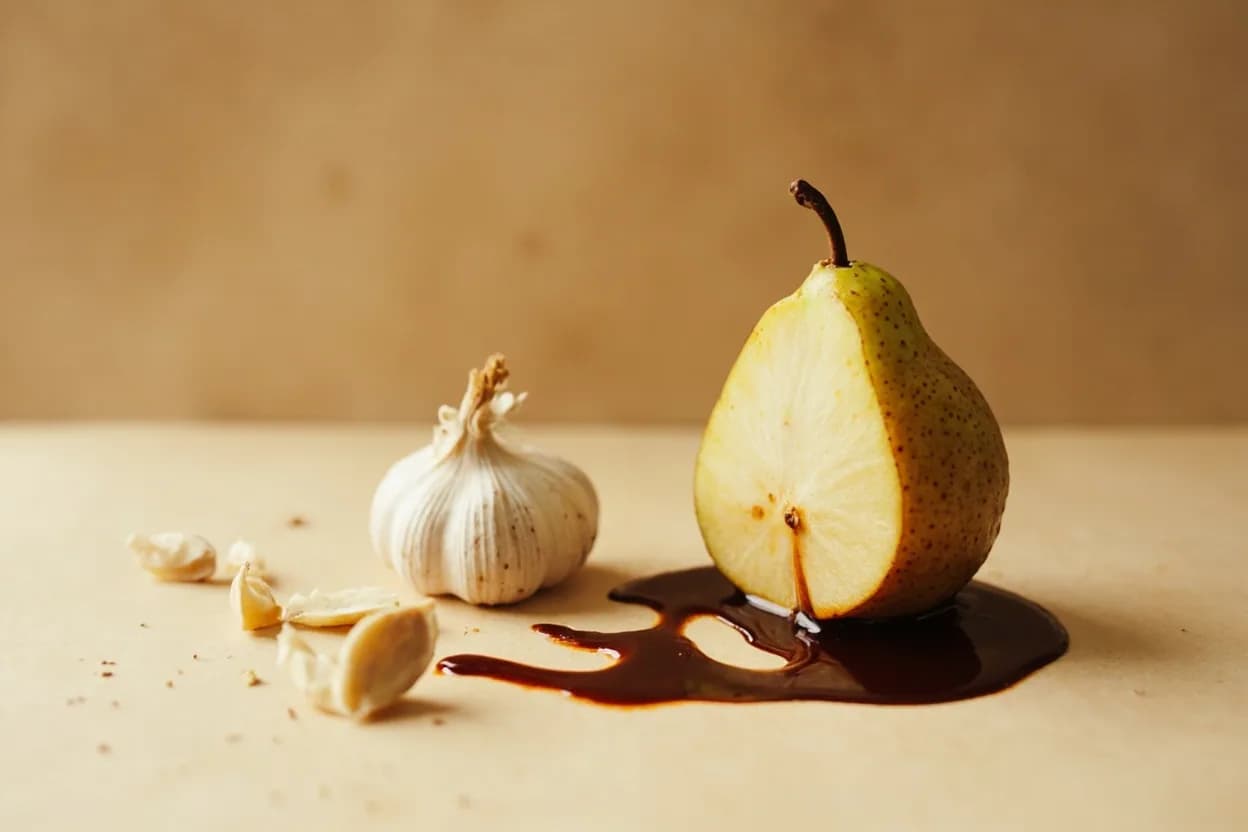
Grated pear tempers raw garlic's harshness while its enzymes begin breaking down the proteins garlic clings to; a foundational marinading trio.
- GingerKorean
Ginger's sharp warmth complements pear's cool sweetness; together they define the aromatic base of many Korean galbi and dak-galbi marinades.
- Beef short ribs (galbi)Korean
Korean pear is the classic tenderizer for galbi; enzymes break down collagen and muscle fiber, producing the signature melt-tender texture.
- Sesame oilKorean
Sesame oil's toasty richness rounds out pear's clean sweetness to create a deeply savory-sweet marinade finish standard in Korean BBQ.
- Gochugaru (Korean chili flakes)Korean
Pear's sweetness cools the building heat of gochugaru, creating balanced heat in marinated dishes and kimchi preparations.
- Blue cheeseWestern fusion
The fruit's mild sweetness and crisp texture make it an excellent fresh contrast to pungent blue cheeses on a cheese board — a Korean twist on the fruit-and-cheese pairing.
Adventurous pairings
White miso's fermented umami deepens with pear's sweetness; grated pear in a miso glaze for chicken or pork creates an unexpected tenderizing, caramelizing effect.
- Yuzu kosho
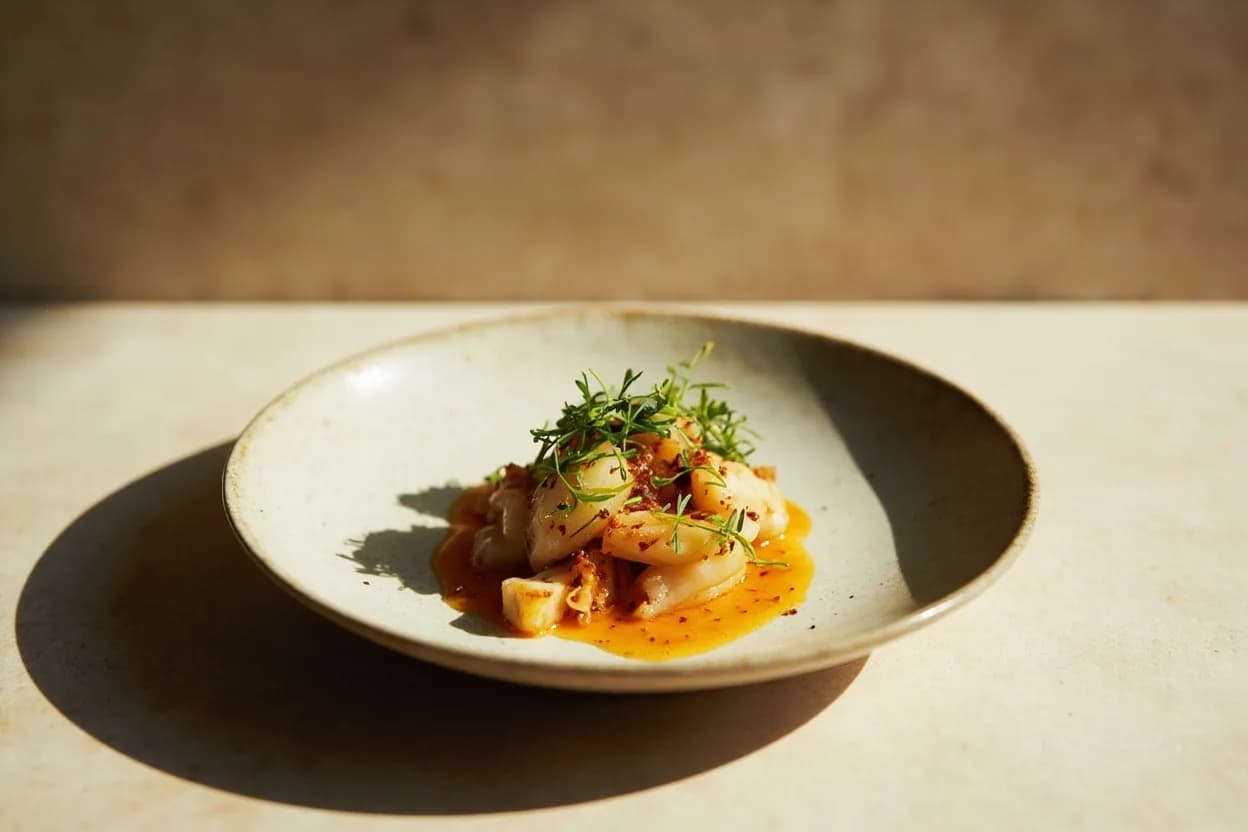
The citrus heat of yuzu kosho against pear's mellow sweetness creates a bright, punchy dressing for grilled scallops or raw fish.
- Walnuts and gorgonzola
A composed salad of sliced Korean pear, candied walnuts, and gorgonzola uses the pear's water-crisp texture and sweetness to anchor the rich, bitter elements.
- Lamb
The same proteolytic enzymes that tenderize beef work on lamb; grated Korean pear in a lamb marinade with cumin and coriander bridges Korean and Middle Eastern flavor languages.
Tread carefully
- Delicate raw seafood (immediate marination over 30 min)avoid
Protease enzymes will begin denaturing the proteins in raw fish or shrimp within minutes; pear-marinated raw seafood becomes mushy quickly. Add pear juice only to brief, quick marinades or use it cooked.
- Very tannic red wine reductionsavoid
Korean pear's low acidity and floral delicacy are overwhelmed by heavy tannic wines; it performs best in umami-forward or lightly acidic sauce contexts.
How to use it
- Grate on a box grater and squeeze juice into marinades as a tenderizing agent
- Julienne raw into salads for crisp textural contrast
- Blend into a smooth sauce base for galbi sauce or dipping sauces
- Dice and fold into cold noodle dishes (naengmyeon) as a fresh garnish
- Press juice and use as a natural meat tenderizer in overnight brines
Appears in
Related flavours
- Kiwi
Kiwi contains actinidin, another protease enzyme, and is used similarly as a meat tenderizer; a functional but more acidic substitute.
- Pineapple
Bromelain in pineapple serves the same meat-tenderizing role; pineapple is the closest tropical analog to pear's function in Korean marinades, though more aggressive.
- Apple
Grated apple is a common home-cook substitute for Korean pear in marinades; slightly more acidic and less sweet but functionally similar.
References
- 1.The Food Lab — J. Kenji López-Alt (W. W. Norton & Company)
- 2.Korean Home Cooking — Sohui Kim
- 3.My Korea — Hooni Kim
- 4.On Food and Cooking — Harold McGee (Scribner, 2004)
Confidence: high
Notes
Enzyme Timing
Korean pear's proteolytic enzymes work best when raw and freshly grated. Cooking or prolonged heat destroys the enzymes. For tenderizing, always add grated pear or its juice to cold marinades and marinate in the refrigerator. A 4-hour marinade for beef short ribs is near-ideal; overnight works but can make very thin cuts slightly mushy at the surface.