Spices & Dried Aromatics
Long Pepper
Also: Piper longum, pipli, thippili, pippali, Bengal pepper
The pepper that ruled Rome before black pepper arrived — complex, warm, and resinous with a slow-building heat.
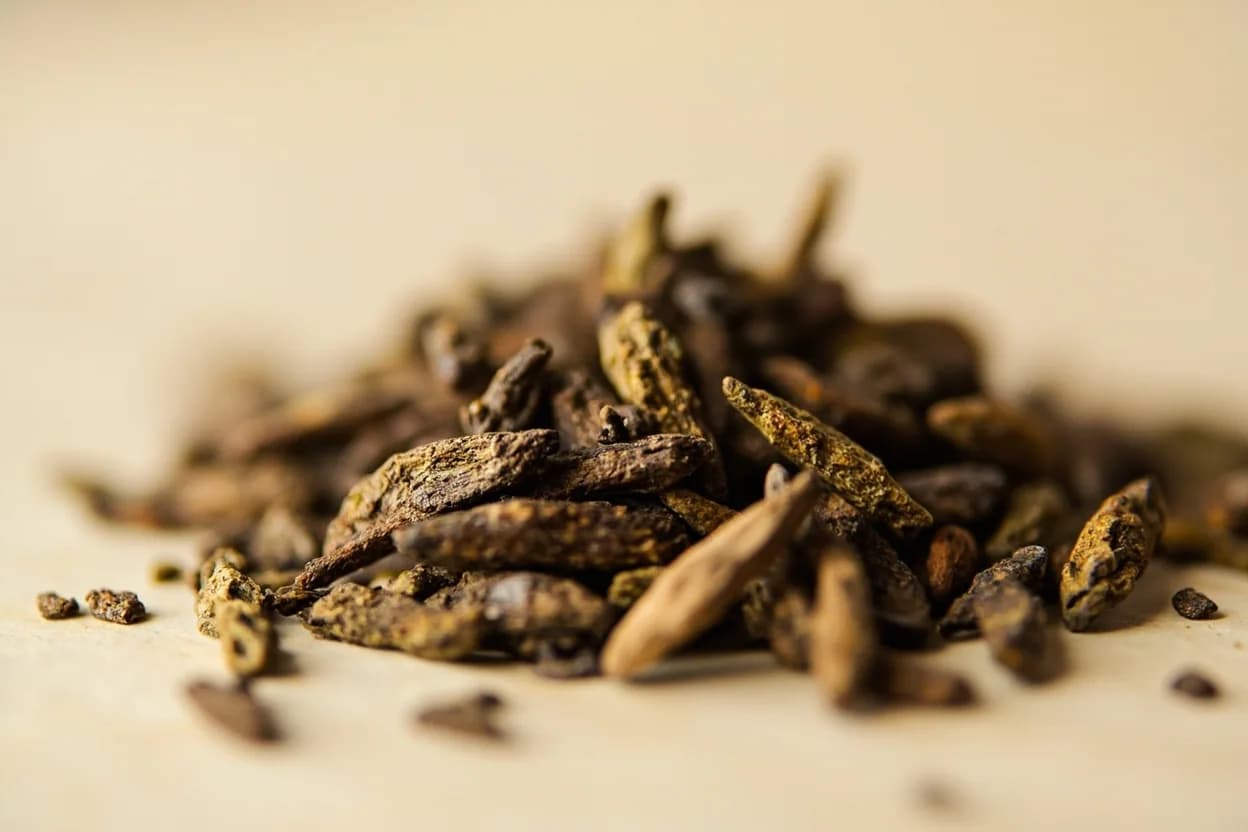
Long pepper (Piper longum) is a flowering vine whose cylindrical catkin-like fruits are dried and used whole or ground. Indigenous to South Asia and historically dominant in ancient Mediterranean cuisines before black pepper displaced it, it carries a more complex heat profile — earthy, sweet, and resinous with notes of ginger, cinnamon, and a lingering warmth that builds gradually. It remains essential in Ethiopian berbere, Indian Ayurvedic cooking (as pipli), and Moroccan ras el hanout.
In photos
Flavour profile
Classic pairings
- LambNorth African / Roman historical
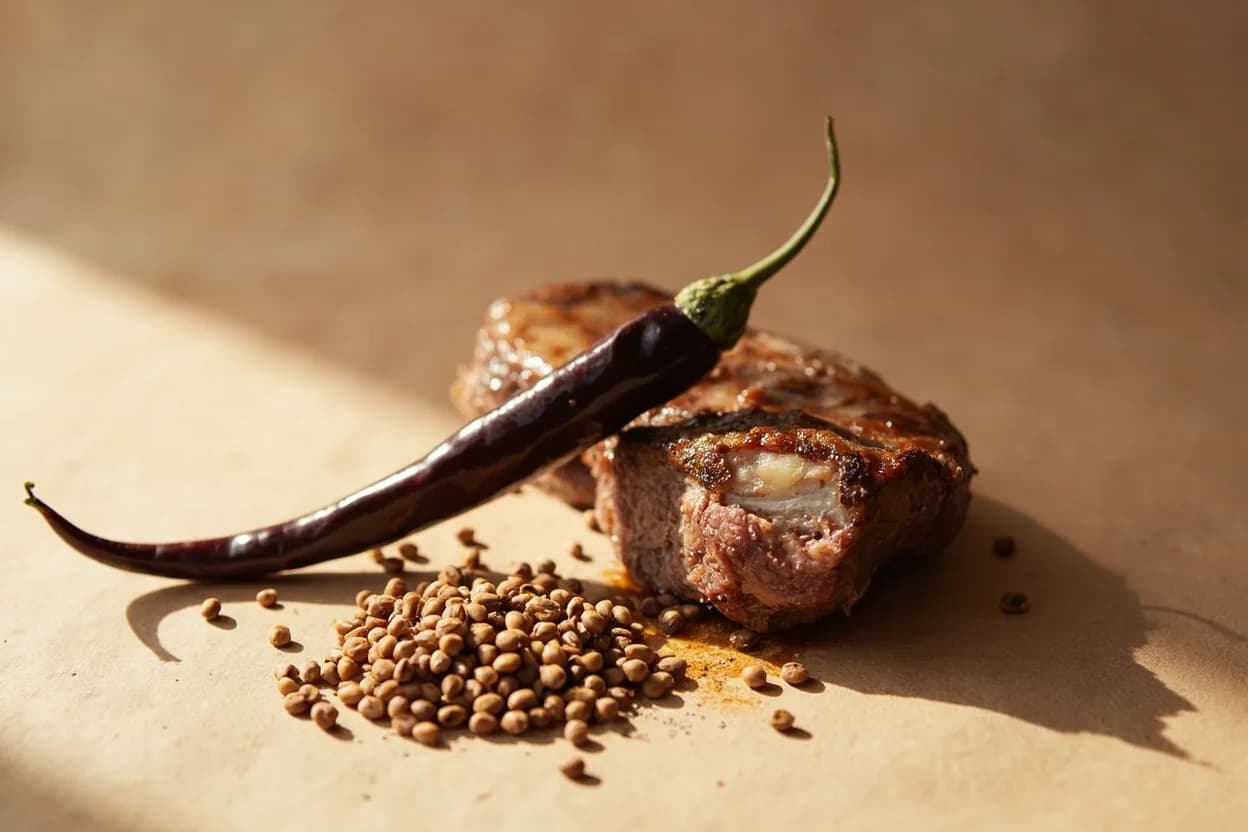
Long pepper's resinous warmth cuts through lamb's fat while its sweetness complements the meat's gaminess — a pairing documented in Roman cookery and still used in North African mechoui.
- HoneyRoman historical
The classical Roman pairing of piperata cum melle — honey tempers the heat and amplifies the floral-sweet register, yielding a complex sweet-heat glaze or sauce.
- LentilsIndian
In Indian dal preparations, whole pipli is bloomed in ghee to release its camphor-ginger warmth into the legumes, adding depth that black pepper cannot replicate.
- Berbere spice blendEthiopian
Long pepper is a structural component of Ethiopian berbere, where its complex heat anchors the blend's layered warmth alongside korarima, fenugreek, and dried chiles.
- GheeIndian
Blooming long pepper in clarified butter extracts its fat-soluble piperine and resinous compounds, creating an aromatic base for Indian vegetable and lentil dishes.
- Wine-braised meatsMedieval European
Medieval European recipes consistently pair long pepper with red wine braises — the tannins and acidity in wine soften the pepper's heat while its sweetness bridges the alcohol.
- TurmericIndian
A canonical Ayurvedic pairing: piperine in long pepper dramatically enhances bioavailability of curcumin in turmeric, and the flavors are harmonious — earthy, warm, and slightly bitter.
Adventurous pairings
Ground long pepper's cinnamon-resin notes amplify the roasted bitterness of high-cacao chocolate in a way black pepper cannot; use sparingly in ganaches or mole-style sauces.
- Aged cheese
The slow-building heat and resinous complexity of long pepper provides counterpoint to the lactic richness of aged Manchego or Pecorino, making it an unexpected cheese-board addition.
- Citrus curd
A pinch of ground long pepper in lemon or yuzu curd introduces a floral-warm back note that sharpens the citrus without the harsh immediacy of black pepper.
- Fermented black garlic
Long pepper's camphor resin plays against black garlic's balsamic sweetness, creating a layered funk-and-heat combination suited to roasted roots or braised pork belly.
Tread carefully
- Delicate white fishavoid
Long pepper's persistent, resinous heat overwhelms the subtle sweetness of sole, turbot, or Dover flounder — the spice dominates rather than enhances.
- Fresh dairy cream saucesavoid
The camphor-resin character of long pepper turns medicinal in neutral cream-based sauces, where there is nothing to anchor or counterbalance it.
How to use it
- Bloom whole in hot ghee or oil before adding aromatics — releases fat-soluble piperine fully
- Grind to a fine powder just before use; pre-ground loses volatiles quickly
- Use whole in slow braises and remove before serving, like a bay leaf
- Steep in warm honey, vinegar, or wine to create flavored syrups and shrubs
- Crush coarsely and use as a crust on lamb or duck before roasting
- Combine with equal parts black pepper when a more complex heat is desired
Appears in
Related flavours
- Black Pepper
The spice that displaced long pepper historically; shares piperine but lacks long pepper's sweet-resinous complexity
Co-occupies the berbere spice blend; the floral-camphor notes of korarima complement long pepper's resinous warmth
Shares the warming, slightly medicinal heat family and appears alongside long pepper in trikatu and ras el hanout
Long pepper's flavor profile contains cinnamon-like sweetness, making them natural partners in spice blends and braises
References
- 1.On Food and Cooking — Harold McGee
- 2.The Oxford Companion to Food — Alan Davidson
- 3.Apicius: A Critical Edition — Christopher Grocock & Sally Grainger
- 4.Spices: The History of a Temptation — Jack Turner
Confidence: high
Notes
Historical displacement
Long pepper was the primary pepper of classical antiquity — Apicius uses it more frequently than black pepper, and Roman trade routes to India were built partly around it. When Portuguese traders opened direct spice routes in the late 15th century, black pepper became cheaper and more available, and long pepper largely vanished from European kitchens. It survived as a culinary constant in Ethiopia and South Asia, where it never lost its primacy.
Ayurvedic significance
In Ayurvedic medicine, long pepper (pipli) is one of the three components of trikatu alongside black pepper and dried ginger — a foundational digestive and warming formula. This context shapes how Indian cooks use it: predominantly in lentil dishes, warming tonics, and spiced ghee, where its medicinal warmth is valued alongside its flavor.