Smoke & Fire
Liquid Smoke
Also: smoke concentrate, natural smoke flavor, wright's liquid smoke, colgin liquid smoke
The pantry shortcut to campfire depth — concentrated, precise, and far more legitimate than its reputation suggests.
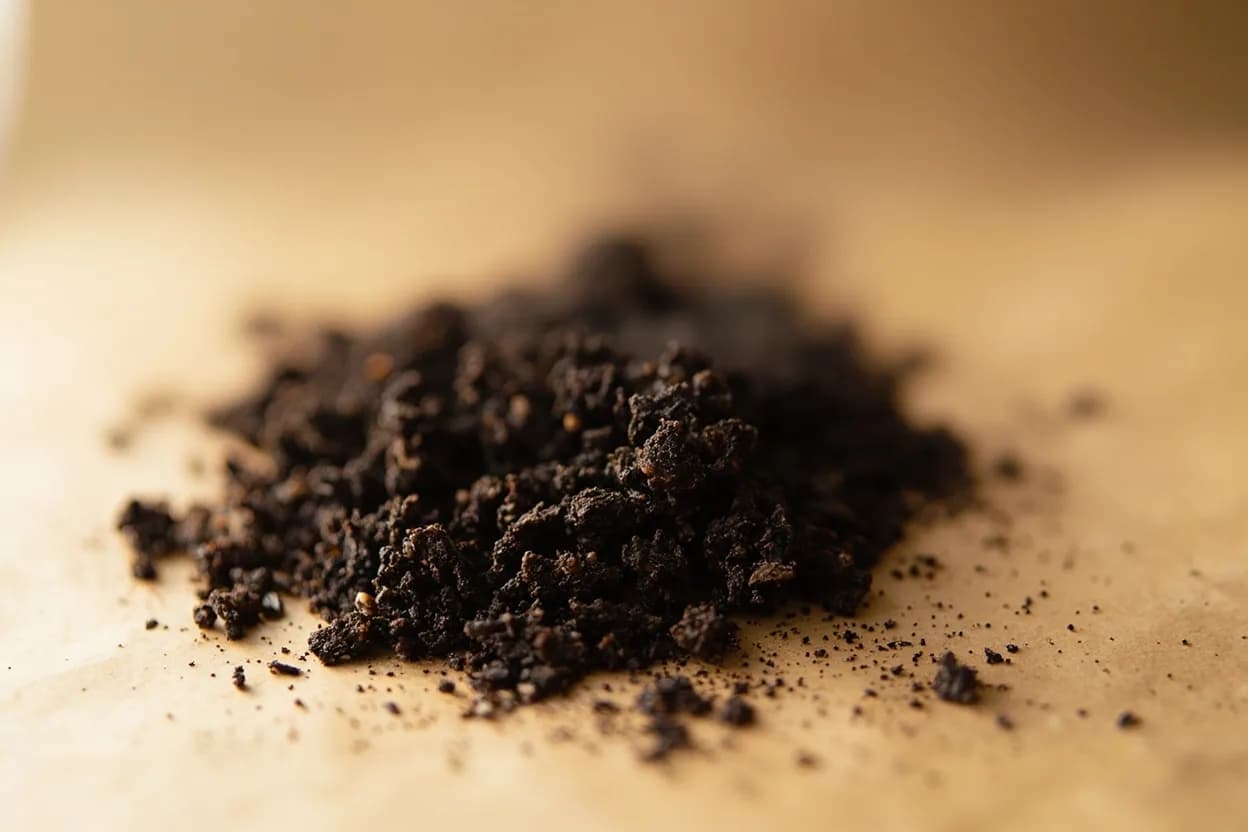
Liquid smoke is produced by burning hardwood (hickory, mesquite, applewood, or pecan) and passing the smoke through a water condenser that captures soluble smoke compounds — primarily carbonyls, phenols, and organic acids — as a dark, water-soluble liquid. It is then filtered to remove tar and particulates, leaving a chemically concentrated, shelf-stable smoke flavoring that paradoxically contains fewer carcinogenic compounds than actual wood smoke. Used at measured doses (typically a few drops to a teaspoon), it delivers genuine campfire depth to braises, marinades, plant-based BBQ, and pantry cooking without a smoker. At its best it is a precision tool; misused, it overwhelms everything with an artificial, acrid edge.
In photos
Flavour profile
Classic pairings
- Pulled pork (oven-braised)American BBQ
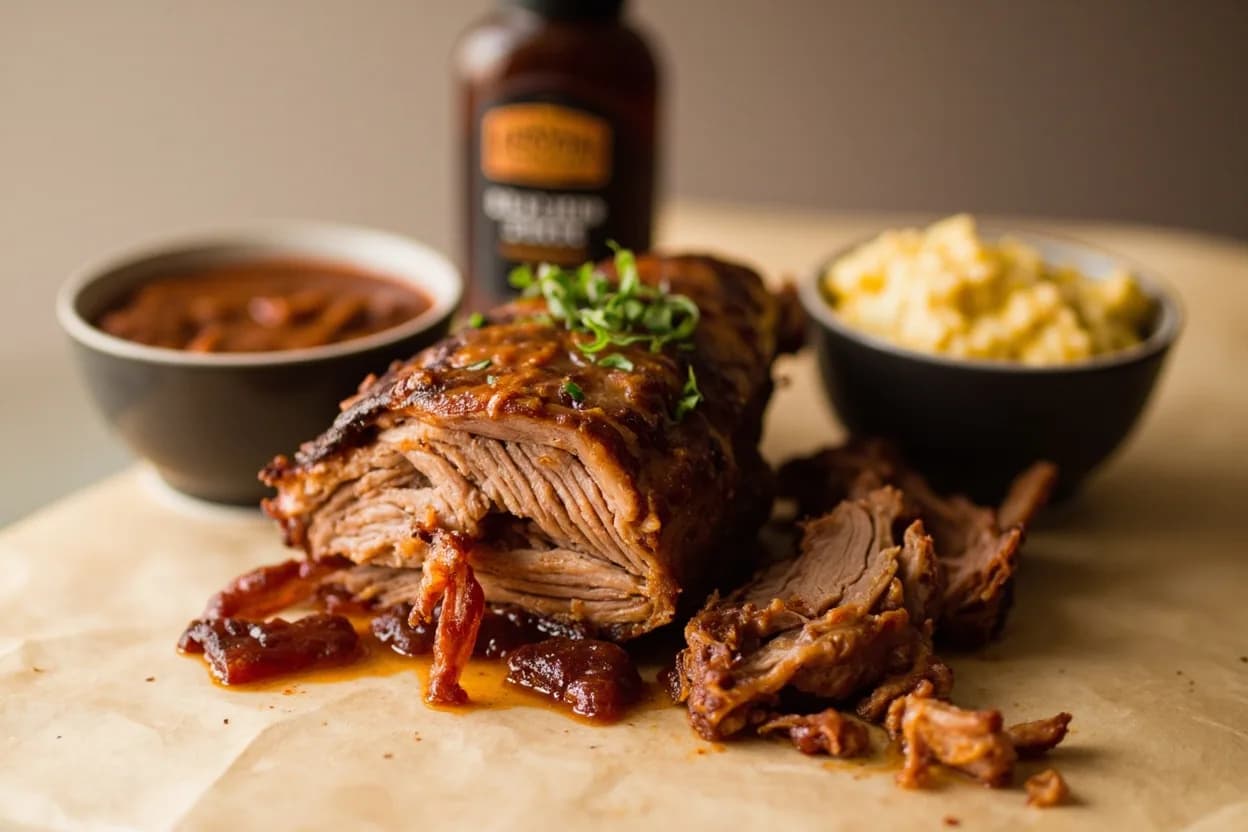
A teaspoon of liquid smoke in the braising liquid replicates slow-smoked pork shoulder character in an indoor Dutch-oven braise — the cornerstone of pantry-BBQ cooking.
- BBQ baked beansAmerican
A few drops of liquid smoke give oven-baked beans the campfire depth they would normally get from simmering alongside a smoked ham hock.
- Smoked cheese sauceAmerican
Liquid smoke added to a béchamel or processed-cheese sauce creates a convincing smoked-cheddar base for smoked mac and cheese without a cold-smoker.
- Chicken wings (oven or air-fryer)American
A marinade with liquid smoke, brown sugar, and paprika convincingly mimics wood-smoked wings from a conventional oven — a standard weeknight BBQ technique.
- Beef jerkyAmerican
Liquid smoke is standard in home jerky marinades — it penetrates thin meat slices deeply and acts alongside salt as a preservation aid.
- Oven-baked ribsAmerican
Rubbing ribs with liquid smoke before wrapping in foil and baking at 300°F (149°C) for 3 hours produces a credible substitute smoke ring and bark.
Adventurous pairings
- Smoked tofu or tempeh
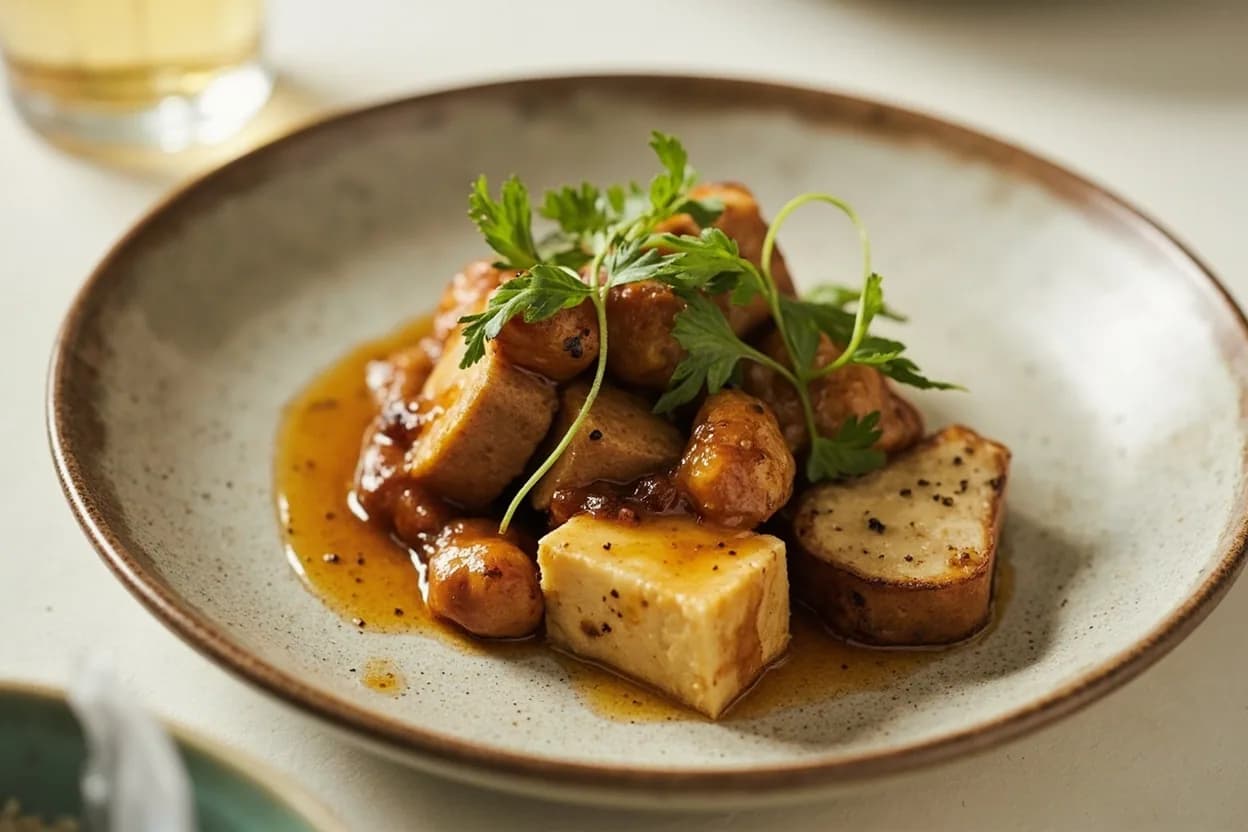
Liquid smoke is transformative for plant-based proteins — marinating tofu in smoke, tamari, and maple syrup overnight creates genuinely smoky BBQ texture after baking or grilling.
- Smoked lentil soup
A few drops added to a Spanish-style lentil soup with chorizo (or a vegan version) replicates the flavor of smoked paprika and fire-dried chiles simultaneously.
- Smoked cocktails (Bloody Mary, Old Fashioned)
A single drop of liquid smoke in a Bloody Mary adds a campfire dimension without the theatre of a cloche; an Old Fashioned with liquid smoke riffs on smoky Islay Scotch.
- Smoked mayonnaise
Three drops per cup of mayo creates a condiment that elevates BLTs, lobster rolls, and deviled eggs with a barely-there smoke suggestion.
- Plant-based bacon (mushroom, rice paper, tempeh)
Liquid smoke is the non-negotiable ingredient in any convincing vegan bacon preparation — it bridges the gap between savory and smoky that no other pantry ingredient achieves.
- Smoked dark chocolate mousse
A single drop of liquid smoke folded into dark chocolate mousse creates a campfire-after-dessert sensation — unexpected and deeply satisfying.
Tread carefully
- Delicate seafood (scallops, sole)avoid
Liquid smoke's phenolic intensity will overwhelm delicate seafood entirely; even a single drop is too much for anything subtle.
- Fresh salads and raw vegetable dishesavoid
The liquid medium and intensity of smoke flavor collides with fresh, bright ingredients — use smoked salt instead if any smoke element is wanted.
- Pastry and baked goods (without extreme precision)avoid
One drop too many and a smoked caramel or smoked shortbread becomes medicinal and off-putting — discipline is essential in sweet applications.
How to use it
- Starting with 1/4 teaspoon per pound of protein and adjusting to taste — never eyeballing
- Adding to marinades, brines, and braising liquids rather than surfaces for even distribution
- Combining with smoked paprika and chipotle for layered smoke complexity rather than a single note
- Using as a finishing element in sauces and dips after cooking, when the dose can be precisely evaluated
- Brushing diluted liquid smoke (1:5 in water) on roasts before dry-rubbing to mimic a smoke-bark base
- Pairing with umami-rich ingredients (tamari, miso, Worcestershire) to anchor the smoke note in savory
Appears in
Related flavours
Most commercial liquid smoke is hickory-based — it replicates hickory's sweet-baconlike character in pantry form.
- Smoked Paprika
Pimentón de la Vera is the closest spice-drawer analogue — also wood-smoke-derived, also concentrated, but fat-soluble rather than water-soluble.
Chipotle (smoked dried jalapeño) and liquid smoke are frequent pantry companions — the chile adds spice and complexity while the liquid smoke amplifies campfire depth.
References
- 1.On Food and Cooking: The Science and Lore of the Kitchen — Harold McGee
- 2.The Food Lab: Better Home Cooking Through Science — J. Kenji López-Alt
- 3.Meathead: The Science of Great Barbecue and Grilling — Meathead Goldwyn
- 4.Salt Fat Acid Heat — Samin Nosrat
Confidence: high
Notes
More legitimate than its reputation
Liquid smoke is often dismissed as a cheap shortcut, but food scientists note that it is chemically equivalent to real wood smoke — the same phenols and carbonyls — and paradoxically safer because the filtration process removes most of the carcinogenic polynuclear aromatic hydrocarbons (PAHs) present in actual wood smoke. Harold McGee has pointed this out in On Food and Cooking. The stigma is cultural, not scientific.
Wood variety matters
Not all liquid smoke is the same: hickory-based (Wright's, Colgin) is bold and sweet; mesquite-based is earthier and hotter; applewood is milder and more floral. Reading the label and selecting the appropriate wood variety for the dish makes a measurable difference in the final outcome.