Citrus & Floral
Lemon Zest
Also: lemon peel, lemon rind, lemon oil
The aromatic outer layer of the lemon — all perfume, no acid — that transforms pasta, pastries, and dressings.
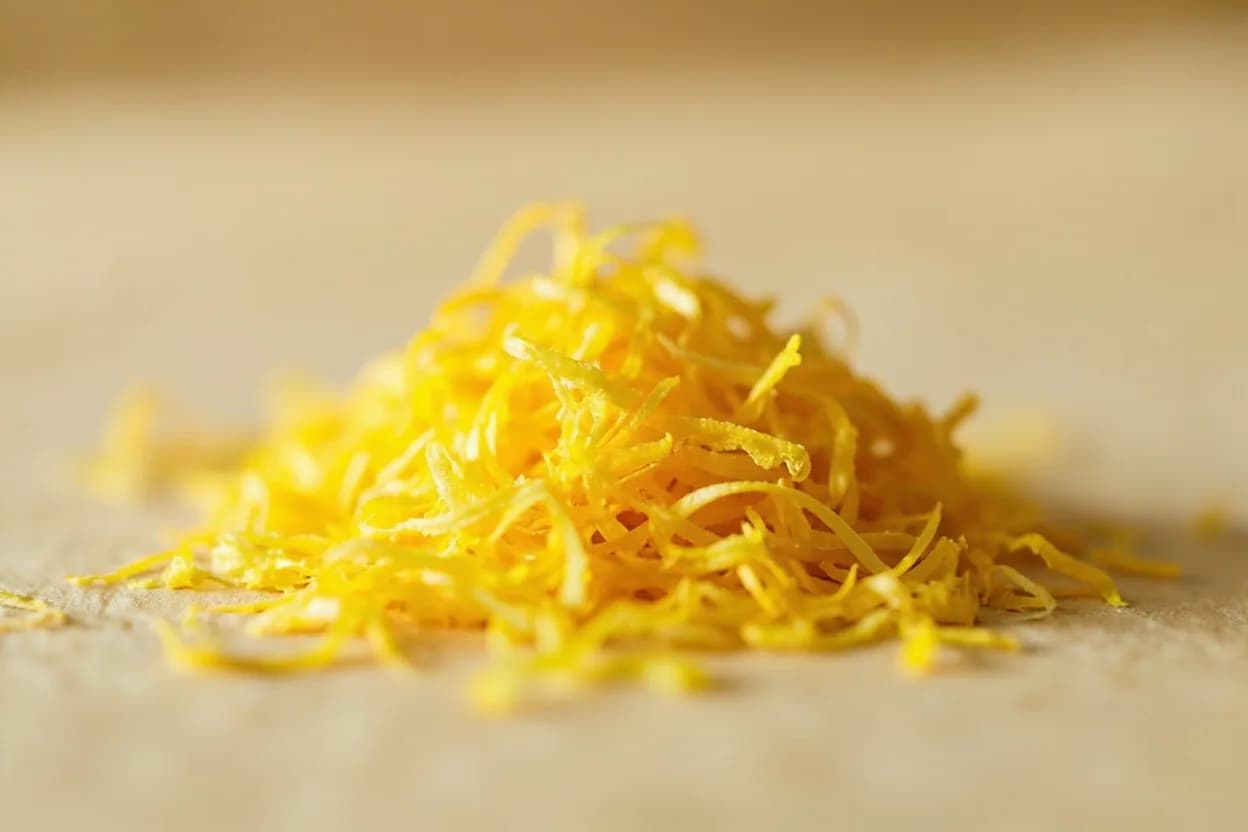
Lemon zest is the colored outer layer of the lemon peel, removed with a microplane or zester to capture the essential oil-laden cells while avoiding the bitter white pith beneath. Unlike lemon juice, which delivers acidity and watery brightness, zest contributes pure aromatic intensity: the volatile compounds limonene, citral, linalool, and pinene that define the smell of lemon without its tartness. The flavor is intensely fragrant, floral-citrus, faintly resinous, and — when used abundantly — can carry a pleasing bitterness. It is one of the most powerful aromatic modifiers in the kitchen, effective in both fat-soluble (oil, butter, cream) and water-based contexts.
In photos

Flavour profile
Classic pairings
- Pasta (spaghetti, linguine)Italian
Rubbed into olive oil or butter, lemon zest perfumes pasta with citrus intensity that juice alone cannot achieve — the fat carries the volatile oils across every strand.
- RicottaItalian
Lemon zest is the standard aromatic partner in ricotta-based pasta fillings, cheesecakes, and fritters — the fat in the cheese fixes the citrus oils and releases them slowly.
- Butter (compound butter / beurre blanc)French / European
Zest bloomed in warm butter creates a lemon compound that perfumes fish, asparagus, and grilled chicken far more intensely than adding juice to the pan.
- Poppy seedsCentral European / American
A canonical pairing in Central European and American baking — poppy seed's subtle nuttiness is lifted and brightened by lemon zest without either overwhelming the other.
- ThymeMediterranean
The herbal, slightly medicinal character of thyme and lemon zest's citrus oils are complementary and commonly used together for roast chicken, fish, and vegetable braises.
- AsparagusEuropean
Grated over blanched or roasted asparagus at the last moment, lemon zest accentuates the vegetable's green, grassy flavor notes in a way acid alone does not.
- Vanilla (cream, custard, ice cream)European patisserie
A classic pastry marriage — lemon zest and vanilla coexist without competing; the citrus aromatic brightens vanilla's warm sweetness and prevents richness from becoming cloying.
- White fish (sole, cod, halibut)European / Mediterranean
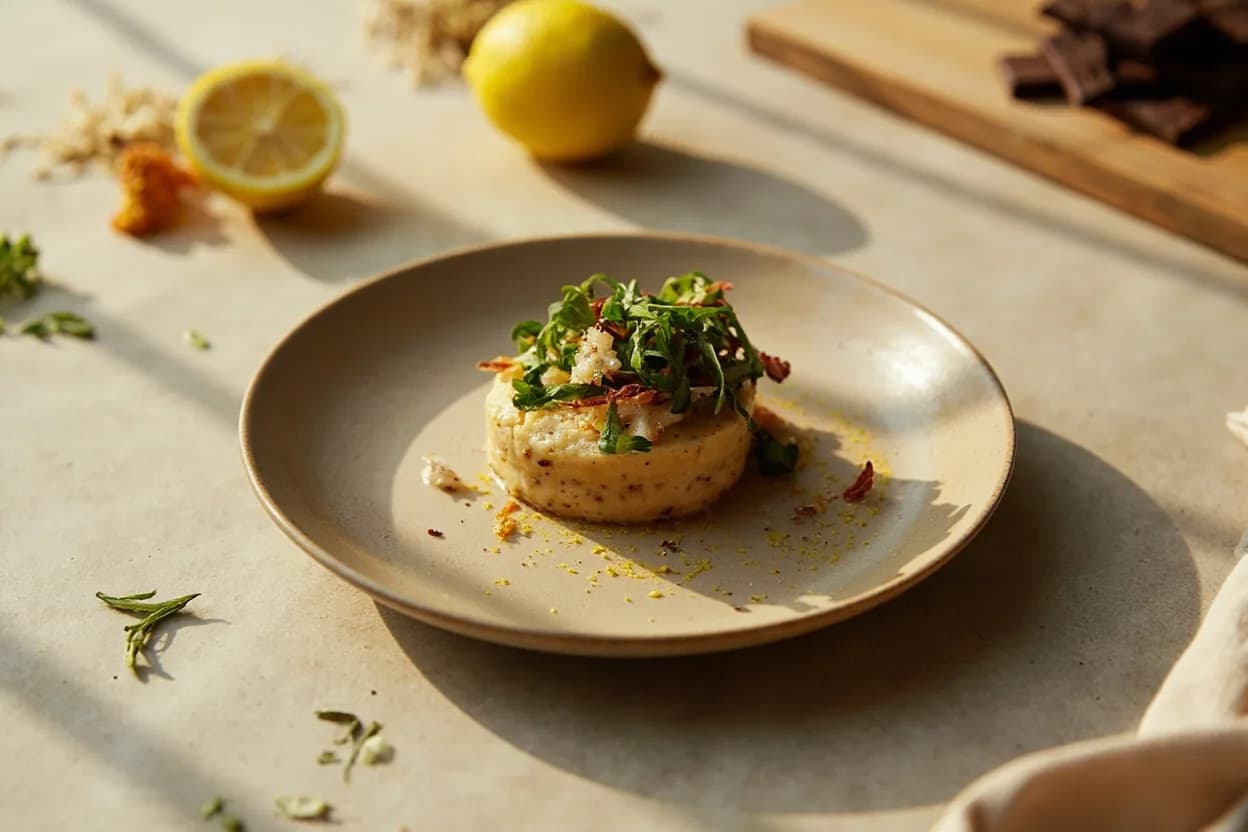
Lemon zest in a crust, marinade, or finishing oil amplifies the delicate sweetness of white fish and masks any lingering sea smell without acidifying the flesh.
Adventurous pairings
- Dark chocolate (70%+)
Lemon zest grated into dark chocolate truffle ganache or folded into a brownie batter introduces a floral brightness that resolves the bitterness of high-cocoa chocolate without adding sweetness.
In dressings, dips, or noodle sauces, lemon zest lightens and perfumes tahini's dense, sesame-paste weight — the citrus oil cuts through the fat in a way that juice cannot match.
- Chili flakes (peperoncino)
Combined in pasta or oils, lemon zest and dried chili create an agrodolce-adjacent dynamic where heat amplifies citrus aromatic release; the combination is greater than the sum of its parts.
- Cardamom
Used together in Scandinavian baking and Levantine desserts, lemon zest and cardamom share floral aromatic compounds (linalool) that reinforce each other harmonically.
- Roasted cauliflower
Grated over hot roasted cauliflower alongside capers and golden raisins (Sicilian agrodolce style), lemon zest knits the sweet, sour, and bitter elements into a coherent dish.
- Gin (in cocktails and curing)
Expressed lemon zest (not juice) over a gin and tonic releases the peel's oils onto the surface of the drink, complementing gin's own citrus-botanical character in a way juice cannot.
Tread carefully
- Cooked too long in water-based liquidsavoid
Volatile citrus aromatics evaporate quickly in hot liquid — add zest at the very end of cooking or off heat; long simmering leaves only bitterness.
- White pith (over-zesting)avoid
The white pith just below the colored zest is intensely bitter with no aromatic benefit; scraping too deep produces harsh, unpleasant bitterness in delicate preparations.
- Non-organic or waxed lemonsavoid
Conventionally grown lemons are often coated with food-grade wax and treated with post-harvest fungicides; always wash thoroughly or use organic/unwaxed fruit when zesting.
How to use it
- Microplane zest directly into fat (oil, butter, cream) to dissolve volatile oils immediately — fat is the best carrier
- Make 'lemon sugar' by rubbing zest into granulated sugar with your fingertips to rupture oil cells and perfume the sugar for pastry use
- Add zest to dry rubs, marinades, and brines where it will bloom in the fat of the protein
- Freeze whole lemons and microplane them frozen — yields finer, drier zest with maximum oil capture
- Steep zest in warm olive oil for 15 minutes to make aromatic citrus oil for finishing dishes
- Combine zest with salt (lemon salt) for a shelf-stable aromatic seasoning
Appears in
Related flavours
- Lemon juice
Juice delivers tartness and water-soluble citrus compounds; zest delivers aromatic oils — they perform different functions and are often used together for full-spectrum lemon character
- Yuzu zest
The Japanese equivalent — more floral and complex; often interchangeable in contexts that can accommodate its distinctiveness
- Orange zest
Sweeter, warmer citrus oil profile; commonly used alongside lemon zest in mixed-citrus preparations like Catalan crema or holiday baking
- Bergamot zest
The luxury relative — used in Earl Grey tea and Italian pastries; shares lemon's floral character with added lavender-like complexity
References
- 1.On Food and Cooking: The Science and Lore of the Kitchen — Harold McGee (Scribner, 2004)
- 2.The Flavor Bible — Karen Page & Andrew Dornenburg (Little Brown, 2008)
- 3.Tartine — Elisabeth Prueitt & Chad Robertson (Chronicle Books, 2006)
- 4.Salt, Fat, Acid, Heat — Samin Nosrat (Simon & Schuster, 2017)
Confidence: high
Notes
Zest versus juice: a fundamental distinction
Many recipes call for both lemon zest and lemon juice, and they are not interchangeable. Juice is acidic and water-soluble; it brightens with tartness and activates baking soda. Zest is pH-neutral, fat-soluble, and entirely aromatic. Adding more juice when you want 'more lemon flavor' produces sourness; adding zest produces perfume. Understanding this distinction separates competent cooks from great ones.
Gremolata — the three-ingredient aromatic
Gremolata (lemon zest, flat-leaf parsley, raw garlic, finely minced together) is the simplest expression of lemon zest's transformative power — scattered over braised ossobuco moments before serving, it cuts through four hours of wine-and-veal richness with one aromatic flourish. The technique — aromatic garnish added raw at service — is the template for dozens of citrus-herb finishing moves in European and Middle Eastern cooking.