Cheeses
Ricotta
Also: ricotta fresca, whey cheese, ricotta di bufala, ricotta di pecora
Mild, slightly sweet, and cloud-soft, ricotta is a blank canvas that takes on flavour from sweet and savoury partners with equal grace.
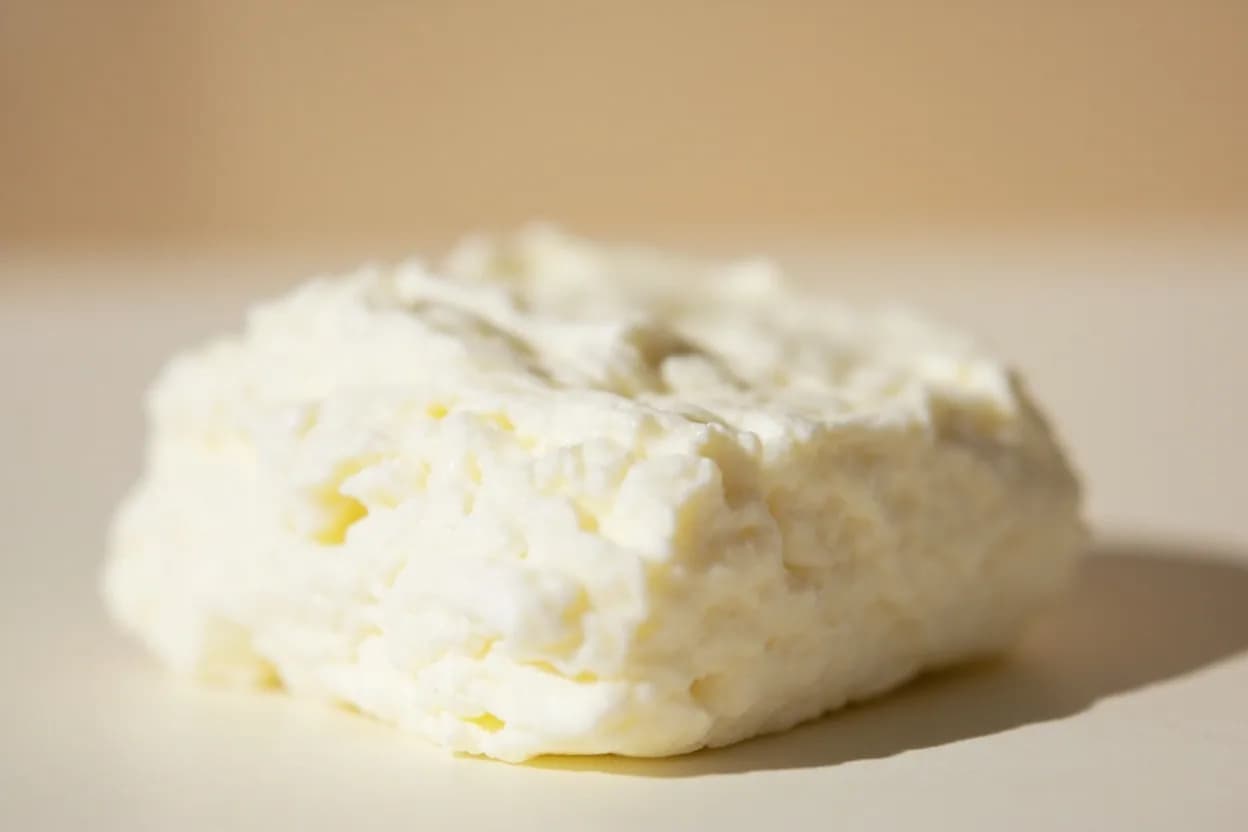
Ricotta (literally 're-cooked') is made by heating the whey left after cheesemaking, causing the remaining proteins to aggregate into soft, moist curds. It is barely cultured and has only residual acidity, giving a clean, mildly sweet, grassy-dairy flavour with almost no fat-forward richness compared to cream cheeses. Sheep's-milk ricotta (di pecora) is nuttier and slightly gamier; buffalo ricotta is richer and more lactic.
In photos
Flavour profile
Classic pairings
- HoneyItalian
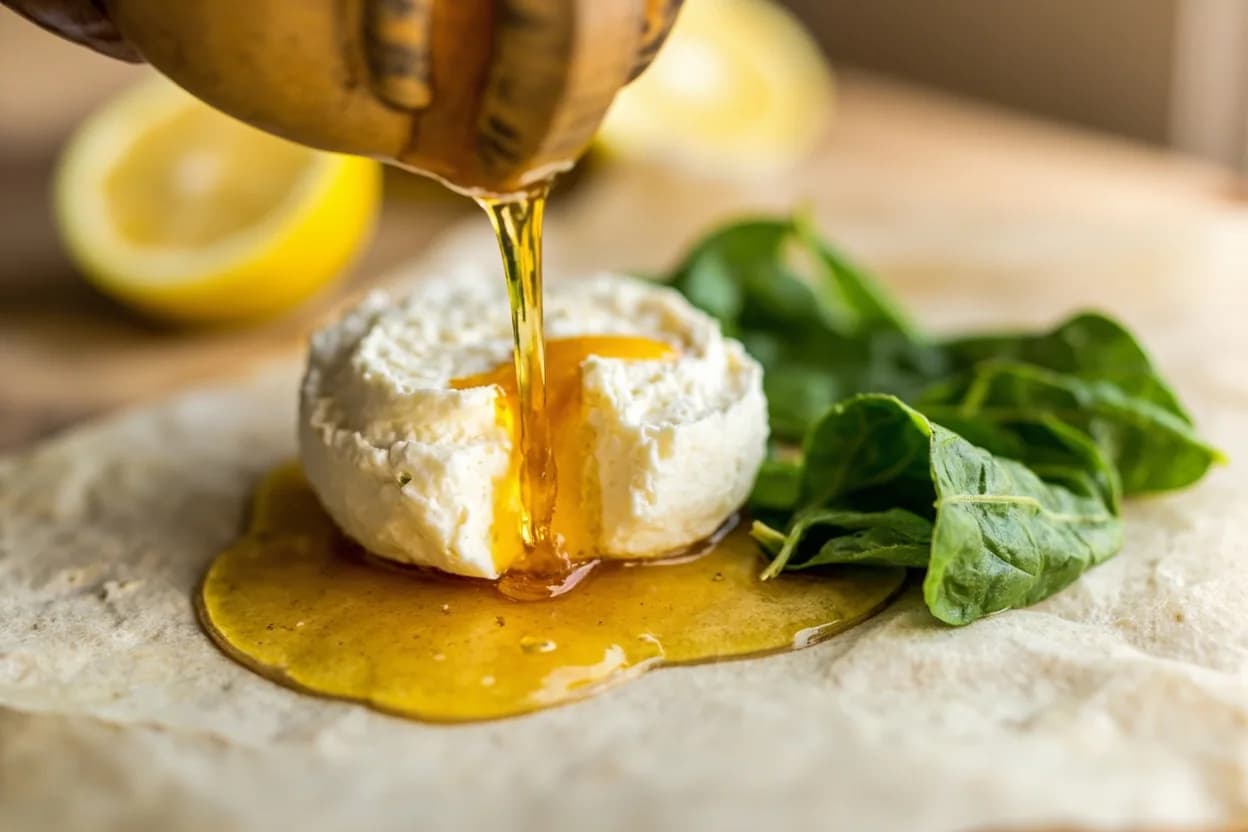
Floral or chestnut honey amplifies ricotta's own natural sweetness and provides viscosity; a drizzle over warm ricotta on toast is one of Italy's oldest simple pleasures.
- SpinachItalian
The iron-mineral bitterness of wilted spinach offsets ricotta's sweetness; together they form the canonical filling of ravioli, cannelloni, and sfogliata across central Italy.
- Lemon zestItalian / Sicilian
Citrus oils brighten and sharpen ricotta's mild character without adding liquid; essential in cannoli cream and many Sicilian pastries where the combination defines regional identity.
- Prosciutto crudoItalian
Salt and cured-meat umami season the bland cheese directly on the palate; the soft-on-soft texture contrast requires a crisp element like crostini to complete the plate.
- Pasta sheets (lasagna, ravioli, conchiglioni)Italian
Ricotta's neutral creaminess binds well under heat without weeping excessively; it absorbs ragù drippings or tomato sauce to create a silky interior layer.
- Roasted cherry tomatoesItalian
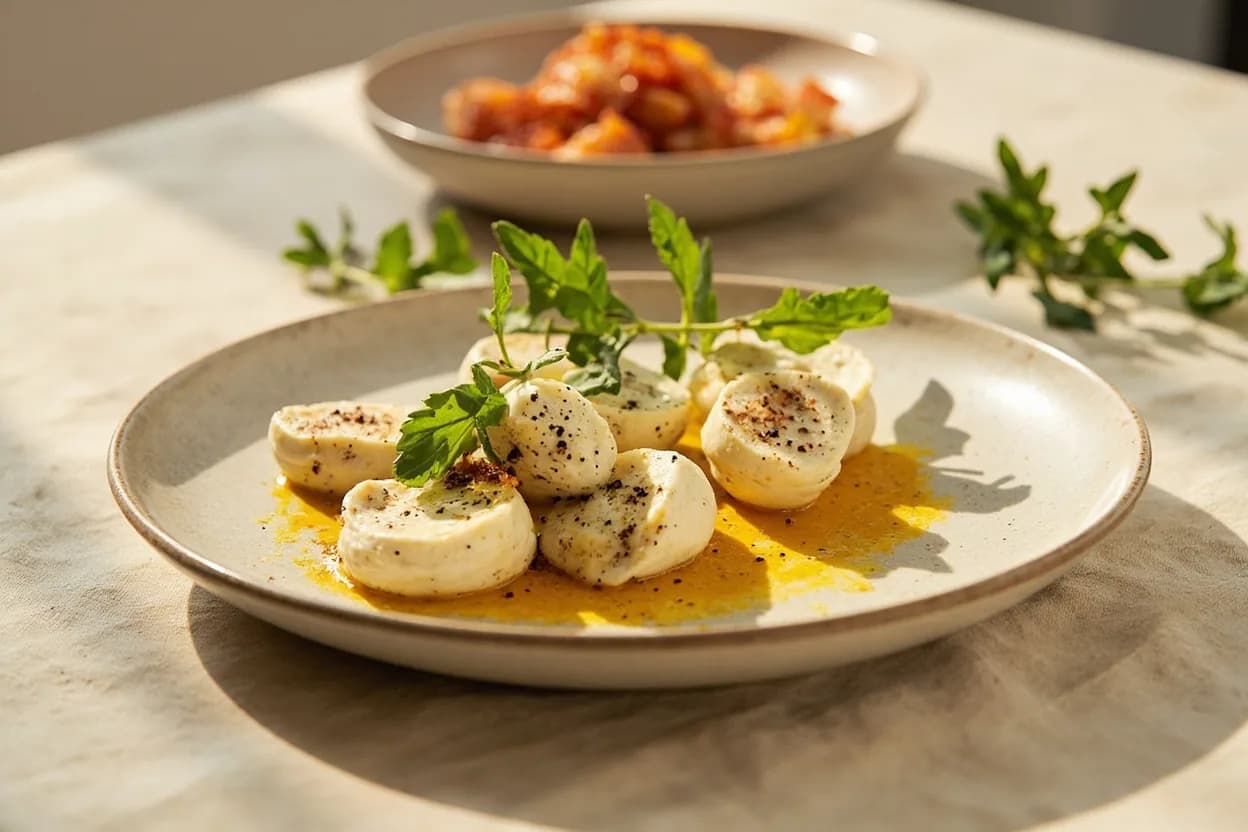
Caramelisation concentrates the tomato's acidity and sweetness; both work as foils to the dairy's mild milkiness while olive oil ties the two together.
- Toasted walnutsItalian
Bitter tannins and Maillard richness from roasted walnuts cut through the fat and give texture — a classic autumn salad or spread pairing.
Adventurous pairings
Safranal and picrocrocin in saffron create a floral, metallic-hay complexity that transforms ricotta into something architectural; used in Sardinian-style pasta fillings and Middle Eastern cheese pastries.
- Bitter chocolate
High-cacao chocolate's roasty bitterness contrasts ricotta's sweetness; the filling of Sicilian cannoli and cassata exploits this dynamic with brilliant economy.
The fiery, spreadable Calabrian salumi melts into ricotta to create a hot-cool-fat-acid balance that elevates pizza toppings and crostini into genuinely complex bites.
- Roasted beetroot
Earthy geosmin compounds in beetroot and ricotta's sweetness create an almost dessert-like vegetable pairing; with walnuts and dill it becomes a complete mezze or starter.
- Pistachio paste
Shared nutty sweetness but with contrasting colour and more complex roasted notes; the Sicilian use in cassata and granita demonstrates how well these two work as a sweet pair.
Tread carefully
- Sharp aged vinegar (un-diluted sherry or balsamic)avoid
Undiluted high-acid vinegar overwhelms the delicate whey sweetness and makes the cheese taste sour rather than fresh; use sparingly or as a glaze.
- Very pungent blue cheesesavoid
Serving ricotta alongside Gorgonzola or Roquefort creates confusion — neither partner has room to shine; the funk overwhelms the mild dairy at every bite.
- Raw garlic in large amountsavoid
Aggressive allicin pungency kills ricotta's delicate flavour within seconds on the palate; use roasted garlic (sweet, mellow) instead if the recipe calls for garlic.
How to use it
- Drain overnight in a cheesecloth-lined sieve to remove excess whey before using in fillings — this prevents soggy pasta
- Season with salt and pepper just before use; un-seasoned ricotta tastes flat even with bold accompaniments
- Whip briefly with a fork or small food processor to achieve a lighter, aerated texture for spreading or piping
- Warm ricotta gently (never above 60°C) to release aromatics; heat drives off the whey character, increasing richness
- Layer ricotta under roasted vegetables in the final minutes of oven time so it just sets rather than cooking dry
Appears in
Related flavours
Shares the fresh milky character but burrata is cream-enriched; ricotta is lighter and more versatile for baked applications
- Mascarpone
Both are unaged Italian soft cheeses but mascarpone is far richer; ricotta substitutes for mascarpone where you want less fat and more texture
- Cottage cheese
Functional cousin — similar whey-derived protein structure, higher moisture; less sweet than ricotta and with more pronounced acidity
References
- 1.The Oxford Companion to Cheese — Donnelly, C. (ed.), Oxford University Press, 2016
- 2.Milk: The Surprising Story of Milk Through the Ages — Mendelson, A., Knopf, 2008
- 3.Italian Food — David, E., Penguin, 1954
Confidence: high
Notes
Sweet versus savoury ricotta
In southern Italy, especially Sicily, ricotta is predominantly a dessert cheese — sweetened, scented with cinnamon or vanilla, and used in cassata, cannoli, and pastiera. In central Italy (Lazio, Umbria), it tilts savoury: pasta fillings, crostini toppings, and pizza bianca. Both traditions hold; the cheese's neutrality is what makes each direction credible.