Cheeses
Burrata
Also: burrata di bufala, burrata pugliese
A pouched fresh mozzarella whose creamy stracciatella core demands acidic, fruity, or cured counterparts to cut its richness.
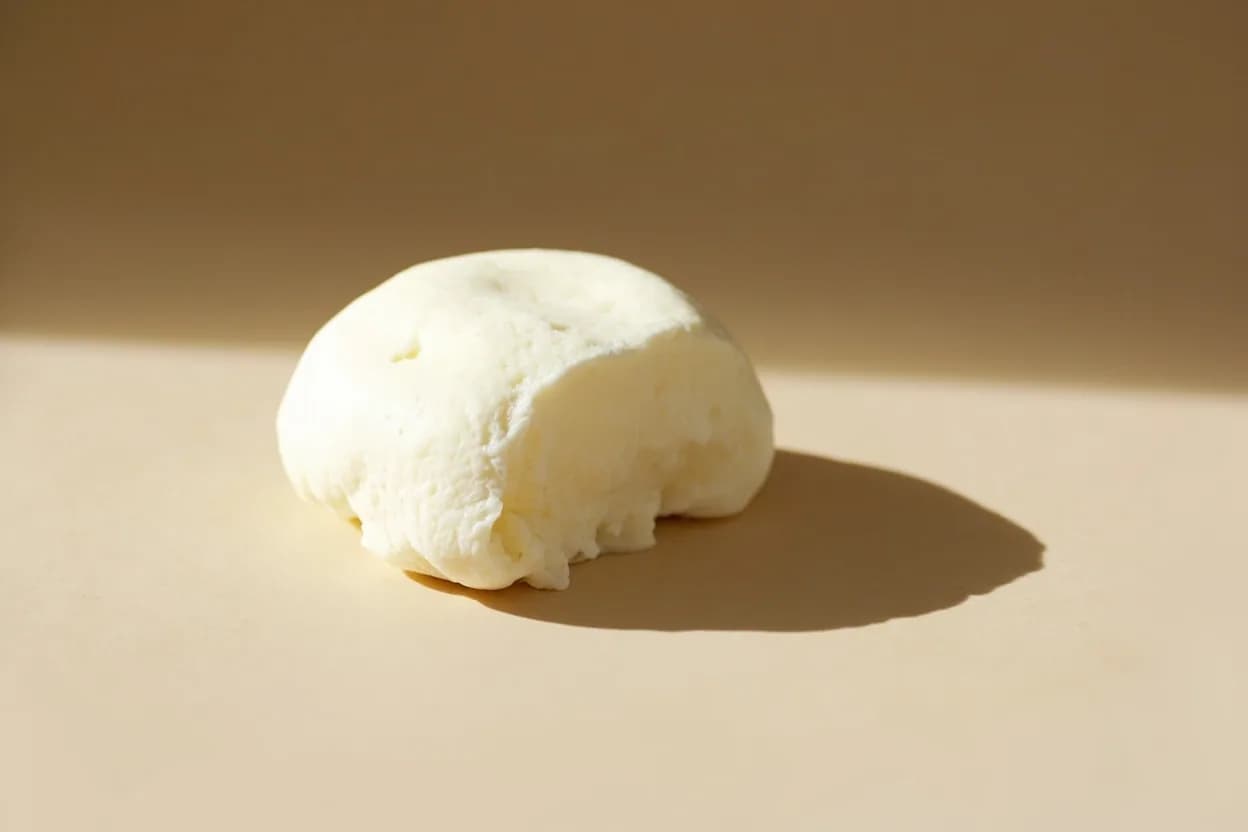
Burrata is a fresh Italian cheese from Puglia — a thin shell of pulled mozzarella encasing a filling (stracciatella) of torn curds soaked in heavy cream. Served at room temperature, it splits open to reveal a liquid-rich interior with a clean milky sweetness, subtle tang, and a round buttery finish that coats the palate.
In photos
Flavour profile
Classic pairings
- Heirloom tomatoesItalian
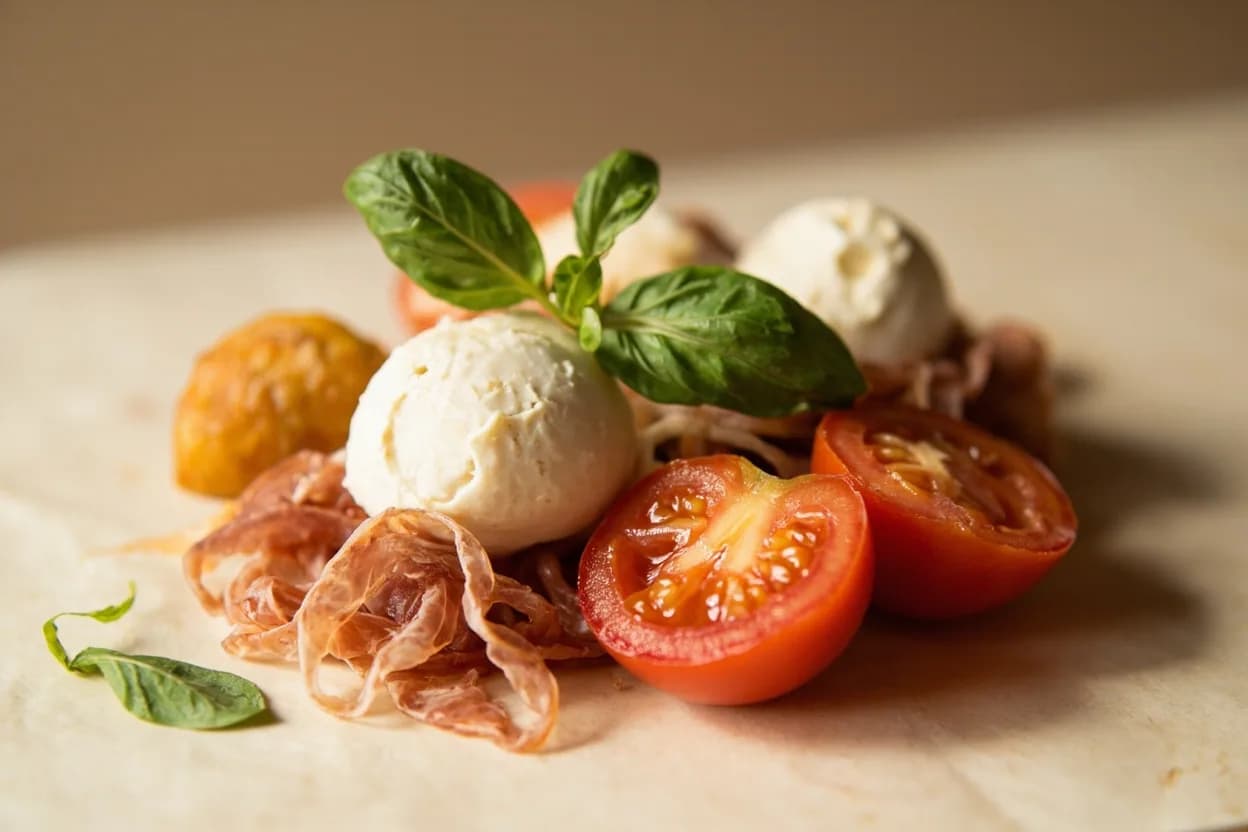
The acidity and glutamate-richness of ripe tomatoes cut through the cream and amplify the cheese's milky sweetness — the quintessential Caprese logic.
- Prosciutto crudoItalian
Salt, umami, and papery texture from the cured ham contrast the soft, yielding cream; fat harmonises with fat while salt brightens the mild dairy.
- BasilItalian
Aromatic methylchavicol and linalool in fresh basil lift the cream's flatness and add anise brightness — the third pillar of every great Caprese.
- Peaches and nectarinesItalian
Stone-fruit acidity and floral lactone esters mirror the cheese's own lactones; sugar in ripe fruit balances residual salt in the mozzarella shell.
- Extra-virgin olive oilItalian
A generous pour of good Puglian oil (grassy, peppery) becomes a sauce for the cream, adding bitterness and aromatics that prevent cloying richness.
- Sourdough or grilled breadItalian
Toasty crust provides textural contrast and a Maillard-rich backdrop that makes the cream taste even more luxurious by comparison.
Adventurous pairings
- Sour cherries or Amarena cherries
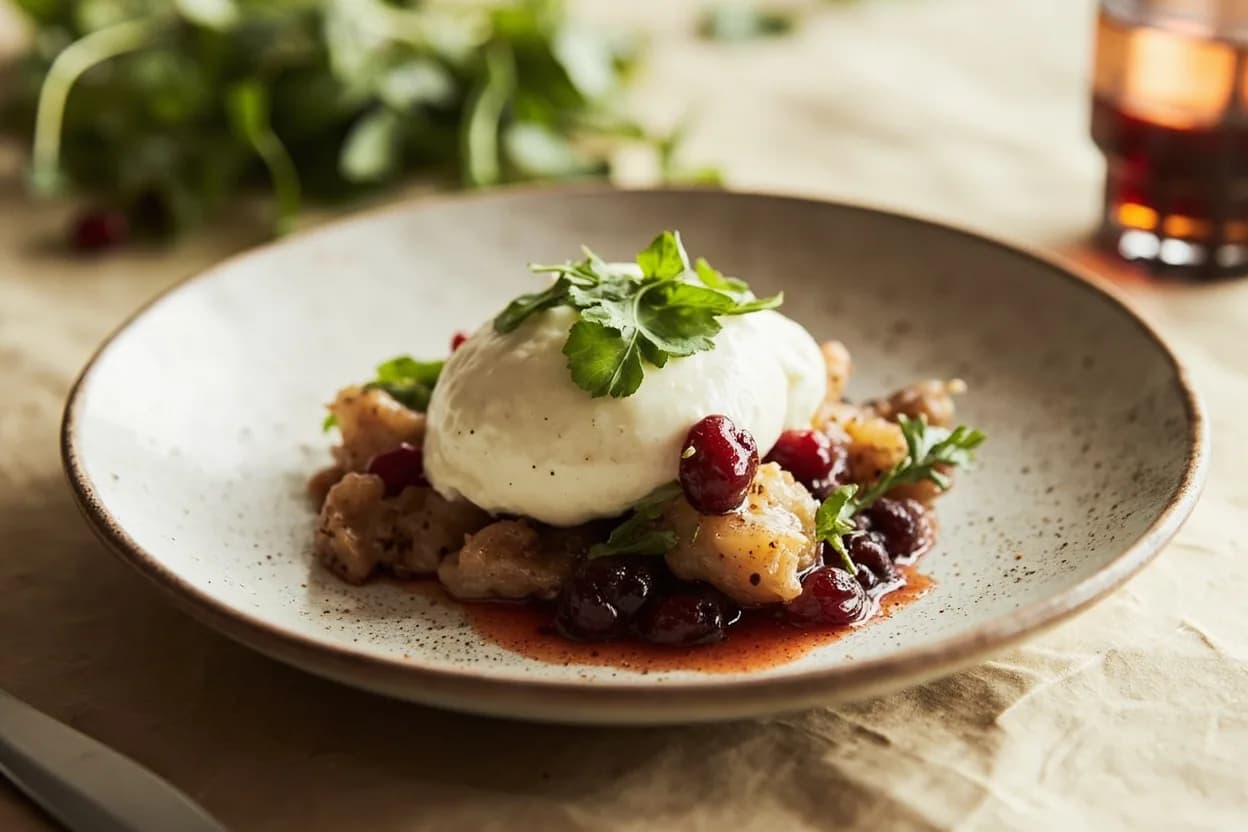
The high-acid, bitter-almond character of Amarena cherries plays against the cream exactly as tomato does, with a festive sweetness that makes a striking antipasto.
- Calabrian chili oil
Capsaicin heat and fruity chili aroma cut dairy fat immediately; the combination has become a restaurant staple precisely because the contrast is so decisive.
- Anchovy fillets
Intense umami and fishiness from cured anchovies dissolve into the cream on the palate, producing an almost oceanic depth with no fishiness remaining — a bold Puglian move.
- Truffle honey
Floral sweetness from honey plus earthy sulphurous truffle aroma wrap around the milk fat in a way that reads as opulent without sweetness overwhelming.
- Compressed watermelon
Chilled, dense watermelon delivers pure sucrose contrast and water-freshness; the combination is stunning in summer when both are at peak.
Tread carefully
- Aged hard cheeses (Pecorino, aged Parmesan)avoid
Both components are strong dairy but in opposite directions — the cream reads as bland and the aged cheese loses its sharpness; the plate is muddy and one-note.
- Heavy cream-based saucesavoid
Doubling cream on cream produces a palate-coating richness with no contrast or acid relief; the dish becomes cloying within a few bites.
- Overly bitter greens (raw radicchio, endive)avoid
Intense bitterness overwhelms burrata's delicate milkiness rather than complementing it; opt for milder bitter greens like arugula if you want that edge.
How to use it
- Serve at room temperature — cold burrata is rubbery and flavourless; pull it from the fridge 30 minutes before plating
- Tear open, don't slice — cutting cleanly loses the dramatic stracciatella flow
- Finish with flaky salt (Maldon) to season the cream as it spreads across the plate
- Pair with high-acid elements always on the same plate to cut richness
- Use within 24 hours of purchase; freshness is the single most important quality variable
Appears in
Related flavours
- Fresh mozzarella
The structural parent of burrata — same milky base, less cream; pairings largely transfer but mozzarella tolerates heat where burrata cannot
- Stracciatella
The inner filling of burrata sold separately; identical pairing logic, often used as a pizza topping or pasta finish
Shares the fresh, mild, milky character; works similarly with tomato and honey but has more grainy texture and slightly more acid
References
- 1.The Oxford Companion to Cheese — Donnelly, C. (ed.), Oxford University Press, 2016
- 2.Cheese and Culture — Kindstedt, P., Chelsea Green Publishing, 2012
- 3.Tasting Rome — Minchilli, K. & Zucker, A., Clarkson Potter, 2016
Confidence: high
Notes
Origin and seasonality
Burrata was invented in Andria, Puglia, around the 1920s as a way to use cream and mozzarella trimmings. Traditionally made from buffalo or fior di latte (cow's milk), the best examples are produced and consumed the same day. Summer — when tomatoes and stone fruit peak — is the natural season for burrata cookery.