Herbs
Basil
Also: Italian basil, sweet basil, Genovese basil, basilico (Italian), basilic (French)
The perfume of summer kitchens from Genoa to Marseille — sweet, clove-tinged, and so volatile that it is best treated like a spice: added at the last possible moment or never heated at all.
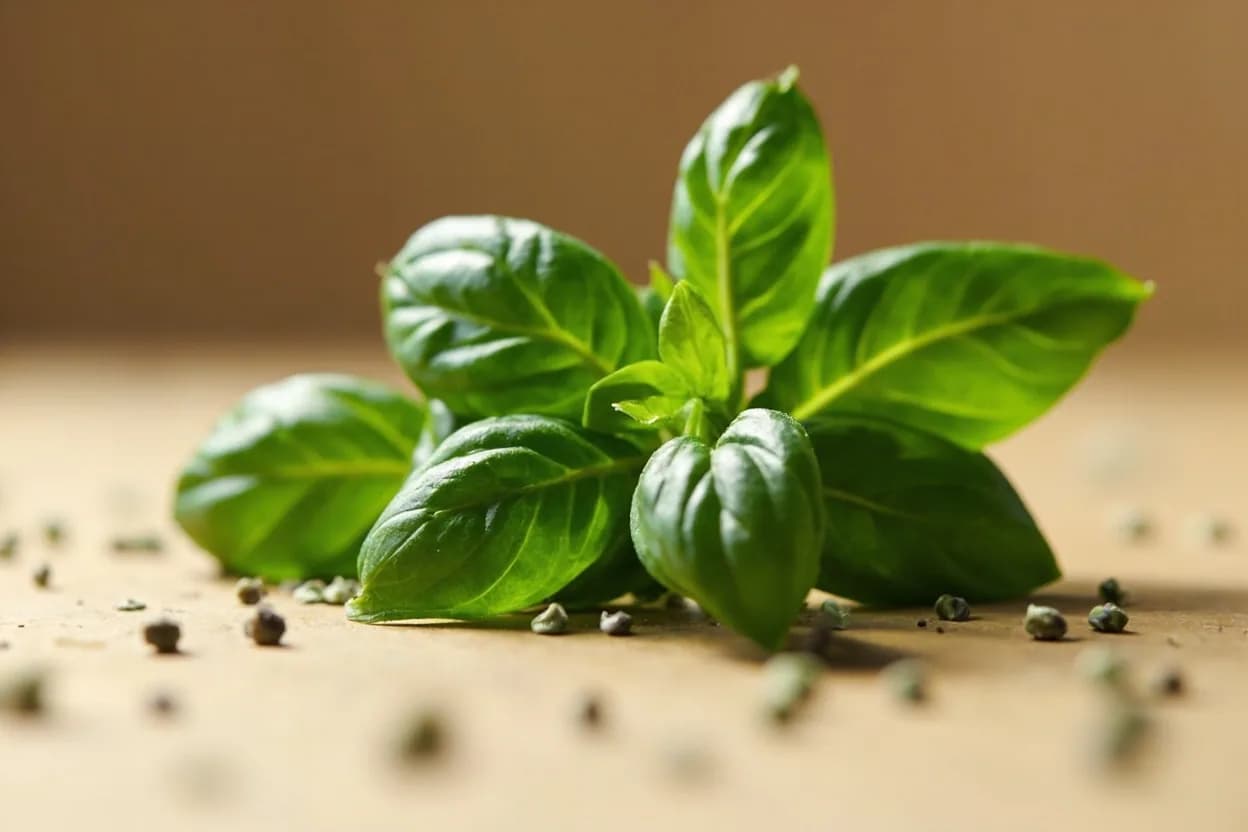
Sweet basil (Ocimum basilicum) is a tender annual herb native to tropical Asia, cultivated for thousands of years in the Mediterranean basin and now one of the world's most recognizable culinary herbs. Genovese basil — the large-leafed Italian variety prized for pesto — dominates Western cooking. Its flavor is driven primarily by linalool and methyl chavicol (estragole), producing a distinctive sweetness with clove-like warmth and a faint anise undertone. Basil's aromatic compounds are among the most volatile in the herb world: the leaves blacken and lose fragrance almost immediately when bruised aggressively or exposed to heat. This fragility is also its charm — it rewards gentle handling and last-second addition.
In photos
Flavour profile
Classic pairings
- TomatoItalian
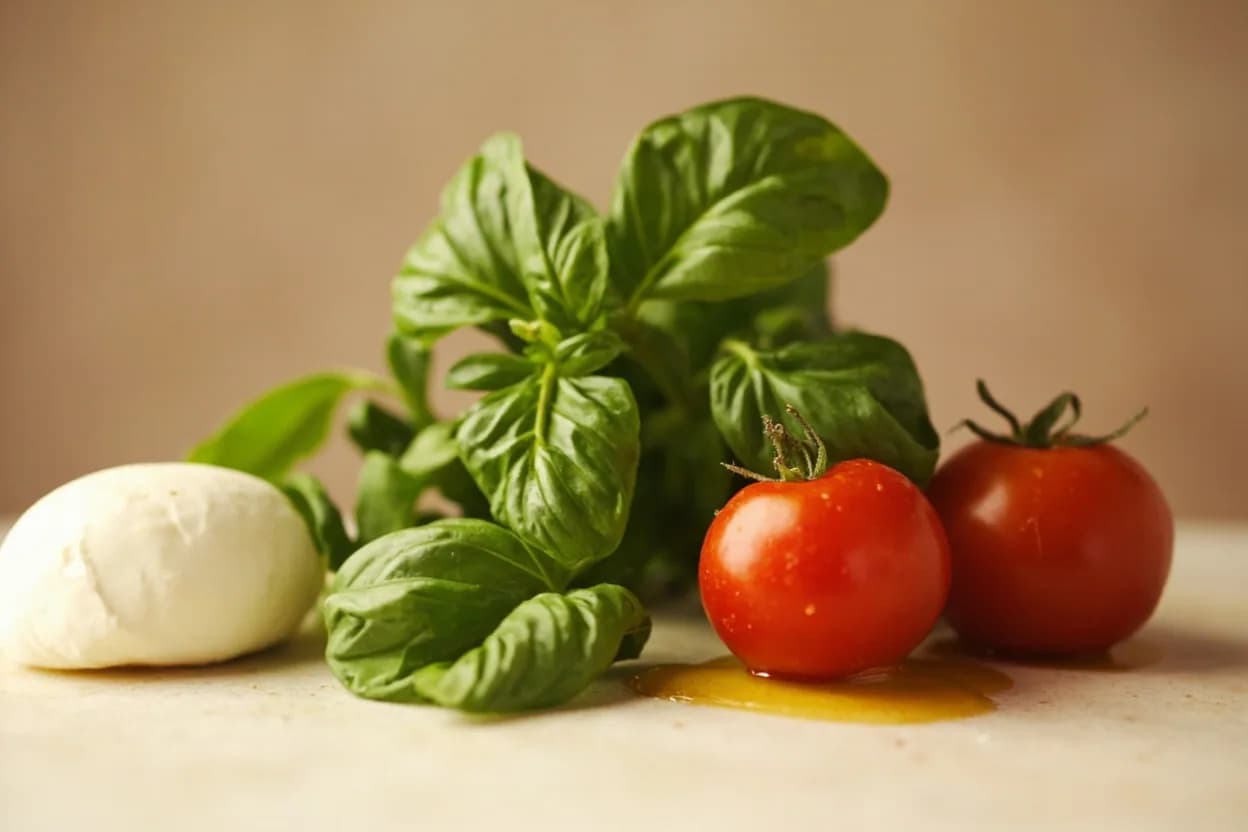
The most canonical herb-vegetable pairing in Western cooking: basil and ripe tomato share aromatic compounds that amplify each other; the herb's sweet-clove volatiles make a summer tomato taste more like itself. The pairing is equally perfect raw (caprese, bruschetta) and briefly cooked (marinara).
- Fresh mozzarellaItalian
Caprese — sliced tomato, fresh mozzarella, basil, olive oil — is the defining expression of this triple pairing; the dairy fat in mozzarella traps and carries basil's aromatics, making each bite more fragrant than the herb alone.
- Extra-virgin olive oilItalian
Basil pesto is the proof: extra-virgin olive oil is the ideal fat medium for basil's volatile aromatics, emulsifying them across Parmesan and pine nuts while its own grassy, fruity flavors reinforce the herb's Mediterranean character.
- Parmesan (Parmigiano-Reggiano)Italian
Aged Parmesan's crystalline umami and sweet caramel depth are the structural counterpoint in pesto to basil's fresh herbaceous brightness; the two define Ligurian cuisine together.
- Pine nutsItalian
Classically toasted for pesto, pine nuts contribute buttery, mild nuttiness that cushions basil's intensity without competing with it — the fat in the nuts traps aromatic compounds and releases them slowly.
- GarlicItalian
Basil and garlic are constant companions in Mediterranean cooking from pistou to bruschetta; garlic's sulfur compounds provide savory depth that grounds basil's sweet volatility into something more substantial.
- LemonItalian
A squeeze of lemon over fresh basil, or lemon zest in a basil dressing, brightens the herb's aromatics and adds acid contrast that prevents the sweetness from becoming cloying; used in Ligurian and Provençal preparations alike.
Adventurous pairings
- Strawberry
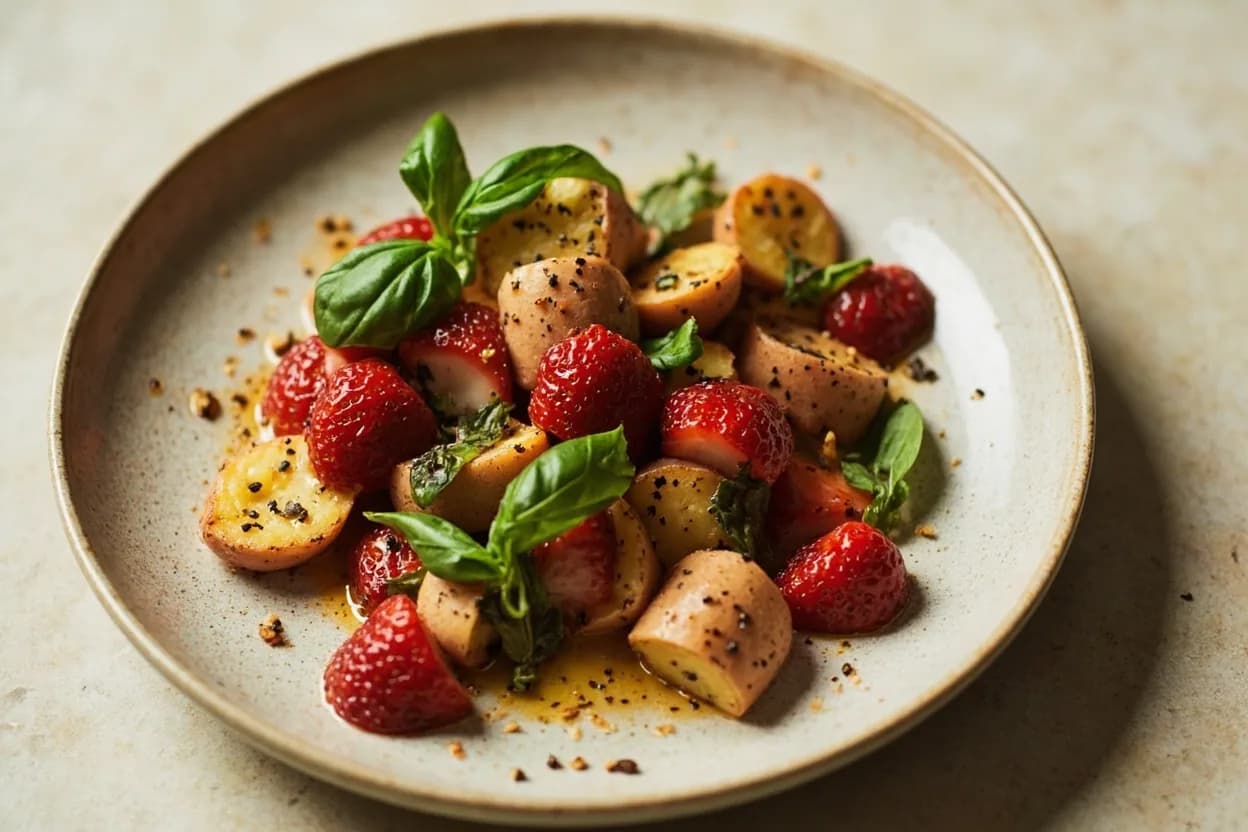
Basil and strawberry is a modern classic: muddled basil in strawberry cocktails, basil-macerated strawberries, or basil oil on a strawberry tart all work because the herb's linalool amplifies the berry's floral ester profile in a way that mint does not.
- White chocolate
White chocolate ganache infused with basil — via cream heated with basil leaves — produces a dessert that is simultaneously sweet, creamy, and herbaceous; the fat carries the aromatics with unusual fidelity.
- Watermelon
Cold watermelon with torn basil, flaky salt, and a thread of good olive oil is a summer salad of deceptive sophistication; both share aromatic compounds in the green-floral family, and the salt and oil lock the basil's fragrance into the fruit.
- Burrata with balsamic
Reducing balsamic to a syrup concentrates its acidity and sweetness into something that contrasts sharply with burrata's cream and basil's herb freshness — the three together span acid, fat, and aromatics in a single forkful.
- Peach or nectarine
Stone fruit and basil share linalool-family aromatics; a peach and basil salad, or basil-macerated grilled peaches, uses the herb to amplify the fruit's floral character rather than merely adding greenness.
Tread carefully
- Prolonged direct heatavoid
Basil's aromatic compounds — linalool, methyl chavicol, eugenol — are among the most volatile in the herb world and degrade rapidly above 65°C; boiling or long sautéing leaves nothing behind but a slightly bitter, black shadow of the herb.
- Blending aggressively without iceavoid
Blade friction heats basil above its oxidation threshold in seconds, blackening the chlorophyll and turning the color from vivid green to dull brown-grey; when making pesto or basil oil in a blender, work in short pulses with cold oil or over ice.
- Strong fermented flavors (miso, fish sauce, blue cheese)avoid
Basil's delicate, sweet aromatics are overwhelmed and lost next to powerfully fermented flavors; it lacks the structural boldness of Thai basil or shiso to hold its own against fermented intensity.
- Red meat braises and stewsavoid
Adding fresh basil to a long-cooked beef or lamb dish is pointless — the aromatics evaporate entirely within the first 10 minutes; dried basil has more persistence (though less quality) in long braises if an herb note is needed.
How to use it
- Tearing rather than cutting — a knife bruises cells mechanically and accelerates oxidative blackening; torn leaves expose less cut surface
- Adding whole leaves off heat to pasta, pizza, and soups in the final seconds before serving
- Making cold-process basil oil: blanch 10 seconds in boiling salted water, shock in ice water, squeeze dry, then blend with cold olive oil — locks green color and aromatics
- Chiffonade: rolling tightly and slicing into thin ribbons to release aromatics while minimizing bruising relative to chopping
- Blooming: dropping a few leaves into warm (not boiling) oil for a minute to gently extract aromatics into the fat
- Making pesto: the classic Ligurian mortar method (pestle in a circular motion, no percussion) develops less heat than a blender and produces a more textured, brighter result
Appears in
Related flavours
Thai basil's estragole-eugenol profile is bolder, spicier, and more anise-forward than Italian basil's linalool sweetness; heat-stable where Italian basil is not.
Shiso is the East Asian aromatic equivalent — also an annual herb with complex aromatics used as a table herb and finishing green, but with a distinctive anise-mint-cinnamon profile.
- Oregano
Oregano is basil's dried-herb counterpart in Italian cooking — earthier, more robust, heat-stable, and used where basil's fragility would make it pointless.
References
- 1.Mastering the Art of French Cooking — Julia Child
- 2.Essentials of Classic Italian Cooking — Marcella Hazan
- 3.The Flavor Bible — Karen Page & Andrew Dornenburg
- 4.On Food and Cooking — Harold McGee
- 5.Tartine — Chad Robertson
Confidence: high
Notes
Why basil turns black — and how to prevent it
Basil blackens through two simultaneous reactions: enzymatic oxidation (polyphenol oxidase reacting with oxygen when cells are ruptured) and chlorophyll degradation. Both are accelerated by heat and mechanical damage. The professional solutions are: blanch quickly and shock in ice (for purees and oils), tear rather than cut, add at the last second, and work cold when blending. Basil oil made by blanching, shocking, and cold-blending stays vivid green for days; basil leaves chopped at room temperature turn grey within minutes.
Pesto: mortar versus blender
Traditional Ligurian pesto (Disciplinare del Pesto Genovese DOP) is made in a marble mortar with a wooden pestle using a circular grinding motion — never percussion. This method generates far less heat than a blender, preserves more volatile aromatics, and produces a slightly rough emulsion with visible texture rather than a smooth paste. The difference is most apparent in the smell: mortar pesto is perceptibly more fragrant. For home cooks, a food processor with cold oil and short pulses is an acceptable compromise; a running blender is the most damaging method.