Herbs
Thai Basil
Also: horapa (Thai), rau húng quế (Vietnamese), Asian basil, sweet Thai basil
The anise-clove perfume of Southeast Asian cooking — bolder, spicier, and far more heat-stable than Italian basil, it thrives in the wok and disappears into coconut curries as a finishing note.
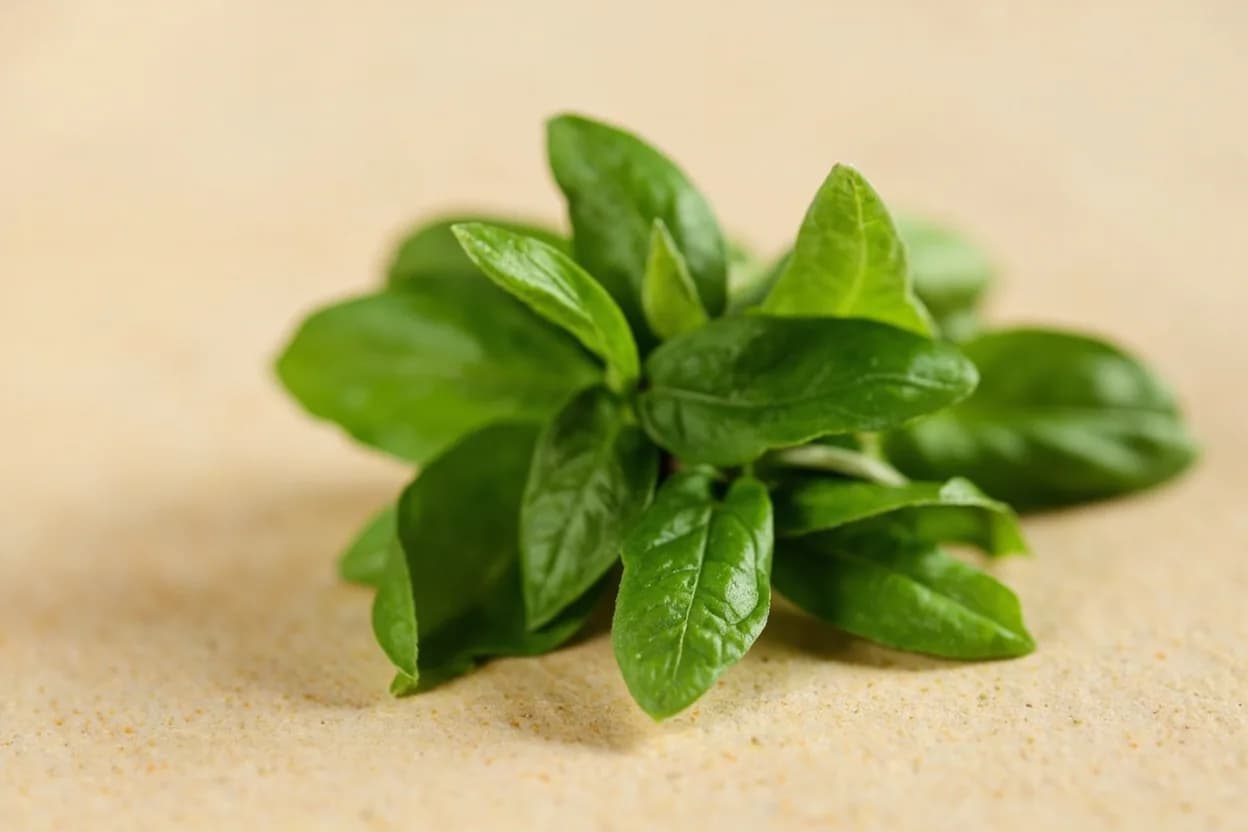
Thai basil (Ocimum basilicum var. thyrsiflora) is a cultivar of sweet basil distinguished by its purple stems, slightly serrated dark-green leaves, and pink-purple flower clusters. Its flavor is considerably more assertive than Italian basil, with a pronounced anise sweetness from high estragole content, warm clove notes from eugenol, and a faint peppery heat. Crucially, Thai basil is far more heat-stable than Italian basil — where Italian basil wilts and blackens in seconds, Thai basil can be added to a screaming hot wok and hold its color and flavor long enough to perfume the oil and wilt gracefully. It is the finishing herb of Thai stir-fries and a key garnish for pho.
In photos
Flavour profile
Classic pairings
- Oyster sauceThai
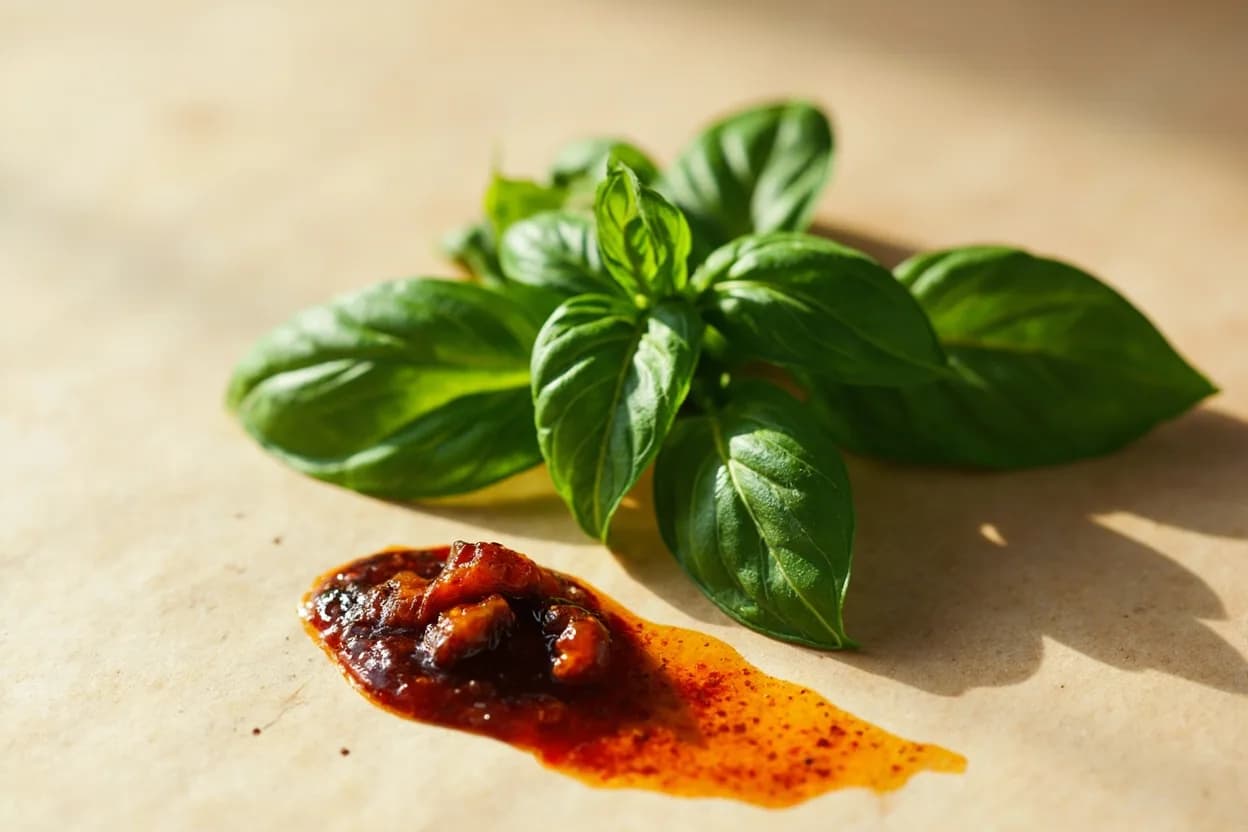
The combination of oyster sauce's sweet, thick umami and Thai basil's anise-clove perfume is the very definition of pad krapow (Thai basil stir-fry) — oyster sauce provides the caramelized depth that carries the herb's aromatic intensity.
- Bird's eye chiliThai
Thai basil and bird's eye chili (prik kee nu) are inseparable in the Thai kitchen — the herb's cooling anise sweetness tempers the ferocious heat of the chili while amplifying its fruity volatility; both are added together in pad krapow.
- Coconut milkThai
Thai basil leaves floated into green and red curries at the very end contribute a fresh herbal lift that cuts through coconut milk's sweet richness; the fat in the coconut milk traps and amplifies the herb's aromatic compounds.
- Fish sauceThai
Fish sauce's fermented umami salt and Thai basil's sweet anise are a fundamental Thai flavor combination; the herb offsets fish sauce's barnyard intensity while fish sauce grounds the herb's sometimes cloying sweetness.
- Eggplant (Thai round)Thai
Thai round eggplant with Thai basil in green curry or stir-fried with garlic is a canonical pairing; eggplant's spongy, mild flesh absorbs the herb's aromatics while providing textural bulk.
- Ground pork or chickenThai
The minced-meat base of pad krapow exists partly to carry Thai basil's aromatics — fat-dispersed anise and clove compounds from the herb permeate every bite of the meat rather than remaining in a separate herb stratum.
- Star aniseVietnamese
In Vietnamese pho, Thai basil is served alongside star anise-scented broth; both share anethole as a key aromatic compound, making them powerfully resonant — the fresh herb echoes and brightens the broth's deeper anise note.
Adventurous pairings
- Strawberry
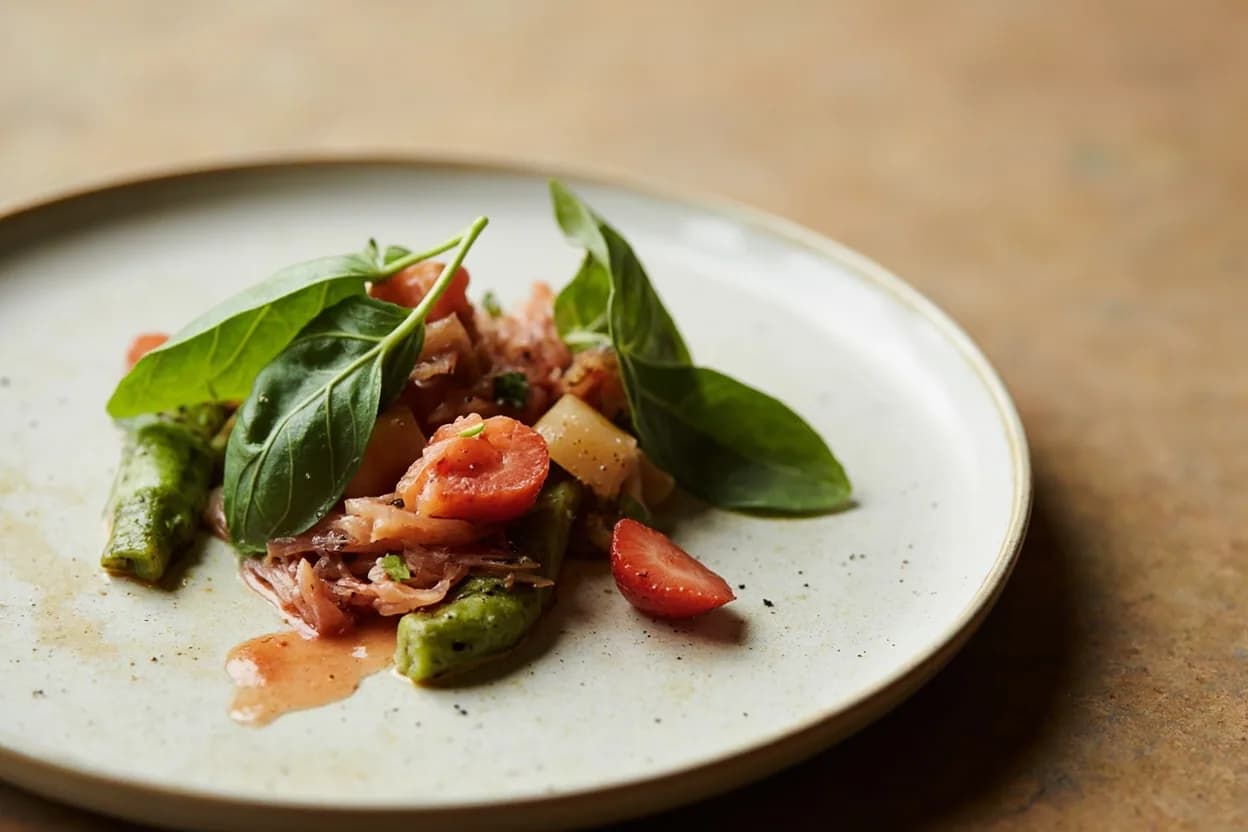
Thai basil's anise-clove warmth plays extraordinarily well with ripe strawberry in cocktails, sorbets, and compotes — the combination is more complex and less cloying than strawberry-Italian basil, which has become a cliché.
- Mango
Fresh mango's tropical sweetness and Thai basil's spiced anise are a natural pairing found in Southeast Asian salads and drinks; both share aromatic terpenes in the orange-citrus-floral family.
- Dark rum
A Thai basil mojito or daiquiri riff is genuinely surprising: rum's molasses sweetness, lime acid, and Thai basil's clove-anise create a layered tropical cocktail that outperforms any mint version for complexity.
Thai basil on burrata with a drizzle of good olive oil and chili flakes swaps Italian for Southeast Asian in an almost seamless exchange — the cream amplifies the herb's warm, aromatic volatiles into something richer and more lingering than Italian basil achieves.
- White chocolate
Thai basil-infused white chocolate ganache is a pastry chef's flourish that works because white chocolate's milky sweetness and cocoa butter fat carry Thai basil's anise-clove volatiles the way coconut milk does — intensifying rather than masking them.
Tread carefully
- Parmesan and classic Italian pasta saucesavoid
Thai basil's clove-peppery character reads as slightly medicinal against aged Italian cheese and tomato; Italian basil's linalool-dominant profile is what harmonizes with Parmesan — Thai basil creates discord.
- Adding at the very start of long braisesavoid
Unlike bay leaf or thyme, Thai basil's volatiles dissipate entirely over prolonged heat — it becomes tasteless fibrous matter with no herbal contribution. Reserve for the final 30 seconds of cooking.
- Heavy cream-based European saucesavoid
Thai basil's assertive anise-clove profile clashes with classic cream reductions built around French aromatics — the herb overwhelms and creates a confused, off-register result.
How to use it
- Adding whole leaves to a screaming-hot wok in the final 30 seconds of stir-frying — high heat briefly blooms the aromatic oils before the leaf wilts
- Stirring into curry or soup at the very end of cooking, off heat, so the residual warmth wilts the leaf without destroying volatile aromatics
- Infusing into coconut oil or neutral oil by gently warming — strained oil carries the herb's aromatics into dressings and finishes
- Deep-frying whole leaves in hot oil for 15–20 seconds to produce crispy, concentrated herb chips used as garnish in Thai stir-fries
- Muddling raw for cocktails, syrups, and cold dressings where heat must be avoided
- Laying fresh leaves over steamed or grilled dishes as a table garnish, allowing diners to incorporate the raw herb into each bite
Appears in
Related flavours
- Holy basil (krapow)
Holy basil is peppery and clove-forward with almost no anise; Thai basil is sweeter and more anise-forward. They are frequently confused but are distinct herbs that behave differently in cooking.
Shiso shares Thai basil's anise-mint aromatic family from a different botanical angle — cooler and more menthol where Thai basil is warmer and more clove.
- Italian basil
Italian basil's linalool-dominant profile makes it sweeter and less spiced than Thai basil's estragole-eugenol combination; the two are broadly substitutable in cold applications but not in wok cooking.
References
- 1.Simple Thai Food — Leela Punyaratabandhu
- 2.It Rains Fishes: Legends, Traditions and the Joys of Thai Cooking — Kasma Loha-unchit
- 3.The Flavor Bible — Karen Page & Andrew Dornenburg
- 4.On Food and Cooking — Harold McGee
Confidence: high
Notes
Thai basil vs. holy basil — a crucial distinction
Thai basil (horapa) and holy basil (krapow) are both called 'basil' in English and both appear in Thai cooking, but they are distinct cultivars with notably different flavor profiles and culinary applications. Thai basil is the herb of pho, green curry, and stir-fries where an anise-sweet note is wanted. Holy basil is the herb of pad krapow — spicier, clove-pepper forward, and with almost none of Thai basil's anise sweetness. Outside Thailand, holy basil is difficult to source fresh, and Thai basil is commonly substituted, producing a milder, sweeter result.
Three-cup chicken and the power of wok-fried basil
Taiwanese san bei ji (three-cup chicken) — named for the equal measures of soy sauce, sesame oil, and rice wine — finishes with a large handful of Thai basil leaves fried in the sauce for 30–60 seconds until the leaves turn dark, glossy, and crisp at the edges. This step transforms the herb from a fresh garnish into a deeply caramelized, slightly bitter, intensely aromatic component. It demonstrates Thai basil's unique heat stability: the same treatment would turn Italian basil into black, tasteless shreds.