Fats, Pastes & Condiments
Toasted Sesame Oil
Also: roasted sesame oil, dark sesame oil, Asian sesame oil, goma abura
The most aromatic finishing oil in Asian cooking — a few drops transform a dish.
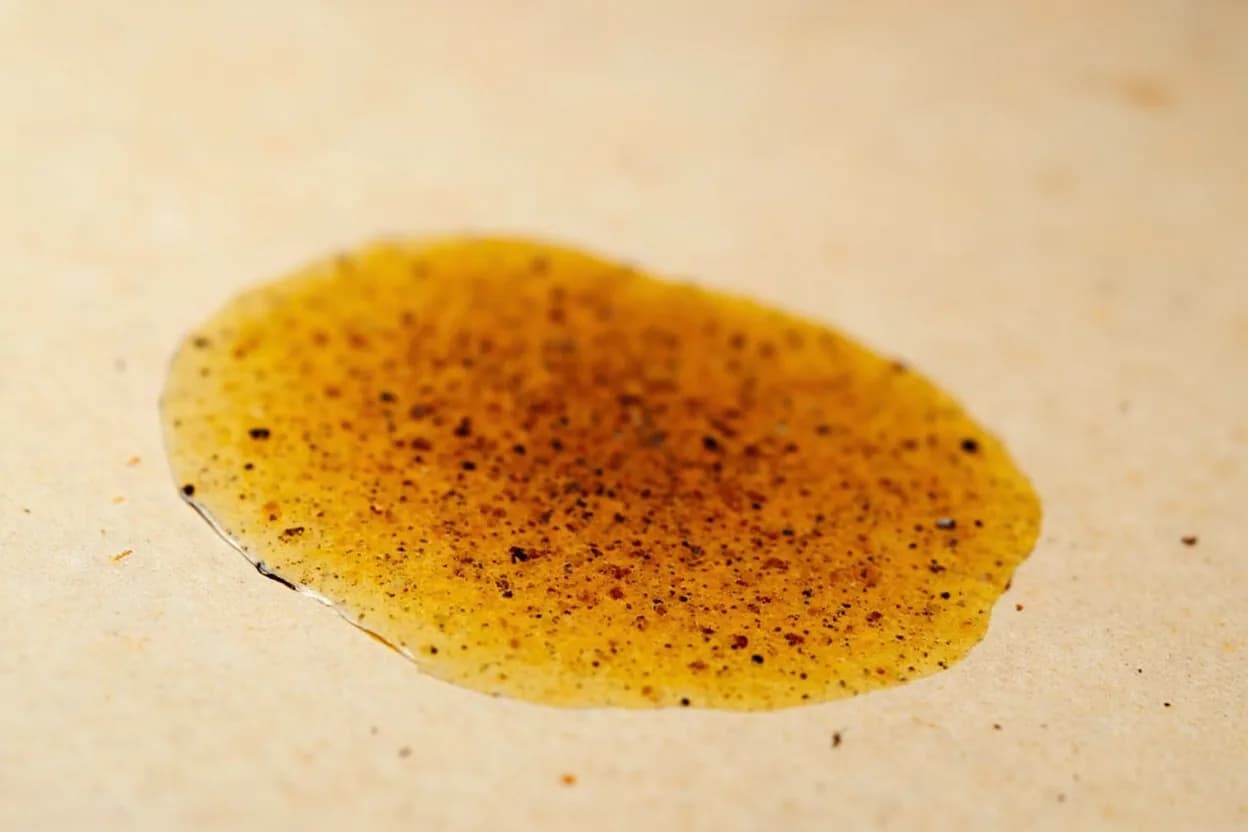
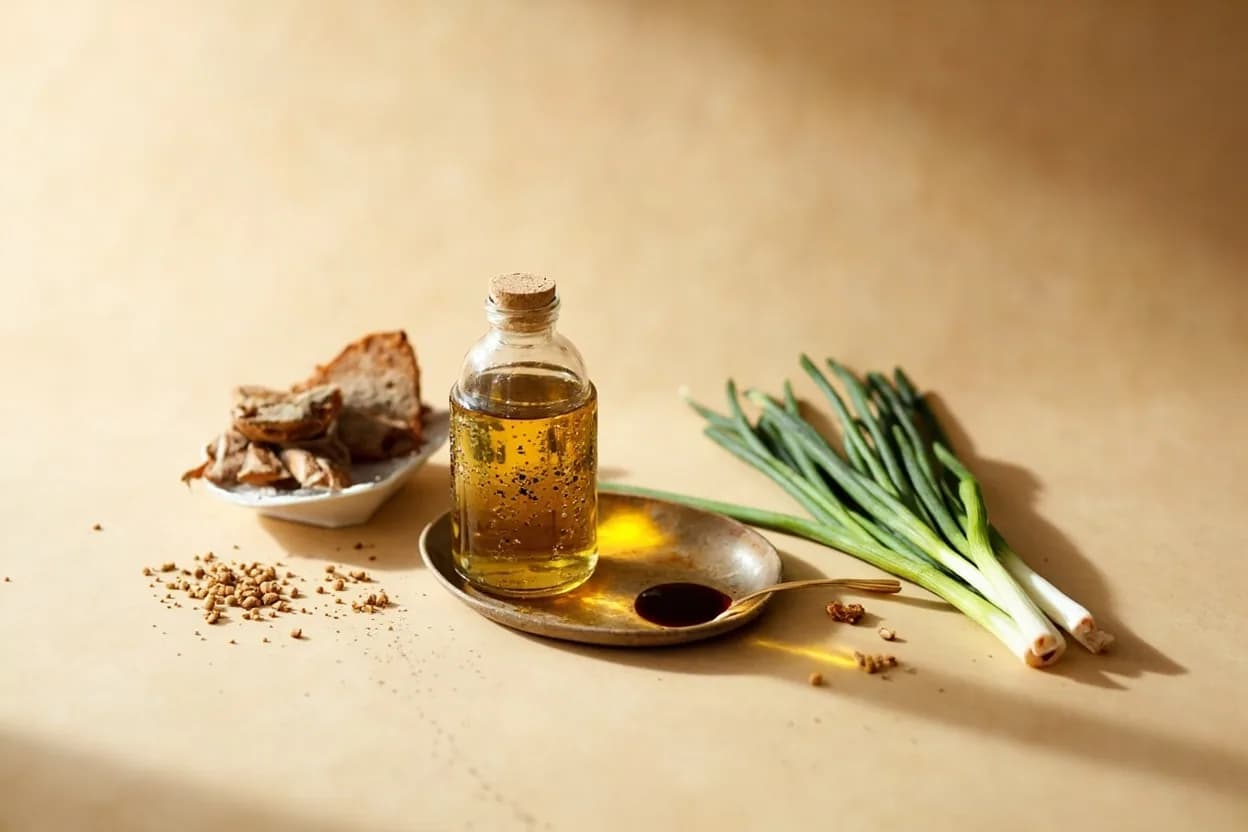
Toasted sesame oil is pressed from sesame seeds that have been roasted to a deep amber before extraction. Unlike light (untoasted) sesame oil, it carries an intense, almost smoky nuttiness dominated by pyrazines and furans generated during roasting. It is far too volatile to cook with at high heat; its role is strictly as a finishing oil, seasoning sauce, or aromatic drizzle. Chinese, Korean, and Japanese cuisines each treat it as a non-negotiable pantry staple.
In photos
Flavour profile
Classic pairings
- Soy sauceChinese, Japanese, Korean
The canonical duet of East Asian cuisine — soy's umami salt and sesame's fat-soluble aromatics create a richer, more rounded seasoning than either alone.
- GingerChinese
Ginger's sharp, citrusy heat cuts through sesame oil's richness; together they form the backbone of countless cold noodle dressings and dumpling dips.
- Scallions (green onions)Chinese, Korean
Their grassy, sulfurous sharpness contrasts with sesame oil's fat, brightening the finish and preventing heaviness.
- Rice vinegarChinese
Acid lifts and clarifies the sesame richness; the two together are the core of many Chinese cold salad dressings.
- GarlicKorean, Chinese
Raw or briefly bloomed garlic amplifies the roasted savory character of sesame oil, deepening overall savoriness through thiosulfinate-pyrazine synergy.
- CucumberChinese, Korean
Cool, mild cucumber absorbs sesame oil's aroma without competing; the pairing appears across pai huang gua (smashed cucumber) and Korean banchan.
- Cold soba noodlesJapanese
Soba's earthy buckwheat flavor has an affinity for sesame's nuttiness; a toss of sesame oil keeps strands separate and richly coated.
- Spinach (blanched)Japanese
Gomae-style: sesame oil tames spinach's oxalic bitterness while its fat carries fat-soluble chlorophyll pigments, making greens taste brighter.
Adventurous pairings
A drizzle of toasted sesame oil over 70%+ chocolate intensifies shared roasted, bitter, and nutty notes — used in modern confectionery and ganache.
- Roasted cauliflower
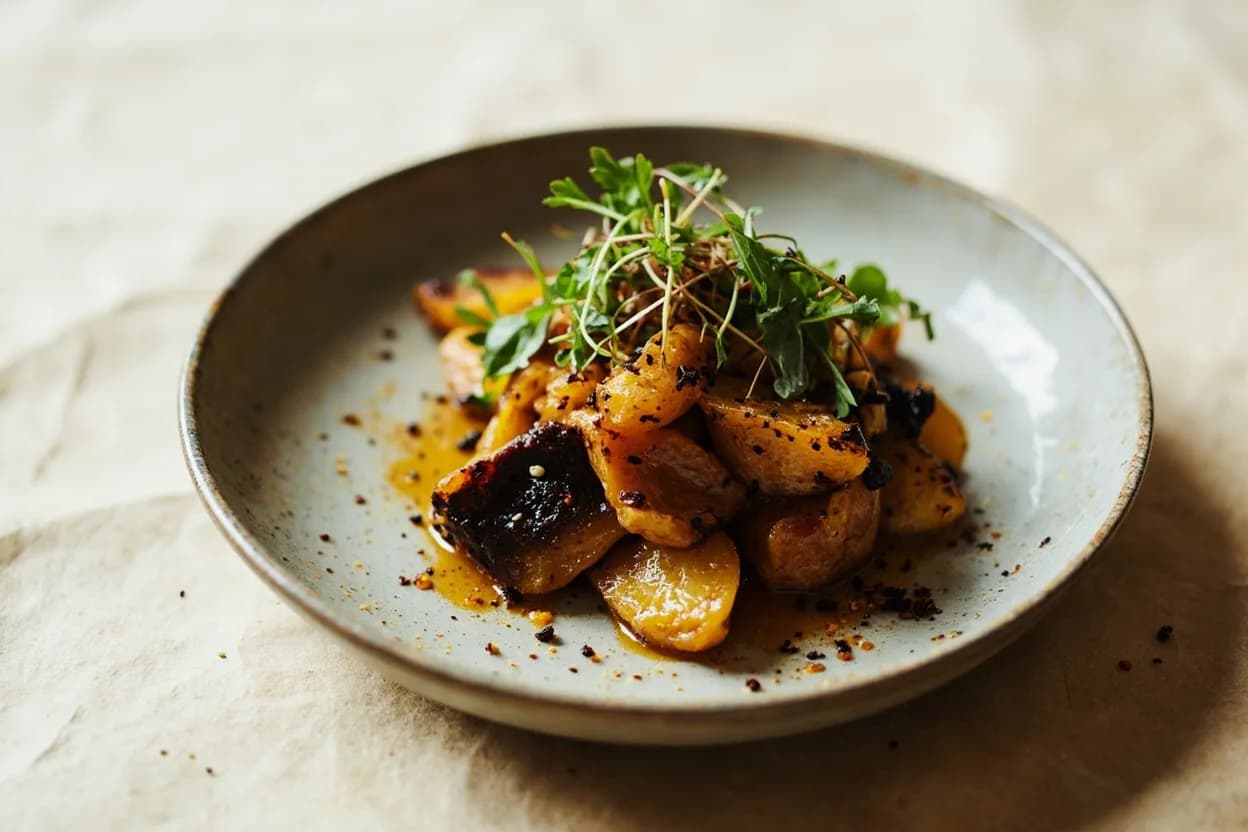
Sesame oil's pyrazines echo cauliflower's own Maillard compounds when added post-roast; finish with a scatter of toasted seeds for textural coherence.
- Avocado
The oil's roasted character provides contrast to avocado's buttery neutrality; a few drops with flaky salt and lime replaces the need for complex sauce.
Drizzled instead of olive oil on hummus, sesame oil creates a Middle-Eastern-meets-East-Asian bridge that deepens the tahini character already present.
- Ripe stone fruit (peach, nectarine)
Furanone volatiles in roasted sesame harmonize with the lactone character of ripe peach — a pairing used in avant-garde salads and dessert finishes.
Tread carefully
- High-heat fryingavoid
Toasted sesame oil's aromatic compounds burn and turn acrid above 170°C / 340°F; reserve it for finishing only.
- Delicate white fish (raw)avoid
The oil's intensity overwhelms subtle sashimi-grade fish; use light sesame oil or none at all for such applications.
- European dairy-forward saucesavoid
Beurre blanc, cream reductions, and similar French sauces clash tonally — the roasted Asian register conflicts with the fresh-dairy character.
How to use it
- Add as a finishing drizzle off heat — the very last step
- Whisk into cold dressings and marinades as an aromatic fat
- Blend with chili oil and soy for dipping sauces
- Use sparingly — 1 tsp is often enough for 4 servings
- Combine with neutral oil to temper intensity in stir-fry marinades
- Store tightly sealed away from light; flavor degrades quickly once opened
Appears in
Related flavours
The solid analog — same roasted seed, different texture; the two are often combined in dan dan sauce and cold sesame noodle dressings.
Middle Eastern untoasted sesame paste — paler, earthier, far less smoky; a counterpart that shows how roasting transforms the same seed.
- Chili Oil
Natural ally in Sichuan-style finishing; sesame oil's nuttiness softens chili oil's raw heat.
References
- 1.On Food and Cooking — Harold McGee
- 2.The Food of China — E.N. Anderson
- 3.The Japanese Kitchen — Hiroko Shimbo
- 4.Korean Home Cooking — Sohui Kim
Confidence: high
Notes
Buying
Quality varies enormously. Korean brands (Ottogi, Beksul) and Taiwanese brands (Kadoya is Japanese) tend toward a lighter, more fragrant roast; Chinese brands often go darker and earthier. Avoid bargain blended products labeled 'sesame-flavored oil' — they use artificial pyrazine flavoring.
Light vs. Toasted
Light or 'pure' sesame oil is pressed from raw seeds and has a mild, neutral flavor suitable for cooking. Toasted sesame oil is a condiment — its fragrance is entirely different and irreplaceable.