Herbs
Shiso (Perilla)
Also: perilla, beefsteak plant, oba (Japanese), kkaennip (Korean), tía tô (Vietnamese), Japanese basil
A jagged-edged leaf that doesn't know which herb it wants to be — simultaneously basil, mint, anise, and cinnamon — and is all the more captivating for it.
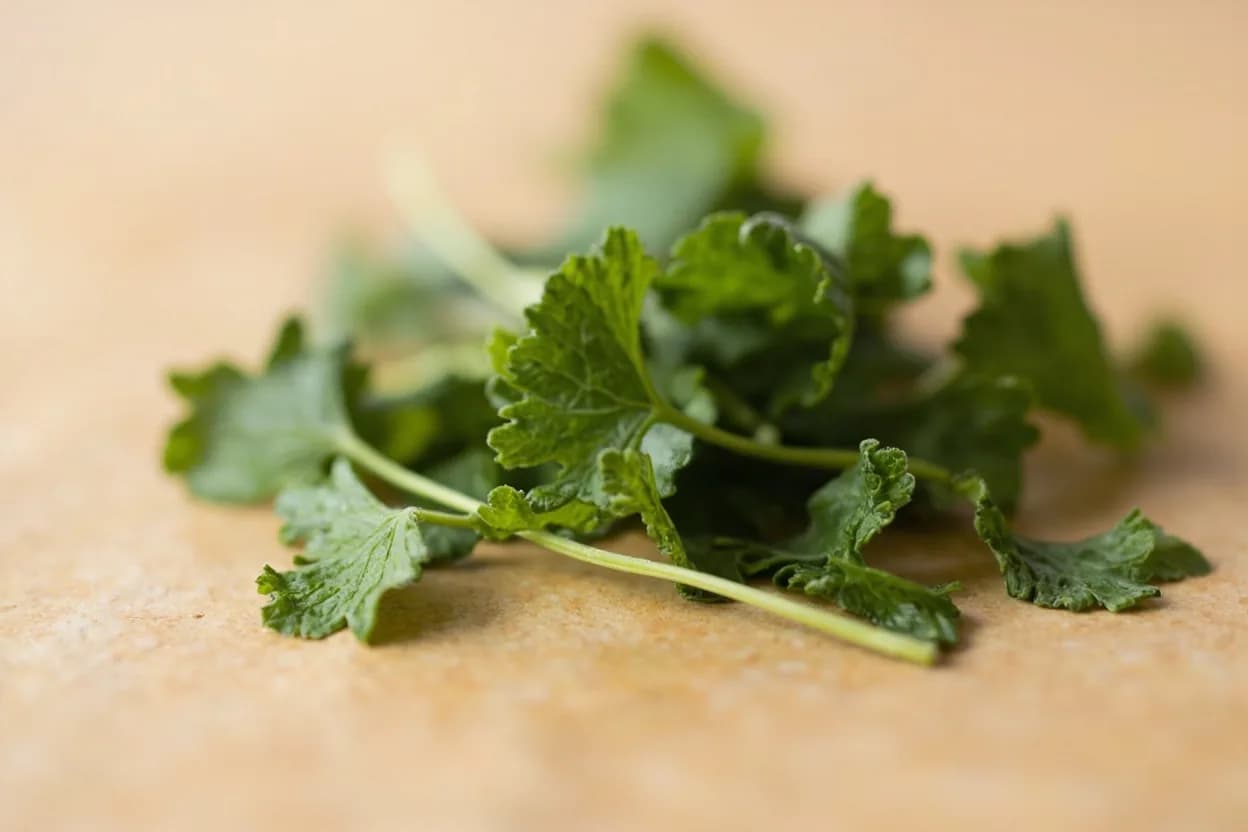
Shiso (Perilla frutescens var. crispa) is a large-leafed annual herb in the mint family, native to the mountainous regions of China and India and cultivated for centuries across Japan and Korea. Green shiso (ao-jiso) carries a complex aromatic profile — simultaneously anise, mint, basil, and faintly citrus — driven by perillaldehyde, an aldehyde compound unique to this plant. Red shiso (aka-jiso) is more astringent and earthy, used primarily in pickling (umeboshi, shibazuke). The leaf can be used whole as a wrap, shredded as a garnish, deep-fried as tempura, or muddled into drinks and sauces. Its flavor is ephemeral — it diminishes quickly with heat — making timing critical.
In photos
Flavour profile
Classic pairings
- Raw fish (sashimi/sushi)Japanese
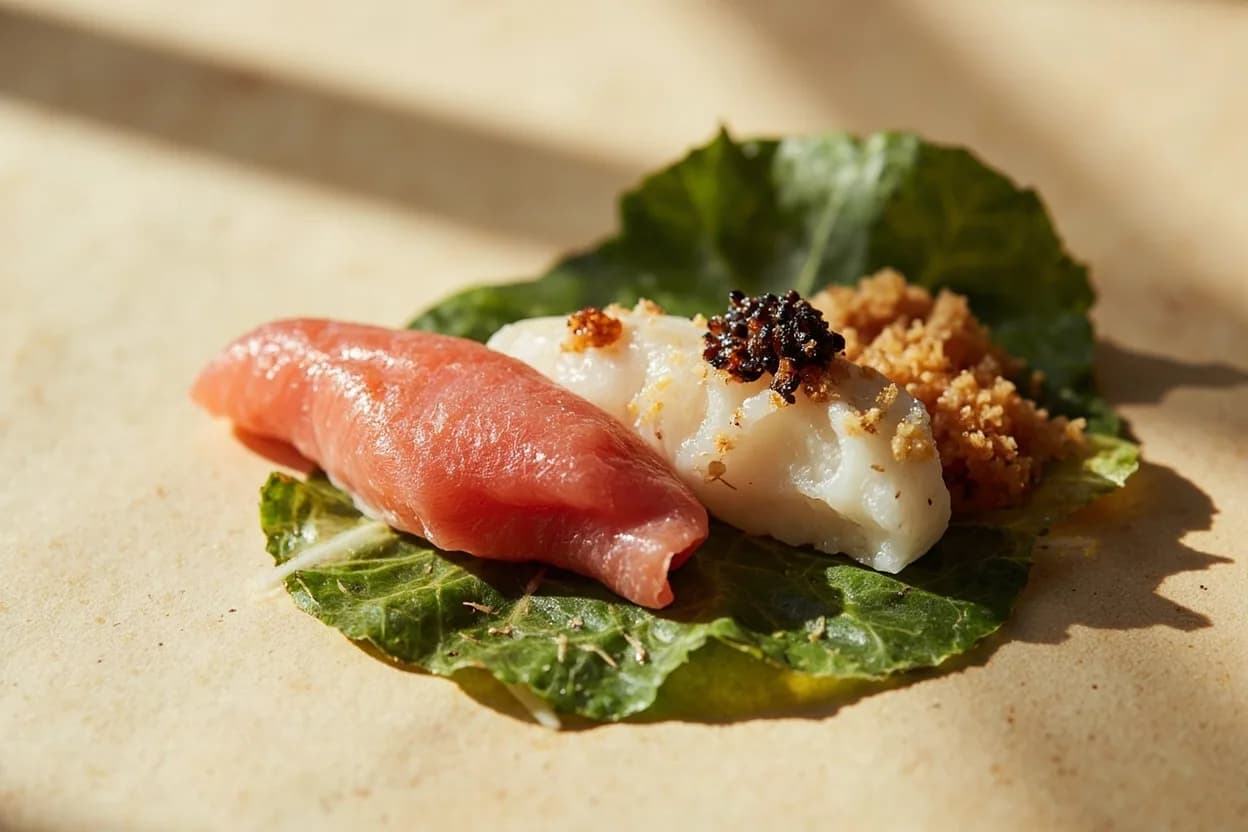
Shiso is sashimi's traditional bed and garnish because perillaldehyde has proven antimicrobial properties and its bright anise-mint freshness cuts through the oceanic richness of fatty fish like salmon, mackerel, and toro.
- Umeboshi (pickled plum)Japanese
Red shiso is inseparable from umeboshi — it provides the color (red), astringency, and part of the pickled sour profile; green shiso on the table alongside umeboshi onigiri is equally canonical.
- SesameKorean
Toasted sesame and shiso is a cornerstone Korean combination in kkaennip (perilla) namul and wraps; sesame's nutty depth is the perfect foil for shiso's sharp, herbal freshness.
- TofuJapanese
Cold tofu with shredded shiso, soy, and grated ginger is a classic Japanese hiyayakko; the herb's aromatics lift the neutral curd into something fragrant and complete.
- Tempura batterJapanese
Whole shiso leaves dipped in very light tempura batter and fried for seconds are a canonical Japanese appetizer; the batter seals and briefly concentrates the volatile aromatics before they escape.
- Grilled pork belly (samgyeopsal)Korean
Korean perilla leaves are used as wraps for grilled pork belly, with garlic and doenjang; the cool herbal freshness is the essential counterpoint to the fat and char.
Adventurous pairings
- Watermelon
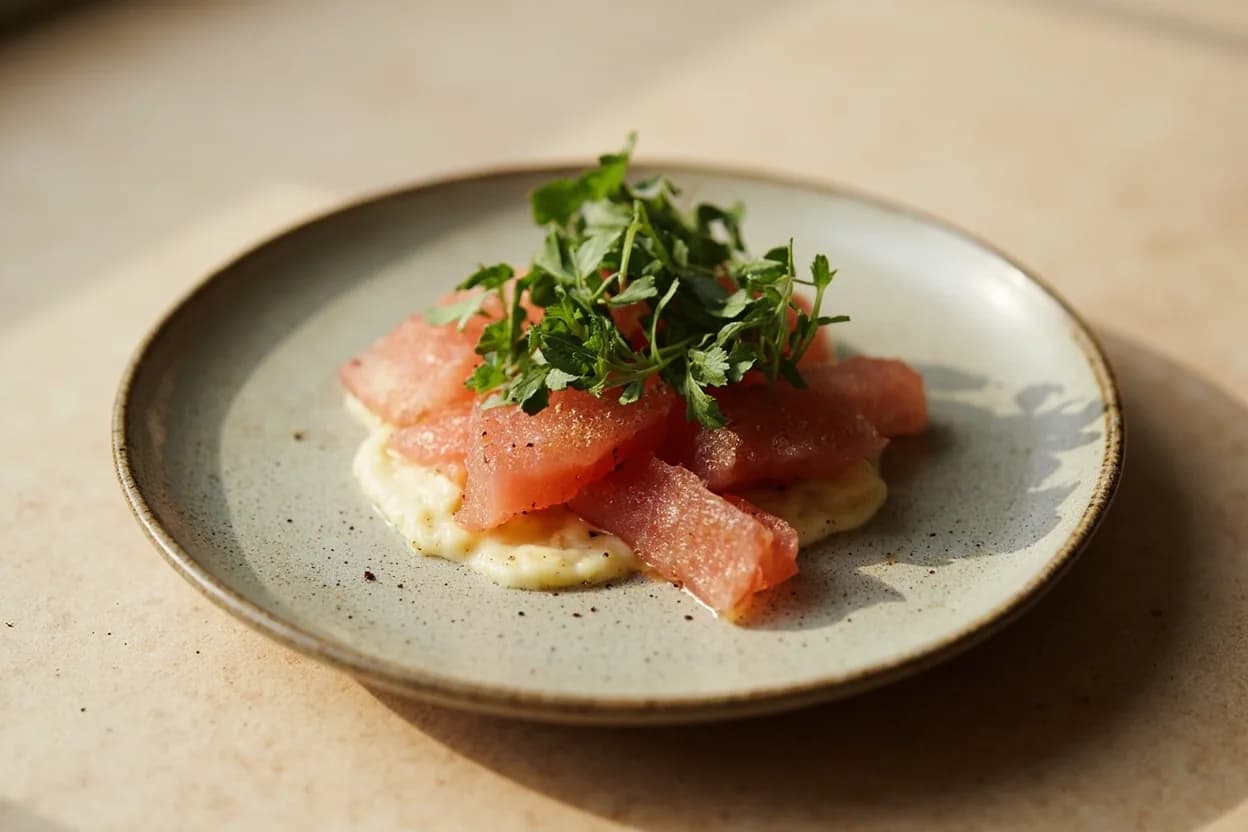
Shredded green shiso scattered over watermelon with a few grains of flaky salt is a Japanese summer salad move that works because the herb's anise note echoes compounds in watermelon rind, and both share a cooling character.
Shiso with creamy burrata bridges Italian and Japanese sensibilities; the herb's anise-mint aromatics cut through the cream in a way that Italian basil does but with an exotic, more complex register.
- Strawberry
Green shiso muddled into a strawberry shrub or scattered over strawberry desserts amplifies the berry's floral esters and adds an aromatic backbone that elevates what might otherwise be a flat sweetness.
- Avocado
Shiso avocado toast or hand rolls — the herb's sharpness and mint-anise notes cut through avocado's buttery richness and add a fragrance dimension that lime alone cannot achieve.
Candied shiso or shiso powder in dark chocolate ganache creates a bold, complex pairing: the chocolate's bitterness and shiso's anise-mint brightness occupy opposite ends of the flavor spectrum and create contrast rather than competition.
Tread carefully
- Prolonged high heatavoid
Perillaldehyde, shiso's signature aromatic compound, is extremely volatile and evaporates rapidly above 100°C; adding shiso early in a braise or stir-fry destroys what makes the herb worth using — always add last or use raw.
- Strong blue cheeseavoid
Shiso's delicate, multi-layered aromatics are annihilated by the aggressive ammoniacal and butyric notes of Roquefort or Gorgonzola; the herb simply vanishes rather than contributing.
- Heavy red wine reductionsavoid
Tannin-heavy red wine sauces overwhelm shiso's nuanced profile; the herb belongs in fresh, acidic, or lightly dressed preparations rather than deeply reduced savory sauces.
How to use it
- Chiffonade (fine shreds) for garnishing sashimi, noodles, and salads — releases aromatic oils while keeping texture
- Whole-leaf wrapping for Korean ssam (grilled meats), Japanese temaki, or Vietnamese cuốn
- Tempura frying: whole leaves fried in very light batter for 30–45 seconds — enough to set the batter without destroying the herb
- Muddling into dressings, cocktails, and cold sauces to release perillaldehyde without heat degradation
- Curing: packing layers of shiso with salt and sugar around fish (similar to gravlax) to transfer aromatics
- Pickling red shiso with umeboshi or making shiso juice (yukari) by salting, squeezing, and drying the leaves
Appears in
Related flavours
Thai basil shares the anise-clove aromatic family; shiso is cooler and more mint-forward, Thai basil spicier and warmer — they are complementary expressions of the same aromatic note.
- Mint
Mint occupies shiso's cool, mentholated register; they can be substituted in very loose approximations but shiso's anise complexity is distinctive.
- Basil (Italian)
Italian basil shares shiso's linalool-adjacent aromatics; the two herbs work similarly as fresh finishing herbs but shiso carries more menthol and anise depth.
References
- 1.Japanese Farm Food — Nancy Singleton Hachisu
- 2.The Japanese Kitchen — Hiroko Shimbo
- 3.Korean Food Culture — Michael J. Pettid
- 4.On Food and Cooking — Harold McGee
Confidence: high
Notes
Perillaldehyde: a compound unlike any other herb
What sets shiso apart from every other culinary herb is perillaldehyde (PA), an aromatic aldehyde found in significant concentrations only in Perilla frutescens. PA is 2,000 times sweeter than sugar by some measures yet contributes almost no perceptible sweetness at the concentrations present in the leaf — instead it registers as a distinctive anise-mint-citrus signature. The compound is highly volatile and heat-labile, which explains why shiso must be added at the last possible moment and why even briefly refrigerated leaves lose significant aromatic intensity.
Green vs. red shiso: two culinary personalities
Green shiso (ao-jiso) and red shiso (aka-jiso) are varietal selections of the same species grown for different culinary purposes. Green shiso is the table herb — used fresh, as garnish, in wraps, and as tempura. Red shiso is primarily a pickling ingredient: its anthocyanins turn the brine of umeboshi a vivid crimson-pink and contribute astringency. Dried and ground red shiso (yukari) is used as a table seasoning sprinkled over rice. The two are not interchangeable in most applications.