Preserved & Cured Fish
Shrimp Paste (Belacan / Kapi)
Also: belacan, kapi, trasi / terasi (Indonesian), bagoong alamang (Filipino), ngapi (Burmese), gkapi (Thai), fermented shrimp paste
Southeast Asia's most pungent umami engine — a brick of salt-fermented shrimp paste that, once toasted, transforms into the aromatic bedrock of sambals, curries, and laksa.
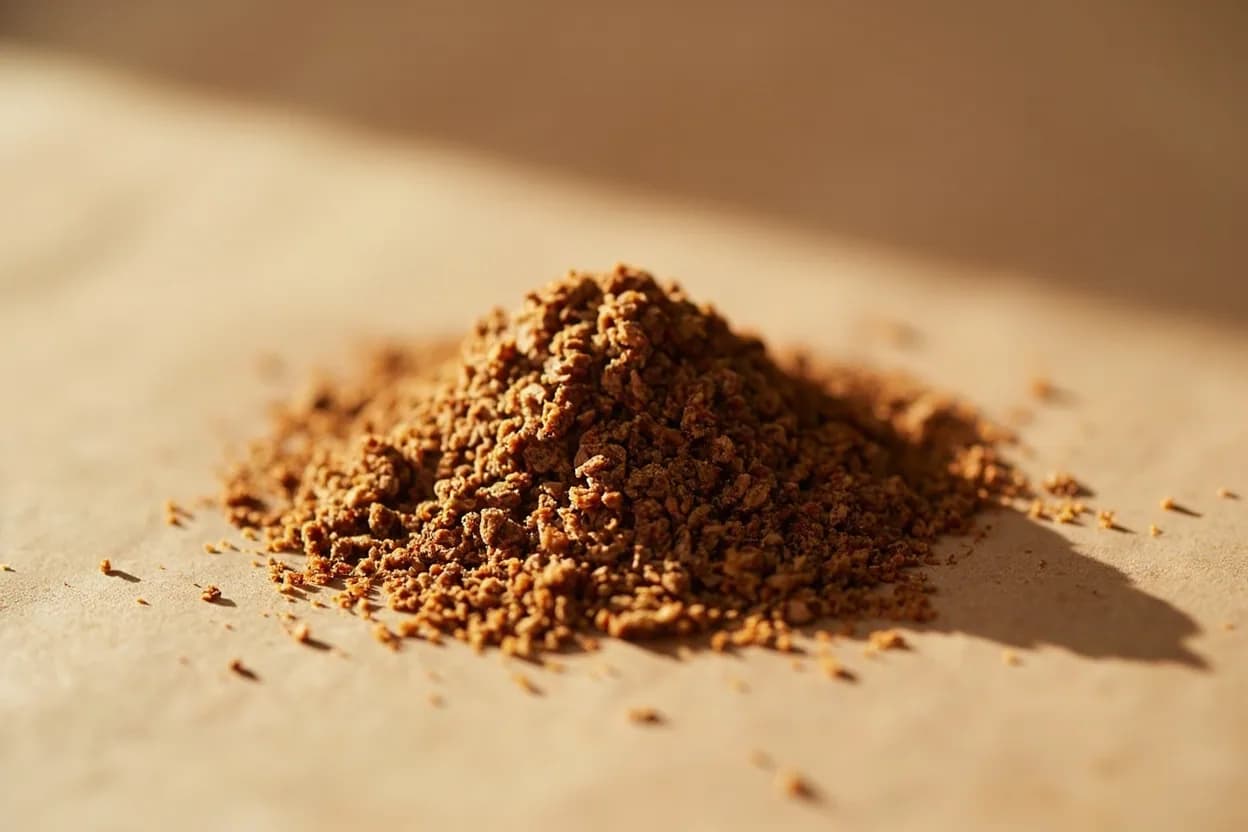
Belacan (Malaysian) and kapi (Thai) are solid or semi-solid fermented shrimp pastes produced by salting small shrimp or krill, fermenting them in the sun for several days to months, then drying and compressing the mass into blocks. Enzymatic proteolysis converts shrimp proteins into a dense matrix of free amino acids (particularly glutamate), nucleotides, and aromatic volatile compounds including pyrazines, indole, and short-chain fatty acids. Raw, the smell is notoriously aggressive — sulphurous, ammonia-edged, tidal. Toasted or cooked, the aroma transforms dramatically into a complex, savoury-sweet-smoky depth that anchors the flavour of nearly every Malaysian, Thai, and Indonesian rempah (spice paste). It is irreplaceable: no substitute delivers the same fermented marine backbone.
In photos
Flavour profile
Classic pairings
- LemongrassMalaysian / Thai
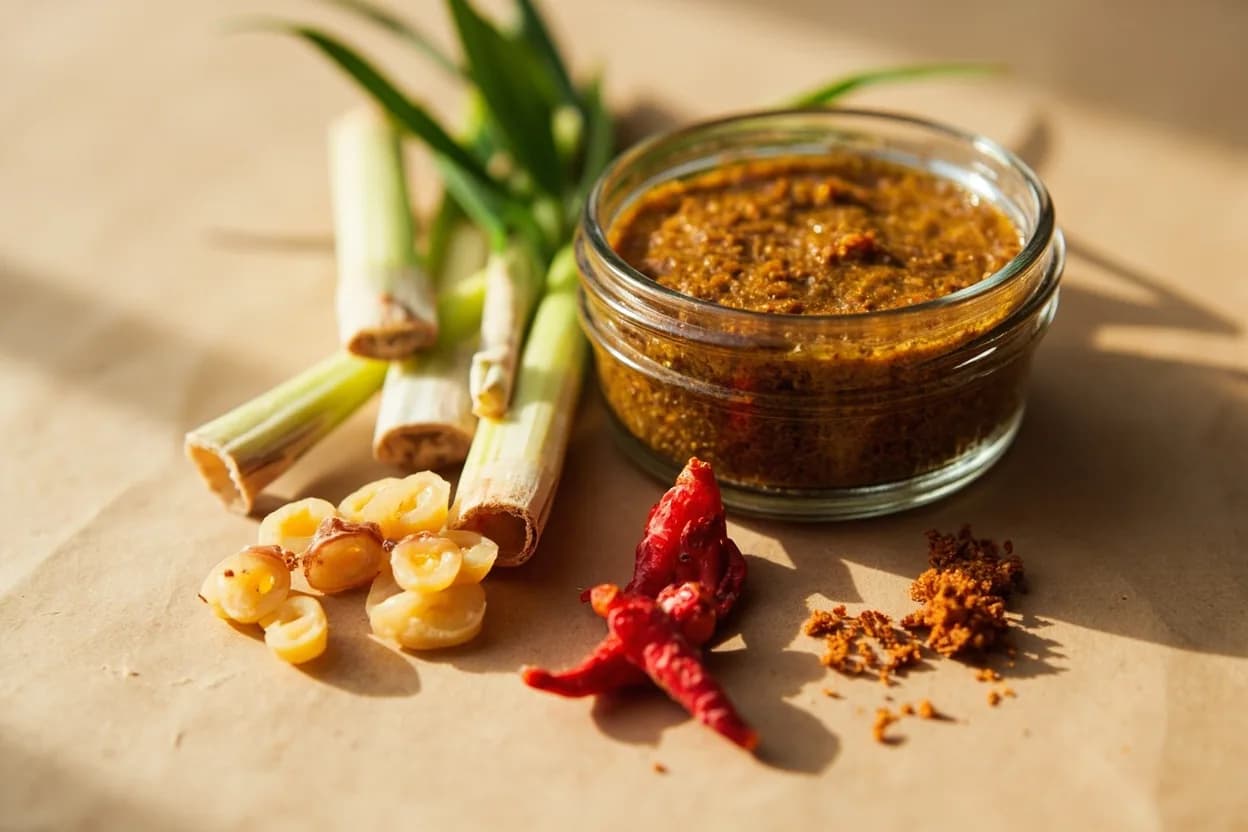
The citral freshness of lemongrass is the canonical foil to belacan's pungency — every laksa paste, rendang rempah, and Thai roasted chilli jam opens with this pairing, their contrasting intensities resolving into a coherent aromatic base.
- GalangalMalaysian / Indonesian
Sharp, piney galangal provides medicinal heat that cuts through the fermented heaviness of shrimp paste; the two are ground together as the first step in most serious Southeast Asian spice pastes.
- Chilli (fresh and dried)Malaysian
Sambal belacan — pounded fresh chilli with toasted belacan and lime — is the ur-condiment of Malaysian cooking; the chilli's capsaicin and the shrimp paste's umami create a heat-amplification effect beyond what either achieves alone.
- Coconut milkMalaysian / Thai
The fat and sweetness of coconut milk tempers belacan's intensity while carrying its aromatic compounds; laksa lemak, rendang, and many Thai curries depend on this balance.
- TamarindMalaysian
Acid-sour tamarind brightens the heavy fermented character and prevents pastes from reading as merely pungent; together they form the backbone of asam pedas and sour prawn curries.
- Long beans and kangkung (water spinach)Malaysian / Singaporean
Stir-fried with sambal belacan, the mild bitterness of long beans and the vegetal crunch of kangkung provide the textural and flavour contrast that makes belacan-dressed vegetables a staple.
- ShallotsSoutheast Asian
The sweet-onion base of fried shallots is almost always the aromatic carrier in which toasted belacan is combined before building a sambal or curry — shallot's fructose sweetness rounds the paste's edge.
Adventurous pairings
- Roasted butternut squash
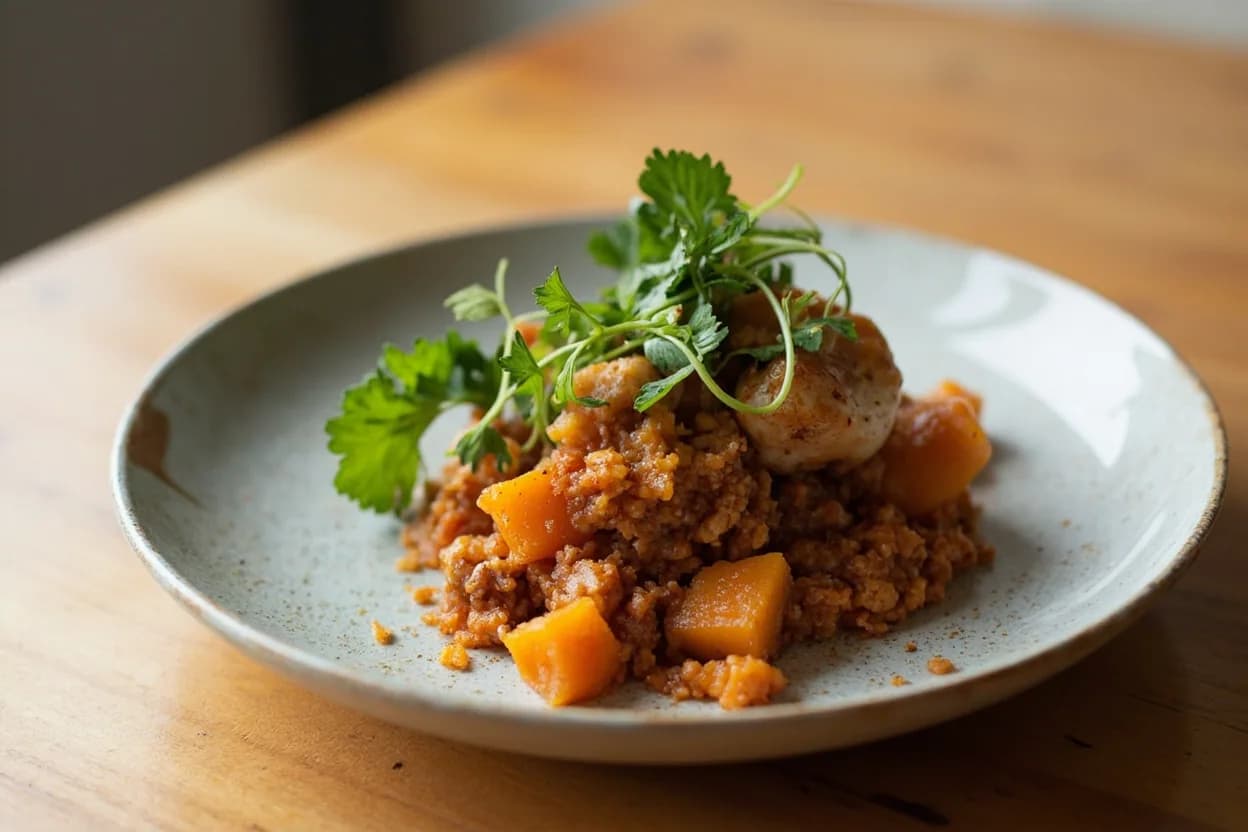
A rempah of belacan, chilli, and shallot blended with roasted squash makes a complex soup where the vegetable's sweetness absorbs the paste's intensity, producing a result more nuanced than cream-based squash soup.
- Pasta (aglio e olio base)
A pea-sized amount melted into olive oil with garlic before tossing with spaghetti creates an invisible umami layer that elevates without announcing itself — the shrimp paste analogues colatura but with a more complex fermented register.
- Roasted tomatoes
Slow-roasted tomatoes blended with a tiny amount of toasted kapi produce a sauce with extraordinary depth; the tomatine bitterness and shrimp paste's marine sweetness combine unusually well.
- Dark chocolate ganache
At micro-quantities (under 0.5g per batch), kapi introduces a savoury-umami dimension to dark chocolate ganache that reads as mysterious complexity rather than fishiness — a technique from avant-garde pastry.
- Fried egg
The Thai practice of frying eggs over high heat in a thin film of kapi-seasoned oil (kapi khao) produces a deeply savoury, crispy-edged egg that makes an extraordinary basmati accompaniment.
Tread carefully
- Subtle broths and consommésavoid
Even small amounts overwhelm delicate clear stocks — the volatile compounds are uncontrollable in a lightly seasoned broth context.
- Yoghurt-based dressingsavoid
Dairy's lactic freshness and the ammonia edge of uncooked shrimp paste produce an unpleasant combination; there is no culinary tradition that uses them together for good reason.
- Raw applications without toastingavoid
Adding raw belacan directly to cold or room-temperature preparations (salads, fresh dipping sauces) retains the raw ammonia and sulphur volatiles; always dry-toast or briefly fry the paste first.
How to use it
- Toast belacan before use: wrap in foil and dry-toast in a hot pan 2–3 minutes per side, or char slightly directly over gas flame on a skewer — this eliminates raw ammonia notes and develops roasted complexity
- Pound or blend with aromatics (shallots, chilli, lemongrass, galangal) into a rempah before frying — never add straight to water-based liquids
- Fry the rempah in oil until it darkens and 'splits' (oil separates from the paste) — this is the indicator that the paste's rawness is cooked out
- Start with small quantities and build — 1 teaspoon per 4 servings is typical; it's far easier to add than to correct an overdose
- Refrigerate tightly sealed or freeze for long-term storage; the salt content preserves it for months but fat oxidation degrades quality at room temperature
Appears in
Related flavours
- Fish sauce (nam pla / patis)
The liquid cousin of shrimp paste — used in overlapping contexts; shrimp paste delivers more body and more intense funk, fish sauce more versatility in light or clear preparations.
- Anchovy (preserved)
Italian preserved anchovies share the fermented umami mechanism but with a more refined, less pungent character; European chefs may reach for anchovies when shrimp paste's intensity is too dominant.
- Miso (hatcho / red)
The darkest Japanese misos are the closest analogue in umami intensity; both are built on enzymatic protein breakdown but miso lacks the marine specificity.
References
- 1.The Food of Malaysia — Wendy Hutton
- 2.Hot Sour Salty Sweet: A Culinary Journey Through Southeast Asia — Jeffrey Alford & Naomi Duguid
- 3.Thai Food — David Thompson
- 4.On Food and Cooking — Harold McGee (fermented seafood chemistry)
- 5.Fermented Foods of the World — B.J.B. Wood (ed.)
Confidence: high
Notes
Regional variation is significant
Malaysian belacan tends to be drier and more brick-like, with a more controlled, less ammonia-forward character than Indonesian terasi (which is often darker and more pungent) or Burmese ngapi (which can include fish and be significantly wetter). Thai kapi occupies a middle ground — more paste-like than belacan, with a purple-grey colour. They are not perfectly interchangeable in recipes; belacan is the mildest entry point.
The toasting transformation
The transformation between raw and toasted belacan is one of the most dramatic in any world kitchen. Raw, it is nearly unapproachable — a powerful aversion trigger. Toasted, it shifts to a roasted, nutty, savour-complex aromatic that cooks in Malaysia use as casually as Parmesan rind. This transformation is non-negotiable: always cook the paste before assessing its flavour contribution.