Souring Agents
Tamarind
Also: imli, asam, tamarin, tamarindo, Tamarindus indica
The tropics' most versatile sour — a dark, fruity, intensely tart pulp that anchors chutneys, curries, pad thai, and tamarind agua fresca on four continents.
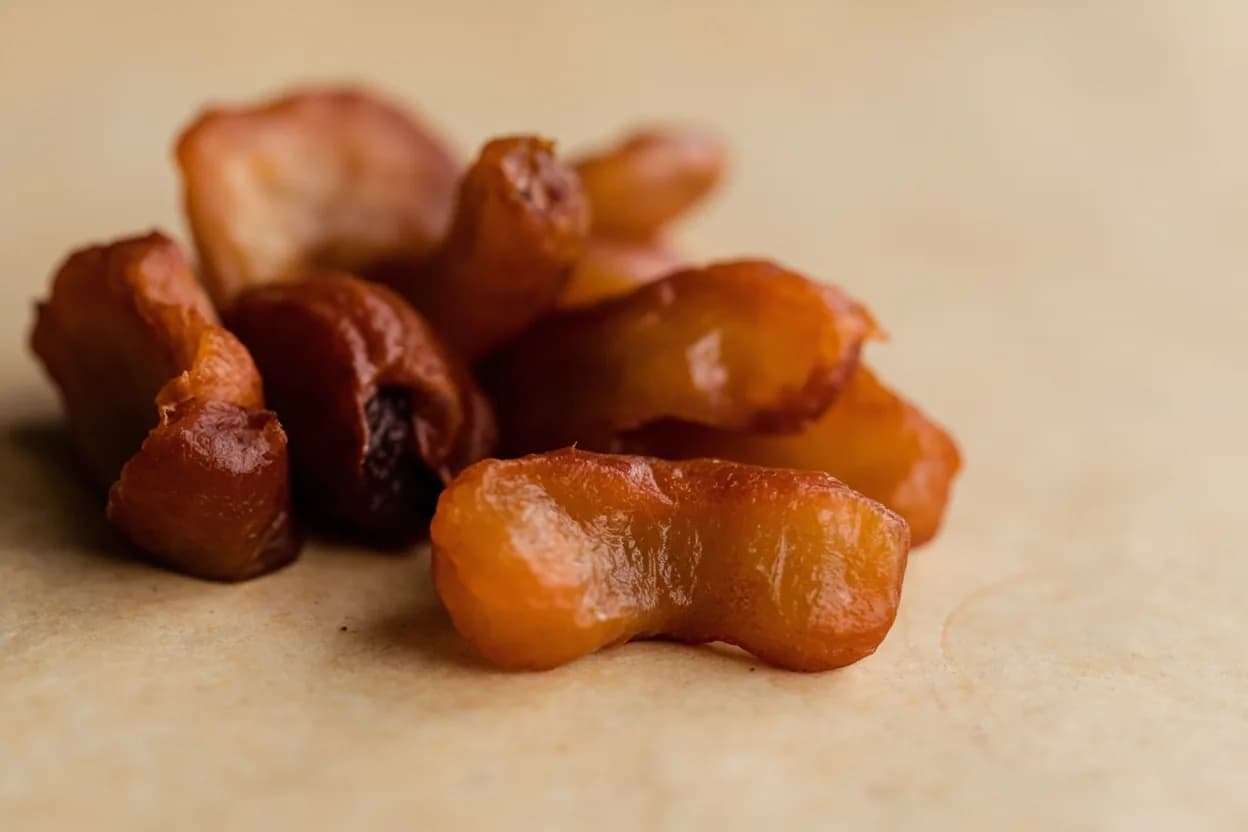
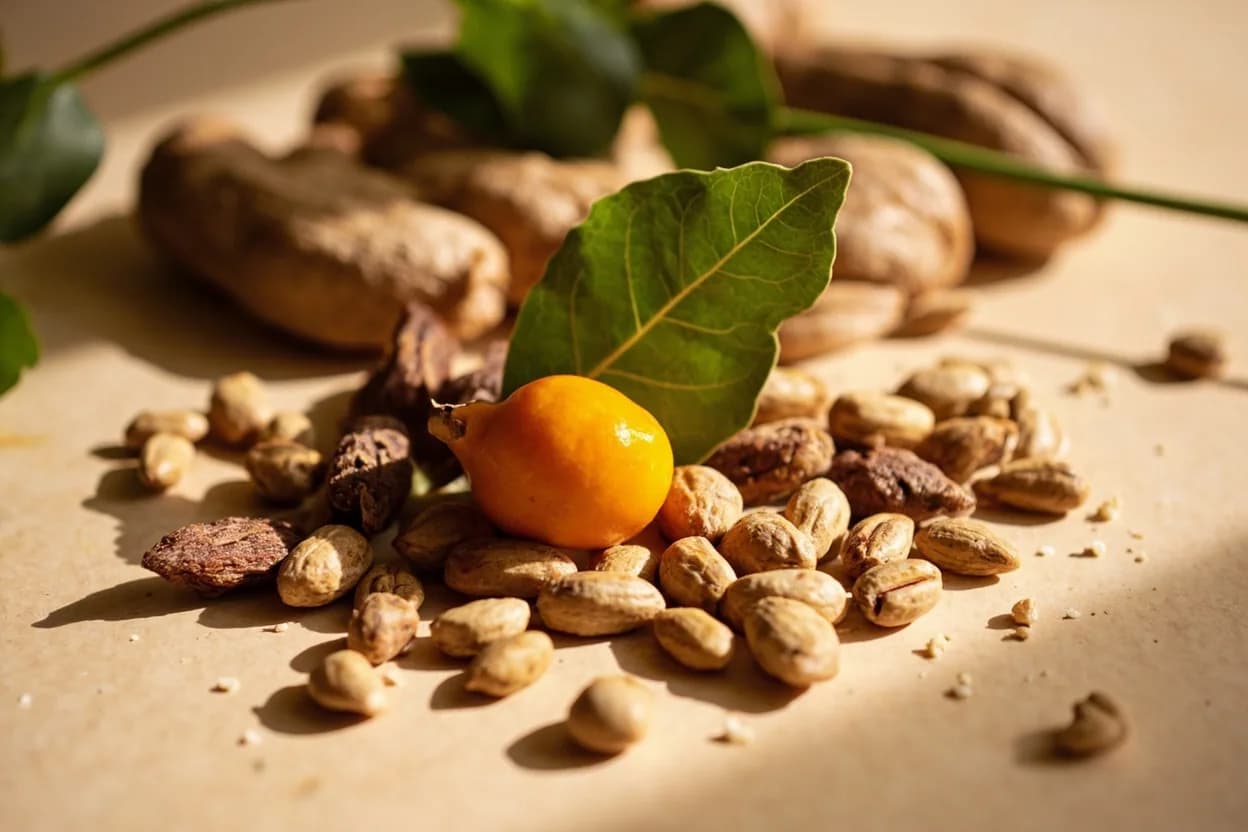
Tamarind is the dried pulp extracted from the seed pods of Tamarindus indica, a tree native to tropical Africa but naturalized across South Asia, Southeast Asia, Mexico, and the Caribbean over millennia. The pulp contains tartaric acid (the primary souring agent), malic acid, citric acid, and significant natural sugars — producing a distinctive tart-sweet-fruity profile unlike any other souring agent. Fresh pods are fibrous; the usable form is either a compressed block of pulp (requiring soaking and straining) or a ready-to-use concentrate. Flavour ranges from intensely sour in raw pulp to rich, date-like, and complex when cooked long with fats and sugar.
In photos
Flavour profile
Classic pairings
- PeanutsThai
The canonical Thai pairing: pad thai sauce balances tamarind's sourness with fish sauce, palm sugar, and roasted peanuts — the fat and nuttiness round the acid perfectly.
- Palm sugar or jaggerySouth Asian / Thai
Across South and Southeast Asian cooking, tamarind and unrefined cane sugar are inseparable — the pairing is the backbone of sweet-sour sauces, tamarind chutney (imli chutney), and pad thai.
- Lentils (dal)South Indian
Tamarind is stirred into South Indian dal (sambar) and rasam — its sourness lifts the earthiness of toor dal and creates the defining sweet-sour-spiced character of these dishes.
- Shrimp and seafoodSouth Indian / Malaysian
In Tamil prawn curry, Malaysian assam prawns, and Mexican aguachile adaptations, tamarind's acid brightens lean seafood and helps tenderise the protein.
- Chillies and gingerIndian / West African
The classic base of Indian and West African sour-spiced sauces: tamarind's dark fruit registers on a completely different layer than the chilli heat, giving depth rather than competition.
- Chickpeas (chaat and panipuri)Indian
Tamarind chutney is the defining sweet-sour component of virtually every chaat preparation — drizzled over fried dough, crunchy chickpeas, and raw onion.
- Coconut milkMalaysian / South Indian
A Malaysian and South Indian cornerstone: tamarind and coconut milk create a complex sour-rich broth (fish curry, laksa) where the acid prevents the fat from reading as heavy.
Adventurous pairings
Tamarind's tartaric acid and dark fruit character have a genuine chemical affinity with 70%+ chocolate — as a ganache filling or sauce, the two deepen each other's fruit complexity without tipping into sweetness.
- Lamb shoulder (slow-braise)
A West African and Persian-adjacent approach: tamarind tenderises tough cuts through acid while its fruit complexity builds a braising liquid with remarkable depth — akin to pomegranate molasses but darker.
- Mango (raw or green)
Doubling down on sourness sounds wrong but works beautifully in Indian imli-aam candy and Mexican chamoy — the mango's volatile aromatics lift tamarind's darker fruit register into something bright.
- Chipotle pepper
Mexican-Indian crossover: tamarind and chipotle share dark fruit and smoke — together in a glaze or barbecue sauce they create a complex, multi-layered sweet-sour-smoky backdrop.
- Medjool dates
In North African and Levantine cooking, tamarind and dates together push fruit-sourness to its richest register — a date-tamarind dipping sauce for fried foods is extraordinary.
Tread carefully
- Cream-based or butter saucesavoid
Tamarind's high tartaric acid content easily curdles dairy proteins — add only to cooled sauces or use with coconut milk instead.
- Delicate white wines in cookingavoid
Tamarind's dark, heavy sourness overwhelms the bright acidity wine is meant to contribute; use tamarind or wine, not both.
- Iron cookware (unlined cast iron)avoid
Tartaric acid reacts with bare iron, producing a metallic off-flavour and potentially discolouring the dish — use stainless steel, enamel, or clay.
How to use it
- Soak compressed block tamarind in warm water for 15 minutes, then squeeze and strain through a sieve to produce a smooth pulp — the ratio is roughly 1 part tamarind to 2 parts water for a working concentrate
- Cook tamarind in oil with spices first (like a bloomed tadka) to mellow its raw sourness before adding liquid
- Reduce tamarind water to a thick paste for glazes and chutneys — the sugars concentrate and the flavour deepens dramatically
- Balance sourness with palm sugar or jaggery in a 2:1 ratio (tamarind:sugar by taste) for sweet-sour sauces
- Add at the end of long braises to preserve volatile aromatics; adding early gives depth but sacrifices brightness
- Use sparingly as a substitute for lemon or lime in South Asian recipes where dark fruit complexity is preferred over sharp citrus
Appears in
Related flavours
The Konkan coast souring agent — similar dark-fruit sourness but more astringent and cooler-tasting; used where tamarind would be too sweet
Another fruity-sour reduction used across the Middle East and South Asia; sweeter and more floral where tamarind is darker and earthier
Tamarind is a primary component of Worcestershire — the sauce's sour-fruity depth is largely the tamarind's contribution
- Palm sugar / jaggery
Tamarind's inseparable culinary partner across Thai, Indian, and Malaysian cooking — the sweet to tamarind's sour
References
- 1.The Complete Asian Cookbook — Charmaine Solomon
- 2.Indian-ish — Priya Krishna
- 3.True Thai — Victor Sodsook
- 4.On Food and Cooking: The Science and Lore of the Kitchen — Harold McGee
- 5.The Africa Cookbook — Jessica B. Harris
Confidence: high
Notes
Block vs. concentrate
Compressed tamarind blocks are the traditional form and produce a more nuanced, fruity flavour — the soaking process is quick and the result far superior to jarred concentrate. Concentrate is convenient but often lacks the aromatic volatiles that make tamarind distinctive. For chutneys and complex sauces, always use the block. For a quick weeknight stir-fry or pad thai sauce, concentrate is a reasonable compromise.
Sweet-sour calibration
Tamarind's tartness varies considerably between brands and regions. South Indian and Thai cooks calibrate tamarind-to-sugar ratios by taste rather than fixed measurement — the correct balance is the point where neither sourness nor sweetness dominates, a harmony sometimes described as khatta-meetha (literally 'sour-sweet') in Urdu and Hindi.