Souring Agents
Kokum
Also: Garcinia indica, amsul, aamsul, kokam, kudampuli (in Kerala, though distinct)
A deep-purple dried fruit from the Konkan coast that delivers tangy-fruity sourness with a dark berry undertow.
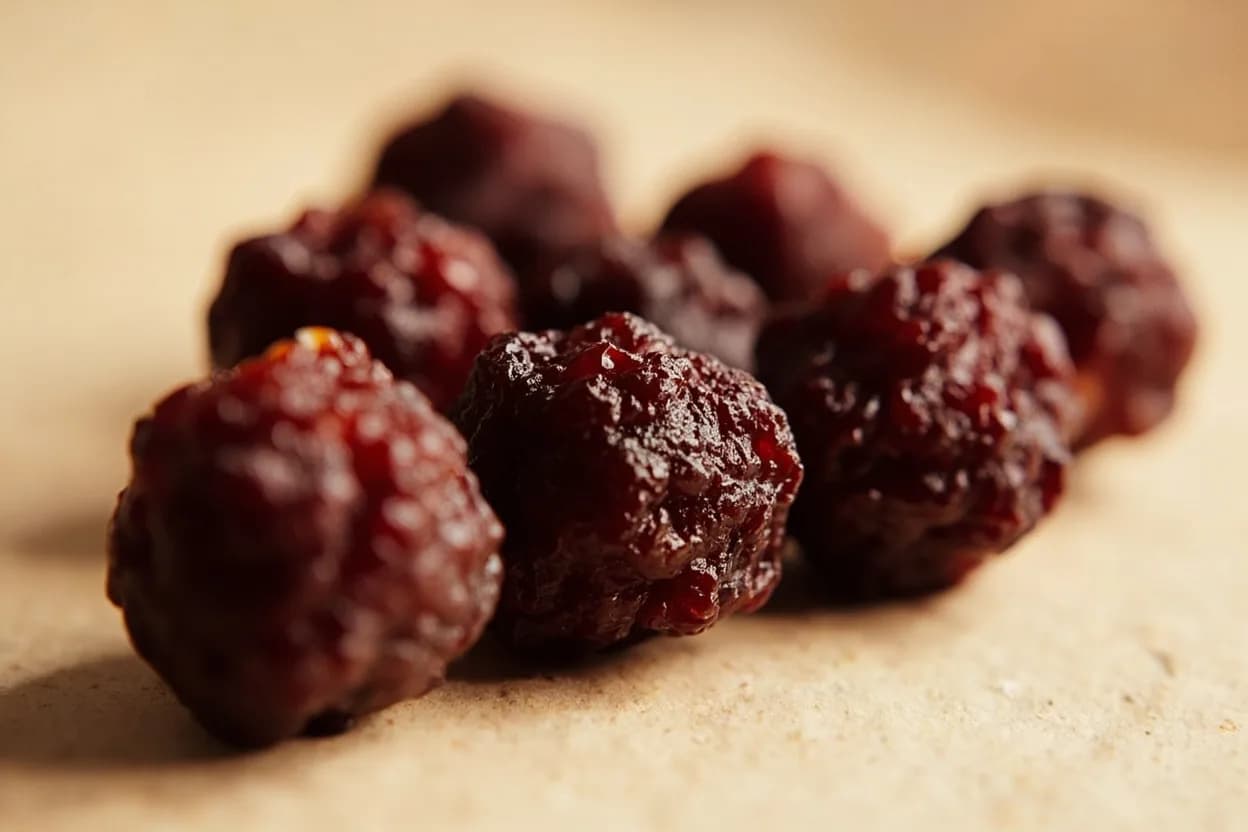
Kokum is the sun-dried rind of Garcinia indica, a tree native to India's Western Ghats. The fresh fruit resembles a small purple plum; when halved, salted, and dried, the rind concentrates to a sticky, deep-maroon piece that releases a brick-red souring liquid when soaked or simmered. Its acid is primarily hydroxycitric acid (rather than the citric or acetic acids of other souring agents), giving it a distinctive tangy-fruity character—more like dried plum than sharp citrus—with a subtle astringency and a faint cooling aftertaste. In Konkani, Goan, and Malvani cooking it functions exactly as tamarind does in South Indian cuisine: a souring backbone that also adds color and a slight thickening quality.
In photos
Flavour profile
Classic pairings
- Fish curry (Konkani/Malvani)Indian (Konkani / Malvani)
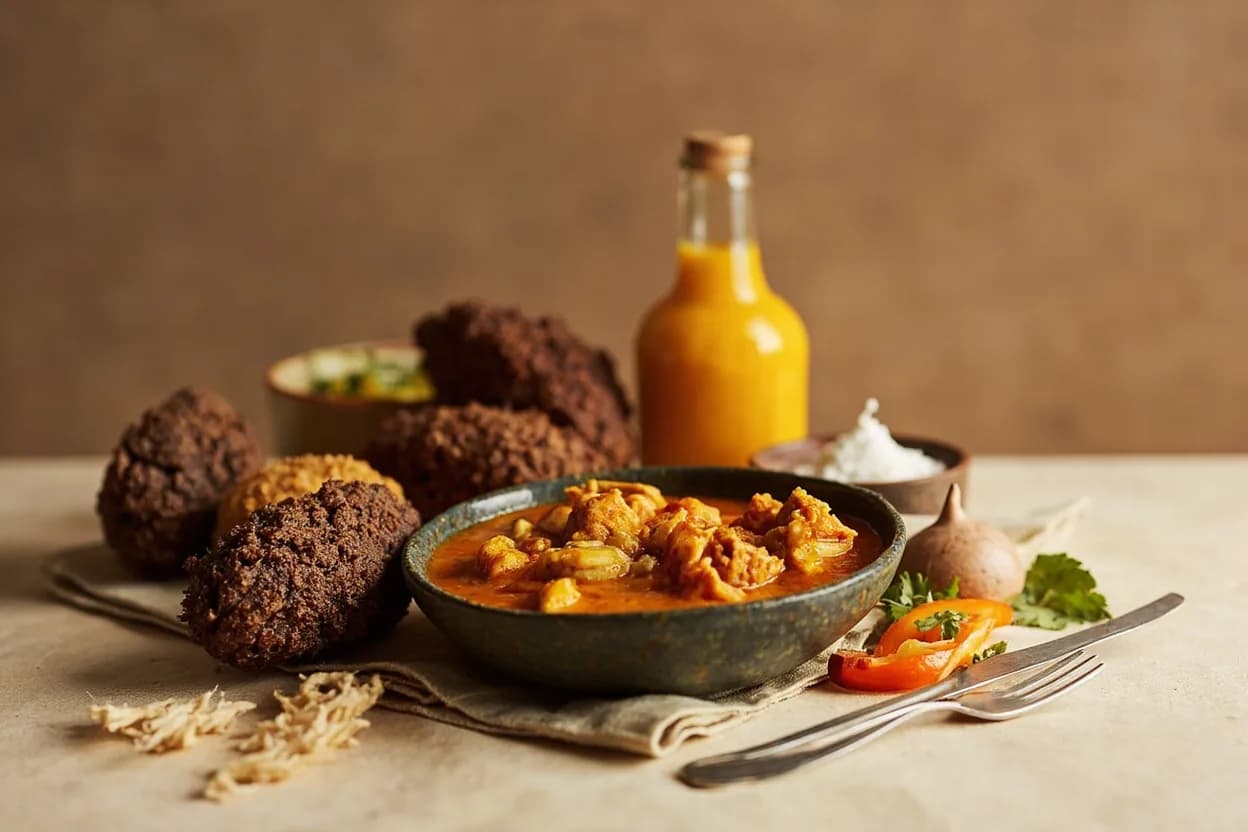
Kokum is the defining souring agent for coastal fish curries from Goa to Ratnagiri—its fruity tartness complements the sweetness of coconut milk without overpowering the fish.
- Sol kadhiIndian (Konkani / Goan)
Kokum steeped in coconut milk with green chili and coriander is the canonical cooling drink-condiment of the Konkan coast—served alongside fish meals to aid digestion.
- Prawn curryIndian (Goan)
Kokum's tartness cuts through the sweetness of shrimp while its red pigment (garcinol) stains the sauce a beautiful coral hue.
- Coconut milkIndian (Konkani)
The classic pairing—kokum's tartness counterbalances coconut's richness, and its color deepens creamy sauces into vivid coral.
- Black-eyed pea curryIndian (Goan)
In Goan and Konkani vegetarian cooking, kokum sours legume curries the way tamarind does in Tamil Nadu—it brightens the earthy beans and adds color.
- Kadhi (Maharashtrian-style)Indian (Maharashtrian)
Some coastal Maharashtra cooks add kokum in place of yogurt to kadhi for a lighter, dairy-free tartness with more color.
Adventurous pairings
- Watermelon agua fresca
A kokum shrub syrup (kokum + sugar + water) stirred into watermelon juice produces a vivid crimson drink with a fruity-tart complexity beyond lime juice alone.
Replace part of the lime juice with kokum-infused liquid for a darker, fruitier 'leche de tigre'—the cooling finish makes the citrus cure feel more complex.
- Dark chocolate truffles
Kokum's fruity tartness works like passion fruit against 70%+ chocolate—infuse in cream, strain, and make ganache for a distinctly Indian-inflected truffle.
- Gin cocktails
A kokum shrub in a gin tonic adds color, tartness, and an exotic berry note that pairs well with botanical gins.
- Roast duck
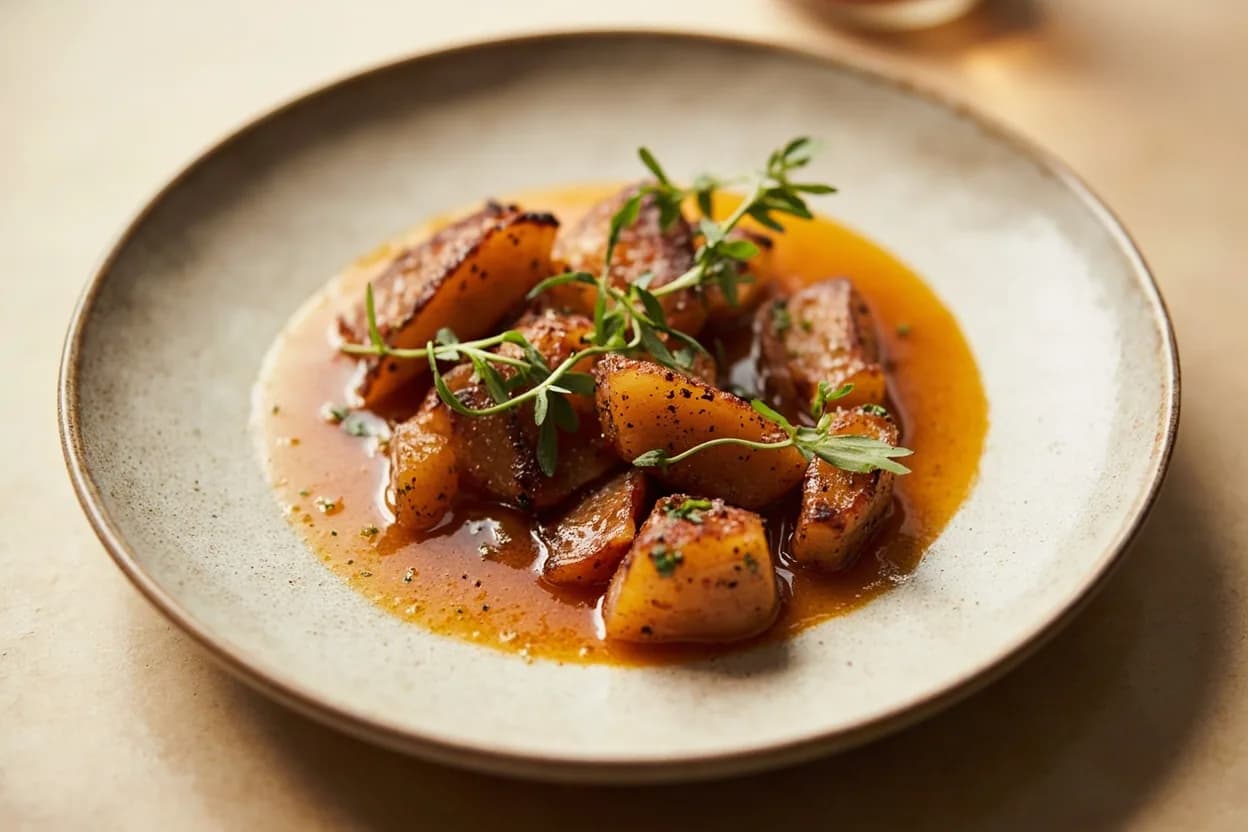
Kokum's dark fruit and acid mirror plum sauce's function against rich duck fat—glaze in the last 15 minutes for a crimson lacquer with tropical depth.
Tread carefully
- Lemon-forward dishesavoid
Kokum's earthy, dark-fruit tartness clashes with the bright zestiness of fresh lemon; the flavors pull in different directions.
- Mild dairy like fresh paneer or ricottaavoid
The astringency and dark color stain and overwhelm delicate mild dairy; use yogurt-based souring agents instead.
- Recipes requiring clear, colorless acidityavoid
Kokum bleeds deep maroon—it will color anything it touches; use lime juice or white vinegar when appearance requires clarity.
How to use it
- Soak 3–4 dried pieces in ½ cup warm water 20 minutes; use the soaking liquid and squeeze the pieces to extract all juice
- Simmer directly in curries and remove pieces before serving (they become leathery and intensely sour)
- Make kokum sherbet: steep in sugar syrup with cumin, black salt, and chili for a digestive drink concentrate
- Toast briefly in a dry pan before soaking to deepen the smoky-earthy notes
- Infuse in coconut milk for 10 minutes—no heat needed—for sol kadhi
Appears in
Related flavours
The functional equivalent in South Indian cooking—interchangeable in many recipes, though kokum is fruitier and less acidic.
- Green chili
A canonical pairing in sol kadhi—the heat of the chili balances kokum's cooling tartness.
- Coriander (fresh)
Fresh coriander brightens kokum-based dishes; together they are the garnish signature of Konkani cooking.
- Dried mango (amchur)
Both are dried-fruit souring agents; amchur is sharper and grassier, kokum is darker and more mellow.
References
- 1.The Vegetarian Table: India — Yamuna Devi
- 2.Prashad: Cooking with Indian Masters — J. Inder Singh Kalra
- 3.Indian-ish — Priya Krishna
- 4.Taste: The Story of Britain Through Its Cooking — Kate Colquhoun
- 5.Flavor Bible — Karen Page & Andrew Dornenburg
Confidence: high
Notes
Where to find it
Kokum is sold dried in Indian grocery stores, usually labeled 'amsul' or 'kokam.' It is also sold as a concentrate (kokum syrup) in Maharashtra. Dried pieces keep for over a year in a sealed container. Do not confuse with kudampuli (Malabar tamarind / Garcinia cambogia), a related but distinct souring agent used in Kerala fish curries—though they can substitute for each other.