Herbs
Tarragon
Also: French tarragon, estragon, Artemisia dracunculus
The defining herb of classical French cuisine, with a silky anise warmth that elevates eggs, chicken, and cream.
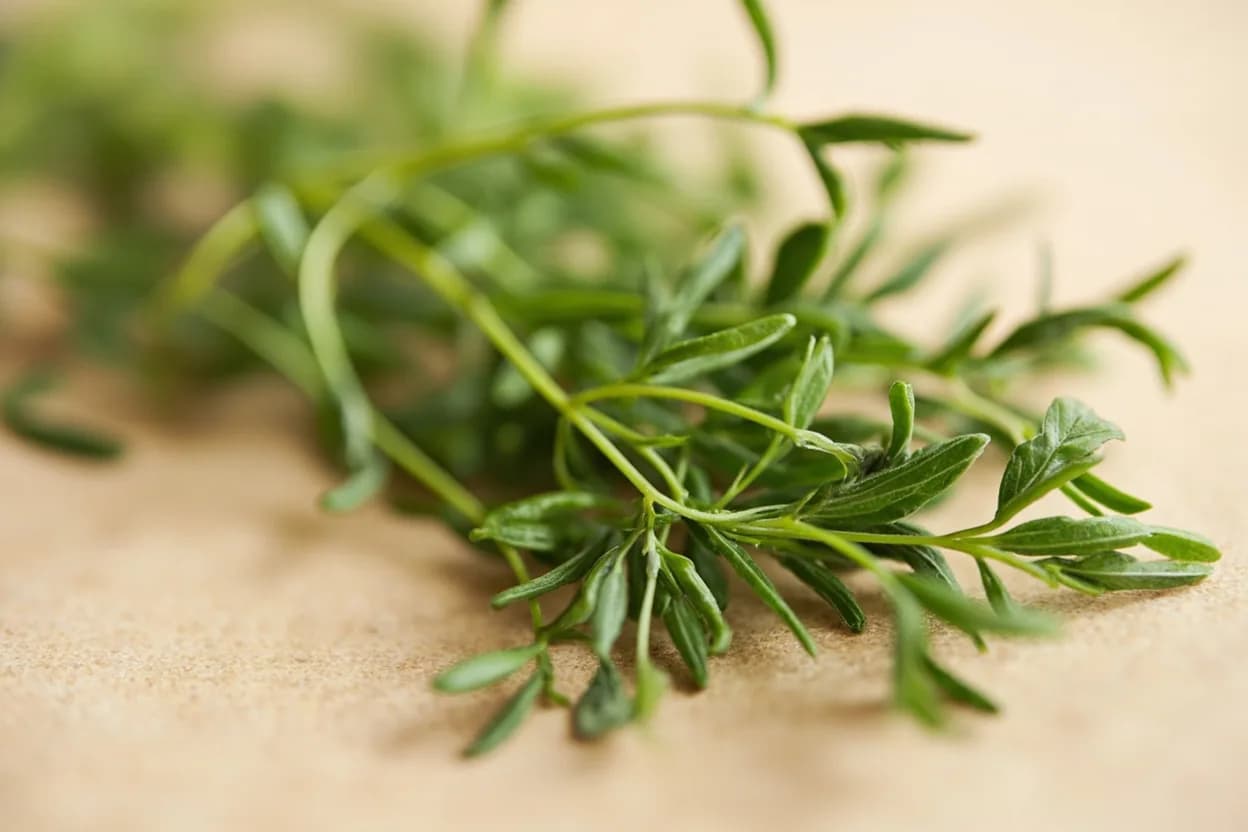
Tarragon (Artemisia dracunculus var. sativa) is a perennial herb native to Central Asia, long adopted as a pillar of French haute cuisine. Its flavor is characterized by a smooth, sweet anise quality underwritten by estragole — the same volatile compound found in basil and fennel — with grassy, slightly vanilla-adjacent warmth. French tarragon is markedly more refined than its Russian cousin, which is coarser and nearly flavorless. The herb loses its nuance when dried aggressively; fresh or briefly dried is preferred.
In photos
Flavour profile
Classic pairings
- Egg yolkFrench
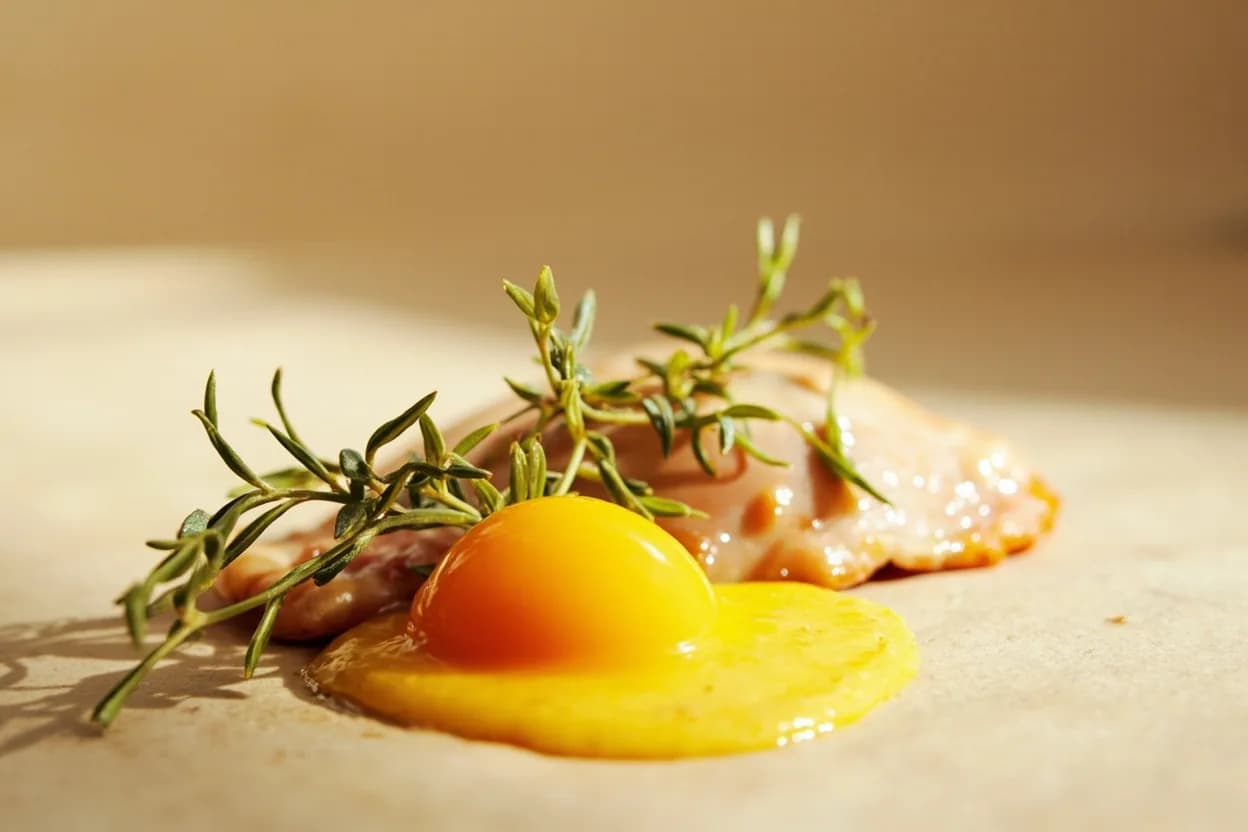
The anise lift cuts the richness of yolk in béarnaise and egg-yolk sauces; a foundational pairing in classical French cookery.
- ButterFrench
Tarragon's fat-solubility means it blooms in beurre blanc and compound butters, softening its anise edge into something floral.
- ChickenFrench
Poulet à l'estragon is canonical — the herb's sweetness complements white meat without overpowering; also classic in cream sauces for roast chicken.
- White wine vinegarFrench
Acidity amplifies tarragon's volatile esters; the combination is the acidic backbone of béarnaise and tarragon vinaigrettes.
- ShallotFrench
Shallots share a mild sulfurous sweetness that aligns with tarragon's profile; the pairing forms the aromatic base of béarnaise.
- Cream
Heavy cream rounds estragole into a luxurious sauce base, as in sauce à l'estragon for veal or chicken.
- Fish (white-fleshed)French
Delicate fish like sole and turbot take tarragon without being overwhelmed; classic in French court-bouillon and beurre blanc.
Adventurous pairings
- Strawberry
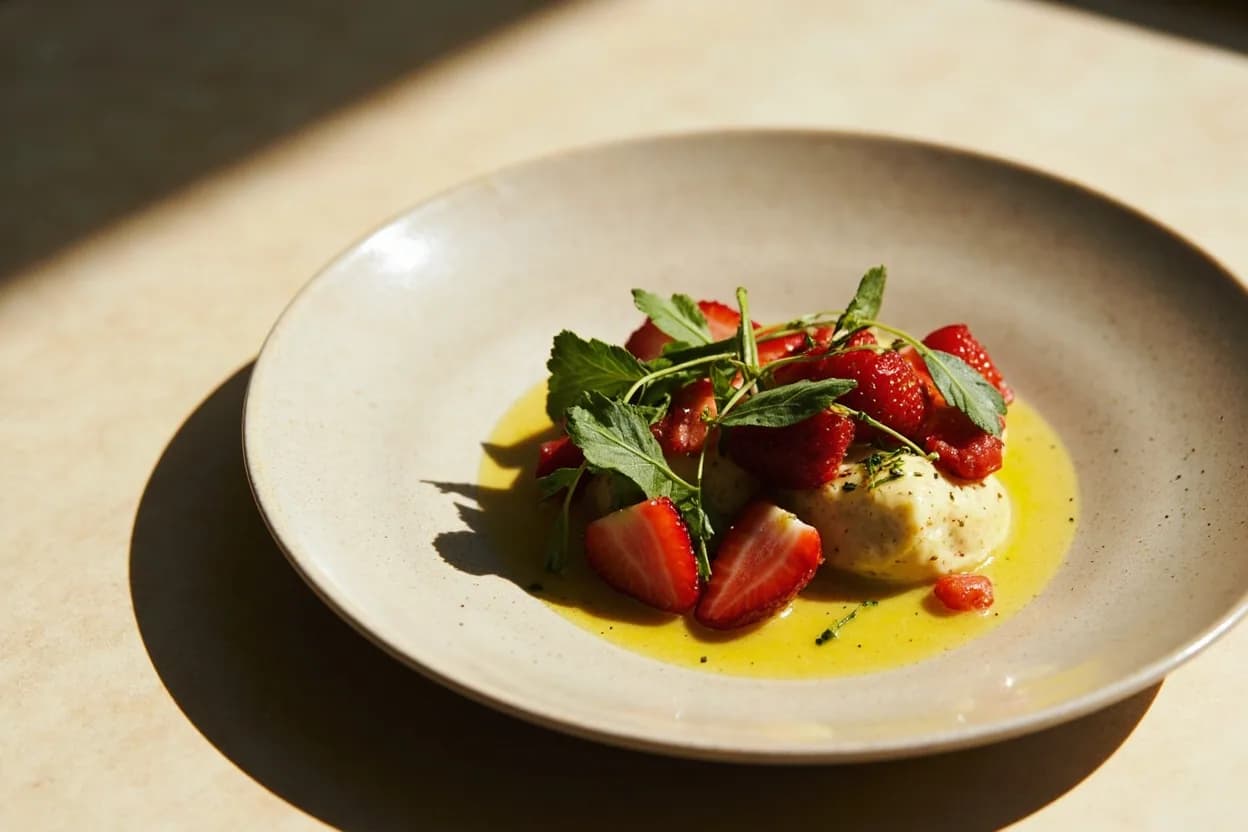
Sweet anise and ripe berry share overlapping aromatic esters; a tarragon-strawberry shrub or granita is unexpectedly harmonious.
- Cucumber
Tarragon's warmth contrasts the cold, watery freshness of cucumber in refined composed salads and cold soups.
- Grapefruit
Bitter citrus oils cut tarragon's sweetness, creating a bracingly sophisticated dressing or ceviche marinade.
- Goat cheese
The tangy lactic sharpness of chèvre grounds tarragon's anise aromatics into something savory and balanced.
Both share grassy, slightly astringent vegetal notes; tarragon steeped briefly into green tea forms an elegant cold infusion.
Tread carefully
- Rosemaryavoid
Both are assertive aromatics with conflicting camphor-forward profiles; together they create a medicinal, overcrowded herb character.
- Cuminavoid
Cumin's earthy, funky warmth clashes with tarragon's sweet delicacy, muddying both flavors.
- Strong blue cheeseavoid
Pungent blue cheeses overpower tarragon's subtle anise; the herb is entirely lost in the competition.
How to use it
- Add fresh tarragon off the heat to preserve volatile estragole; heat destroys it quickly
- Steep bruised sprigs in warm butter or cream for 10 minutes, then remove — extracts flavor without grassy texture
- Make tarragon vinegar by infusing sprigs in white wine vinegar for 2 weeks
- Blend into compound butter with shallot and lemon zest for a finishing butter on fish or steak
- Add to egg dishes (omelets, custards) in the last 30 seconds of cooking
Appears in
Related flavours
Shares estragole as a primary volatile; similarly delicate and heat-sensitive, often interchangeable in sweet, anise-forward roles.
- Chervil
Fellow member of fines herbes with a milder anise character; used alongside tarragon in classical French sauces.
- Fennel frond
Comparable anise warmth, though more robustly flavored; substitutes when tarragon is unavailable in fish preparations.
References
- 1.Larousse Gastronomique, Prosper Montagné (1938, multiple eds.)
- 2.The Flavor Bible, Karen Page & Andrew Dornenburg (2008)
- 3.On Food and Cooking: The Science and Lore of the Kitchen, Harold McGee (2004)
- 4.Le Guide Culinaire, Auguste Escoffier (1903, English ed. 2011)
Confidence: high
Notes
French vs. Russian tarragon
Only French tarragon (Artemisia dracunculus var. sativa) has culinary value. Russian tarragon (var. inodora) is nearly devoid of estragole and produces a coarse, bitter, flavorless herb. French tarragon cannot be grown from seed — it must be propagated by division or cuttings — which partly explains why quality plants can be hard to source.
Drying
Dried tarragon loses most of its volatile character within weeks. Where dried is called for, use it very fresh from the jar or, better, freeze fresh tarragon in an airtight bag to preserve aromatic integrity for sauces and long braises.