Fermented Grains & Cereals
Teff
Also: Eragrostis tef, lovegrass, Ethiopian teff
The world's tiniest grain carries outsized earthy depth — a molasses-meets-hazelnut intensity that anchors injera and gluten-free baking alike.
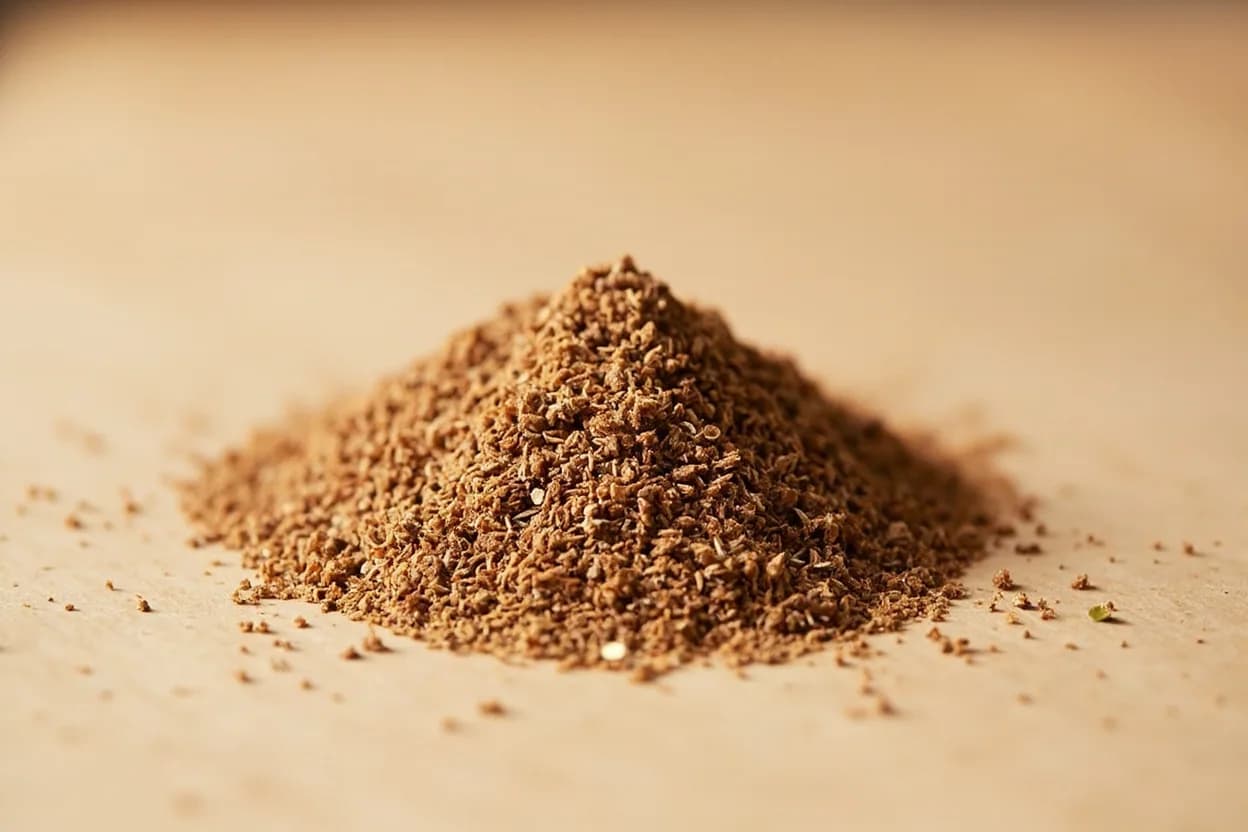
Teff (Eragrostis tef) is an ancient grain native to the Horn of Africa, with seeds so small that one grain of wheat equals roughly 150 teff seeds. Its flavour is distinctly earthy and nutty, with notes of dark molasses, roasted hazelnut, mild cocoa, and a gentle mineral-iron undertone. Whole teff is 100% bran and germ — there is no endosperm large enough to mill away — which gives it an unusually dense nutritional profile and its characteristic robust, slightly sweet-bitter character. It is the primary grain of Ethiopia and Eritrea and has gained global traction as a gluten-free flour.
In photos
Flavour profile
Classic pairings
- HoneyEthiopian
Raw or dark honey's floral-to-malty sweetness plays directly against teff's molasses-mineral bitterness, creating a satisfying whole-grain porridge or pancake.
- Dark chocolateGlobal baking
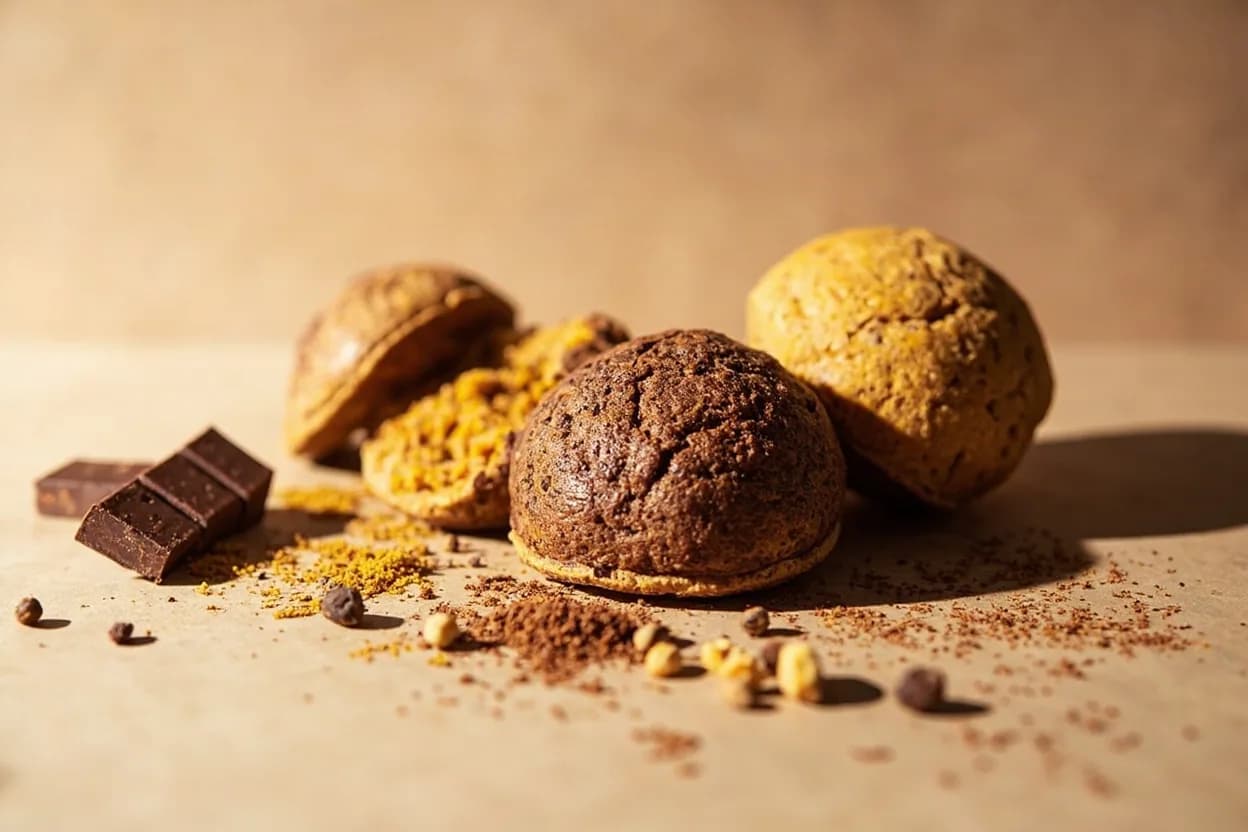
Teff's cocoa-adjacent earthiness and chocolate's deep roast share the same Maillard-compound vocabulary; together they deepen without muddying.
- Berbere spice blendEthiopian
When used in injera, the fermented teff batter's sour earthiness is the structural counterpart to berbere's complex chile-spice heat.
- BananaGlobal baking
Ripe banana's caramel sweetness softens teff's bitterness in pancakes and quick breads; the combination is a natural in gluten-free baking.
- DatesHealth food / natural cooking
Medjool dates amplify teff's molasses notes and provide binding moisture in energy bars and raw confections.
- LentilsEthiopian
Earthy red or green lentils are teff's natural companion in injera-and-misir-wat combinations; both share soil-mineral register that unifies the plate.
- RicottaItalian-inspired
In teff porridge or pancakes, the cool, lactic creaminess of ricotta tempers the grain's intensity while mirroring the lactic sourness of fermented teff.
Adventurous pairings
Ground espresso stirred into teff porridge or baked goods creates a layered mocha effect; both share roasted-bitter compounds that reinforce rather than clash.
- Smoked fish (trout or mackerel)
Teff's iron-mineral earthiness bridges to the ocean minerality of smoked fish; used as a crispbread or porridge base, it anchors the smoke without competing.
- Sorghum molasses
Doubling down on the molasses register creates a deeply earthy, American-Southern-meets-Ethiopian sweetener combination in teff-based porridges or pancakes.
Roasted sesame's bitter-fatty depth echoes teff's hazelnut-cocoa character; together they form an uncommonly complex, nutritious porridge or drizzle pairing.
The sharp, jammy tartness of pomegranate molasses cuts teff's earthiness and adds a bright Mediterranean note to teff flatbreads or grain salads.
Tread carefully
- Very delicate floral flavours (elderflower, rose water in excess)avoid
Teff's robust earthiness bulldozes subtle floral aromatics; any elderflower or rose note disappears entirely.
- Mild white cheeses used as the dominant flavouravoid
Fresh mozzarella or ricotta salata used in large amounts are overwhelmed by teff's mineral intensity; better as supporting accents.
- Highly acidic fruit vinegarsavoid
Aggressive fruit vinegars (raspberry, cherry) collide with teff's bitter-mineral base rather than brightening it, creating an unpleasant metallic aftertaste.
How to use it
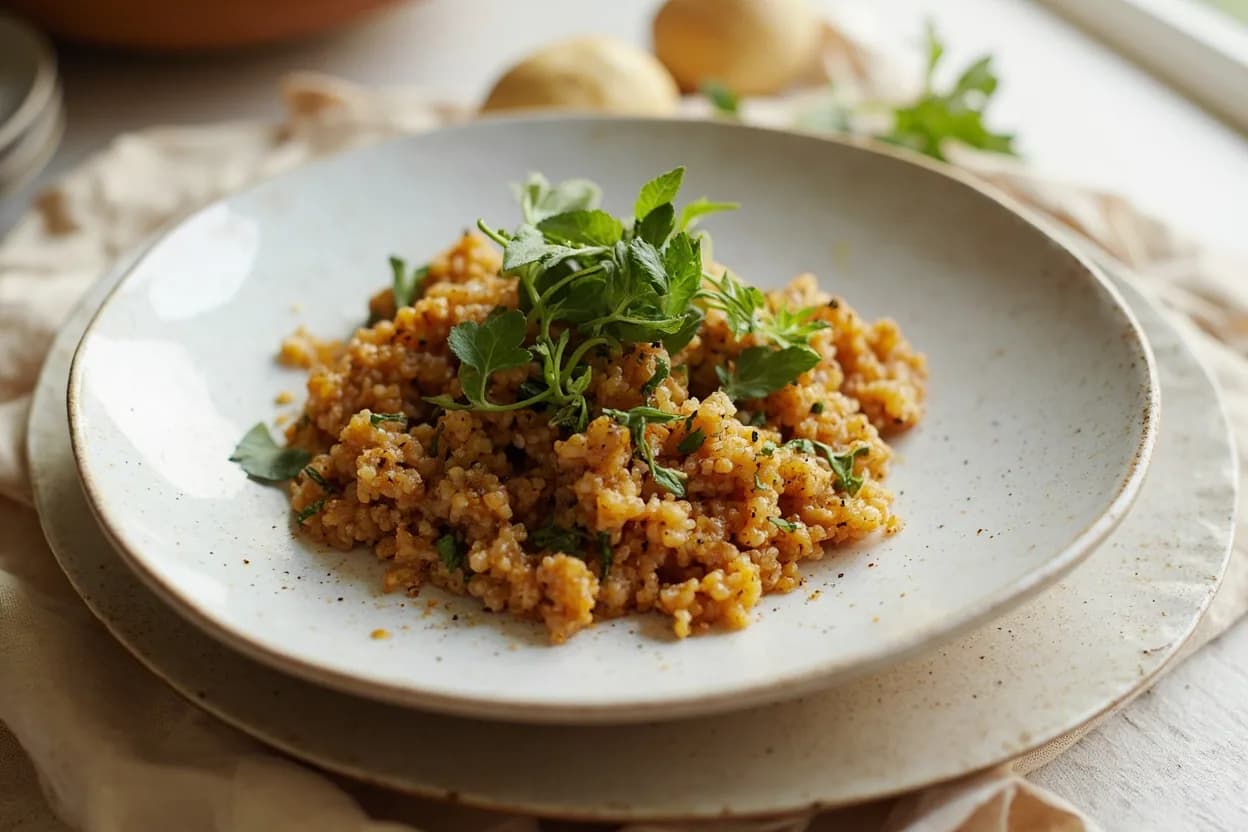
- Porridge: simmer 1 part teff to 3 parts water for 15 minutes, stirring constantly, until thick; sweeten with honey or top with braised greens
- Flatbreads: combine teff flour 1:1 with a neutral flour for binding, or use alone for dense, gluten-free wraps
- Fermentation: soak teff in water 2–3 days to produce the lactic-acid culture for injera batter
- Toast whole grains dry in a pan before cooking to amplify the hazelnut-cocoa notes
- Blending: substitute up to 25% of wheat flour in cakes or muffins for earthy depth without altering structure significantly
Appears in
Related flavours
Teff's primary expression — the fermented flatbread unlocks the grain's sour and earthy extremes simultaneously.
Another earthy, gluten-free pseudo-grain with mineral depth and robust bitterness; the two share pairing logic across sweet and savoury applications.
- Millet
Closest grain-family neighbour in flavour profile — both have mild nuttiness and whole-grain earthiness, and share similar porridge and flatbread applications.
References
- 1.Teff: A Relatively New Crop in the World — National Research Council (1996)
- 2.Ancient Grains for Modern Meals — Maria Speck
- 3.On Food and Cooking — Harold McGee
- 4.Whole Grains Every Day, Every Way — Lorna Sass
Confidence: high
Notes
White vs. dark teff
Teff comes in ivory (white) and brown (dark) varieties. White teff is milder and slightly sweeter; dark teff has a more pronounced earthiness and mineral bite. Both are nutritionally similar, but dark teff produces richer-tasting injera. For baking applications in Western cuisines, white teff is the safer substitution for subtle results; dark teff is worth seeking out when you want the full molasses-iron character.