Teas & Beverages
Espresso
Also: short black, caffe espresso, single shot, doppio, ristretto, lungo
The concentrated essence of roasted coffee — bitter, fruity, and aromatic in 30ml — that is as indispensable a culinary flavor as it is a morning ritual.
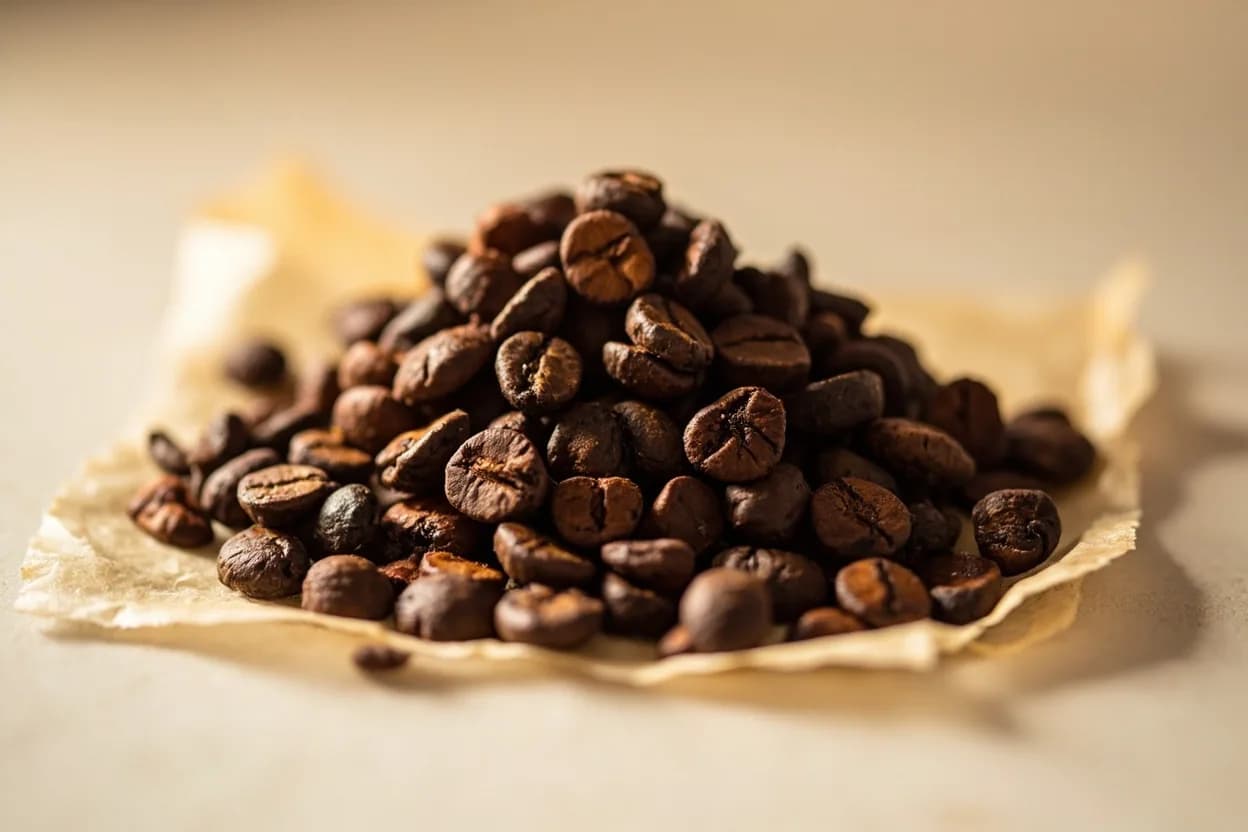
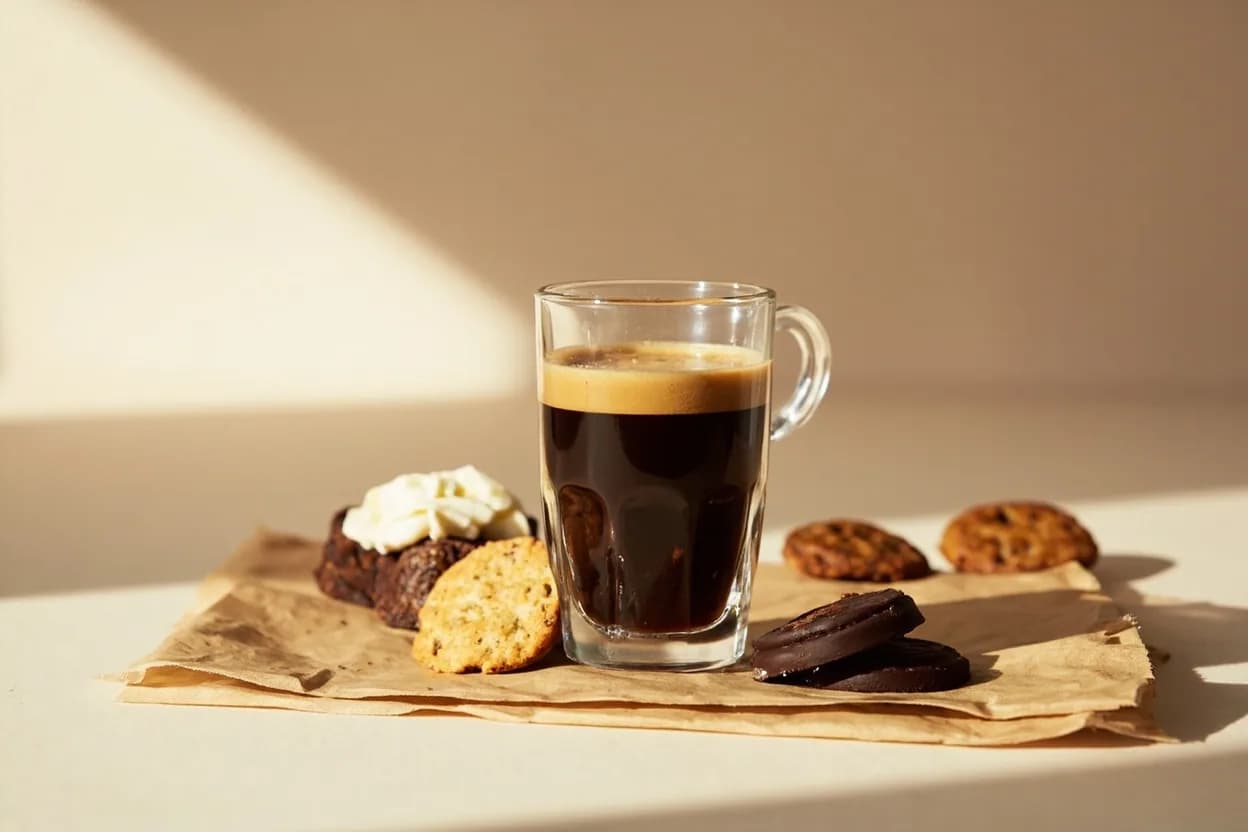
Espresso is coffee brewed by forcing near-boiling water (90–96°C) through finely ground, densely packed roasted coffee at 9 bars of pressure in 25–30 seconds. The result is approximately 30ml of intensely concentrated brew with a golden-to-tawny crema (emulsified coffee oils and CO₂) on the surface. The flavor is complex and roast-dependent: lighter roasts yield floral, fruity, and acidic espresso; medium roasts bring caramel, dark fruit, and nut; darker roasts trend toward bittersweet chocolate, smoke, and tar. All espressos share a characteristic bitter backbone from roasted trigonelline and chlorogenic acids, a pronounced roasted aroma (pyrazines, furans), and a full-bodied texture from the emulsified oils. Culinarily, espresso functions as a flavor amplifier — its bitterness and roast compounds heighten chocolate, deepen savory braises, and provide the structural backbone of cream-based desserts.
In photos
Flavour profile
Classic pairings
- Dark chocolateItalian / French confectionery
The canonical confectionery pairing — espresso's bitterness and roast amplify cacao's own bitterness and bring its fruit notes forward. A chocolate ganache with espresso is greater than the sum of its parts: the coffee fills the flavor space after the chocolate's initial impact and extends the finish.
- MascarponeItalian
The foundational pairing in tiramisu: fat-rich, mildly lactic mascarpone absorbs and tames espresso's intensity, the dairy fat carrying the volatile aromatic compounds while the acidity of the coffee cuts through the richness.
- Savoiardi (ladyfinger biscuits)Italian
The classic structure of tiramisu — savoiardi are soaked in espresso (spiked with marsala) until just tender, not soggy. The biscuit's egg-white lightness and vanilla sweetness form the textural and flavor contrast to the espresso-saturated layers.
- VanillaItalian
Espresso and vanilla are mutually reinforcing: vanilla's lactone sweetness softens the coffee's bitterness, while the coffee's roast extends vanilla's aromatic complexity. The classic espresso affogato — a scoop of vanilla gelato drowned in hot espresso — demonstrates this with perfect economy.
- HazelnutItalian / European confectionery
Shared pyrazine aromatics between espresso and toasted hazelnuts make this a chemically coherent pairing; the nut's fat tempers bitterness and the combination is the basis of espresso-hazelnut pralines, Ferrero-style confections, and café drinks.
- Beef short rib / braised meatsAmerican BBQ / Fusion
Used as a component in a braising rub or braising liquid, a shot of espresso adds deep, umami-forward roast character to slow-cooked beef; the coffee's bitterness is absorbed and mellowed over 3–4 hours, leaving behind a subtle smokiness.
- AmarettoItalian / Cocktail
Almond-cherry liqueur alongside or in espresso is the basis of the amaretto espresso martini and the caffè corretto with amaretto; almond's sweet nuttiness bridges the coffee's roast and cuts its bitterness with sugar.
- CardamomMiddle Eastern / Ethiopian
The defining addition in Middle Eastern and Ethiopian coffee traditions: cardamom's eucalyptol and aromatic ester notes mesh with espresso's roast, lifting the floral, citrus-adjacent tones that espresso shares with cardamom's bright-spice quality.
Adventurous pairings
A small amount of espresso in a slow-cooked braise containing anchovies (à la umami-stacking technique) works because both are glutamate-rich umami bombs; the coffee's bitterness fills in around the anchovy's fish-funk, creating a round, savory depth with no fishiness.
White miso + espresso as a glaze for roasted eggplant or mushrooms: the miso's savory umami and the coffee's bitter roast overlap at the char-sweetness frequency, producing a deeply complex caramelized crust.
- Lapsang souchong
Both are roasted beverages with bitter and smoky dimensions; using a lapsang souchong cold brew in an espresso martini or stacking lapsang with espresso in a tiramisu creates a double-roast, double-smoke dessert that reads as profoundly complex.
Espresso's acidity and fruit tones harmonize with tamarind's sour-sweet profile in a cocktail syrup (espresso-tamarind shrub) or as a glaze for duck; the coffee's bitterness tames tamarind's sharpness.
Sesame paste's bitter, toasty, fatty character pairs naturally with espresso in both sweet (espresso-tahini halva) and savory (espresso-tahini dressing for roasted carrots) contexts; shared bitter-nutty aromatic compounds align.
Tread carefully
- Delicate fish (sole, flounder, turbot)avoid
Espresso's bitter intensity obliterates the subtle sweetness of fine white fish; the bitterness that deepens beef and chocolate is simply aggressive and inappropriate against a delicate seafood plate.
- Floral, high-acid vinaigrettesavoid
Sharp vinegar acid stacks against espresso's own chlorogenic acid sourness, producing a jagged, unpleasant combination; espresso in savory contexts requires fat or umami to balance, not more acid.
- Fresh, raw dairy in cold applications without sugaravoid
Unsweetened cold milk with espresso (not a latte — literally plain cold milk stirred with espresso without sugar) tends to curdle and tastes sour-bitter with none of the balance a latte achieves; the fat and gentle sweetness of dairy need some sugar or warmth to mediate.
How to use it
- Pull espresso at 90–96°C at 9 bars pressure, 25–30 seconds extraction — the starting point for all derivative culinary uses
- Use a freshly pulled shot immediately in hot applications; allow to cool completely before adding to cream or soaking biscuits to avoid curdling or partial cooking
- For cocktails and cold applications, pull a ristretto (15–20ml, shorter extraction, sweeter and less bitter) rather than a full shot
- Reduce espresso with sugar (1:1) to a syrup for baking glazes, ice cream bases, and cocktail syrups — the reduction amplifies sweetness and rounds bitterness
- In spice rubs for beef or pork, grind dried espresso solids (spent grounds or freeze-dried instant as a proxy) with cocoa, salt, and dark chile
- For soaking (tiramisu): slightly dilute espresso with marsala, rum, or coffee liqueur to slow the absorption rate and prevent over-saturation
Appears in
Related flavours
Espresso's most chemically sympathetic partner; together they define Italian dessert culture.
- Vanilla
The sweet-neutral counterpart that softens espresso's bitter edge; the affogato is the purest demonstration.
A fellow intensely roasted beverage that can be layered with espresso for depth-on-depth effect in cocktails and desserts.
- Cardamom
The canonical cross-cultural spice pairing for coffee in Middle Eastern, Ethiopian, and Nordic traditions.
References
- 1.The World Atlas of Coffee — James Hoffmann (2014)
- 2.Modernist Cuisine: The Art and Science of Cooking — Myhrvold et al. (2011), Chapter on Coffee
- 3.Niki Segnit, The Flavour Thesaurus (2010)
- 4.On Food and Cooking — Harold McGee (2004) — coffee chemistry chapter
Confidence: high
Notes
The Maillard engine
Espresso's complex flavor — and its versatility as a culinary ingredient — is the product of Maillard reactions during roasting, which generate hundreds of aromatic compounds across pyrazine (nutty, roasty), furan (caramel, sweet), thiophene (meaty, savory), and aldehyde (fruity, floral) families. This is why espresso can simultaneously support chocolate, stone fruit, vanilla, and savory meat pairings: different culinary contexts activate different spectral regions of its aroma. Lighter roasts emphasize the fruit and floral compounds; darker roasts burn these off and emphasize the bitter, smoky pyrazines.
Bitterness as a tool, not a flaw
The bitterness of espresso — often described as a defect to be minimized — is culinarily one of its most valuable properties. In desserts, a bitter counterweight prevents sweetness from becoming cloying; in braises, it fills the 'background frequency' that gives slow-cooked meats their depth; in cocktails, it provides the structural backbone that allows sweeter and sour elements to register. Learning to use espresso's bitterness purposefully rather than masking it is the defining skill in espresso-driven cooking.