Spices & Dried Aromatics
Facing Heaven Chili (Chaotianjiao)
Also: chaotian jiao, facing-heaven pepper, 朝天椒, Sichuan dried red chili, er jing tiao (related)
Sichuan's upward-pointing dried chili — vibrant, fruity heat with a paprika-like brightness, built for dry-frying and the numbing-spicy mala canon.
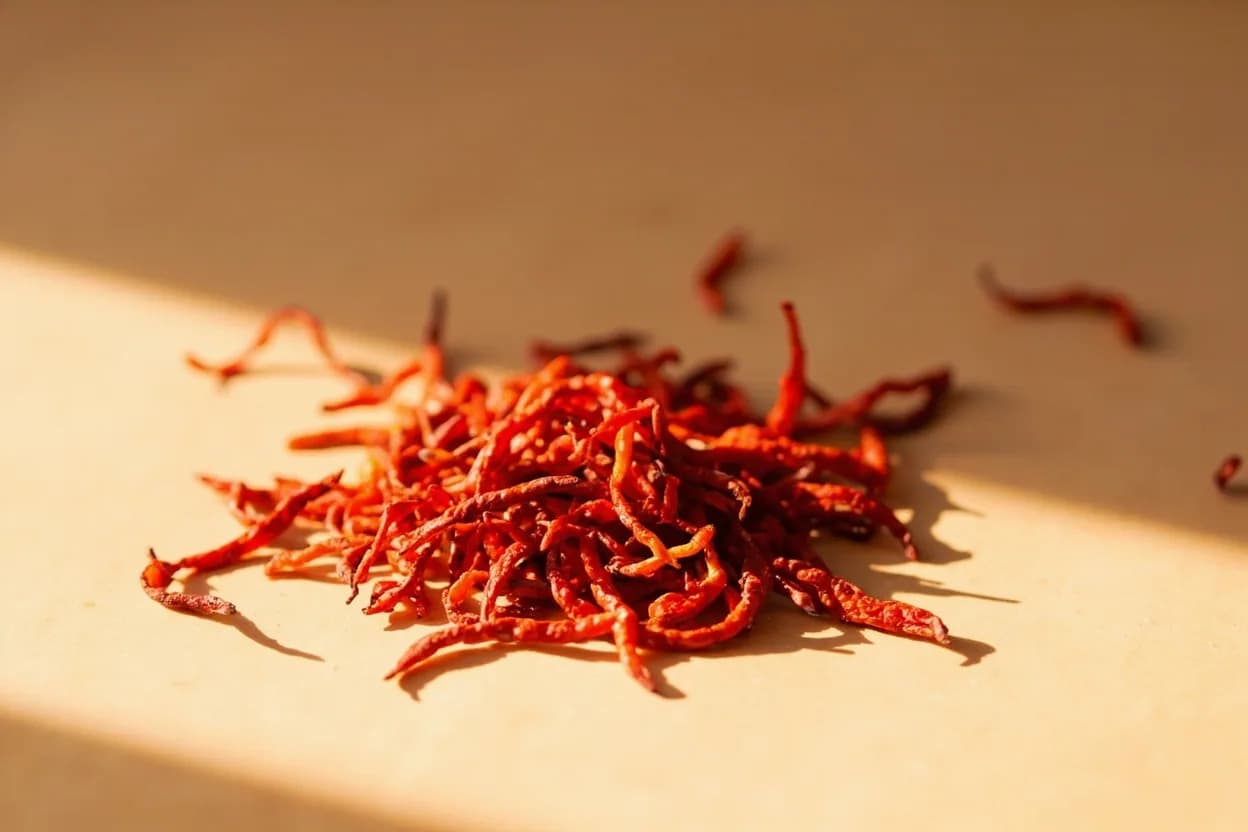
Chaotianjiao ('facing heaven pepper,' literally 'toward-heaven chili') is the most important dried chili in Sichuan cuisine, named for the way the fruit points skyward on the plant. A Capsicum annuum cultivar, it is medium-hot (30,000–70,000 SHU) with a notably bright, clean heat and a fruity, almost paprika-like sweetness when its skin is toasted in hot oil. The seeds contribute significant heat while the dried skin contributes color and aroma. Chaotianjiao is the chili used in kung pao chicken, mapo tofu, doubanjiang-based sauces, and the canonical mala (numbing-spicy) oil base.
In photos
Flavour profile
Classic pairings
- Sichuan peppercorn (hua jiao)Sichuan
The mala ('numbing-spicy') foundation: Sichuan peppercorn's tingling hydroxy-alpha-sanshool and chaotianjiao's heat are inseparable in the Sichuan flavor canon — mapo tofu, mala hot pot, and Chongqing noodles.
- Doubanjiang (fermented broad bean-chili paste)Sichuan
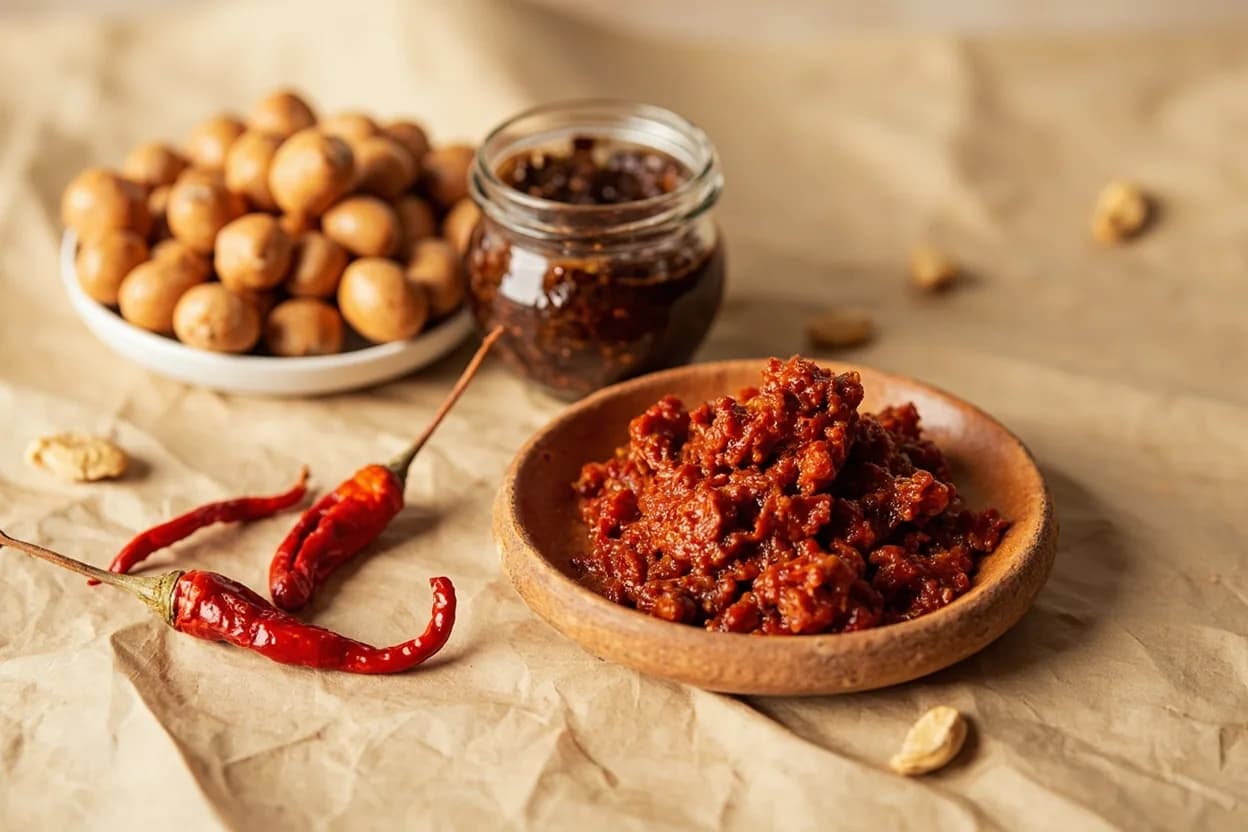
Many Sichuan dishes layer chaotianjiao alongside doubanjiang — the fresh-dried chili provides brightness and color while the paste provides deep fermented umami.
- PeanutsSichuan
In kung pao chicken, whole dried chaotianjiao are dry-fried with peanuts until fragrant — the nut's fat carries the chili's oil-soluble aroma compounds perfectly.
- GingerSichuan
Ginger's sharp, volatile heat (gingerol/shogaol) interacts with the chili's capsaicin for a two-layered warmth used in most Sichuan braised dishes.
- GarlicSichuan
Fried with chaotianjiao in neutral oil as the aromatic base for countless Sichuan stir-fries — the sulphurous compound of garlic becomes sweeter and binds with the chili's oil.
- Dark soy sauceSichuan
The molasses depth and color of dark soy amplifies the chili's dried fruit notes in braised pork belly, red-braised fish, and water-boiled meat (shui zhu).
- Chicken (whole or thigh pieces)Sichuan, Chongqing
Chongqing dry-fried chicken (la zi ji) buries chicken pieces under a mountain of whole chaotianjiao — the fat renders into the chilies, the chilies aromatize the chicken.
Adventurous pairings
- Aged rice wine vinegar (Chinkiang or Zhenjiang)
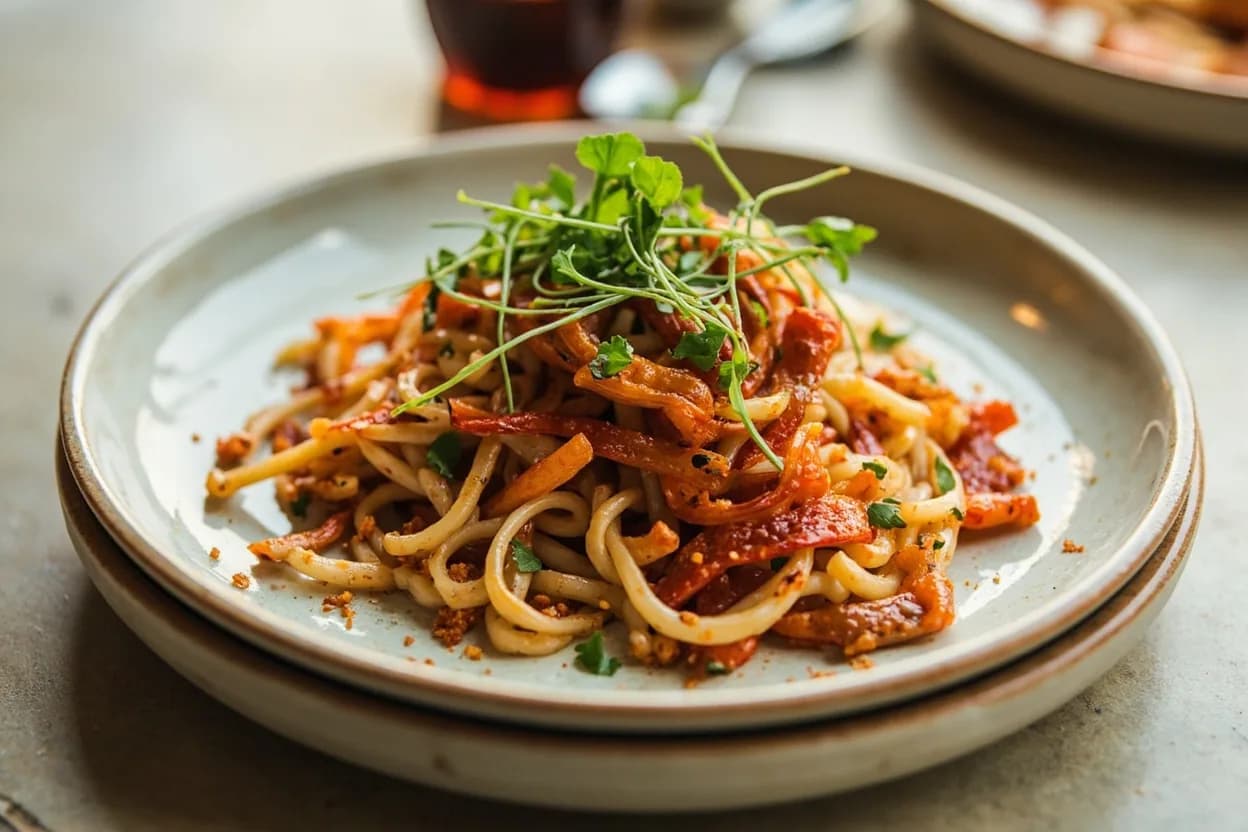
The complex sour-umami depth of Chinkiang vinegar cuts through the oil richness of mala preparations and brightens the chili's fruit — a balance used in Sichuan bang bang chicken and cold noodle dressings.
- Dark chocolate (65%+)
The dried-fruit and roasted bitterness notes in dark cacao converge with chaotianjiao's paprika-like fruitiness — a natural mole bridge; the chili's heat elongates the chocolate's finish.
- Lamb tallow or rendered lamb fat
Strongly flavored animal fat carries the chili's aroma compounds with particular intensity; a base for Northwestern Chinese (Xi'an) and Muslim-quarter lamb preparations where chaotianjiao is foundational.
- Lychee or longan
The floral sweetness of lychee amplifies the chili's bright fruity top note — a Hong Kong-Sichuan fusion move that works in a sweet-and-sour sauce base or a fruity mala granita.
Tread carefully
- Very delicate fish (poached sole, steamed flounder)avoid
Chaotianjiao's heat and aromatic intensity overwhelms the clean sweetness of delicate steamed fish — use milder dried chilies (er jing tiao) or none at all for such preparations.
- Desserts with dairy-forward profilesavoid
Milk proteins and the chili's oil-soluble capsaicin compounds interact poorly at room temperature — unlike capsaicin in cream (which works), the dried chili's roasted notes clash with cold dairy.
How to use it
- Dry-fry whole in a dry wok over medium heat until fragrant and darkened — 1–2 minutes; remove seeds if less heat is desired
- Bloom in hot neutral oil (170°C/340°F) for 30 seconds to extract color and aroma before adding aromatics
- Grind with Sichuan peppercorn for a mala spice blend used in dry rubs
- Chop coarsely (with scissors) into 2–3 cm sections for la zi ji (Chongqing dry-fried chicken) so the segments can be eaten
- Steep in warm chili oil to make a mala condiment oil (hong you)
- Add whole to braises with the stem on — remove before serving, leaving residual heat in the liquid
Appears in
Related flavours
The defining partner — creates the mala (numbing-spicy) flavor profile central to Sichuan cuisine; neither works without the other.
- Er Jing Tiao
Another key Sichuan dried chili, milder and more fruity than chaotianjiao; often used together (one for color, one for heat) in Sichuan pastes.
- Dried Kashmiri Chili
A close functional parallel — high color, moderate heat, fruity dried-berry note. Substitutable in non-Sichuan preparations when the specific aroma is not critical.
References
- 1.Every Grain of Rice: Simple Chinese Home Cooking — Fuchsia Dunlop
- 2.The Food of Sichuan — Fuchsia Dunlop
- 3.Land of Fish and Rice: Recipes from the Culinary Heart of China — Fuchsia Dunlop
- 4.Chinese Gastronomy — Hsiang Ju Lin and Tsuifeng Lin
Confidence: high
Notes
Whole vs. broken
In Sichuan cooking, chaotianjiao are often left whole (or cut into 2–3 cm sections with scissors) rather than ground. This allows the cook to control heat precisely: the skin's oil-soluble pigments and aromatics bloom into the wok oil during the initial frying stage, while the seeds — the primary heat source — can be knocked out beforehand if a milder result is needed. La zi ji takes this to its extreme: the chicken pieces are almost incidental to the spectacle of whole dried chilies.
Chaotianjiao vs. other dried Chinese chilies
Chinese cooking uses many dried chili varieties for different purposes. Er jing tiao (also Sichuan) is thinner, milder, and more aromatic — prized for doubanjiang production. Tianjin (jin tiao) chili is very hot and lean. Chaotianjiao sits in the middle: reliable heat, excellent color, and a bright fruity note that makes it the workhorse of the Sichuan pantry. Most Chinese dried chilies sold internationally are either chaotianjiao or closely related cultivars.