Vegetables & Fruits
Fennel
Also: Florence fennel, finocchio, sweet fennel, bulb fennel, anise fennel
Raw fennel offers cool, crunchy anise-sweetness; braised fennel melts into silky caramel — two personalities, both impeccable partners for seafood, pork, and citrus.
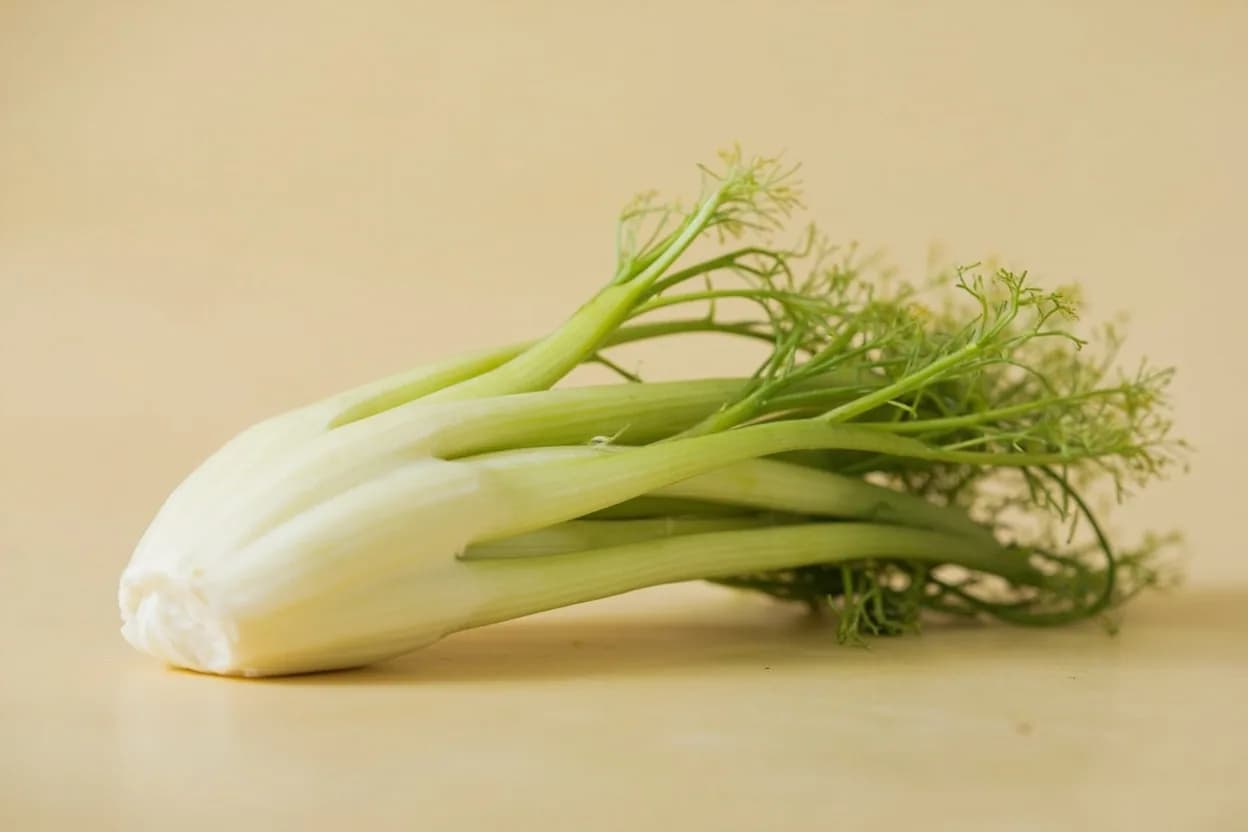
Fennel (Foeniculum vulgare var. azoricum) is a bulbous Mediterranean vegetable prized across Italy, France, and the Middle East. The bulb, fronds, and seeds each have culinary applications. Raw, the bulb is firm and refreshingly crisp, with a pronounced anise-liquorice sweetness undercut by a vegetal freshness. When braised, sautéed, or roasted, it undergoes a dramatic transformation: the anise fades, caramelization builds sweetness, and the texture becomes silky and almost unctuous. Fennel seeds (from a different variety grown for seeds) carry even more concentrated anethole — the essential oil responsible for the anise character — and appear across Italian sausage, Indian spice blends, and liqueurs.
In photos
Flavour profile
Classic pairings
- Orange (blood orange or navel)Italian (Sicilian)
Shaved raw fennel with orange segments is one of southern Italy's defining salads. The citrus's bright acid and sweetness play perfectly against fennel's cool anise crunch; the bitter pith of the orange is echoed by the fennel's slight core bitterness.
- SalmonFrench / Mediterranean
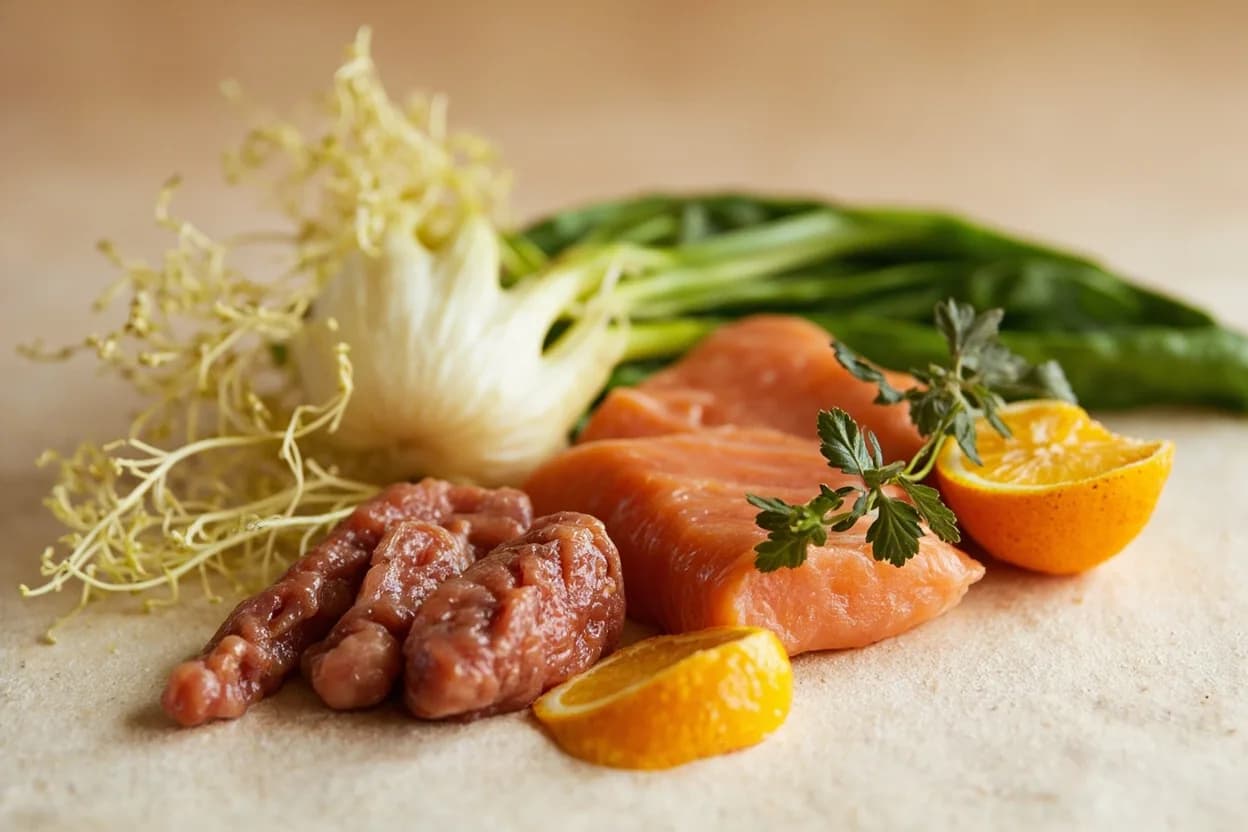
Fennel's anise character has a long affinity with oily fish; fennel-crusted salmon, salmon roasted on a bed of fennel, or fennel-frond butter on a fillet are all classic preparations. The anise cuts through the fish's fat while complementing its natural sweetness.
- Pork sausageItalian
Italian fennel sausage (salsiccia al finocchio) is one of the great sausage traditions; fennel seed is embedded in the pork, creating an inseparable flavor marriage. The anise moderates pork's richness and adds aromatic brightness.
- Olive oil and lemonItalian / Mediterranean
The Mediterranean trio of shaved fennel, extra-virgin olive oil, and fresh lemon is perhaps the ingredient's purest expression — the oil carries the anethole, the lemon provides acidity, and the raw fennel provides crunch and anise sweetness.
- Mussels and clamsFrench (Provençal)
Fennel in shellfish broth is a Provençal and southern Italian tradition; the anise character is a natural partner for briny bivalves in white wine, garlic, and herb preparations. Bouillabaisse relies on fennel and its seeds as a flavor backbone.
- ParmesanItalian
Shaved Parmigiano-Reggiano over thinly sliced raw fennel is a northern Italian antipasto staple. The cheese's crystalline umami and salt amplify fennel's sweetness while the contrasting textures — crunchy vs. shattering — make the combination compelling.
- Pastis / PernodFrench (Provençal)
The anise liqueur amplifies fennel's natural anethole when used in braising liquid or sauce; roasting fennel with pastis and olives is a classic Provençal preparation that doubles down on the anise register to extraordinary effect.
Adventurous pairings
The sharpness and funky mold of Gorgonzola or Roquefort played against caramelized braised fennel creates a sweet-funky counterpoint that works in flatbreads and grain salads — fennel's sweetness mellows the blue's aggression.
The sour-sweet depth of pomegranate molasses drizzled over a shaved fennel salad with herbs echoes the citrus pairing but adds complexity and Middle Eastern aromatic dimension.
Shaved cured mullet roe over raw fennel is a Sardinian and Sicilian luxury combination; the intense salty-oceanic umami of bottarga plays against the cool, clean anise of the vegetable in a way that neither ingredient could achieve alone.
- Grapefruit
Grapefruit's bitter-sour profile provides more tension than orange; shaved fennel with grapefruit and avocado is a contemporary salad that gains from the bitterness resonance between the grapefruit pith and fennel's core.
- Cardamom
Both share aromatic, slightly camphor-like qualities; used together in North African tagine-influenced preparations or spiced fennel tea, they create a layered anise-floral complexity.
Spanish or Mexican chorizo paired with braised fennel: the smoked paprika and fat render into the fennel as it softens, and the anise tempers the heat of the chile — a modern Spanish-inflected preparation.
Tread carefully
- Mintavoid
Both mint and fennel carry strong aromatic-cool compounds; together they create a competing, mentholated experience rather than a harmonious one — each gets in the other's way.
- Tarragon (in large quantities)avoid
Tarragon also contains anethole and risks anise overload when paired with fennel; use sparingly or substituted, not stacked.
- Vinegar-heavy picklingavoid
Sharp pickling brine strips fennel's delicate anise sweetness and replaces it with harsh acidity; brief quick-pickling is fine (it improves texture), but heavy vinegar overrides everything that makes fennel interesting.
How to use it
- Shaving paper-thin on a mandoline for salads — preserves maximum crunch and anise brightness
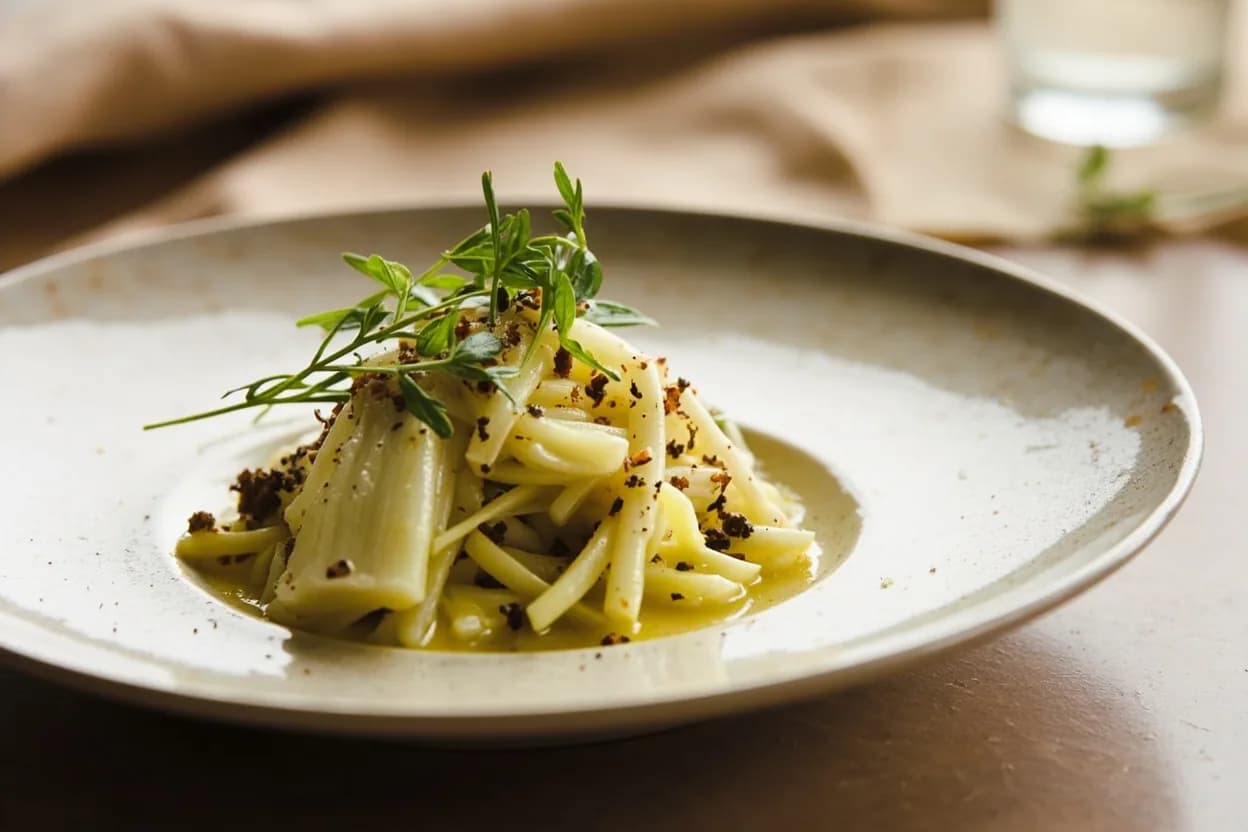
- Slow-braising cut side down in white wine and butter until caramelized — transforms anise into deep sweetness
- Roasting at high heat with olive oil until edges char — produces caramel edges with a smoky bitter-sweet contrast
- Using fronds as an herb finish (raw) — more delicate anise than the bulb, excellent on fish and seafood
- Charring whole over open flame then peeling — smoky exterior and sweet, soft interior for a dramatic contrast
- Reducing fennel in cream with pastis for a pasta sauce — anethole becomes concentrated and complex
Appears in
Related flavours
Shares anethole as the primary flavor compound; used interchangeably in some spice blends but more concentrated and sharper
Another anethole-containing herb; the two overlap and should not be used together in large quantities
- Orange
The canonical fresh citrus partner for raw fennel in Mediterranean salads
References
- 1.Zuni Café Cookbook — Judy Rodgers
- 2.Italian Food — Elizabeth David
- 3.The Flavor Bible — Karen Page & Andrew Dornenburg
- 4.Plenty — Yotam Ottolenghi
- 5.The Complete Robuchon — Joël Robuchon
Confidence: high
Notes
Two vegetables in one
Raw and cooked fennel are, culinarily speaking, almost different ingredients. Raw fennel's anise-coolness is herbaceous and assertive; braised or roasted fennel's caramel sweetness is gentle and rich. Pairings that work beautifully raw (orange, shaved Parmesan, lemon) do not necessarily translate to cooked applications, and vice versa. Think of them as related but distinct ingredients when building a dish.
Fennel seed vs. bulb
Fennel seeds (from Foeniculum vulgare, a different botanical variety grown for its seeds) carry a more pungent, concentrated anethole than the bulb. Seeds are used in Italian sausage, Indian panch phoron, and liqueurs like Sambuca and Pastis. Pairing logic overlaps but seeds tolerate bolder flavor partners — cured meats, spicy braises, robust stews — that might overwhelm the delicate bulb.