Preserved & Cured Fish
Bottarga
Also: boutargue, avgotaraho, butarga, bottarga di muggine, bottarga di tonno
The parmesan of the sea — cured roe sacs that shave into intensely briny, oceanic umami over almost anything.
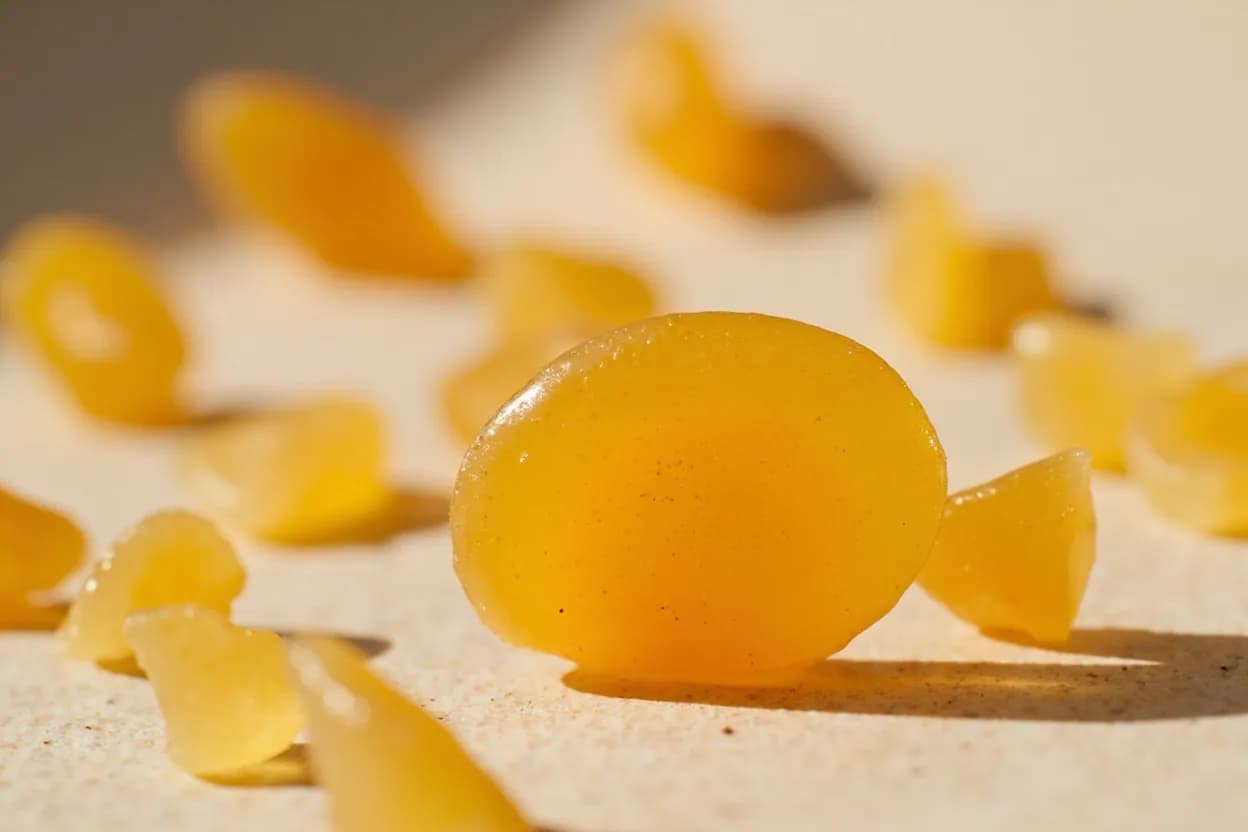
Bottarga is the salted and air-dried roe sac of grey mullet (di muggine, from Sardinia and Orbetello) or bluefin tuna (di tonno, stronger, darker). The intact roe pouch is massaged with sea salt for several days, then pressed and cured for weeks to months until firm enough to grate. The result is a golden-amber to dark amber block with a waxy surface, silky interior, and a flavor that is simultaneously oceanic, briny, eggy, and deeply savory with sweet, mineral undertones. Grey mullet bottarga is more refined and aromatic; tuna bottarga is more assertive and funky.
In photos
Flavour profile
Classic pairings
- SpaghettiSardinian, Sicilian
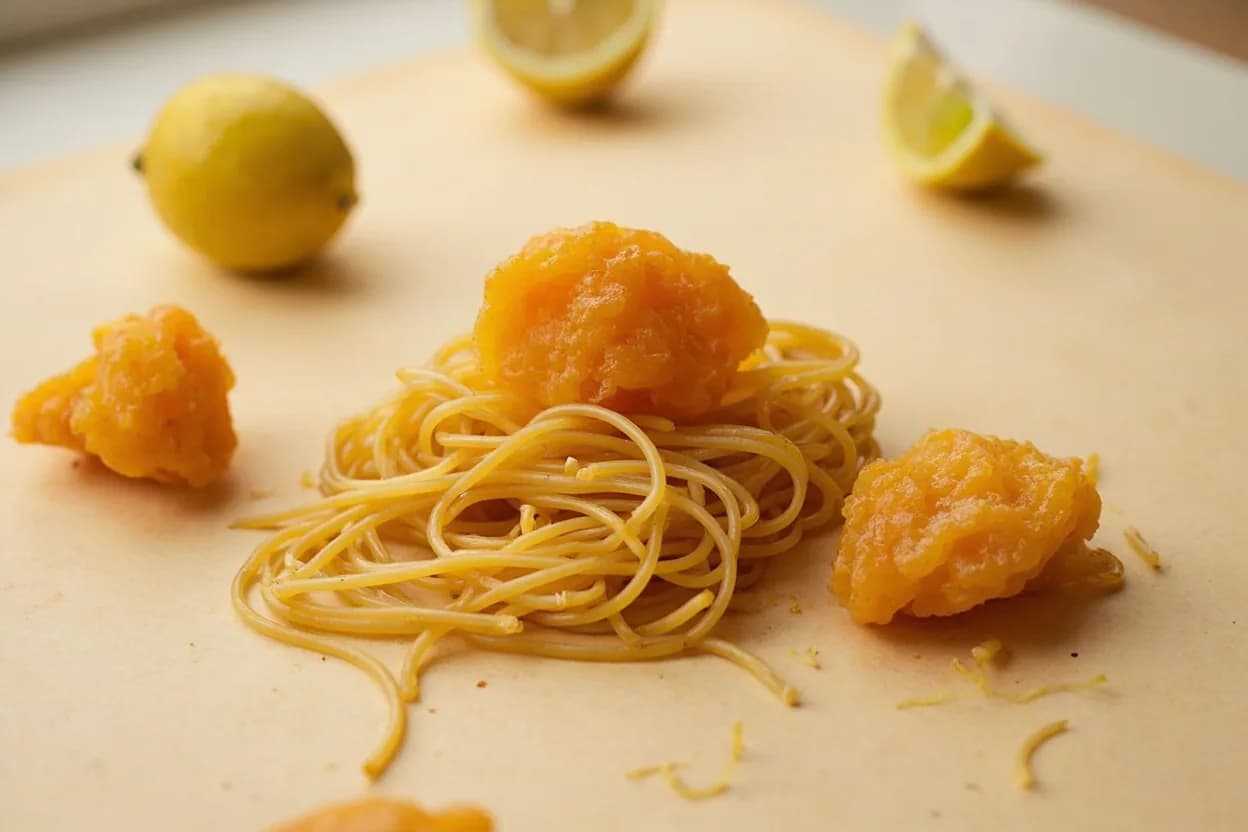
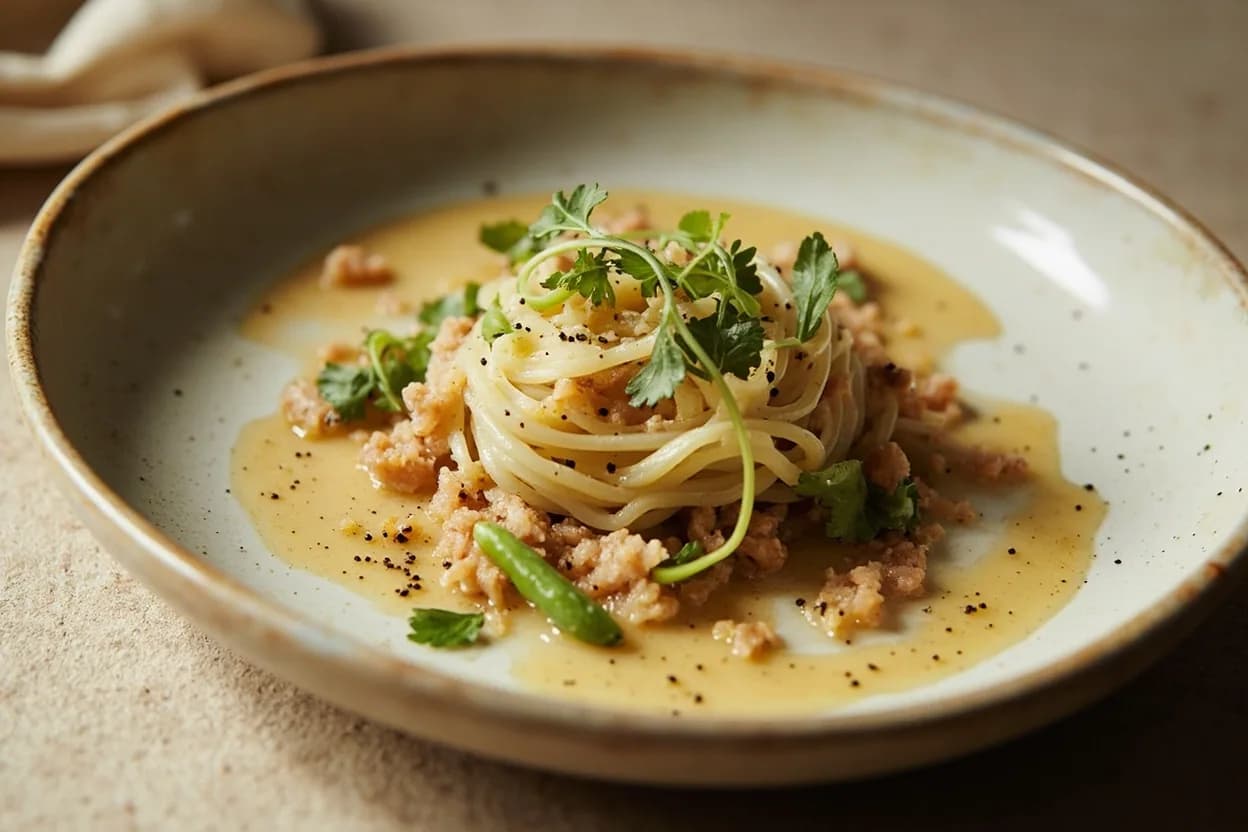
Spaghetti alla bottarga is the canonical preparation: pasta tossed in good olive oil with grated or shaved bottarga — the fat emulsifies the roe's oils and the starchy pasta water binds them. Garlic and parsley are the only additions needed.
- LemonItalian, Greek
Acid cuts through bottarga's richness and amplifies its citrus-mineral notes. A squeeze over shaved bottarga on bread, pasta, or eggs is the simplest and most effective use.
- Olive oilMediterranean
Bottarga's oils are fat-soluble flavor compounds; good extra-virgin olive oil acts as the ideal carrier, helping the roe's aromatics coat every surface of a dish without diluting them.
- EggsSardinian
Grated bottarga over scrambled eggs, frittata, or fried eggs is a Sardinian breakfast staple — two forms of concentrated egg richness, salt amplifying one, umami deepening the other.
- FennelSardinian
Raw fennel's anise sweetness and crunch provide textural and flavor contrast to bottarga's concentrated brininess. Classic in Sardinian antipasto: shaved fennel, sliced bottarga, good oil.
- Bread (rustic sourdough)Sardinian, Greek (avgotaraho)
The simplest Sardinian preparation: thin slices of bottarga on crusty bread with olive oil and a squeeze of lemon. The bread's mild tang and chew are a perfect canvas for the roe's intensity.
- TomatoItalian
Raw sliced tomato with shaved bottarga is a summer antipasto throughout Sardinia and coastal Tuscany — the tomato's sweetness and acid balance bottarga's salt, and both share glutamate richness.
Adventurous pairings
- Avocado
Avocado's creamy, neutral fat acts like a blank canvas for bottarga's brine — the combination reads as an elevated toast or tartare, with the roe's minerals cutting through the fat's richness in the same way lemon would.
- Risotto with butter finish
A mantecatura of butter at the end of risotto, followed by a shower of grated bottarga, creates a dish where every grain is coated in layered umami. The starch absorbs the roe's flavor compounds more completely than pasta.
The counterintuitive pairing of fresh, milky burrata with intensely brined bottarga works because the dairy fat cushions the salinity — similar to how salt cod is served with cream. The contrast is dramatic and considered contemporary in southern Italian trattorias.
- Corn (polenta or fresh)
Bottarga grated over soft polenta is a northern Italian preparation — the corn's sweetness and starch amplify the roe's flavor the way pasta does, but with an added dimension of mineral-meets-sweet.
- Butter-poached lobster
Grated tuna bottarga over lobster sharpens the shellfish's ocean notes — two concentrated, expensive ingredients whose shared marine terroir creates harmony rather than competition.
Tread carefully
- Heavy cream saucesavoid
Rich dairy coats the palate and suppresses bottarga's delicate aromatics — the roe's nuanced ocean-mineral flavor disappears into cream, leaving only salt. Use olive oil instead.
- Strong chili heatavoid
Capsaicin overrides the subtle complexity of grey mullet bottarga in particular. If using tuna bottarga (more assertive), light chili is manageable, but heavy heat wipes out the roe's layered character.
- Cooking bottarga at high heatavoid
Bottarga is a finishing ingredient — heat destroys its volatile aromatics and can turn it bitter. Always grate or shave directly onto a finished, hot dish and serve immediately.
How to use it
- Grating on a Microplane or fine box grater over finished pasta, eggs, or vegetables — the ideal application
- Slicing paper-thin with a sharp knife or mandoline for antipasto presentations
- Shaving with a vegetable peeler for large, dramatic curls over a plate
- Briefly warming sliced bottarga in olive oil (do not fry) to gently open its flavors before adding to pasta
- Whisking finely grated bottarga into olive oil with lemon for a simple vinaigrette
Appears in
Related flavours
The cured whole-fish parallel — less refined but more aggressive umami punch; used cooked in sauces where bottarga is used raw
Liquid anchovy fermentation — a functional cousin for finishing dishes; both are used in small amounts as a flavor amplifier
A rougher textural parallel from Asia: concentrated shellfish umami deployed by grating or crumbling over finished dishes
- Parmesan (Parmigiano-Reggiano)
The 'grate-to-finish' parallel in dairy — same umami delivery mechanism, different terroir; often serve as conceptual substitutes in a dish's finishing role
References
- 1.Italian Seafood — Rick Stein
- 2.The Silver Spoon (Il Cucchiaio d'Argento) — Phaidon
- 3.Culinaria Italy — Claudia Piras (ed.)
- 4.The Flavor Bible — Karen Page & Andrew Dornenburg
- 5.Encyclopedia of Pasta — Oretta Zanini De Vita
Confidence: high
Notes
Mullet vs. tuna bottarga
Bottarga di muggine (grey mullet) from Sardinia's Laguna di Cabras or Orbetello in Tuscany is the premium product — pale amber, with a delicate, perfumed brininess and pronounced sweetness. Tuna bottarga is darker, more intensely flavored, and more aggressively funky. For pasta and eggs, mullet bottarga is ideal. For robust preparations with stronger ingredients, tuna holds its own.
Storage and peeling
Bottarga is sold either whole in its beeswax coating or vacuum-packed. Remove the beeswax or skin before grating. Refrigerate wrapped in paper towel inside an airtight container; use within two to three weeks of cutting. The natural wax on the surface protects the interior and should only be removed immediately before use.