Preserved & Cured Fish
Dried Shrimp
Also: dried prawns, hae bee (Hokkien), kung haeng (Thai), camarao seco (Portuguese/Brazilian), crevettes séchées, sakura ebi (Japanese small dried shrimp), ebi hoshi
The concentrated shellfish umami of the sea in tiny, shelf-stable form — a tablespoon adds oceanic depth to stir-fries, braises, and soups across three continents.
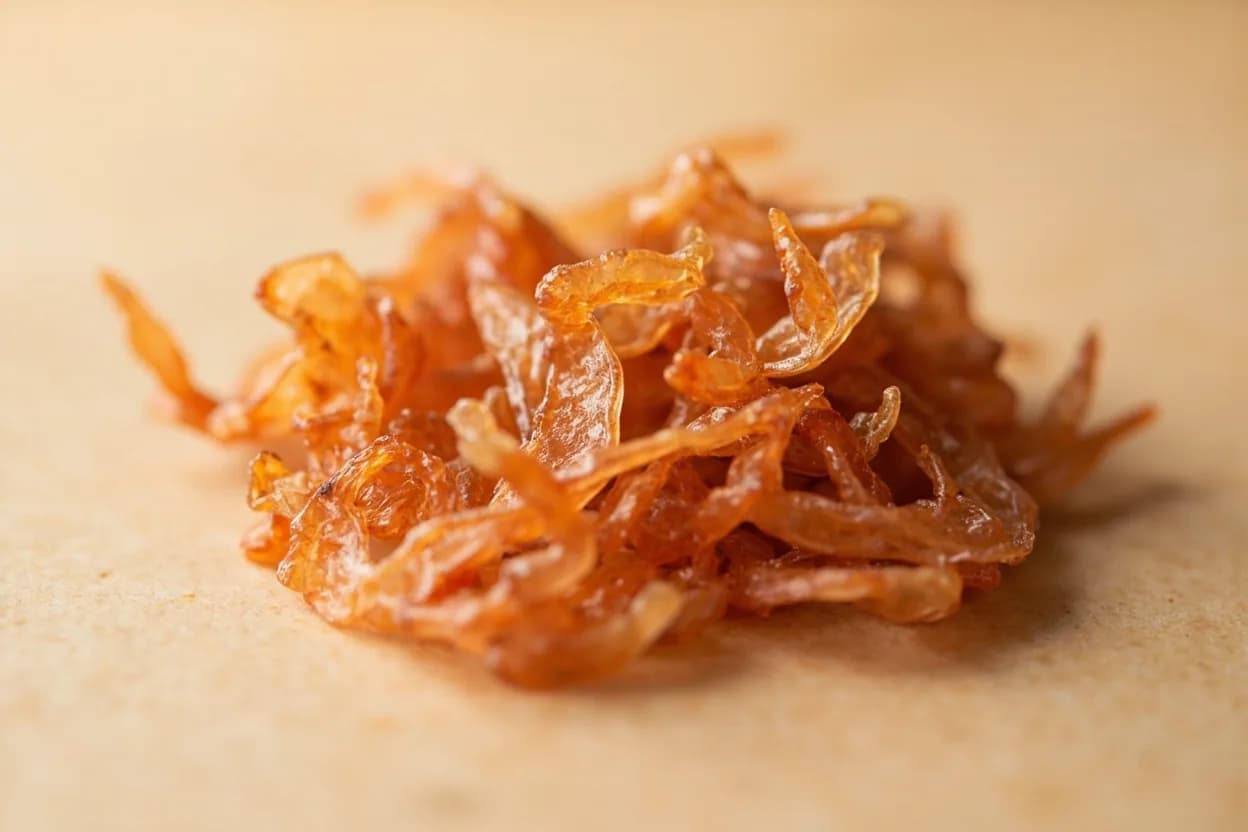
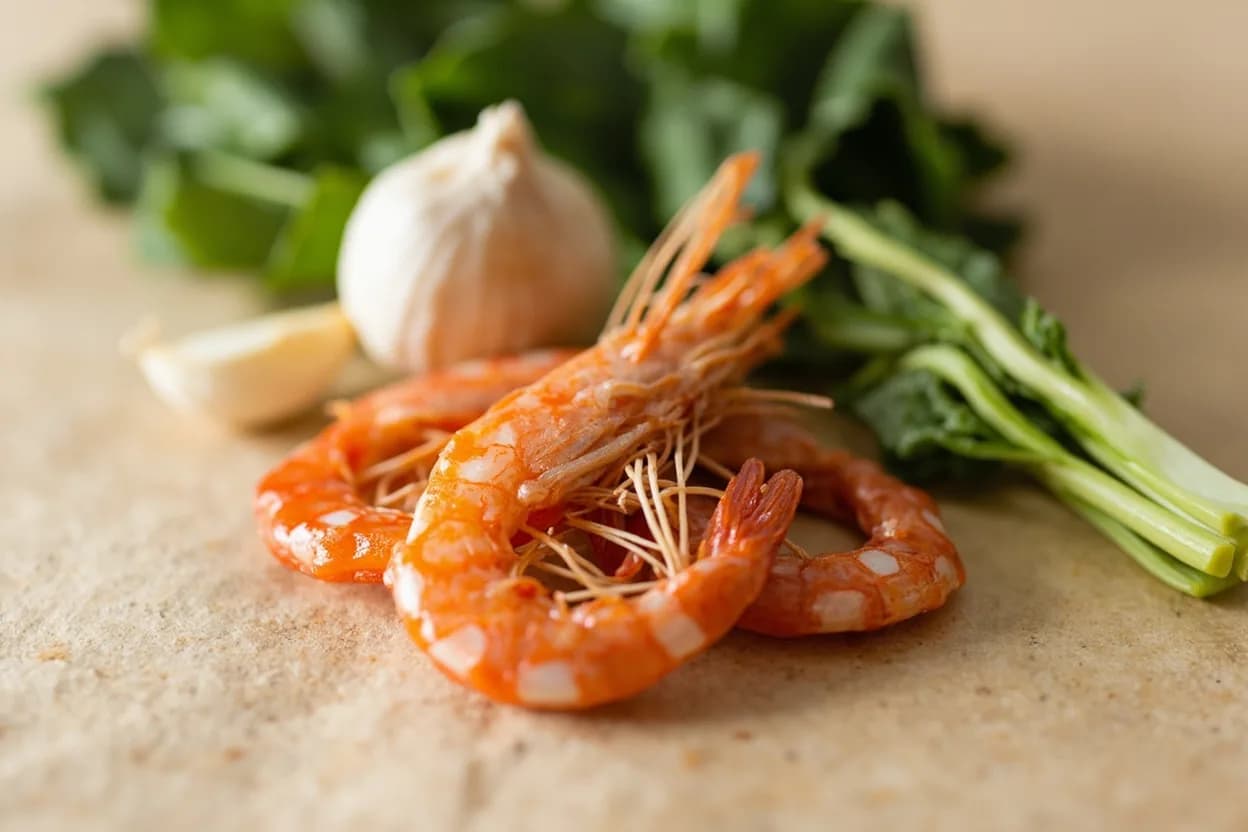
Dried shrimp are shelled, salted, and sun-dried (or oven-dried) small to medium shrimp — most commonly Acetes shrimp (tiny), Indian white shrimp, or Pacific species — preserved by dehydration to 15–25% of their original moisture. The drying process concentrates amino acids (particularly glutamate and glycine), natural sugars (caramelization base), and shellfish-specific flavor compounds (pyrazines, dimethyl sulfide). The result is intensely savory, slightly sweet, and unmistakably oceanic, with a chewy texture that softens when rehydrated. Sizes range from tiny sakura ebi (Japanese small shrimp, used whole) to thumb-sized prawns pounded into pastes. The flavor is shellfish-forward but without the floral esters of fresh shrimp — more concentrated, more mineral, more persistent.
In photos
Flavour profile
Classic pairings
- Garlic and shallotMalaysian, Indonesian, Singaporean, Chinese
The South and Southeast Asian starting point: dried shrimp sautéed with minced garlic and shallot in oil creates a fragrant, powerfully savory base for any stir-fry or braise. The Maillard reaction between the shrimp's amino acids and the natural sugars in shallot and garlic produces extraordinary aromatic complexity.
- Rice (plain or fried)Chinese, Thai, Malaysian, Brazilian
Dried shrimp is a natural partner for rice in virtually every cuisine that uses it — as a flavoring agent in the cooking water (Hainanese style), fried into rice with egg and scallion, or crushed over plain congee. The starch absorbs and carries the shellfish umami.
- Greens (water spinach, morning glory, Chinese broccoli)Malaysian, Singaporean, Thai, Indonesian
Stir-fried greens with dried shrimp and garlic is a canonical Southeast Asian side dish — the bitterness of the vegetable and the sweetness of dried shrimp are complementary, and the quick-cook technique preserves the shrimp's textural presence.
- Tofu (firm and silken)Taiwanese, Chinese, Malaysian
Silken tofu with dried shrimp, soy sauce, and sesame oil is a Taiwanese/Chinese cold appetizer where the tofu's clean protein background amplifies the shrimp's flavors. Fried tofu and dried shrimp in oyster sauce is a warming braise common in Malaysia and Singapore.
- Daikon radishCantonese, Taiwanese, Japanese
Dried shrimp and daikon is a classic combination — the radish's sulfur compounds and water content balance the shrimp's salinity, and together they define the filling of Cantonese turnip cake (lo bak go) and many dim sum preparations.
- Coconut milkMalaysian, Singaporean, Thai, South Indian
The fat in coconut milk carries dried shrimp's fat-soluble aromatic compounds while its sweetness tempers the salt. This pairing is central to laksa (coconut curry noodle soups), rendang, and many South Indian coastal curries.
- Black-eyed peas and beans (West African applications)Nigerian, Ghanaian, Brazilian (Bahian)
In West African and Brazilian cooking, dried shrimp (camarao seco) is pounded and cooked with black-eyed peas, cowpeas, and feijoada-adjacent bean dishes — the legume's earthy sweetness and the shrimp's oceanic salinity are a natural complement, both ingredients carrying significant cultural weight.
Adventurous pairings
- Corn (fresh, creamed, or grilled)
Dried shrimp and corn share natural sweetness and Maillard nuttiness — a combination seen in Yucatecan tamales (with dried shrimp inside the masa), in some Sichuanese corn dishes, and in contemporary fusion recipes. The shrimp's salinity makes the corn taste more intensely of itself.
- Mango (green and ripe)
Green mango salad with dried shrimp is a Thai som tam variant — the tartness of green mango, the sweetness of palm sugar, fish sauce, and pounded dried shrimp create the five-element balance that defines Thai salad. Ripe mango with a sprinkle of dried shrimp and lime is a classic Thai street snack.
- Pasta (linguine, spaghettini)
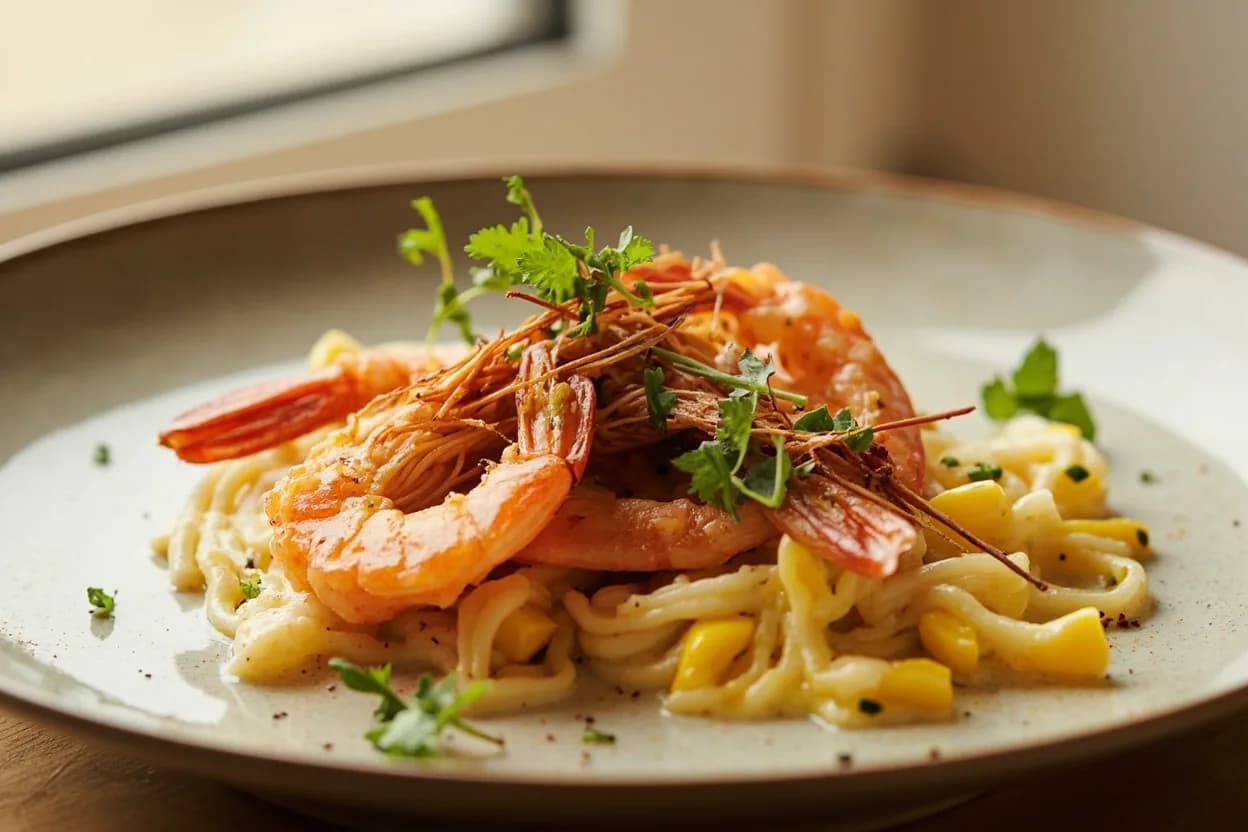
A fusion of Italian and Southeast Asian instincts: dried shrimp sautéed in olive oil with garlic and chili, tossed with pasta and parsley — a functional cousin of spaghetti alle vongole, using shelf-stable preserved shellfish in place of fresh clams for similar oceanic-savory depth.
- Avocado
The combination of creamy, neutral avocado fat and dried shrimp's concentrated shellfish brine mirrors the logic of avocado with anchovy — the fat is a canvas for the preserved fish's intensity. Seen in Mexican-influenced preparations: dried shrimp and avocado tostadas in Oaxacan coastal cooking.
Tamarind's tartness, sweetness, and sour fruit esters complement dried shrimp's umami in multiple traditions — Malaysian asam pedas (sour-spicy fish curry), Indian tamarind chutneys with dried shrimp, and Oaxacan mole amarillo variants. The acid softens the shrimp's salinity and amplifies the fruit notes.
Tread carefully
- Very delicate white fish (sole, turbot, sea bass ceviche)avoid
Dried shrimp's concentrated flavor overrides the subtle sweetness of premium fresh fish. In a ceviche or carpaccio context, the dried shrimp competes rather than complements — the result is confused rather than layered.
- Cream-based Western soups (bisque, vichyssoise)avoid
Dried shrimp's chewy texture, concentrated salinity, and shellfish funk do not integrate cleanly into smooth, cream-based Western soups — the result is jarring both texturally and in flavor. Shrimp bisque is better made with fresh or shell-derived stock.
- Raw application in large piecesavoid
Dried shrimp eaten raw in quantity is tough, intensely salty, and one-dimensional. They should be soaked, pounded, or sautéed to develop their flavor — adding them whole and dry to a finished dish rarely works well.
How to use it
- Soaking in warm water for 15–30 minutes before use to rehydrate and reduce salinity — reserve the soaking water as a flavorful stock
- Pounding in a mortar to a rough paste before adding to sambal, chili pastes, or curry bases
- Sautéing dry in oil until fragrant and slightly crisp before adding other aromatics (garlic, shallot) — 'blooming' dried shrimp in fat
- Grinding to a powder to use as a seasoning agent, sprinkled over dishes like a condiment
- Adding whole (small dried shrimp/sakura ebi) to dashi or stock for an instant shellfish umami layer
- Deep-frying briefly until crisp for garnish — especially sakura ebi, which become light and crunchy
Appears in
Related flavours
The liquid parallel from the same regional larder — both are preserved-shrimp/fish umami sources; fish sauce seasons while dried shrimp provides texture and flavor simultaneously
- Shrimp paste (belacan/terasi)
The fermented paste form of the same ingredient — more pungent, darker, always cooked before use; dried shrimp is the 'fresh' and more restrained relative
Western preserved-fish parallel: same role as a background umami builder, similar salinity levels; anchovy is more commonly melted into sauces while dried shrimp maintains texture
A different preserved-roe shellfish product used similarly as a finishing garnish — both are concentrated, both are crumbled or grated; bottarga is more delicate and expensive, dried shrimp more robust and affordable
References
- 1.Hot Sour Salty Sweet — Jeffrey Alford & Naomi Duguid
- 2.The Food of Malaysia — Wendy Hutton
- 3.Brazil: A Culinary Journey — Yara Castro Roberts & Richard Roberts
- 4.The Complete Asian Cookbook — Charmaine Solomon
- 5.Encyclopedia of Asian Food — Charmaine Solomon
Confidence: high
Notes
Size and variety
Dried shrimp range from tiny sakura ebi (Japanese, from Suruga Bay, 1–2cm) used whole in okonomiyaki and rice dishes, to medium Chinese and Southeast Asian dried shrimp (3–5cm) for sautéing and grinding, to large Bahian camarao seco used in Brazilian coastal cooking. Smaller shrimp dry more evenly and are milder; larger shrimp are more intensely flavored and better for dishes where they will be rehydrated or slow-cooked.
Three-continent footprint
Dried shrimp is one of the most geographically widespread preserved proteins in the world — used throughout Southeast Asia (Thailand, Malaysia, Indonesia, Vietnam, Philippines), across Chinese regional cuisines (Cantonese, Fujianese, Hunanese), in Japanese cooking (sakura ebi in particular), and dramatically in West African and Brazilian Afro-diasporic cuisine, where it arrived via the slave trade and became embedded in Bahian cooking. In Mexico's Oaxacan coastal region, dried shrimp (camarón seco) is a staple of mole amarillo and tamale fillings — a parallel preservation tradition from Pacific coastal trade routes.