Mushrooms
Dried Shiitake
Also: dried lentinus edodes, dried chinese black mushroom, dried forest mushroom, donko, 花冬菇
The backbone of East Asian broths — intensely earthy, smoky, and packed with glutamates that deepen any dish they touch.
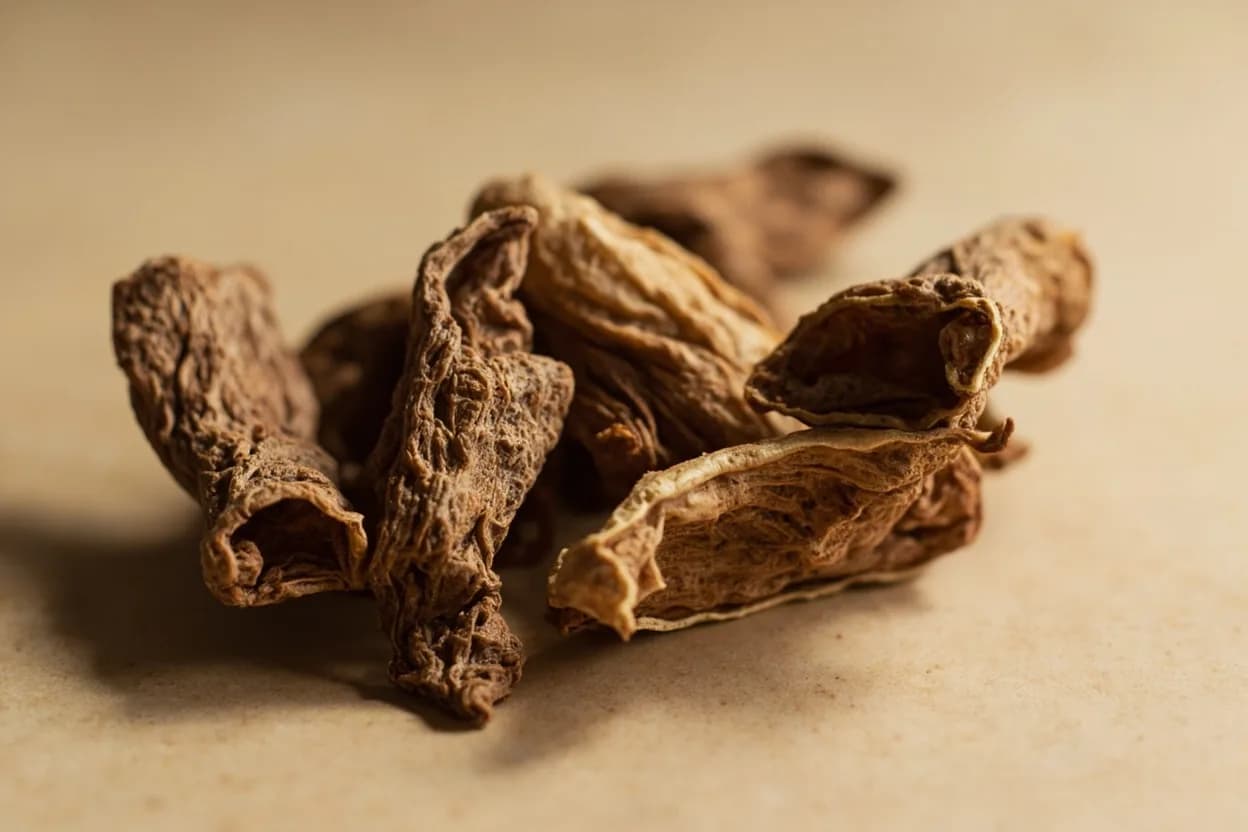
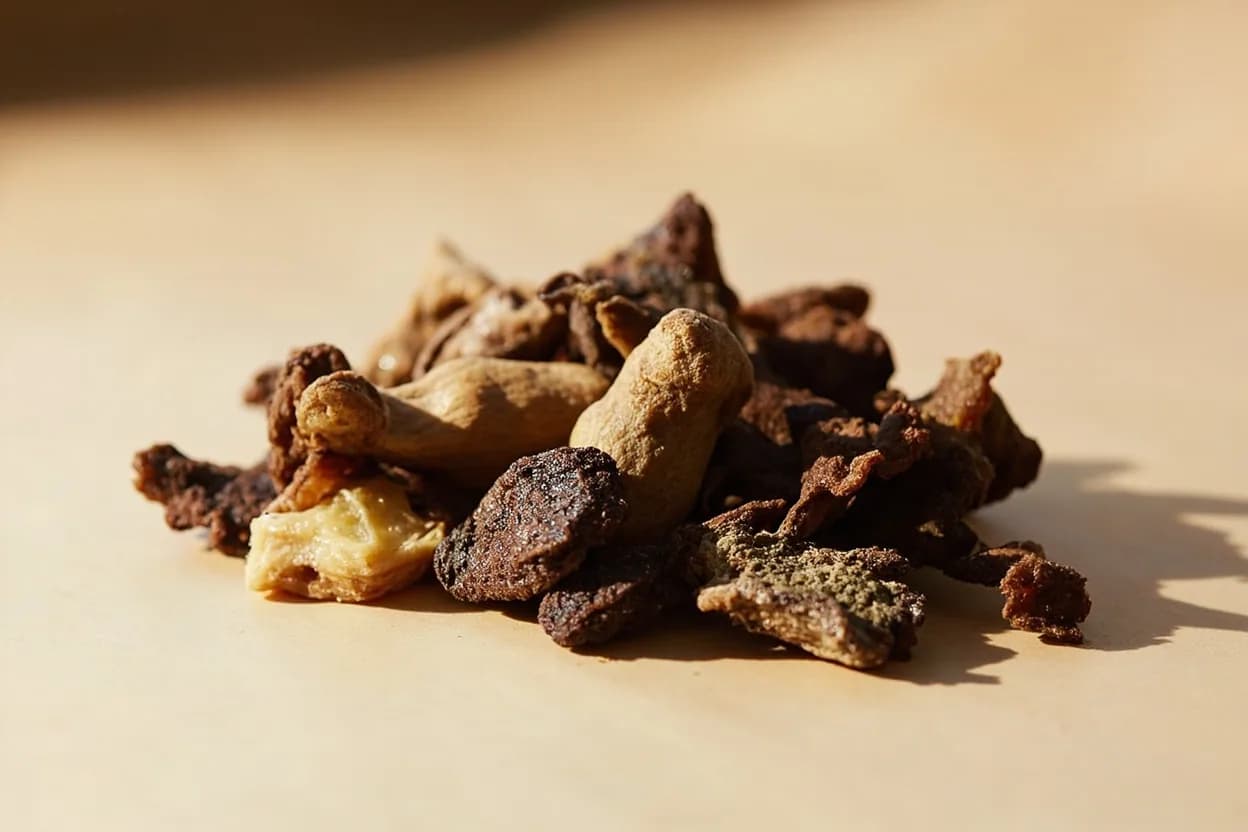
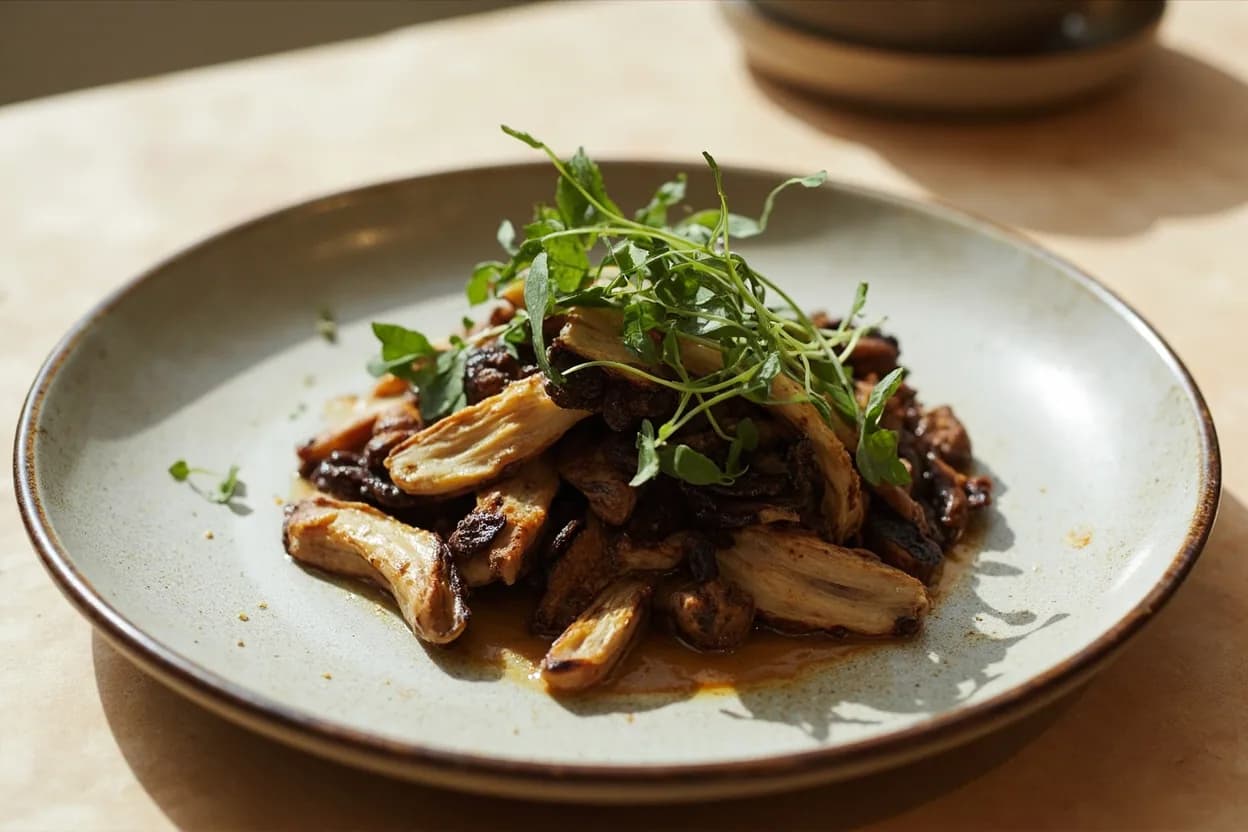
Dried shiitake (Lentinus edodes) are fresh shiitake mushrooms dehydrated until leathery, a process that dramatically concentrates their umami compounds, particularly guanosine monophosphate (GMP). Reconstituted, they deliver an earthy, smoky, forest-floor depth with a meaty backbone; the soaking liquid itself becomes a potent umami broth. Donko-grade caps — thick, cracked, winter-harvested — are the premium tier. Used across Japanese, Chinese, Korean, and Vietnamese cooking as both a flavouring agent and a principal ingredient.
In photos
Flavour profile
Classic pairings
- KombuJapanese
The classic Japanese dashi synergy: kombu's glutamates (IMP) stack multiplicatively with shiitake's GMP, creating umami far greater than either alone.
- Soy SauceChinese
Both are concentrated glutamate sources; together they create a self-reinforcing savory loop used in braised Chinese dishes like hong shao rou.
- GingerChinese
Ginger's sharp heat and citral brightness cut the earthy heaviness of shiitake, a classic Chinese braise balance.
- Tofu (firm or silken)Japanese, Chinese
Tofu absorbs the shiitake's soaking liquor eagerly; the mushroom provides the savory backbone tofu itself lacks.
- Rice NoodlesVietnamese, Chinese
Shiitake-based broth is the canonical soaking/cooking medium for Vietnamese pho chay and various Chinese rice-noodle soups.
- Pork BellyChinese
Red-braised pork belly with dried shiitake is a Shanghainese and Cantonese staple; the mushroom enriches the braising liquid while absorbing the pork fat.
- Dashi StockJapanese
Dried shiitake dashi (mushroom + water soak) is a vegan alternative to bonito dashi with comparable umami depth for miso soup and nimono.
- Napa CabbageChinese
Braised together in a sandy-pot, the cabbage sweetness and shiitake earthiness are a canonical Cantonese comfort pairing.
Adventurous pairings
Shared theobromine and roasted compounds create an uncanny savory-sweet depth; dried shiitake powder used in mole-adjacent sauces plays this beautifully.
- Aged Parmesan
Both are extreme glutamate sources; combining them in a vegan pasta or risotto produces an umami that rivals any meat-based sauce.
Black garlic's balsamic sweetness and shiitake's forest earthiness make an electrifying compound butter or sauce base for seared proteins.
- Scotch Whisky (peated)
The smoky peat of Islay whisky mirrors the smoke note in dried shiitake; used in slow-braised mushroom ragouts or deglazing sauces.
Tamarind's sour fruitiness cuts the musky heaviness of shiitake broth, a pairing found in some Thai and South Indian mushroom curries.
Tread carefully
- Delicate white fish (sole, flounder)avoid
Dried shiitake's muscular umami obliterates the subtlety of mild white fish; the soaking liquor overwhelms rather than supports.
- Strong floral perfumes (rose water, lavender)avoid
The earthy sulfur compounds in shiitake clash with floral aromatics, producing a medicinal, off-putting note.
- Cream-heavy béchamelavoid
The dairy fat mutes shiitake's volatile aromatics and the pairing reads as muddy rather than rich.
How to use it
- Cold-soak overnight in the refrigerator (preserves guanylate for maximum umami extraction)
- Simmer the soaking liquid as a primary dashi or stock base — strain before use
- Slice and braise whole reconstituted caps; they hold shape and absorb flavors
- Grind dried caps to a powder and use as a dry rub or umami seasoning
- Add directly to long-cooked broths or stews without pre-soaking for slower, deeper extraction
Appears in
Related flavours
Together they form the principal umami synergy of Japanese dashi — GMP + glutamate stacking.
European counterpart — similarly concentrated forest umami, though with a more resinous, wine-friendly character.
IMP-rich counterpart used alongside shiitake GMP in full-spectrum Japanese dashi.
Natural pairing across Chinese and Japanese cuisines — both trade in glutamate-driven savoriness.
References
- 1.The Flavor Bible — Karen Page & Andrew Dornenburg
- 2.Japanese Farm Food — Nancy Singleton Hachisu
- 3.Every Grain of Rice — Fuchsia Dunlop
- 4.The Umami Cookbook — Ole G. Mouritsen & Klavs Styrbaek
- 5.On Food and Cooking — Harold McGee
Confidence: high
Notes
The soaking liquid
Never discard dried shiitake soaking water. Strain it through a fine-mesh sieve or cheesecloth to remove grit, then use it as a liquid with more umami per milliliter than most commercial stocks. Cold-soaking overnight rather than hot-soaking preserves more of the volatile GMP nucleotides and produces a cleaner, brighter flavor.
Donko vs. Kōshin grade
Donko (冬菇) are thick-capped winter-harvested shiitake with a deep crack pattern; they are the premium grade for braising and soups. Kōshin (香信) are thinner, faster-drying, and better suited to slicing for stir-fries. The grade matters for texture; umami contribution is comparable.