Mushrooms
Dried Porcini
Also: dried cep, dried boletus, porcini secchi, cèpes séchés, Steinpilze getrocknet
Europe's umami kingpin — concentrated forest, earth, and nuttiness that transforms risotto, pasta, and braises into something elemental.
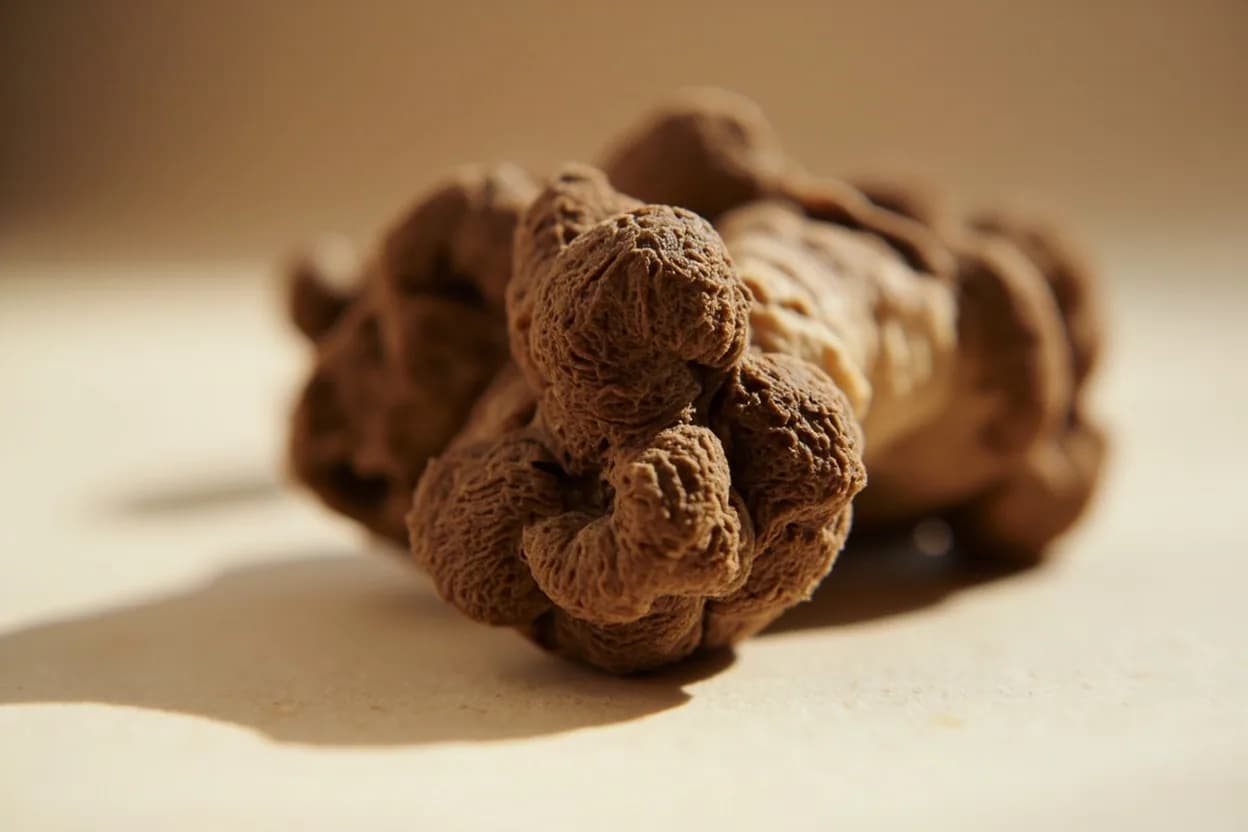
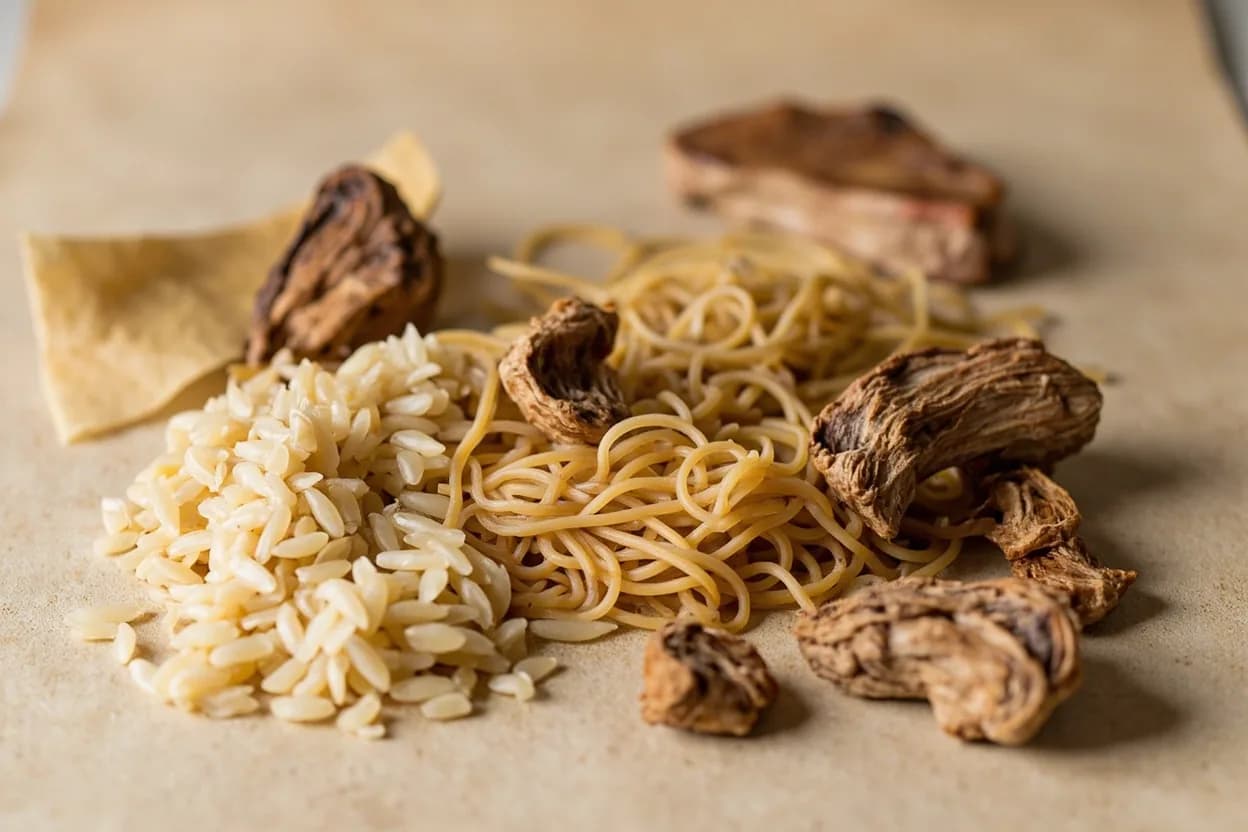
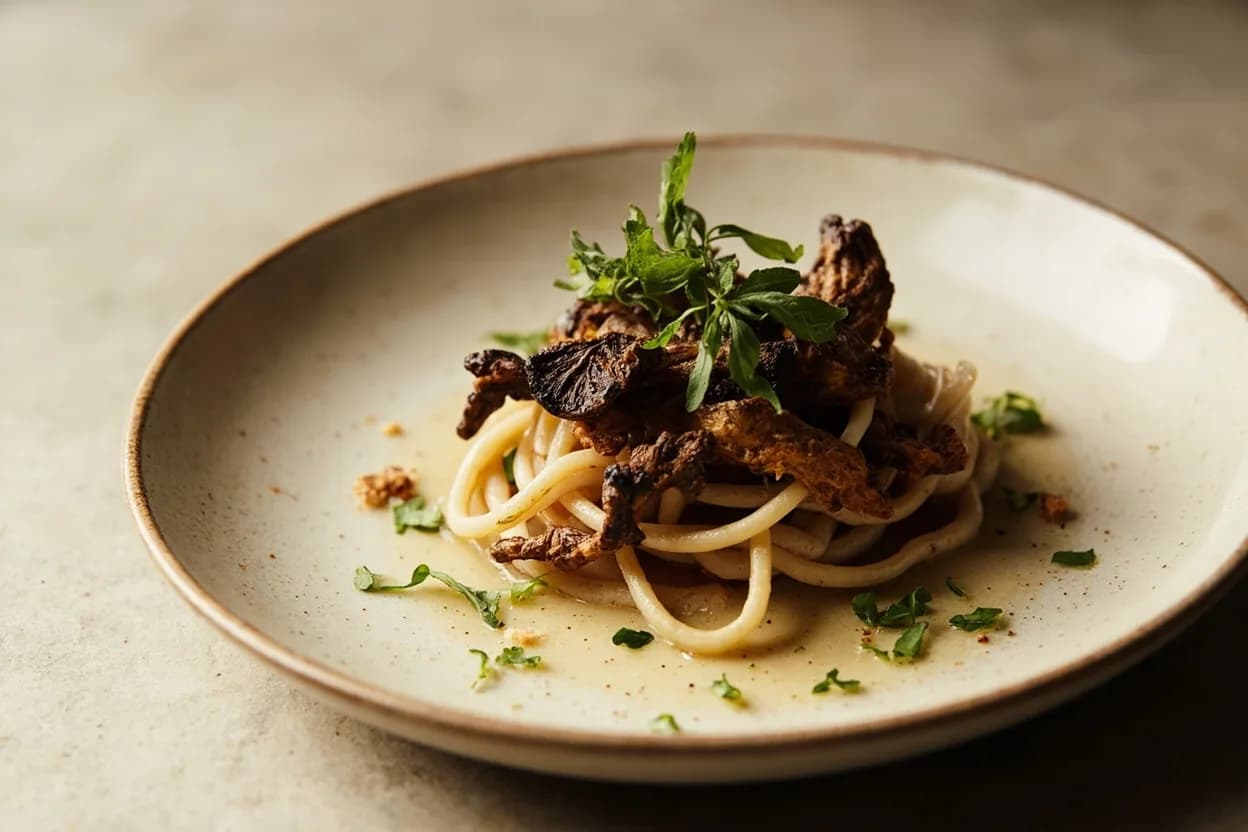
Dried porcini (Boletus edulis) are fresh ceps dehydrated to dark, leathery slices, a process that intensifies their already rich flavor through enzymatic browning and moisture loss. The result is a mushroom with extraordinary glutamate concentration, deep forest-floor earthiness, a resinous nuttiness, and a pronounced savory punch. The soaking liquid runs dark and richly flavored — nearly a ready-made stock. Central to Italian, French, and Central European cooking, dried porcini are the Western world's answer to MSG: a natural, culturally sanctioned umami bomb.
In photos
Flavour profile
Classic pairings
- Arborio / Carnaroli RiceItalian
Porcini risotto is the most canonical pairing — the starch absorbs the soaking liquor, the mushroom richness coats every grain.
- Tagliatelle or PappardelleItalian
Wide, egg-rich pasta noodles hold the weight of a porcini ragù; standard across Tuscany, Umbria, and Emilia-Romagna.
- Beef Chuck or VealItalian, French
Added to long braises, dried porcini deepen the meat's own savory character; a classic Piemontese brasato enhancement.
- Dry Red Wine (Barolo, Burgundy)Italian, French
Tannins in the wine amplify porcini earthiness; the mushroom softens the wine's astringency — a textbook flavor bridge.
- Thyme and RosemaryFrench, Italian
Mediterranean herbs amplify the resinous, woodland quality of porcini without competing; standard in French and Italian sauces.
- Parmesan ReggianoItalian
Both trade in high glutamate; together they create a near-perfect umami synergy in risotto, pasta, and gratins.
- Butter (unsalted European-style)French, Italian
Fat carries porcini's volatile aromatics and rounds the concentrated earthiness into a cohesive, velvety sauce.
Adventurous pairings
- Dark Miso (hatcho or mugi)
The earthy depth of aged miso mirrors porcini's forest character; together in a braise or butter sauce they achieve a trans-cultural umami density.
- Smoked Paprika
Paprika's sweet smoke amplifies the roast note in dried porcini — a compelling pairing for mushroom-stuffed peppers or a Spanish-style ragù.
Anchovy's IMP nucleotides stack with porcini's glutamates for explosive umami; used together in pasta sauces and braising bases, they read as mysteriously beefy.
- Hazelnuts (toasted)
Shared nutty, roasted aromas from the Maillard reaction; a pairing especially effective in compound butters, stuffings, and tarts.
- Aged Balsamic Vinegar
The concentrated aceto tradizionale's sweet-acid complexity lifts the heaviness of a porcini sauce; a few drops at finish transform a risotto.
- Sichuan Doubanjiang
Fermented broad bean chili paste's deep savory-spice marries porcini earthiness in a Sichuan-Italian crossover braise that is surprisingly coherent.
Tread carefully
- Delicate shellfish (scallops, langoustines)avoid
Porcini's muscular earthiness bulldozes the sweet, oceanic delicacy of premium shellfish — save them for lighter mushrooms or no mushrooms at all.
- Fresh dill or tarragon in large quantitiesavoid
Licorice-anise notes from these herbs clash unpleasantly with porcini's forest earthiness, creating a bitter, herbal muddle.
- Citrus juice (direct squeeze over finished dish)avoid
Porcini's umami is acid-sensitive; direct citrus brightens unwantedly, masking the bass note the mushroom is there to provide.
How to use it
- Rehydrate in warm (not boiling) water for 20-30 minutes; cold-soak 2 hours for cleaner flavor
- Strain soaking liquid through fine cheesecloth — it is the most valuable part, add it to every sauce or braise
- Sauté rehydrated porcini in butter until golden before adding to dishes to develop Maillard nuttiness
- Grind dried porcini to a fine powder for dusting pasta dough, seasoning meat, or finishing sauces
- Add powder directly to stocks and demi-glaces to boost umami without textural mushroom presence
Appears in
Related flavours
Eastern counterpart — similarly intense dried-mushroom umami, but with a more sulfurous, smoke-edged character.
The luxury tier of the same flavor family — forest, earth, fat-soluble aromatics; truffle oil is sometimes used with porcini to amplify both.
The French sauce tradition joins porcini powder with veal demi-glace for the richest of brown sauces.
- Parmesan Reggiano
The Italian umami dyad — both maximize glutamates, and together they define the richness of classic pasta and risotto.
References
- 1.The Silver Spoon (Il Cucchiaio d'Argento) — Phaidon
- 2.Mastering the Art of French Cooking — Julia Child
- 3.The Flavor Bible — Karen Page & Andrew Dornenburg
- 4.Fungi: A Field Guide to Mushrooms — Roger Phillips
- 5.On Food and Cooking — Harold McGee
Confidence: high
Notes
The soaking liquid is the prize
Professional Italian cooks consider dried porcini soaking liquid indispensable — it contains the highest concentration of flavor. After straining carefully to remove grit, reduce it if necessary and incorporate it into every sauce, risotto base, or braise. Discarding it is a culinary error.
Italian grades
Italian dried porcini are graded by appearance: Grade A (extra) is pale slices of caps only, nearly blemish-free, with the most nuanced flavor. Lower grades include darker, broken pieces and stems — still deeply flavorful but better suited to powder or long-simmered sauces. The best dried porcini come from the Appennines in autumn.