Mushrooms
Truffle
Also: black truffle, white truffle, Périgord truffle, tartufo, Tuber melanosporum, Tuber magnatum
The most coveted aroma in cooking — a heady, earth-musk-forest perfume that transforms eggs, pasta, and cream into luxury with almost supernatural intensity.
Truffles are subterranean ascomycete fungi in the genus Tuber, harvested by trained dogs or pigs from the root zones of oak, hazelnut, and other host trees. Two species dominate fine cooking: the black Périgord truffle (Tuber melanosporum), with a rich cocoa-earth-musk aroma and concentrated flavor that survives gentle heat; and the white Alba truffle (Tuber magnatum), with an explosively garlicky, sulfurous, honey-and-hay character so volatile it is always served raw. Both contain dimethyl sulfide and androstenol among dozens of volatile compounds that create their unmistakable aromatic signature. Fresh truffle is a seasonal luxury; preserved formats (truffle oil, paste, salt, canned) exist but range from adequate to fraudulent — quality drops sharply with processing.
In photos
Flavour profile
Classic pairings
- Eggs (scrambled, poached, en cocotte)French, Italian
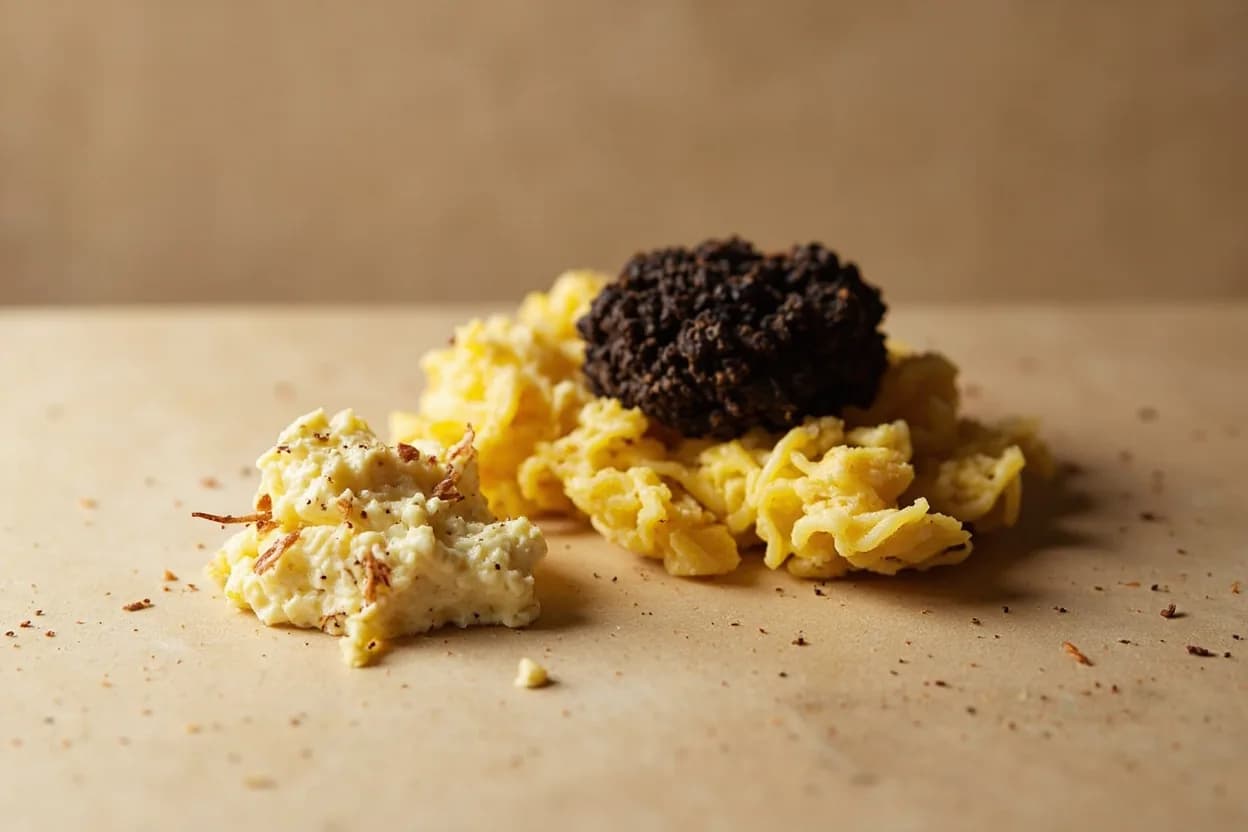
The fat-soluble aromatics of truffle permeate egg yolk overnight in a sealed container; the richness of egg carries the aroma without competing. The classic French and Italian test of a truffle's quality.
- Butter and CreamFrench, Italian
Dairy fat is the ultimate solvent for truffle's volatile compounds; infused cream and compound butters magnify and sustain the aroma in sauces, risotto, and pasta.
- Tagliolini or Pasta al UovoItalian
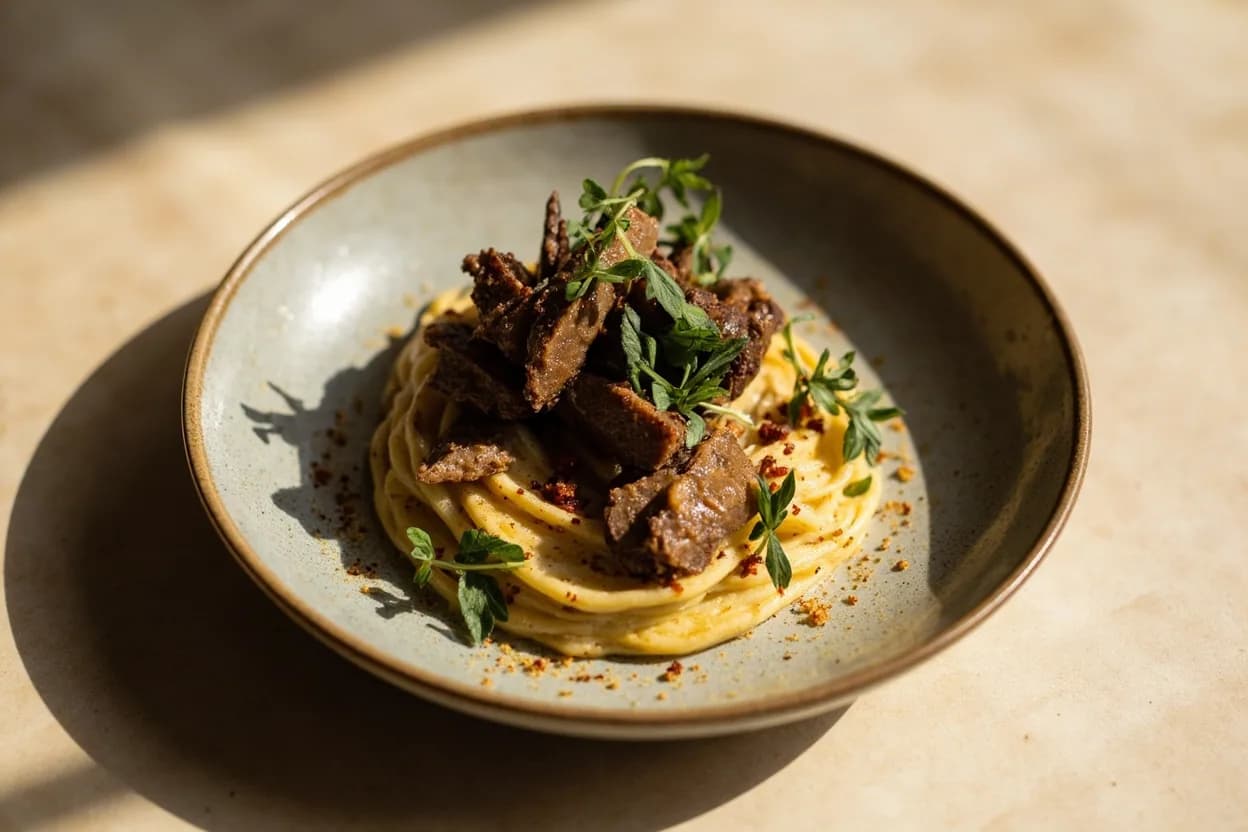
Egg pasta with shaved fresh white truffle, butter, and Parmesan is the quintessential Piemontese preparation — nothing interferes with the truffle.
- Parmesan ReggianoItalian
The glutamate richness of aged Parmesan amplifies truffle's savory dimension; the combination appears in nearly every classical Italian truffle dish.
- Risotto (Carnaroli or Vialone Nano)Italian
Risotto bianco finished with black truffle or white truffle shavings — the starchy, buttery base is a perfect carrier of aromatic fat-soluble compounds.
- Foie GrasFrench
Torchon de foie gras avec truffe is a cornerstone of French haute cuisine; the liver's fat amplifies truffle and both are luxury ingredients that elevate each other.
- Celery Root (Celeriac)French, Italian
The earthy, slightly sulfurous quality of celeriac resonates with truffle without upstaging it — a natural vegetable bridge used in French and Italian composed dishes.
- Potato (creamed, gratin)French
The neutral starchiness of potato provides a blank canvas on which truffle aroma can unfurl; truffle-cream potato gratin is a Périgord classic.
Adventurous pairings
- Dark Chocolate (72%+ cacao)
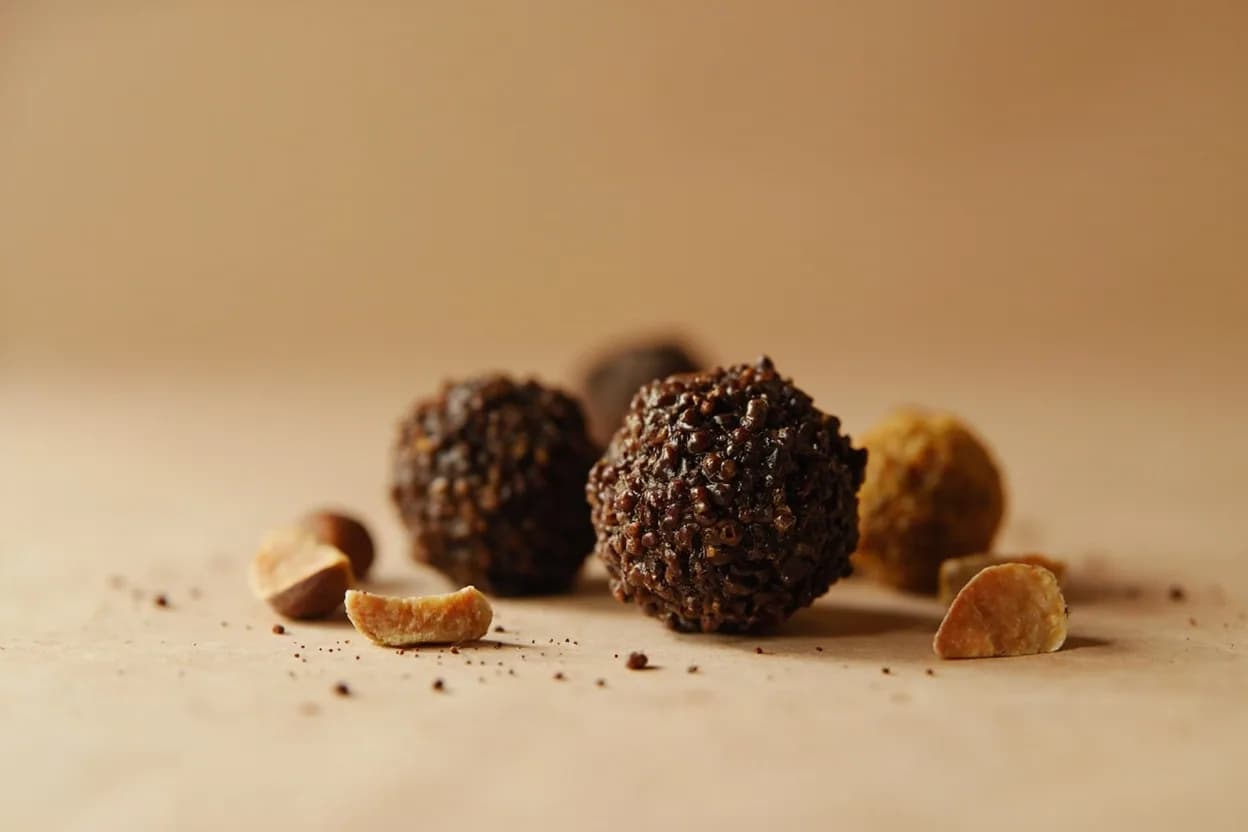
Shared sulfur-adjacent earth compounds link black truffle and dark chocolate; truffle-ganache confections from avant-garde chocolatiers exploit this uncanny resonance.
- Aged Comte or Gruyère
The crystalline, nutty depth of aged mountain cheeses amplifies truffle's forest character; the combination works in fondues, gratins, and gougères.
- Cauliflower (roasted)
Roasted cauliflower's sulfurous, nutty notes mirror truffle's own sulfur compounds; cauliflower purée with shaved truffle is a natural, modern pairing.
- Japanese Dashi
The clean, neutral umami of dashi provides a delicate base that allows truffle aroma to dominate, a trans-cultural luxury pairing in contemporary kaiseki.
- Vintage Champagne
Aged Champagne's autolytic, brioche-yeast character harmonizes with truffle's fermented hay note; the acidity cuts the richness of cream-based truffle dishes.
- Taleggio or Epoisses
Washed-rind cheeses share the sulfurous, barnyard dimension of white truffle — pairing them amplifies both, producing an intensely funky, memorable combination.
Tread carefully
- Aggressive spices (cumin, coriander, star anise)avoid
Overpowering aromatics simply bury the truffle — the spice wins and the expensive ingredient is wasted.
- Acidic sauces (tomato concassé, lemon vinaigrette)avoid
Bright acids destroy truffle's fat-soluble volatile compounds and flatten its aromatic signature almost immediately.
- Heavy smoked elements (smoked salmon, smoked paprika in quantity)avoid
Smoke aromatics compete directly with truffle's sulfur-earth notes, creating olfactory confusion rather than synergy.
- Cheap truffle oil (synthetic 2,4-dithiapentane)avoid
Not an ingredient to pair with, but to avoid: most commercial truffle oil contains no real truffle and its single synthetic compound caricatures the real aroma, conditioning the palate poorly.
How to use it
- Infuse dairy fat (butter, cream) with shaved fresh truffle overnight in a sealed container to transfer aromatic compounds
- Shave white truffle exclusively raw over finished hot dishes — heat destroys the volatile aromatics
- Black truffle tolerates brief gentle heat (buried in pastry, in scrambled eggs) but still peaks when added late
- Store fresh truffle wrapped in dry paper towels in a sealed glass jar with raw eggs — the eggs absorb the aroma within 24 hours
- For black truffle sauces, infuse in warm cream or butter for 10-15 minutes at no more than 60°C (140°F)
Appears in
Related flavours
The accessible-price member of the same flavor family — earthy, forest, umami; often used alongside truffle or as a substitute in less premium applications.
The other pillar of French luxury cooking; together they appear in the most opulent classical preparations.
- Eggs
The simplest and most revealing truffle pairing — fat-soluble aroma transfer into yolk fat is both scientific and deeply traditional.
- Aged Parmesan
The Italian umami amplifier for truffle; inseparable in Piemontese and Umbrian truffle cooking.
References
- 1.The French Laundry Cookbook — Thomas Keller
- 2.Larousse Gastronomique — Prosper Montagné
- 3.The Flavor Bible — Karen Page & Andrew Dornenburg
- 4.Modernist Cuisine — Nathan Myhrvold et al.
- 5.Nose Dive: A Field Guide to the World's Smells — Harold McGee
Confidence: high
Notes
Black vs. white truffle
These are not interchangeable. Black Périgord truffle (December–March) has a rounder, more chocolatey earthiness that survives gentle cooking and marries beautifully with cream sauces, foie gras, and pastry. White Alba truffle (October–December) is so volatile and pungent — garlic, honey, and sulfur — that it is always shaved raw at the last moment over simple dishes. Never apply heat to white truffle; never pair black truffle preparations where white was intended.
The fat-transfer principle
The aromatic compounds in truffle are fat-soluble, not water-soluble. This is why truffle's most revelatory pairings are always with eggs, butter, cream, and fatty cheeses — the fats act as reservoirs and carriers. Keeping fresh truffle sealed with eggs or butter in the refrigerator for 24-48 hours effectively infuses those ingredients without any heat.