Sweet Aromatics
Tonka Bean
Also: cumaru, Dipteryx odorata, tonquin bean, coumarú
The French pastry kitchen's forbidden luxury — tonka bean's coumarin-laden scent conjures vanilla, almond, and sweet hay in a single grating.
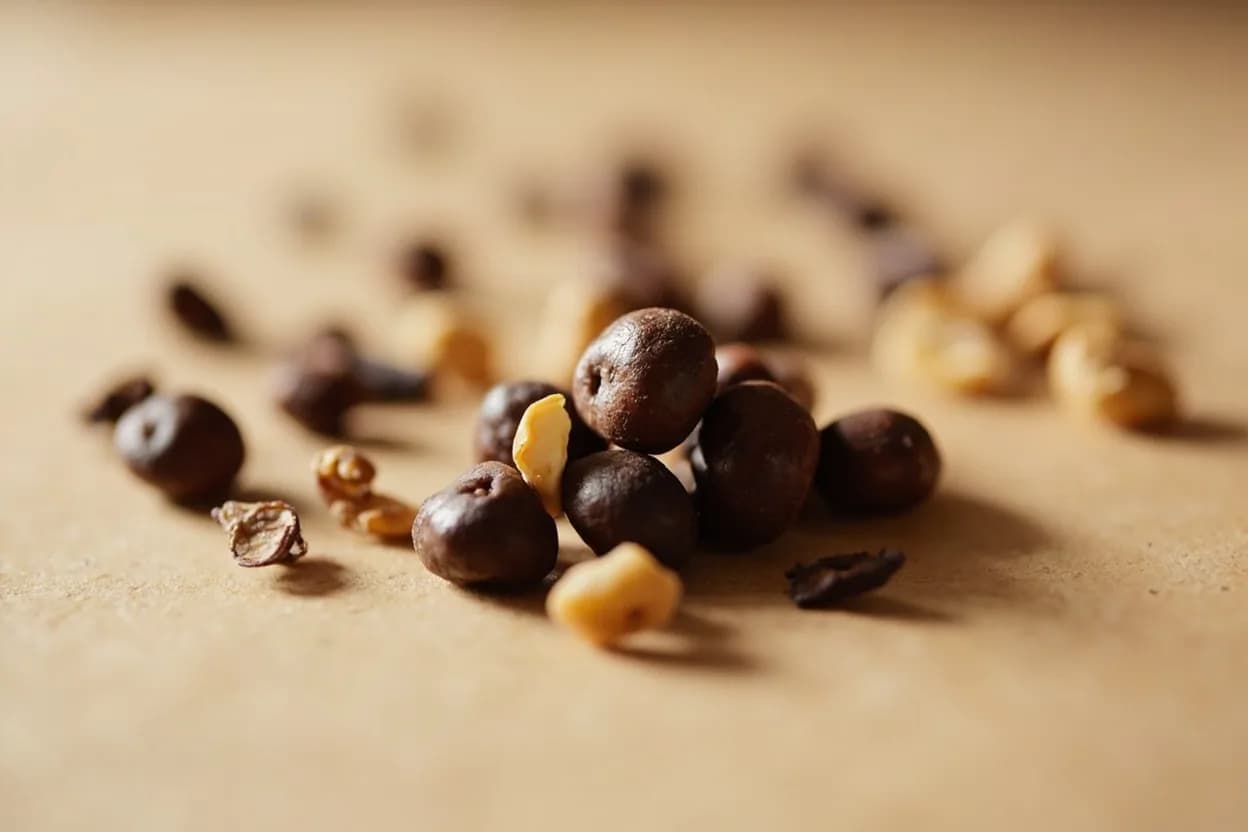
The wrinkled black seed of Dipteryx odorata, a South American tropical legume tree native to Venezuela and Brazil. Tonka's dominant aromatic compound is coumarin (3,4-benzopyranone), which also gives sweet woodruff, freshly mown hay, and new-mown grass their characteristic scent. Coumarin has anticoagulant properties at high doses, which led the FDA to ban tonka bean in US food use in 1954 (the restriction applies to whole/ground beans, not coumarin traces). In France and much of Europe it remains legal and beloved by pastry chefs. A single bean — grated with a fine Microplane over cream or custard — delivers a complex, layered scent that reads simultaneously as intensified vanilla, bitter almond, and tobacco. It is used in minute quantities: a half-bean per liter of cream is typical.
In photos
Flavour profile
Classic pairings
- Dark chocolateFrench patisserie
Tonka's almond-coumarin intensity deepens and enriches chocolate's bitter fruity complexity; a celebrated French pastry pairing for ganaches and mousses.
- Heavy cream / crème fraîcheFrench
Fat dissolves coumarin's lipophilic aromatics efficiently; grating tonka bean directly into warm infusing cream is the standard deployment.
- CaramelFrench
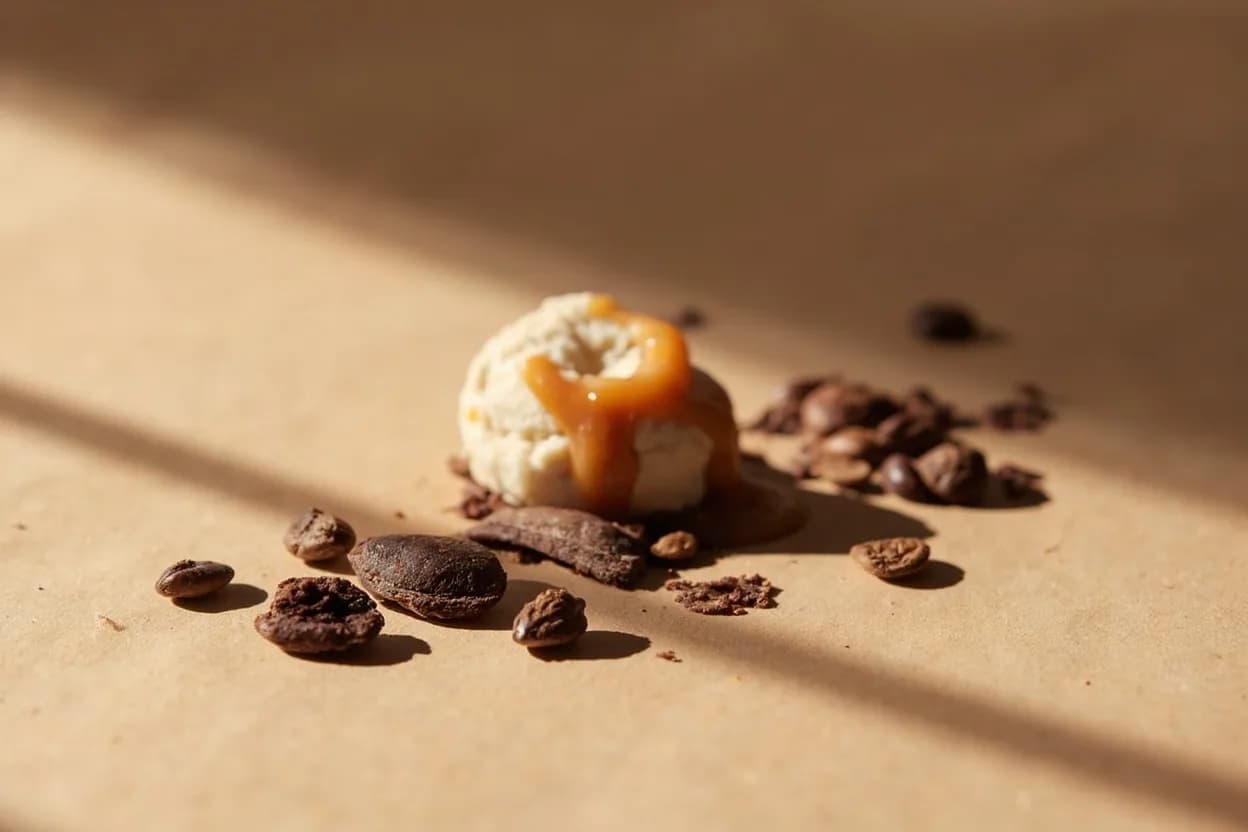
Tonka's coumarin resonates with caramel's Maillard-sweet notes while adding hay and almond complexity; together they create a caramel that surpasses its original depth.
- PearFrench
Pear's subtle floral esters and mild acidity are lifted and framed by tonka's vanilla-almond character without being overwhelmed; a refined French pairing.
- Milk chocolateFrench, Belgian
Tonka's intensity finds a more delicate platform in milk chocolate, where its almond note reads more clearly against a sweeter, creamier base.
- CoffeeFrench, Nordic
Coumarin's hay-like sweetness is a complementary partner to coffee's roast bitterness; used in contemporary European coffee shop preparations.
- FigFrench, Italian
Fig's honeyed, jammy sweetness and seeds carry a slight almond note that rhymes with tonka's benzaldehyde character; used in fig tarts and dried-fruit confections.
Adventurous pairings
- Raw oysters
A Heston Blumenthal–era discovery: a trace grating of tonka over a raw oyster with its brine draws out an unexpected sweetness in the mollusc and creates a perfumed, contemplative contrast that has no rational explanation but works.
- Butternut squash
Squash's natural sweetness and slight nuttiness are magnified by tonka's almond-coumarin character; grated into a squash velouté with browned butter, it creates a winter dish of quiet complexity.
- Lavender
Both contain floral, perfumed aromatics; in controlled quantities, tonka and dried lavender together produce a honey-floral scent in panna cotta or crème brûlée without tipping into soap.
- Black pepper
Piperine's sharp heat creates contrast with tonka's sweet-floral profile, resulting in a complex tension used in contemporary chocolate ganaches and in Nordic gravlax preparations (in tiny quantities).
- White peach
The floral, lactone-rich fragrance of white peach resonates with tonka's hay-floral character; together in a parfait or poached fruit they create something close to a distillation of summer stone fruit.
- Aged rum (rhum agricole)
Rhum agricole from Martinique or Guadeloupe shares tonka's grassy, sweet-cane aromatic register; combined in a sabayon or sauce, they amplify each other's richness without becoming cloying.
Tread carefully
- Competing high-coumarin spices (sweet woodruff, melilot)avoid
Stacking coumarin sources (for culinary and potential health reasons) amplifies bitterness beyond the pleasant range and creates an acrid, pharmaceutical quality.
- Aggressive citrus zestavoid
Limonene's sharp brightness overwhelms tonka's delicate hay-vanilla register, reducing it to an indistinct background sweetness.
- Blue cheese or strongly fermented dairyavoid
Volatile sulfurous compounds in pungent cheeses clash with tonka's perfumed florals, creating an unpleasant chemical conflict.
How to use it
- Microplane grating: grate directly over warm cream, custard, or ganache just before setting — heat and fat capture the aromatics immediately
- Infusion in cold dairy: steep a half-bean in cold cream in the refrigerator overnight for a gentler, more layered extraction
- Tonka sugar: seal a half-bean in airtight container with caster sugar for 2 weeks — the coumarin migrates into the sugar crystals
- Ganache: add grated tonka directly to chopped chocolate before pouring over hot cream; the fat of cocoa butter extracts coumarin efficiently
- Quantity control: 0.25 to 0.5 of one bean per liter of liquid is sufficient; tonka is potent and more is not better — bitterness escalates quickly
- Pairing with vanilla: tonka amplifies and extends vanilla, making the combination richer than either alone without doubling the bean count
Appears in
Related flavours
Tonka amplifies and extends vanilla's core notes; often described as 'vanilla but more so' and used together or as an intensifier substitute
The most classic savory-leaning pairing; tonka elevates chocolate ganache beyond what vanilla alone achieves
Tonka's coumarin resonates with caramel's Maillard sweetness; frequently combined in high-end French confectionery
References
- 1.Patisserie — Christophe Felder
- 2.The Flavor Bible — Karen Page & Andrew Dornenburg
- 3.Aroma: The Magic of Essential Oils in Food & Fragrance — Mandy Aftel
- 4.Heston Blumenthal: The Fat Duck Cookbook — Heston Blumenthal
Confidence: curated
Notes
Legality and safety
Tonka bean is banned as a food additive in the United States by the FDA under 21 CFR 189.130 due to coumarin's anticoagulant properties. It is legal and widely used in the EU, UK, Australia, and most of the world. The culinary quantities used — fractions of a single bean per serving — are orders of magnitude below the dose levels that produce measurable anticoagulant effects in humans. Nonetheless, chefs should be aware of the regulatory status in their jurisdiction and should never substitute tonka for vanilla without informing guests, as the scent and flavor are distinctive.
The art of restraint
No spice punishes overuse more swiftly than tonka bean. At a quarter-bean per liter of cream, it is ethereal — an aromatic suggestion that draws the palate forward. At a whole bean, coumarin's medicinal bitterness dominates and any subtlety collapses. The best tonka dishes are those where diners recognize the aroma without being able to name it. Pierre Hermé's tonka bean macaron and Christophe Michalak's tonka panna cotta are the canonical references for getting the dose right.