Preserved & Cured Fish
Anchovy
Also: salted anchovy, anchois, acciuga, boquerones (fresh), ansjovis
The invisible backbone of countless great dishes — anchovy melts into fat and disappears, leaving pure savory depth.
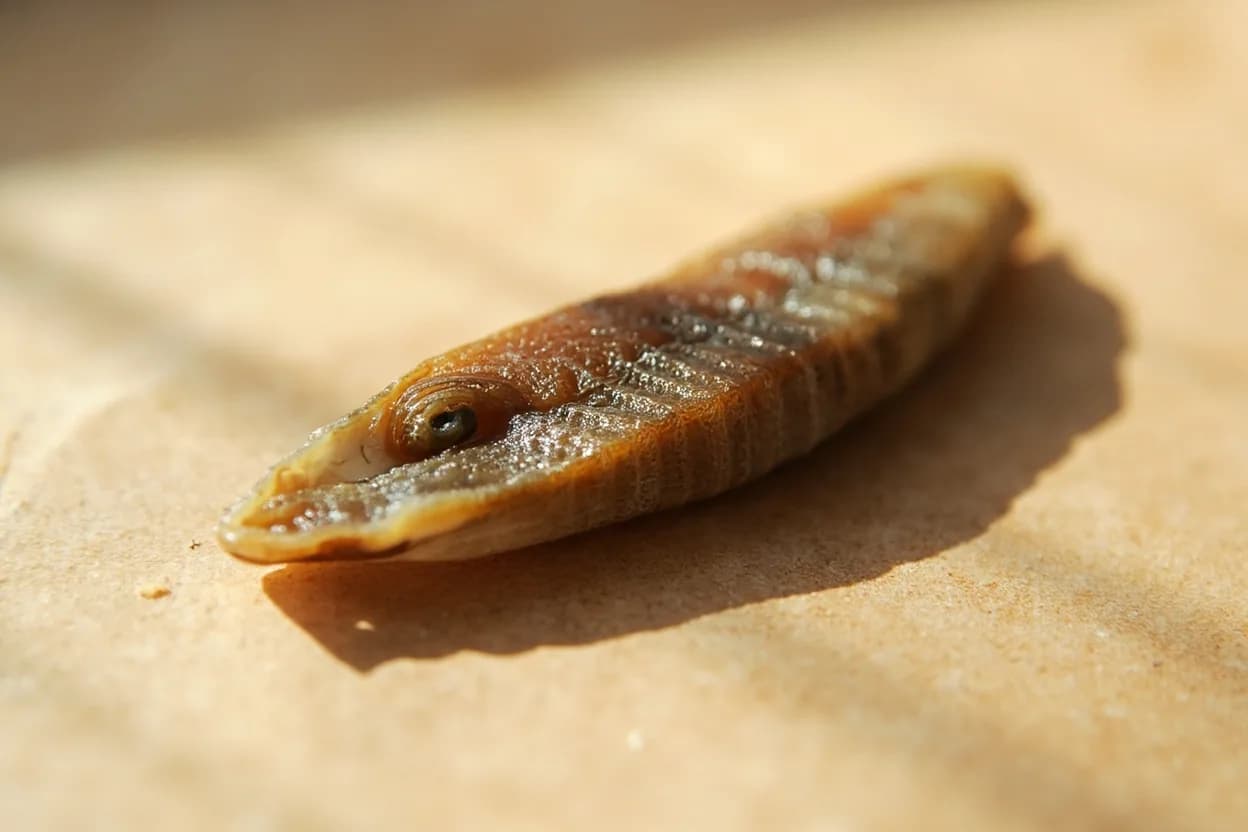
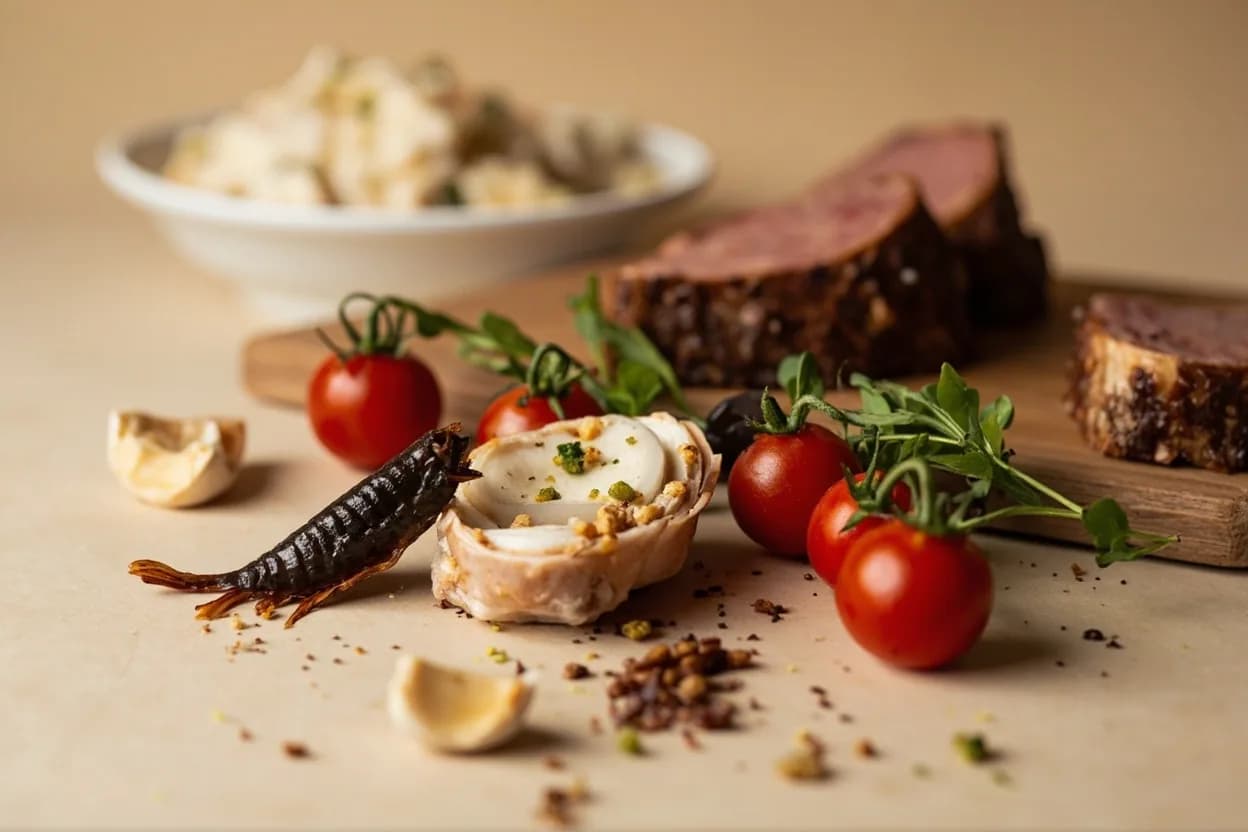
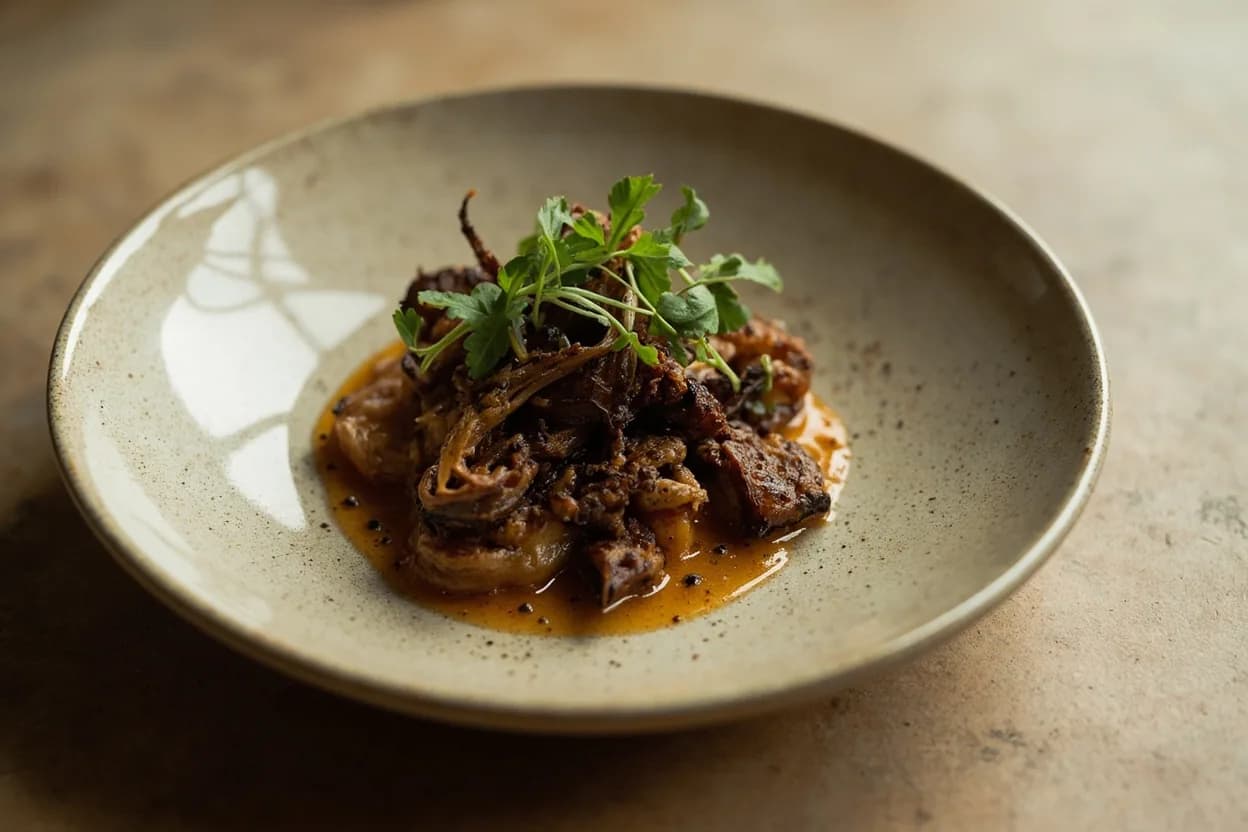
Cured, salt-packed or oil-packed small pelagic fish (Engraulis encrasicolus) that have undergone enzymatic autolysis to develop intense glutamate and inosinate richness. The resulting flavor is profoundly umami with a clean, oceanic salt rather than overtly fishy. Properly used, anchovy is a flavor amplifier — it doesn't announce itself; it makes everything around it taste more like itself.
In photos
Flavour profile
Classic pairings
- LambItalian, Provençal
Anchovy amplifies lamb's inherent savoriness without competing. Inserted into slits in a leg before roasting or dissolved into a braising liquid, it vanishes into the meat and elevates every bite.
- GarlicItalian
One of the great duos in Western cooking. Both are pungent and sulfurous in raw form; together, cooked slowly in olive oil, they collapse into a sweet, deeply savory base (bagna cauda, puttanesca).
- TomatoItalian, Neapolitan
Two glutamate powerhouses that multiply each other's savory impact. The acid in tomato cuts anchovy's salinity; the anchovy deepens the tomato's sweetness. Essential to puttanesca and pizza marinara.
- ButterItalian, French
Anchovy dissolves completely into softened butter, creating a compound that coats pasta or melts on grilled meat. The fat rounds and carries the umami without any fishiness.
- CapersSicilian, Neapolitan
The pickled brine of capers counterpoints anchovy's salt with sharp acidity and floral methylbutyrate esters. Together they define the pantry flavor of southern Italian cooking.
- Romaine lettuceMexican-American (Caesar Cardini)
Caesar salad's architecture: anchovy paste emulsified into egg yolk and lemon becomes a dressing that clings to cool, crunchy leaves — sweetness and bitterness tempering the salt-umami punch.
- Olive oilMediterranean
The preferred medium for anchovy flavor: a slow sizzle in warm oil (not hot) dissolves the fillets and infuses the fat, which then carries that savory depth through the entire dish.
- Broccoli rabeItalian-American, Pugliese
Bitter greens and anchovy are a natural pairing — the assertive bitterness needs the glutamate punch to balance it, and anchovy has enough presence to hold its own.
Adventurous pairings
Both carry intense bitter-umami undertones from fermentation. A pinch of minced anchovy in a mole or dark chocolate sauce bridges cocoa's earthiness with deep savory notes — used in Oaxacan-inflected mole negro variants.
- Strawberry
The salt-glutamate hit of anchovy acts as a seasoning for fruit's volatile esters, just as a pinch of salt makes a strawberry taste more strawberry. Anchovy butter on toast with macerated berries is a documented modernist technique.
Stacking fermented-glutamate sources sounds redundant but instead creates textural umami complexity — miso's paste and anchovy's brine read differently on the palate, and their amino-acid profiles complement rather than cancel.
- Grilled bread (bruschetta)
High-quality salt-packed anchovies draped over charred bread with good olive oil and nothing else is an Italian antipasto tradition that showcases the fish without dilution — a lesson in restraint.
- Whisky (peated)
The phenolic smokiness of Islay Scotch and anchovy's fermented salinity share iodine and brine notes derived from the same coastal terroir. Pairing as a snack, not a sauce — salt-packed anchovy on oatcakes with a dram of Laphroaig.
Tread carefully
- Delicate white fish (sole, flounder)avoid
Anchovy's intensity crushes the subtle sweetness of thin, delicate fillets. Any dish where the main protein is mild and fine-textured will be overpowered.
- Cream-based dessertsavoid
Outside intentional savory-sweet experiments, anchovy's aggressive salinity and fermented notes clash with vanilla, sugar, and cream — the fat doesn't absorb anchovy the way olive oil does, instead amplifying its fishiness.
- Raw application on very acidic dishesavoid
A straight anchovy fillet on a heavily vinegared salad or ceviche clashes — the competing acidities and salt create a harsh, unbalanced bite. Anchovy needs heat or fat to round its edges.
How to use it
- Dissolving in warm olive oil or butter (10–12 minutes over low heat) — fillets melt completely, leaving only flavor
- Pounding salt-packed anchovies into a paste in a mortar with garlic — the base for bagna cauda and many southern Italian sauces
- Inserting whole fillets into incisions in meat before roasting (leg of lamb, beef pot roast)
- Emulsifying anchovy paste into vinaigrettes and Caesar dressing with egg yolk and lemon
- Using anchovy oil (from the tin) as a finishing drizzle over cooked vegetables
- Building a soffritto with anchovy, onion, and tomato paste for braises and ragù
Appears in
Related flavours
The liquid fermentation product of anchovies — same umami signature in a liquid form for finishing dishes raw
Southeast Asian parallel: same enzymatic fermentation process, same glutamate punch, different aromatic register
Another preserved fish product from the Mediterranean — complementary briny depth, but cured roe vs. whole fish
Anchovy is a key ingredient; understanding anchovy helps decode Worcestershire's layered umami
References
- 1.The Flavor Bible — Karen Page & Andrew Dornenburg
- 2.Salt, Fat, Acid, Heat — Samin Nosrat
- 3.On Food and Cooking — Harold McGee
- 4.The Italian Pantry — Theo Randall
- 5.Nose Dive: A Field Guide to the World's Smells — Harold McGee
Confidence: high
Notes
Salt-packed vs. oil-packed
Salt-packed anchovies (whole, from Sicily or Cantabria) are superior for most culinary applications — they require rinsing and filleting, but their flavor is cleaner and more nuanced. Oil-packed fillets in tins are more convenient and work well when the anchovy is cooked into a sauce. The oil itself is valuable: use it as a finishing drizzle.
The umami multiplier effect
Anchovy's power comes from its dual glutamate-inosinate content. Glutamates (from enzymatic breakdown of proteins) and inosinate nucleotides are synergistic — together they create an umami sensation up to eight times stronger than either alone. This is why anchovy makes tomato taste more tomato and lamb taste more lamb: it stacks on existing glutamate sources in the ingredient.