Pickled Condiments
Capers
Also: câpres (French), capperi (Italian), alcaparras (Spanish/Portuguese), caper buds
Pickled flower buds that deliver a sharp, saline, and distinctly mustardy punch wherever richness needs cutting.
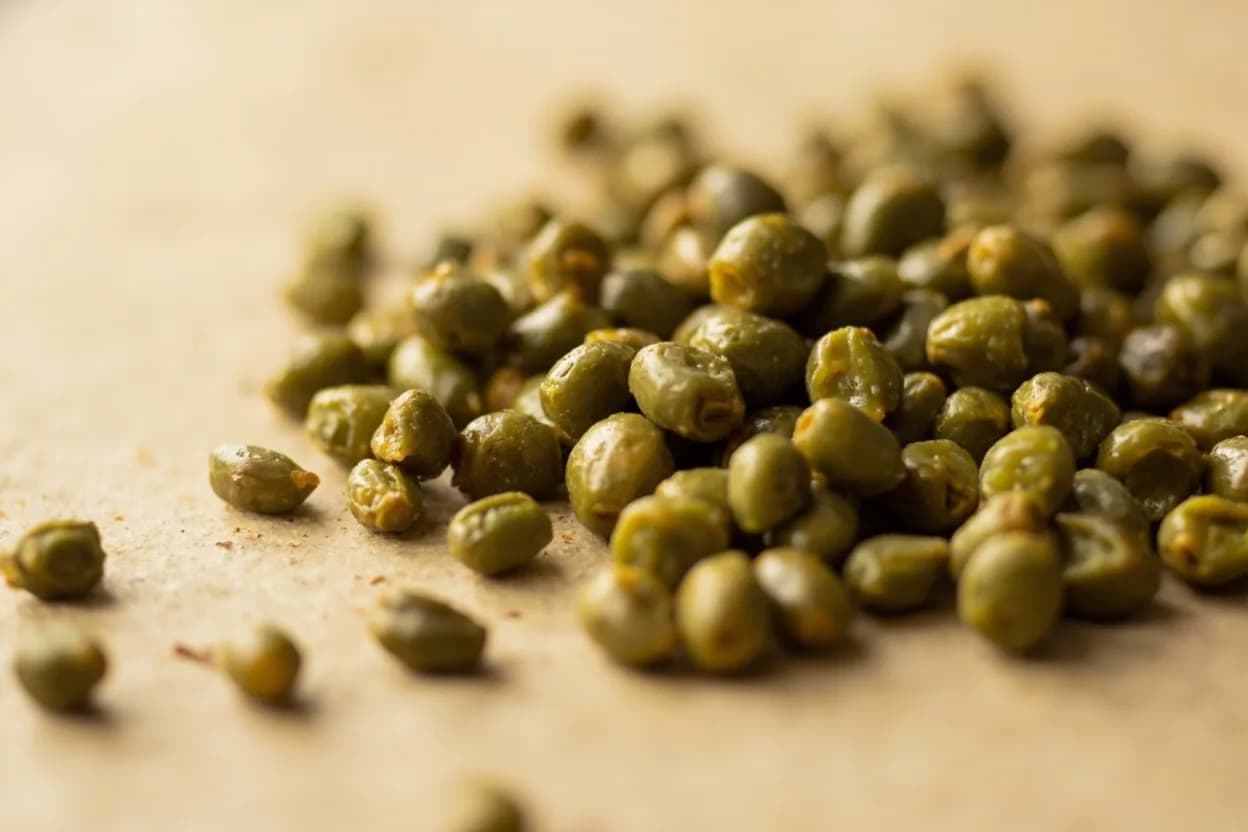
Capers are the unopened flower buds of Capparis spinosa, a thorny Mediterranean shrub. The buds are harvested by hand, then dry-salted or brined in vinegar, which develops their characteristic flavour through enzymatic breakdown of glucosinolates into mustard-like compounds (isothiocyanates), combined with the acidity of the brine and a concentrated vegetal saltiness. The smallest nonpareilles (under 7 mm) are the most prized for their firm texture and concentrated flavour. Larger capers are milder; caperberries (the fruit rather than the bud) are milder still with more crunch.
In photos
Flavour profile
Classic pairings
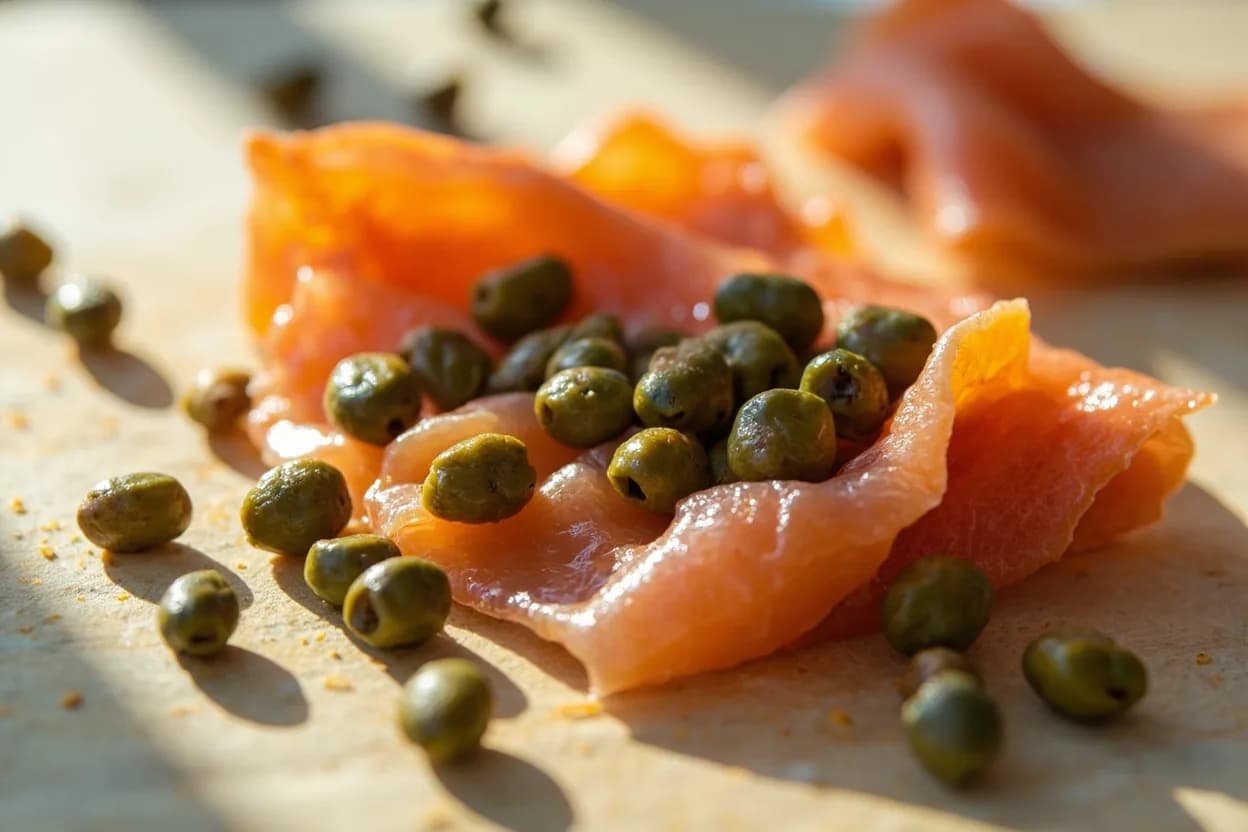
- Smoked salmon / loxScandinavian / Jewish-American deli
The acid and salt of capers cut the fatty richness of smoked salmon and echo its salt cure — the canonical New York bagel and Scandinavian smørrebrød combination.
- Pasta puttanescaItalian (Neapolitan)
Capers alongside anchovies, olives, tomatoes, and garlic form one of Italy's boldest pasta sauces — each element is pungent and the effect is deliberately overwhelming.
- Butter (beurre de câpres)French
Warm butter mellows and carries caper flavour; pan sauces like skate meunière and piccata rely on caper-in-butter to bridge acid and fat.
- Tuna (vitello tonnato, salade niçoise)Italian / French
The meaty, mild protein of tuna is lifted by caper's mustard-salt sharpness; they appear together in Piedmontese tonnato sauce and throughout Provençal cuisine.
- LemonItalian
Capers and lemon are twinned in piccata and gremolata — both are acidic but the caper adds body and brine that fresh citrus alone cannot.
- AnchoviesItalian / French
Two salt-preserved Mediterranean condiments that reinforce each other's umami depth without tasting 'fishy' together; the backbone of puttanesca, tapenade, and bagna càuda variants.
- Roast lambFrench
Caper sauce (sauce câpres) is the classic French accompaniment to braised or roast lamb — the acid and pungency of capers cut the lanolin-rich fat of the meat.
Adventurous pairings
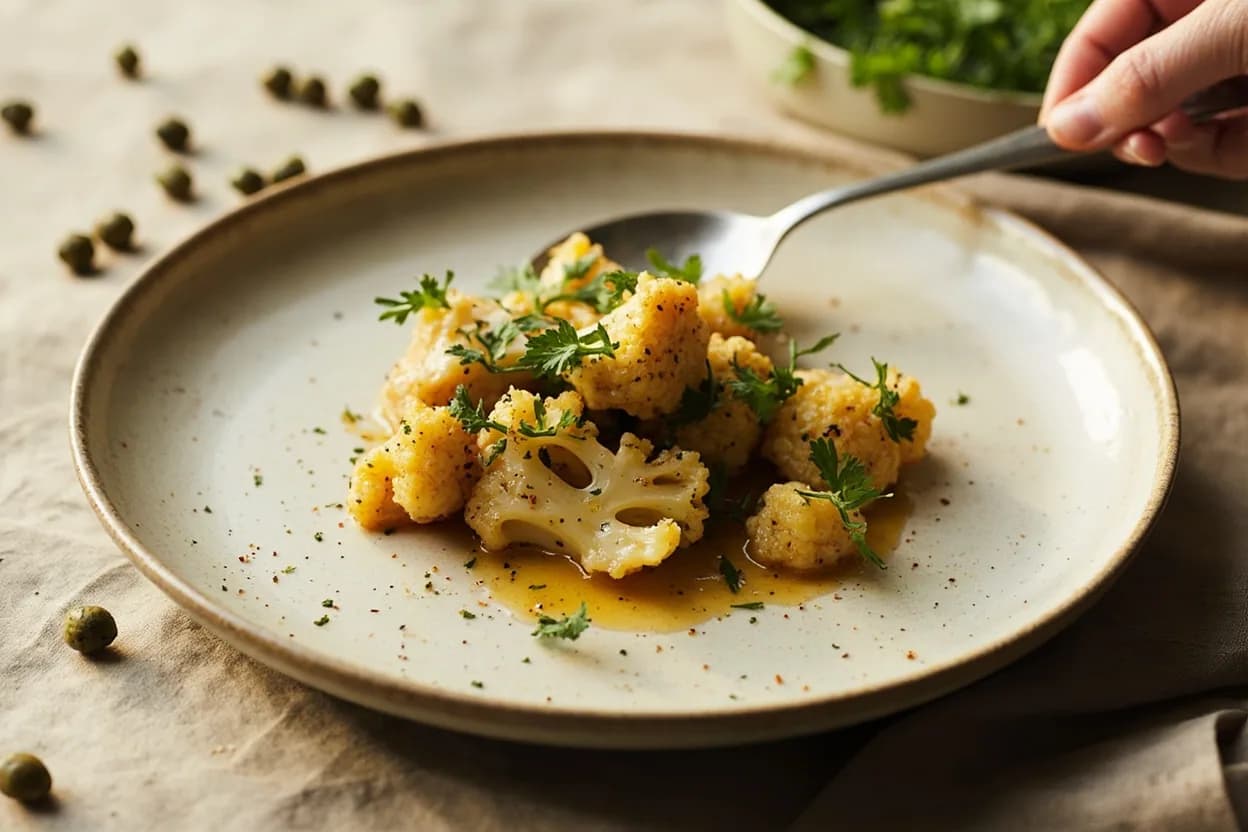
- Cauliflower
Roasted cauliflower with fried capers, golden raisins, and pine nuts is a Sicilian agrodolce treatment — the capers bridge the sweetness of raisins and the nuttiness of the vegetable.
- Dark rye bread
The sour, earthy depth of rye bread anchors the brine of capers; a smørrebrød base that brings out the best in both preserved fish and pickled condiments.
- Strawberries
A modern savoury salad trick: macerated strawberries with capers, basil, and a drizzle of olive oil — the berry's sweetness absorbs the acid punch in a surprising harmony.
- Fried capers (crispy)
Salt-packed capers fried in olive oil until crisp lose their acidity and develop a deep savoury crunch — used as a garnish on burrata, pasta, or fish, transforming the pairing dynamic entirely.
Double-salt treatment: both bring intense, mellowed, sun-cured salinity — together in a North African chermoula or tagine marinade they create a layered preserved-citrus-brine character.
Tread carefully
- Delicately spiced dessertsavoid
Capers' aggressive brine and mustard compounds have no place in pastry; even a small amount overwhelms sweet, vanilla-forward preparations.
- Dairy-based cream soups (vichyssoise, cream of mushroom)avoid
The sharp vinegar acidity can cause cream to curdle and compete unpleasantly with the smooth, neutral profile these soups depend on.
- Very tannic red wines (pairings note)avoid
High tannin amplifies the metallic, pungent edge of capers — stick to crisp whites (Vermentino, Muscadet) or rosé with caper-heavy dishes.
How to use it
- Rinse salt-packed capers thoroughly before use — salt-packed have more flavour but require 15–20 minutes soaking
- Fry in hot olive oil until they open like tiny flowers and crisp — use as a garnish rather than a sauce element
- Stir into warm butter pan sauces off the heat to preserve sharpness
- Chop fine and whisk into vinaigrettes to emulsify and add brine without visible texture
- Crush a few whole capers into mayonnaise or aioli for a remoulade or tartare sauce base
- Add whole to braises near the end of cooking so they soften but retain their identity
Appears in
Related flavours
- Olives
Fellow Mediterranean brine-cured condiments that frequently appear together — same salt-acid register, olives add fat and fruitiness
The salt-umami pairing partner: capers provide acid-pungency, anchovy provides depth and body
- Mustard (Dijon)
Shares the isothiocyanate chemistry behind caper's pungency — they amplify each other in French compound sauces
References
- 1.Encyclopaedia of Herbs, Spices and Flavourings — Elisabeth Lambert Ortiz (Dorling Kindersley, 1992)
- 2.The Silver Spoon (Il Cucchiaio d'Argento) — Phaidon Press, 2005
- 3.On Food and Cooking: The Science and Lore of the Kitchen — Harold McGee (Scribner, 2004)
Confidence: high
Notes
Salt-packed vs. brine-packed
Salt-packed capers (especially from Pantelleria) have a more complex, less vinegary flavour and are preferred by Italian cooks. Brine-packed are more convenient and ready-to-use but carry a sharper, more one-dimensional acidity. When a recipe calls for capers in a delicate sauce, salt-packed rinsed capers will produce a rounder result.
Caperberries
Caperberries are the full fruit of the same plant, harvested after the bud opens and sets. They are larger (grape-sized), milder, and crunchier — used as a garnish for cocktails and charcuterie boards where the full caper's intensity would overwhelm.