Pickled Condiments
Anchovy (as flavoring)
Also: salted anchovies, anchovy fillets in oil, pasta d'acciughe, anchoïade
Salt-fermented anchovy used not as a fish course but as a silent umami amplifier that makes everything around it taste more intensely like itself.
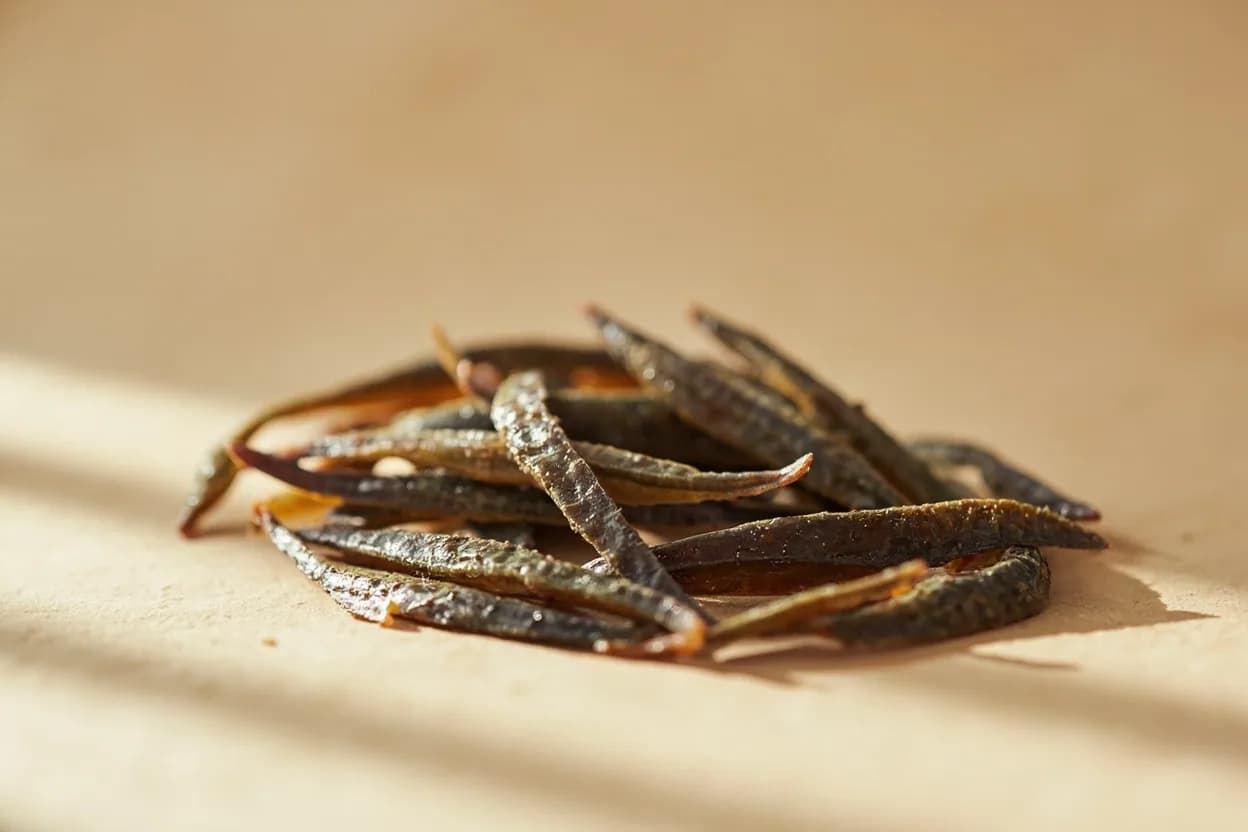
Anchovy used as a flavouring agent — dissolved into hot fat, mashed into sauces, whisked into dressings — functions as one of the world's most powerful umami boosters. The fish (Engraulis encrasicolus) is salt-cured for 6–12 months or longer, during which enzymatic autolysis and Maillard-like reactions break down proteins into free glutamates and nucleotides, producing an intensely savoury paste. When deployed correctly, anchovy is invisible as a fish flavour and instead elevates the savoury depth of everything it contacts. The flavour character is: intensely salty, savoury, umami-forward, with a complex fermented undertone and, when dissolved in fat, a smooth meaty richness.
In photos
Flavour profile
Classic pairings
- Romaine lettuce (Caesar salad)Mexican-American (Tijuana origin)
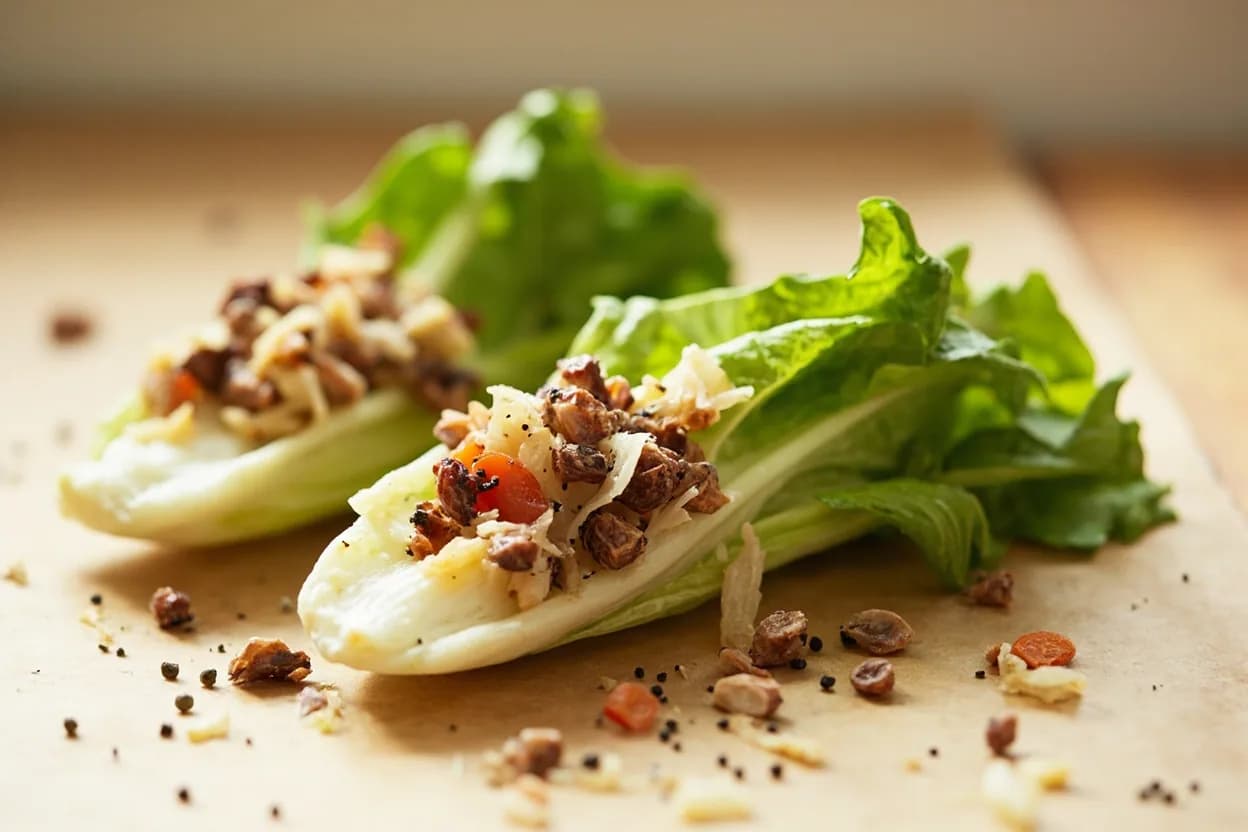
Anchovy fillets pounded into the Caesar dressing are the dish's backbone — providing the umami without which the salad tastes flat regardless of lemon, egg, or Parmesan.
- Butter (compound butters)French
Anchovy butter (beurre d'anchois) is a classic French compound — the fat carries and smooths the salt-fermented intensity, used on grilled meats, bread, and steamed vegetables.
- Tomatoes (pasta sauces, pizza)Italian
Tomatoes are naturally high in glutamate; anchovy multiplies that umami synergistically — together in puttanesca or anchoïade-topped pizza they create an intensity greater than either alone.
- LambFrench
A classic French trick: stud a leg of lamb with slivers of anchovy before roasting — the fish dissolves and amplifies the meat's savoury depth without leaving any trace of fishiness.
- GarlicItalian (Piedmontese) / French (Provençal)
In bagna càuda and anchoïade, anchovy and garlic are co-equals — each's pungency is softened and deepened by the other through slow cooking in fat.
- Olives (tapenade)French (Provençal)
The salt and brine of anchovy integrates into tapenade to provide umami depth that olive oil and capers alone cannot supply.
- Parmesan (Parmigiano-Reggiano)Italian / French-American
Two glutamate-rich ingredients that double-stack umami; Caesar dressing relies on both — together they create a depth of savouriness that is almost meaty.
Adventurous pairings
- Dark bitter chocolate
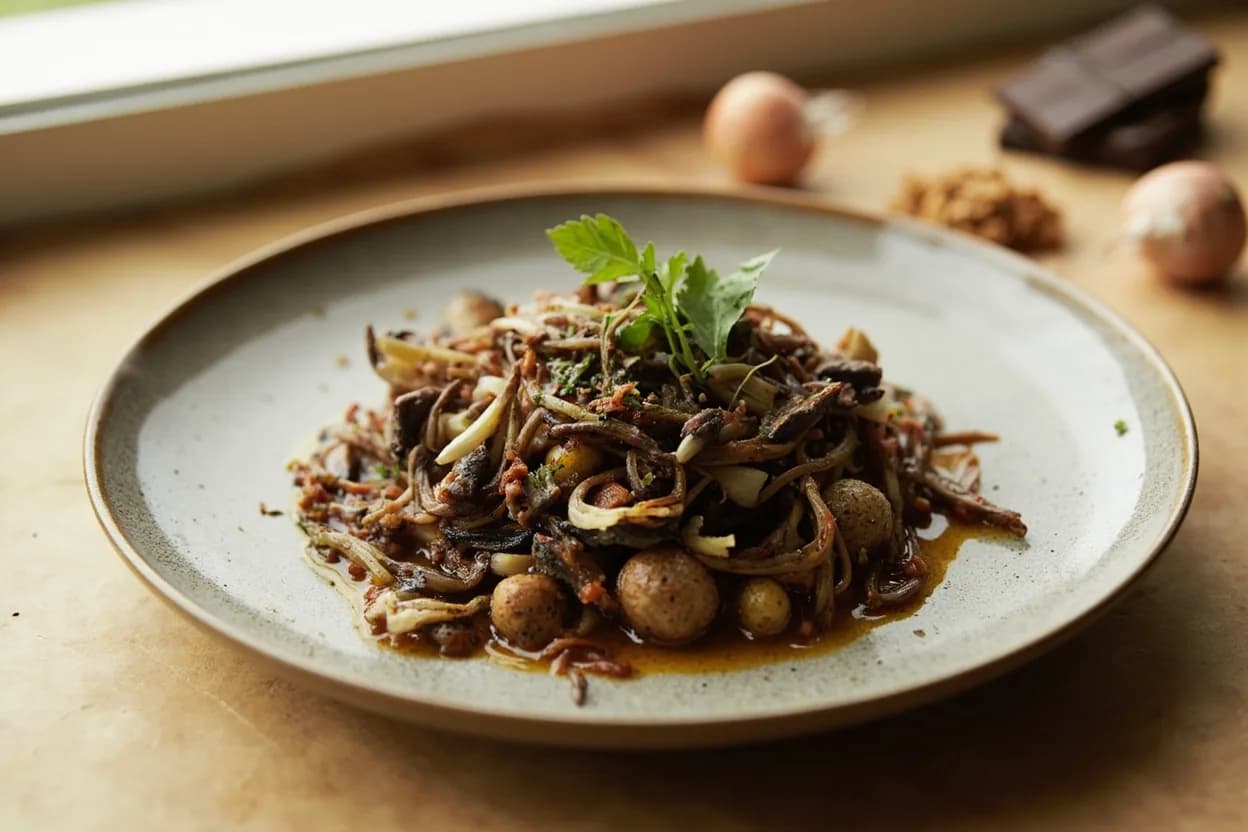
Salt-packed anchovy melted into a chocolate mole-style sauce — both bitter and fermented, they reinforce each other's depth in a way that sounds impossible and tastes profound.
- Roasted beets
Beetroot's earthy sweetness and its natural glutamates marry well with anchovy: a Scandinavian-influenced salad with pickled anchovy (matjes), boiled beet, and sour cream is a northern European standard.
- Green beans (haricots verts) with anchovy vinaigrette
The snap and slight bitterness of green beans gains enormous depth from an anchovy-emulsified vinaigrette — a technique from the Nice kitchen that transforms a simple side.
- Walnut
Walnut's tannin and bitter oil cuts through anchovy's salt and creates a mole-like earthiness — used together in Ligurian pasta sauces (pasta con noci e acciughe).
Both are long-fermented umami bombs; used together sparingly (in a marinade or glaze) the combined glutamate-IMP synergy is extraordinary. Japanese fusion chefs exploit this pairing in umami-maximalist compositions.
Tread carefully
- Delicate white fish (sole, turbot, Dover bream)avoid
Anchovy's aggressive salt and fermented intensity obliterates the clean, sweet freshness of mild white fish — a flavour collision that respects neither ingredient.
- Fresh herbs (basil, tarragon) as the primary noteavoid
Anchovy's saltiness and funk will overwhelm delicate aromatic herb notes; use in herb-based sauces only in minimal quantities or not at all.
- Sweet dessert applicationsavoid
Unlike other umami boosters (miso caramel is a known exception), anchovy's briny, fermented iodine note does not translate to sweet contexts — no savoury-anchovy chocolate is likely to succeed outside extreme novelty.
How to use it
- Melt anchovy fillets in olive oil or butter over low heat until they completely dissolve — they will disappear as a fish and become pure flavour
- Mash with the flat of a knife on a board with coarse salt to make a paste before adding to dressings
- Bloom in the first stage of a sofrito or mirepoix — before aromatics go in — to build the flavour base
- Whisk into vinaigrettes for an invisible umami lift in composed salads
- Stud meat before roasting — use a larding needle or paring knife to insert slivers into the flesh
- Add sparingly to braises in the last 20 minutes to amplify savouriness without tasting fishy
Appears in
Related flavours
The constant companion — acid-brine to anchovy's salt-umami; appear together in puttanesca, tapenade, salade niçoise
- Fish sauce (nam pla, nuoc cham)
The liquid, Southeast Asian equivalent of the same fermented-fish umami principle; functionally interchangeable in many Western recipes
Anchovy is a key ingredient in Worcestershire — using the sauce and understanding anchovy's role within it are closely linked
References
- 1.The Flavour Thesaurus — Niki Segnit (Bloomsbury, 2010)
- 2.Salt, Fat, Acid, Heat — Samin Nosrat (Simon & Schuster, 2017)
- 3.On Food and Cooking: The Science and Lore of the Kitchen — Harold McGee (Scribner, 2004)
Confidence: high
Notes
The invisibility principle
The power of anchovy as a flavouring lies in its complete dissolution. When sceptics say 'I hate anchovies,' they almost invariably love Caesar salad, lamb anchoïade, and Worcestershire sauce. The goal is never to taste 'fish' — the goal is to make the dish taste overwhelmingly, inexplicably savoury. This is also why quality matters: good-quality salt-packed anchovies (Recca, Ortiz, Agostino Recca di Sicilia) dissolve cleanly; cheap oil-packed anchovies can leave an unpleasant residual fishiness.
Salt-packed vs. oil-packed
Salt-packed anchovies from Sicily (often the highest quality) must be filleted and rinsed before use; oil-packed are ready immediately. For dissolving into sauces and dressings the difference is minimal after processing; for serving whole (on pizza, pinxtos), oil-packed is more practical.