Preserved & Cured Fish
Anchovy Sauce (Aekjeot)
Also: 멸치액젓, myeolchi aekjeot, Korean anchovy fish sauce, myeolchi jeot
Korea's liquid umami backbone — saltier and more pungent than Southeast Asian fish sauces, with a deep marine savouriness that seasons kimchi from the inside out.
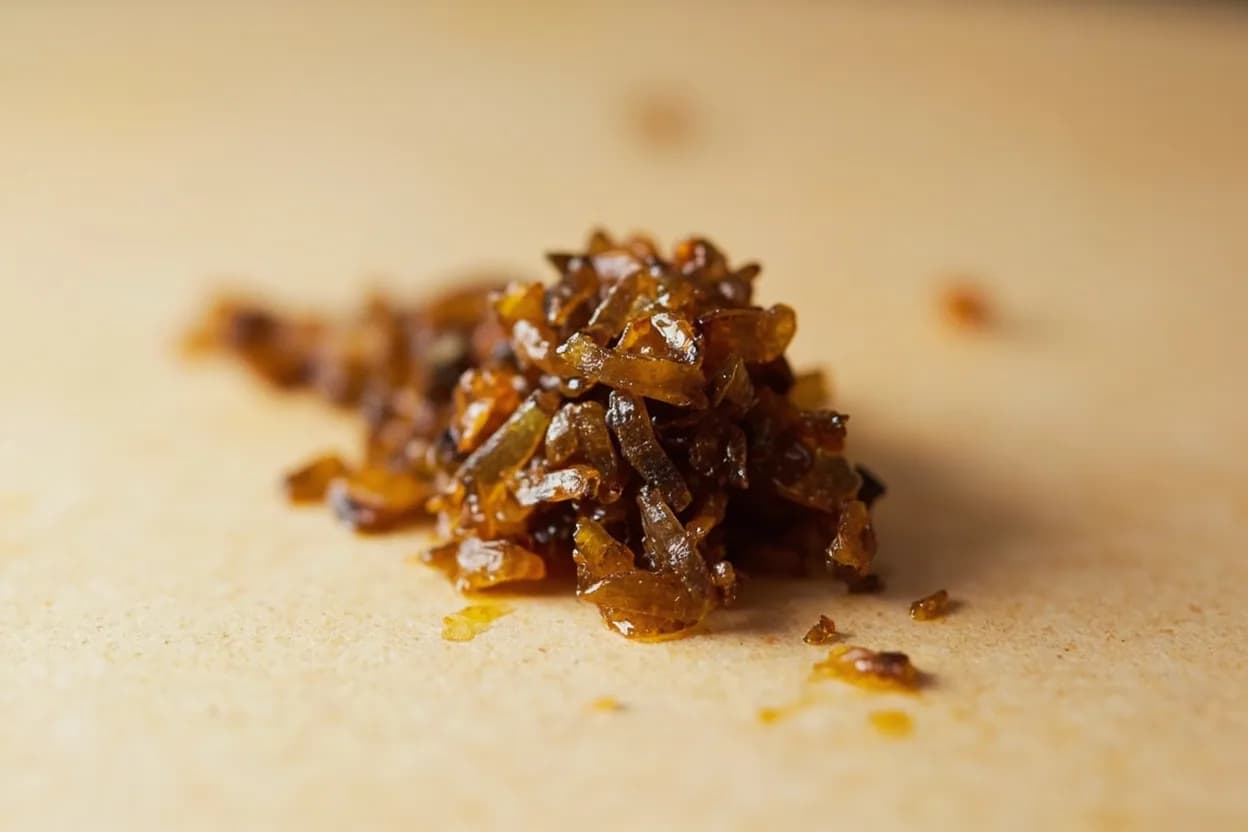
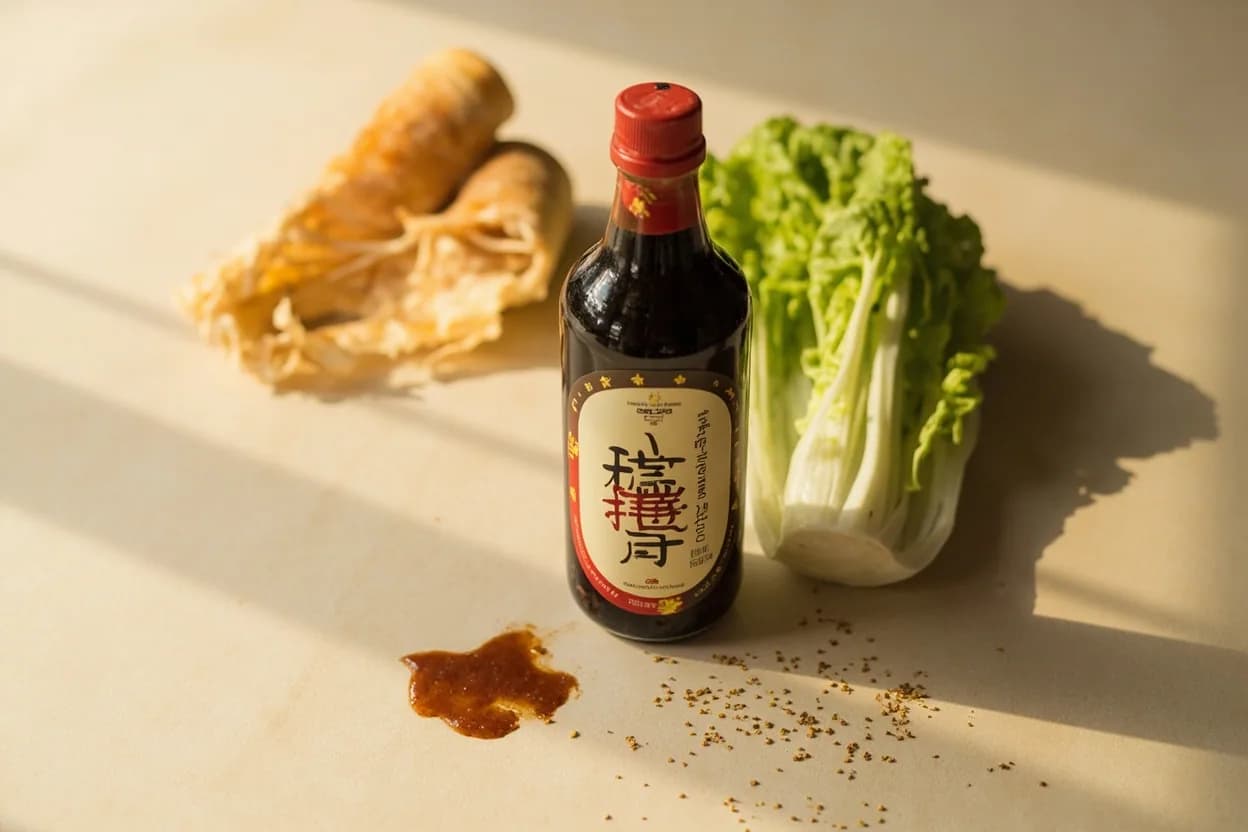
Aekjeot is a Korean fish sauce produced by salting small anchovies (myeolchi) and fermenting them for 12–24 months, allowing endogenous enzymes to break down proteins into free glutamates and other flavour-active compounds. The result is a darkly amber, intensely saline liquid with a complex, funky marine depth quite distinct from Thai nam pla or Vietnamese nước mắm — it carries more iodine edge and less sweetness. It is used primarily as a secondary seasoning agent inside kimchi pastes and as a finishing salt for soups and stews, and is considered a non-negotiable ingredient in authentic baechu kimchi.
In photos
Flavour profile
Classic pairings
- Napa cabbage (baechu)Korean
The defining use — aekjeot seasons the kimchi paste and penetrates salted cabbage leaves during fermentation, building layered umami that no other seasoning replicates.
- Doenjang (fermented soybean paste)Korean
Both are fermented umami sources; aekjeot added to doenjang jjigae amplifies savouriness without competing, creating a richer broth than either ingredient alone.
- Radish (mu)Korean
Kkakdugi (cubed radish kimchi) depends on aekjeot to round the sharp brassica bite of radish and encourage lactic fermentation.
- Gochugaru (Korean chilli flakes)Korean
Aekjeot and gochugaru are inseparable in kimchi paste — the sauce tempers the raw heat and binds the flakes into a cohesive, clinging marinade.
- GarlicKorean
Allicin and glutamate interact synergistically; raw garlic blooms inside kimchi paste seasoned with aekjeot, producing the characteristic warm, pungent kimchi aroma.
- Spring onion (pa)Korean
Pa kimchi (whole-scallion kimchi) relies on aekjeot for the primary savoury note, the onion's sweetness providing balance.
- Anchovy and kelp dashiKorean
Adding a dash of aekjeot to Korean anchovy-kelp broth reinforces the marine baseline, useful when dried anchovies are mild or old-stock.
Adventurous pairings
- Tomato-based pasta sauce
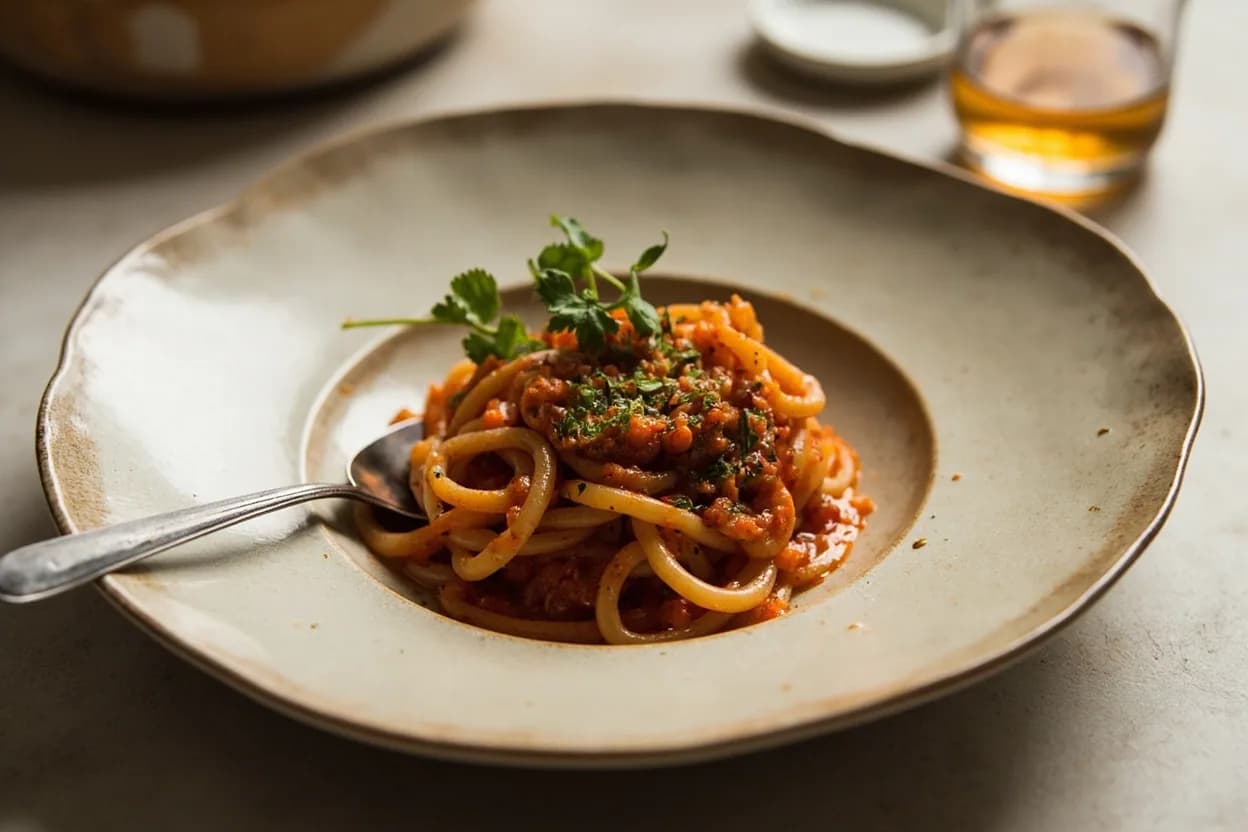
A teaspoon stirred into a slow tomato sugo dissolves invisibly but elevates glutamate concentration, mimicking the effect of colatura di alici without the Italian larder.
- Butter-roasted vegetables
A few drops whisked into brown butter before tossing with roasted mushrooms or cauliflower delivers a salty, fermented depth that reads as inexplicably savoury.
- Ramen tare
Korean-Japanese fusion cooks add a measure of aekjeot to shoyu or shio tare for a distinctly funkier, more marine character than standard fish sauce tare.
- Vinaigrette
A small drop in a rice-vinegar or apple-cider vinaigrette adds salinity and complexity; particularly effective over bitter greens like endive or frisée.
- Scrambled eggs
A single teaspoon replaces salt in scrambled eggs, introducing an almost imperceptible oceanic savouriness that makes them taste more intensely eggy.
Tread carefully
- Delicate cream-based saucesavoid
The aggressive salt and fermented funk overwhelm subtle dairy sauces; a cream beurre blanc or béchamel will be dominated and may break under the acid load.
- Desserts and sweet preparationsavoid
Unlike a calibrated fish-sauce caramel, raw aekjeot's iodine edge reads as off-putting rather than intriguingly saline in most sweet contexts.
- Delicate white fish (as a sauce)avoid
Poured directly on steamed or poached white fish, its intensity drowns the mild protein; better to use a milder soy or citrus soy.
How to use it
- Add early in kimchi paste preparation so it dissolves evenly and begins interacting with garlic and ginger
- Use in place of salt in soups and jjigae — start with half the salt amount and add aekjeot to taste
- Never boil at high heat for extended periods — aromatics cook off; add near the end for soup finishing
- Combine with saeu-jeot (salted shrimp) in kimchi for a two-register umami effect (glutamate + nucleotide synergy)
- Store refrigerated after opening — salt content alone preserves it, but cold storage prevents off-flavour development
Appears in
Related flavours
- Saeu-jeot (salted fermented shrimp)
The two are used in combination in kimchi pastes — shrimp paste provides nucleotide umami, anchovy sauce provides glutamate; together they produce a synergistic effect.
- Nam pla (Thai fish sauce)
A close functional cousin, though sweeter and less funky; can substitute in non-Korean contexts where aekjeot's intensity would overwhelm.
Both are liquid savoury seasonings in Korean cooking — soy sauce is used for clearer-coloured soups (miyeok guk), aekjeot where colour is less critical.
References
- 1.The Korean Table — Taekyung Chung & Debra Samuels
- 2.Korean Cuisine: An Illustrated History — Michael Pettid
- 3.The Art of Fermentation — Sandor Ellix Katz
- 4.On Food and Cooking — Harold McGee (fermentation chemistry)
Confidence: high
Notes
Aekjeot vs. other fish sauces
Korean aekjeot is noticeably saltier and more aggressively funky than Thai nam pla or Vietnamese nước mắm because it uses a higher salt-to-fish ratio and undergoes a longer initial fermentation before pressing. This makes substitution approximate rather than precise — reduce quantities when swapping in from Southeast Asian sauces, and expect the flavour profile to shift.
Vegan kimchi note
Traditional kimchi without aekjeot is not a simple omission — the fermented amino acids it contributes are significant. Vegan recipes substitute with miso, kelp broth reduction, or a mix of soy sauce and nutritional yeast, but results are notably milder in the first weeks of fermentation.