Spices & Dried Aromatics
Ancho Chile
Also: ancho, chile ancho, dried poblano, mulato (darker variant), ancho pasilla
The dried poblano that anchors Mexico's great moles — deep chocolate, raisin, and mild tobacco with barely a whisper of heat.
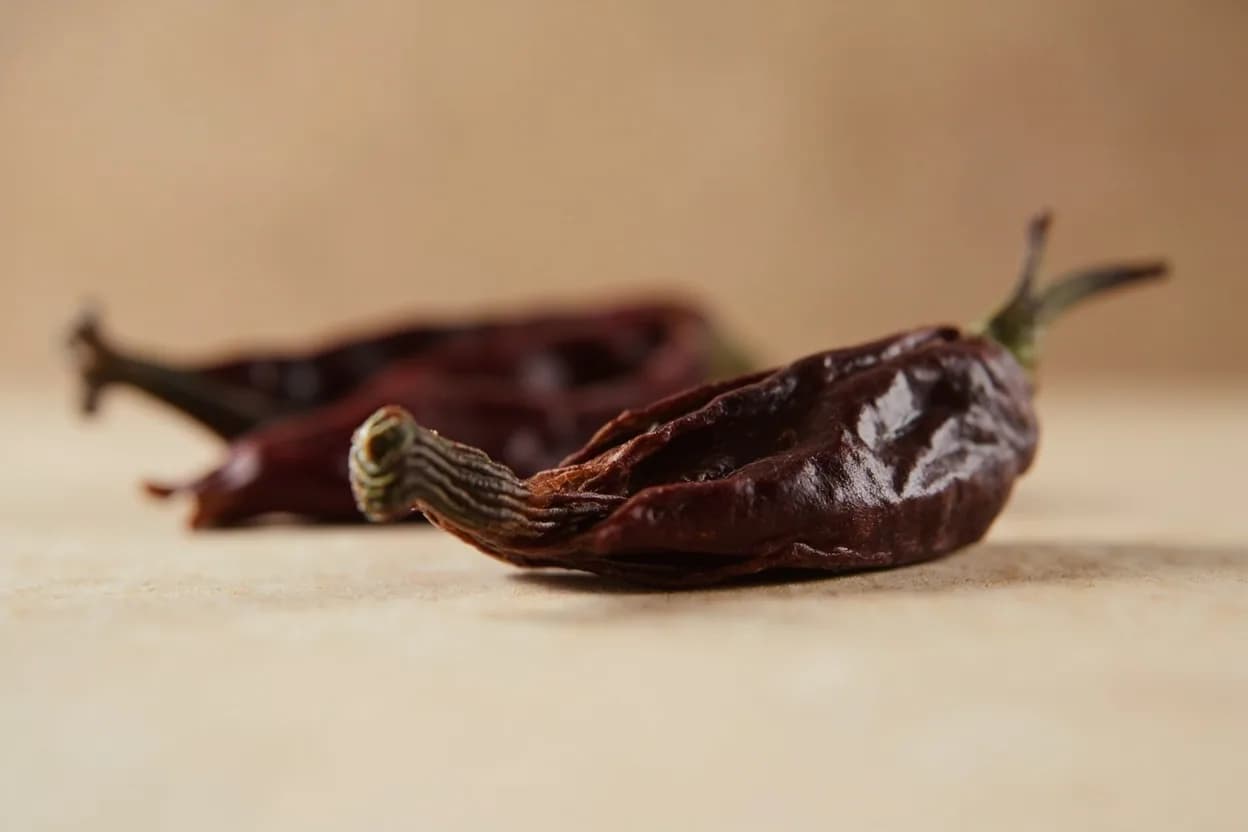
The ancho is simply the poblano pepper (Capsicum annuum) in its dried state — wrinkled, mahogany-black, and flat, the name coming from the Spanish for 'wide.' At 1,000–2,000 Scoville units it is one of the mildest dried chilies, which means flavor rather than fire drives its use. The dominant notes are dark chocolate, dried plum, tobacco leaf, and a subtle earthiness that deepens when the chile is toasted and rehydrated. It is the most widely used dried chili in Mexican cooking, appearing in nearly every mole negro, adobo marinade, and red chili braise. The ancho forms the sweet, dark base layer of complex Mexican sauces, letting other chilies (pasilla, mulato, chipotle) contribute their own dimensions on top.
In photos
Flavour profile
Classic pairings
- Dark chocolateMexican
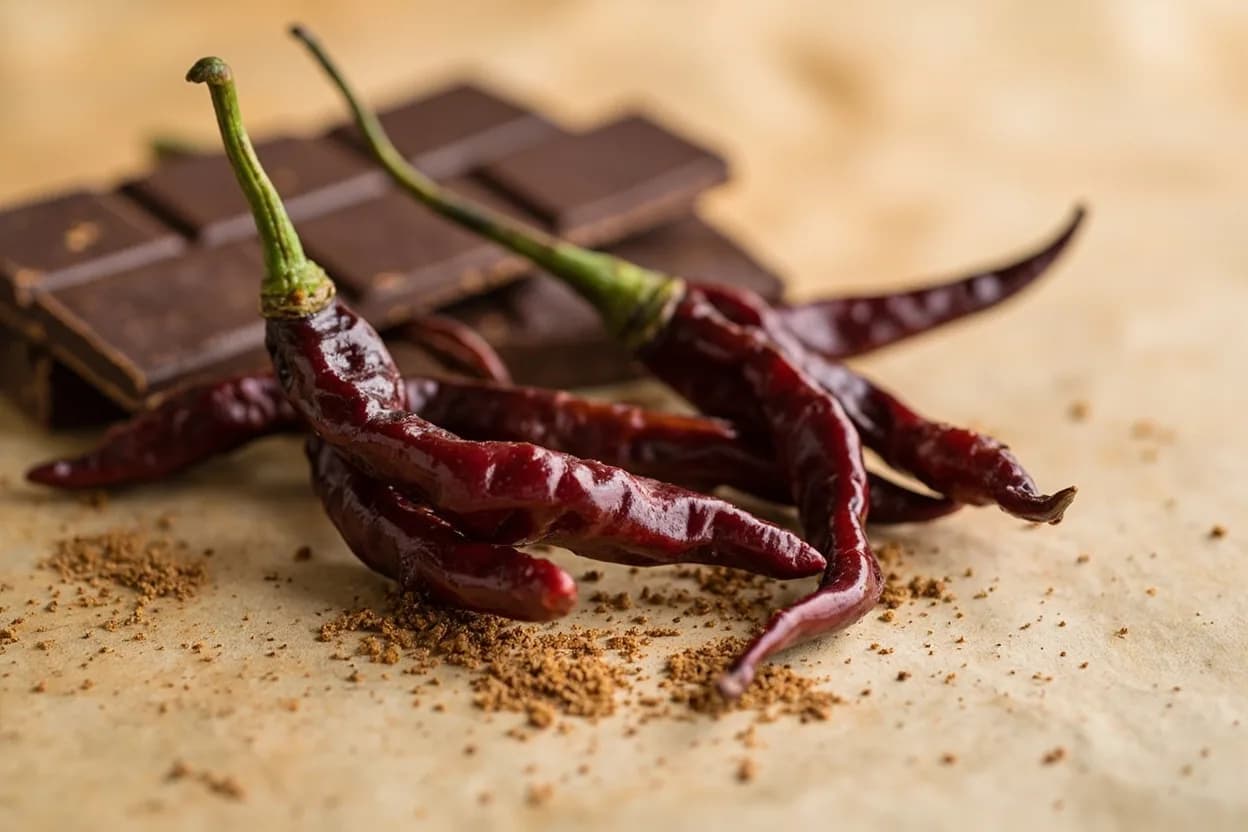
The defining pairing in mole negro — ancho and bitter chocolate are mirror flavors that deepen each other; both carry the same roasted, bittersweet character.
- TurkeyOaxacan / Mexican
Mole negro is the canonical vehicle, where ancho is soaked, blended with tomatoes, spices, and chocolate, and poured over turkey for festive occasions.
- CuminMexican
A fundamental Mexican flavor combination: ancho's sweetness and tobacco depth are amplified by cumin's warm earthiness in adobos, chili con carne, and red stews.
- GarlicMexican
Rehydrated ancho blended with garlic forms the base of adobo marinades for pork, chicken, and beef; the garlic sharpness offsets the chile's sweetness.
- Pork shoulderMexican
Braised pork in ancho adobo (chile colorado) — the fat carries the chocolate-plum flavors deep into the meat during slow cooking.
- TomatoMexican
Roasted tomato and rehydrated ancho form the flavor backbone of many Mexican salsas and red braises — tomato's acidity brightens the chile's depth.
- Dried oregano (Mexican)Mexican
Mexican oregano's citrusy, floral bitterness cuts through ancho's rich sweetness and is an essential combination in red enchilada sauce.
Adventurous pairings
Ancho's roasted chocolate-tobacco notes align almost perfectly with espresso; ancho-coffee dry rubs on beef short ribs or duck create complex, umami-forward bark.
- Soy sauce and mirin
A Japanese-Mexican bridge: ancho paste thinned with soy and mirin makes a deeply savory glaze for grilled eggplant or salmon.
Plumping dried apricots alongside rehydrated ancho in a lamb tagine-style braise creates a sweet-savory depth reminiscent of both Mexican mole and North African cooking.
Ancho-tahini sauce — blended rehydrated chile with sesame paste, garlic, and lemon — produces a smoky, nutty dip that bridges Middle Eastern and Mexican flavor worlds.
A spoonful of crème fraîche stirred into ancho-based soups or drizzled over posole tempers the dark bitterness and adds a tangy dairy richness.
Tread carefully
- Very acidic wines in braising liquidavoid
The bitterness in ancho amplifies when cooked with high-acid wine; use chicken stock or dark beer instead, adding a splash of vinegar at the end.
- Skipping the toasting stepavoid
Raw dried ancho chile has a raw, slightly dusty flavor; a brief dry-toast in a skillet or comal is essential to develop the chocolate and tobacco notes before rehydrating.
- Substituting with chipotle as the only chileavoid
Chipotle brings smoke and more heat but lacks ancho's chocolatey sweetness — the flavor profile shifts dramatically; use both if that complexity is desired.
How to use it
- Toast whole dried anchos in a dry skillet 1–2 minutes per side until fragrant but not charred, then soak in hot water 20–30 minutes to rehydrate
- Remove seeds and veins after rehydrating — the veins carry concentrated bitterness; save a few seeds if more heat is wanted
- Blend rehydrated anchos with aromatics and strain through a fine-mesh sieve for silky-smooth mole and enchilada sauce bases
- Make ancho adobo by blending with garlic, cumin, oregano, and vinegar — use as a wet marinade for pork, chicken, or beef before roasting
- Combine with mulato and pasilla in the 'holy trinity' of mole negro for traditional layered complexity
- Use ancho powder (ground dried chile) as a dry-rub base alongside brown sugar and smoked salt for BBQ applications
Appears in
Related flavours
The most common partner to ancho in Mexican sauces — guajillo adds tangy berry brightness to ancho's dark chocolate base, creating fuller, more layered red sauces.
European equivalent in function — both are mild, sweet dried peppers that color and flavor braises and marinades without dominant heat.
Parallel dried red pepper with mild fruitiness; gochugaru's character is brighter and fruitier where ancho is darker and more chocolatey.
References
- 1.Authentic Mexican — Rick Bayless
- 2.Mexico: The Cookbook — Margarita Carrillo Arronte
- 3.The Essential Cuisines of Mexico — Diana Kennedy
- 4.The Flavor Bible — Karen Page & Andrew Dornenburg
Confidence: high
Notes
Ancho vs. mulato
Mulato is a close relative — also a dried poblano, but from a different variety that produces darker (near-black) skin and an even more pronounced chocolate-coffee note with slightly more heat. The two are often confused at market; true ancho is mahogany-red when held to light, mulato stays nearly black. Mole negro typically calls for both.
The 'holy trinity' of Mexican dried chilies
Classic Oaxacan mole negro uses ancho (sweet-chocolate base), mulato (dark chocolate-coffee depth), and pasilla (herbal-licorice top note) together. Understanding each chile's distinct role — and not simply using one variety of dried red chile — is the key to authentic mole complexity.