Dried Fruits
Dried Apricots
Also: Hunza apricots, Turkish apricots, khooshk zardalu, kayısı, mishmish mjalil
Sunshine concentrated into a chew — tart, floral, and bright even in the depths of a slow-cooked stew.
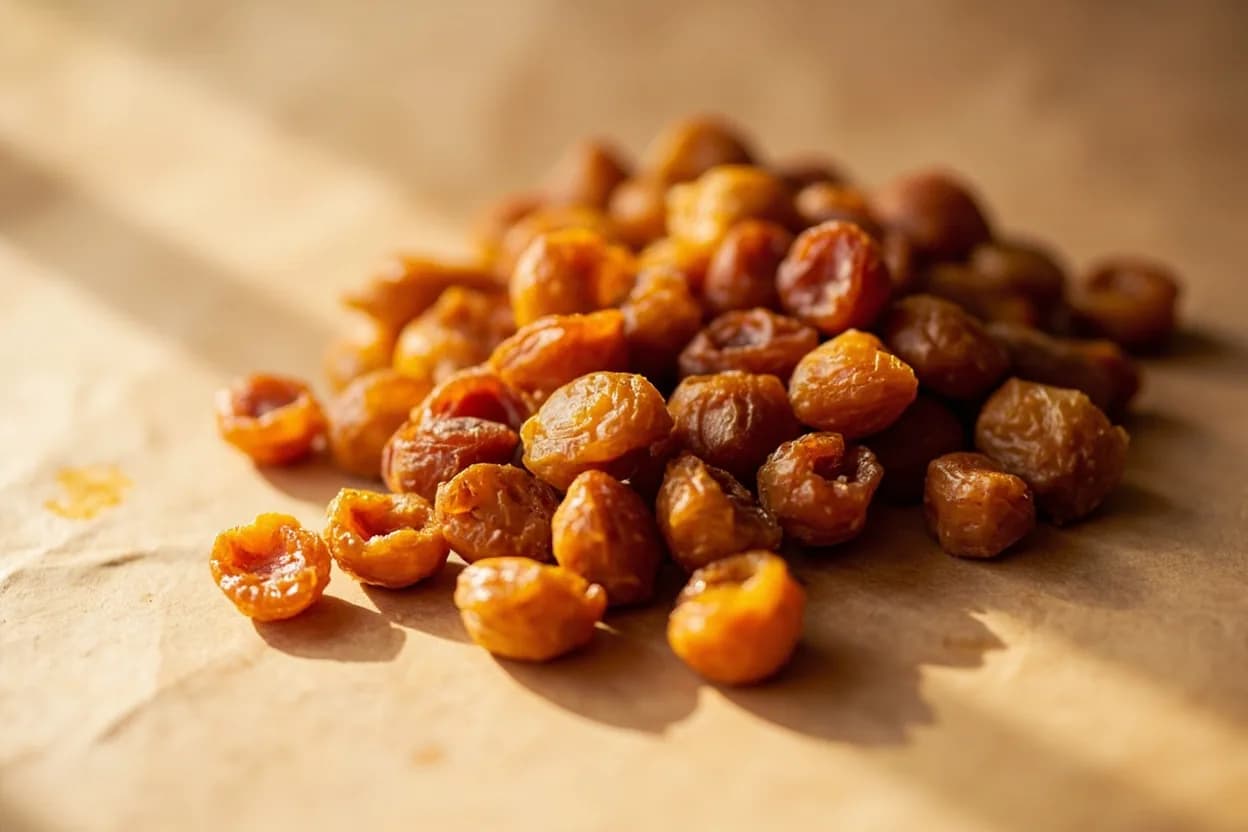
Dried apricots are ripe apricots (Prunus armeniaca) dried until their water activity drops to a stable shelf-stable level, concentrating sugars, carotenoids, and malic and citric acids. Two main styles dominate cooking: sulfured Turkish apricots (bright orange, supple, sweet-tart) and unsulfured Hunza or Afghan varieties (small, dark brown, intensely flavored with richer stone-fruit depth). Fresh apricot's fleeting floral-peach brightness becomes in drying a more assertive tart-sweet concentrated fruit flavor with raisin-like body. High acidity (malic and citric) gives dried apricots their signature brightness — they lighten and lift dishes even after hours of slow cooking.
In photos
Flavour profile
Classic pairings
- LambPersian / Moroccan
The defining pairing in Persian and Moroccan cooking — dried apricot's acidity cuts lamb's gaminess while its sweetness balances the spice-braised richness; foundational in khoresh-e zardalu and Moroccan tagines.
- SaffronPersian
Saffron's floral-honey-metallic character and dried apricot's stone-fruit brightness are the twin luxuries of Persian rice and stew cookery; polo ba zardalu is their most iconic meeting.
- AlmondsMoroccan / Turkish
Shared botanical origin (both Prunus family) creates a natural affinity — almonds' richness and mild bitterness bridge the sweetness of apricots in tagines, stuffings, and confectionery.
- ChickenNorth African / Middle Eastern
Lean poultry absorbs dried apricot's acid-sweet juice beautifully in slow braises; the fruit breaks down and creates a naturally sweet, tangy pan sauce without additional sweetener.
- Cinnamon and cardamomPersian / Moroccan
The warm spice backdrop that amplifies apricot's floral register in Persian rice dishes and Moroccan tagines; cardamom especially mirrors apricot blossom.
- Pork (chops, loin)European
Dried apricot's high acidity tenderizes and its sweetness glazes pork — a classic European combination in German Schnitzel accompaniments and British pork stuffings.
- Basmati ricePersian
In Persian polo preparations, dried apricots cook into the rice crust (tahdig) and throughout the pilaf, contributing both sweetness and jewel-like color.
Adventurous pairings
Apricot's sweetness and acidity are exactly the counterbalance harissa's concentrated chile heat needs; together in a lamb or chicken marinade they create the same sweet-hot dynamic prized in Tunisian cuisine.
- Manchego or aged sheep's milk cheese
The lanolin-grassy tang of sheep's milk cheese finds a perfect counterpart in apricot's tart brightness; a Spanish-influenced cheese board combination that outclasses most quince paste pairings.
- Whisky (especially Scotch with fruity character)
Many Speyside and Highland whiskies carry natural apricot and stone-fruit notes; a chunk of rehydrated Hunza apricot alongside a dram of Balvenie or Glenfarclas brings out the fruit character in the spirit.
- White miso
White miso's gentle umami-sweetness elevates the floral character of apricot in a glaze for salmon or chicken; the fermented-lactic note bridges to apricot's own faint fermented complexity.
Both are high-acid, intensely flavored pantry staples; together in a tagine or grain salad they stack acid registers in a complex way, with preserved lemon providing saline-bitter brine notes that apricot's pure fruit acid cannot.
Tread carefully
- Chocolate (especially dark)avoid
Dried apricot's bright citric acidity clashes with dark chocolate's roasted-tannin bitterness; the combination creates a sharp, discordant impression rather than fruit-and-chocolate harmony.
- Oysters or briny seafoodavoid
The mineral brine of oysters and the concentrated sweetness of dried apricot create an off-putting sweet-saline conflict; fresh lemon is always the right call here.
- Aged blue cheeseavoid
Unlike dried figs, which can hold their own against Roquefort, dried apricot's bright acidity and floral sweetness are overwhelmed by very strong blues; the pairing tastes sour and overworked.
How to use it
- Rehydrate in warm water, orange juice, or white wine for 20–30 minutes before braising or puréeing
- Simmer directly in stews and tagines without rehydrating — they will plump and soften in the braising liquid
- Chop fine and stir into grain stuffings, couscous, or rice pilaf to distribute sweetness and acidity evenly
- Purée rehydrated apricots with lemon juice and olive oil for a tart-sweet condiment or glaze
- Thread whole onto skewers between lamb or chicken pieces for grilling — they caramelize and baste the meat
- Simmer with sugar and lemon juice into a jam or compote to use as a glaze base for duck, pork, or pastry
Appears in
Related flavours
The earthier, jammier cousin — where dried apricot is bright and acidic, dried figs are darker, more musky, and lower in acid; they complement each other in Persian mixed-fruit stews.
- Dried plums (prunes)
Another high-acid dried stone fruit used in similar savory applications; prunes are deeper and more tannic, apricots lighter and more floral.
The Persian pantry's other tart-bright ingredient; zereshk and dried apricots appear together in polo, each adding a different register of fruity acidity.
Dried apricot's most refined Persian companion — together they are the luxury notes of Persian rice-cookery.
References
- 1.A Book of Middle Eastern Food — Claudia Roden
- 2.The New Persian Kitchen — Louisa Shafia
- 3.Plenty More — Yotam Ottolenghi
- 4.Couscous and Other Good Food from Morocco — Paula Wolfert
- 5.Flavor Bible — Karen Page & Andrew Dornenburg
Confidence: high
Notes
Sulfured vs. unsulfured
Bright orange Turkish dried apricots are sulfured with SO₂ to preserve color and prevent browning; they are sweeter, softer, and milder in flavor. Unsulfured Hunza or Afghan apricots (dark brown, leathery) have far more concentrated stone-fruit intensity and a faint fermented quality from natural oxidation. For savory dishes where the fruit must hold character after long cooking, unsulfured is generally superior. For visual impact in a rice dish or cheese board, sulfured is the choice.
A natural acid agent
Dried apricots contain significant malic and citric acid — higher than most dried fruits. This is why they succeed in long braises: they continue to contribute a brightening acidity even after the fruit itself dissolves, preventing heavy spice-braised dishes from tasting flat or one-dimensionally sweet.