Fermented Pastes & Sauces
Doubanjiang
Also: 豆瓣酱, Pixian doubanjiang, spicy bean paste, chili bean paste, toban djan, la douban
Sichuan's fermented chili-and-broad-bean paste — the foundational mother condiment of Sichuan cooking, delivering mala umami in one ingredient.
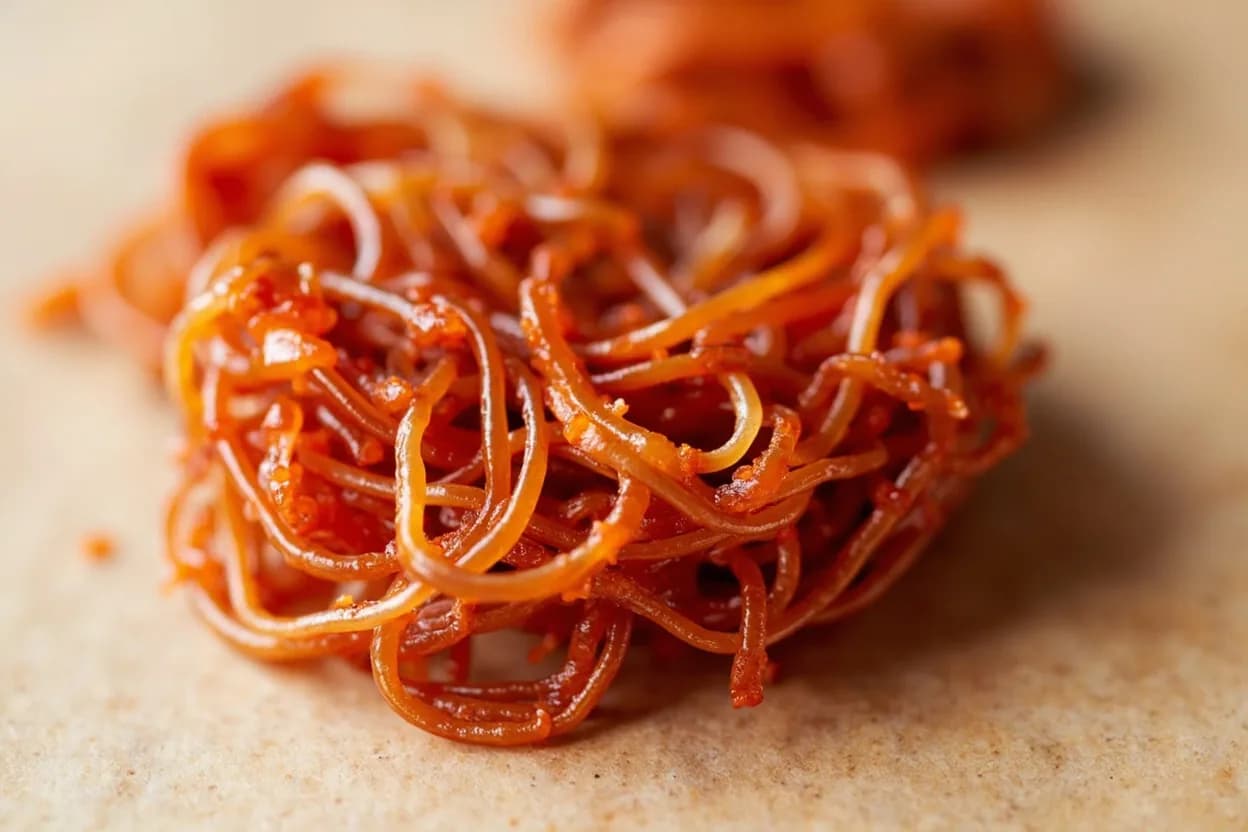
Doubanjiang is a fermented paste made from broad beans (fava beans), dried Sichuan chili peppers, salt, and flour, traditionally produced in Pixian County, Chengdu, Sichuan Province, where the local climate and water produce the optimal fermentation environment. The paste is aged in large open earthenware jars for anywhere from six months to five or more years; longer aging produces deeper complexity, darker color (from deep red-orange to near black), and more layered umami. The fermentation process generates both the glutamate-based savory depth typical of fermented bean pastes and the slow heat of Sichuan chilies, giving Pixian doubanjiang its characteristic mala (numbing-spicy) backbone — the flavor base of mapo tofu, twice-cooked pork, dan dan noodles, and dozens of other Sichuan classics.
In photos
Flavour profile
Classic pairings
- Silken tofu (doufu)Sichuan, Chinese
Mapo tofu is the defining recipe — silken tofu's neutral, quivering delicacy absorbs the doubanjiang-based sauce utterly; without the paste, mapo tofu does not exist.
- Pork (ground and belly)Sichuan, Chinese
Twice-cooked pork (huí guō ròu) uses doubanjiang as the flavoring medium for fatty pork belly; the paste's oil-soluble chili compounds bloom in pork fat.
- Sichuan peppercorn (huā jiāo)Sichuan, Chinese
The inseparable companion — Sichuan peppercorn's citrus-numbing hydroxy-alpha-sanshool pairs with doubanjiang's heat to produce the mala (numbing-spicy) sensation that defines Sichuan cuisine.
- Garlic and gingerSichuan, Chinese
Both aromatics are fried in oil before doubanjiang in virtually every Sichuan recipe; they provide the aromatic foundation that anchors the paste's intensity and prevents it from reading as simply 'hot.'
- Chicken or pork brothSichuan, Chinese
Doubanjiang-based sauces and braises are always diluted with broth to distribute heat and umami across a dish; Sichuan-style water-boiled fish (shuǐzhǔ yú) uses a rich broth as the vehicle.
- Fermented black beans (douchi)Sichuan, Chinese
Used together in many Sichuan preparations for layered, complementary fermented umami; fermented black beans add a sharp, fruity note that offsets doubanjiang's earthiness.
- Neutral oil (vegetable or rapeseed)Sichuan, Chinese
Frying doubanjiang in oil is the essential activation step — the oil turns deeply red as chili pigments extract, creating doubanjiang oil that carries flavor through the entire dish.
Adventurous pairings
- Lamb (shoulder and rack)
Lamb's lanolin and iron-rich gaminess stands up to doubanjiang's intensity; a doubanjiang-based glaze or braise for lamb shoulder is a natural meeting of Sichuan and Central Asian flavor traditions.
Both are fermented, earthy, and slightly bitter; doubanjiang's heat woven into a dark chocolate ganache creates a sophisticated chili-chocolate effect with far more complexity than simple cayenne.
- Natto (fermented soybeans)
An all-in fermented-bean umami stack — natto's ammonia-sharp depth combined with doubanjiang's chili-earth creates a maximally funky, savory condiment for rice or noodles.
Two fermented, intensely savory ingredients whose glutamates stack multiplicatively; small amounts of doubanjiang stirred into an anchovy-butter pasta sauce creates an East-West umami bomb.
- Butternut squash
The squash's sweet starchiness tames doubanjiang's heat while the paste's fermented depth makes the vegetable taste complex rather than simply sweet — a natural foil.
Tread carefully
- Delicate fresh herbs (basil, tarragon, mint)avoid
Doubanjiang's aggressive salinity and heat instantly overwhelm the volatile aromatic compounds in delicate herbs; add herbs after the doubanjiang element if required.
- Cream or dairy-based saucesavoid
The paste's acidity and heat denature dairy proteins and curdle cream sauces; do not combine.
- Mild white fish (sole, flounder)avoid
The paste's intensity obliterates the clean, delicate flavors of white-fleshed flatfish; save for firm, strongly flavored fish like catfish or carp.
How to use it
- Always fry in oil first — add doubanjiang to hot oil (ideally rapeseed) and cook 1–3 minutes stirring constantly until the oil turns deep red and the paste darkens; this is the essential first step
- Add garlic and ginger to the oil before the paste, or immediately after, to build the aromatic base
- Deglaze with broth or Shaoxing wine after frying to lift fond and create the sauce base
- Use in tablespoon quantities — it is extremely salty; taste before adding more salt anywhere else
- For stir-fries, add at the start of cooking over high heat and cook dry before adding other ingredients
- Thin with oil and broth to make a dipping sauce or condiment base for cold noodles (liang mian)
Appears in
Related flavours
Inseparable partner in mala cuisine; provides the numbing yang to doubanjiang's spicy heat
Korean fermented soybean cousin — similar base ingredient but no chili and distinctly different microbial culture
- Fermented Black Bean Paste (Douchi)
Frequently used alongside doubanjiang for layered fermented flavor in Cantonese and Sichuan dishes
References
- 1.Land of Fish and Rice — Fuchsia Dunlop
- 2.Sichuan Cookery (UK) / Shark's Fin and Sichuan Pepper (US) — Fuchsia Dunlop
- 3.Every Grain of Rice — Fuchsia Dunlop
- 4.Revolutionary Chinese Cookbook — Fuchsia Dunlop
- 5.On Food and Cooking — Harold McGee
Confidence: high
Notes
Pixian is the standard
Pixian doubanjiang (郫县豆瓣酱) from Pixian County, Sichuan, holds geographical indication status and is considered the gold standard by Chinese cooks worldwide. It is identified by its deep brick-red color, chunky texture (large pieces of fermented broad bean are visible), and complex, aged aroma. Non-Pixian commercial chili bean pastes vary wildly in quality and often contain significantly more sugar and less fermented character. Look for 'Pixian' or '郫县' on the label.
The frying step is non-negotiable
Unlike Korean gochujang, which can be used raw as a condiment, doubanjiang must almost always be fried in oil before use in cooking. This step extracts the fat-soluble chili pigments (primarily capsanthin) into the oil, turning it a vivid red, and fundamentally transforms the paste's flavor from raw-salty to deep and complex. Skipping it is the single most common Western cooking mistake with Sichuan cuisine.