Souring Agents
Barberries (Zereshk)
Also: zereshk, zereshk polo, dried barberry, Berberis vulgaris
Tiny jewel-red dried berries from Iran whose piercing tartness and ruby color define Persian rice and poultry dishes.
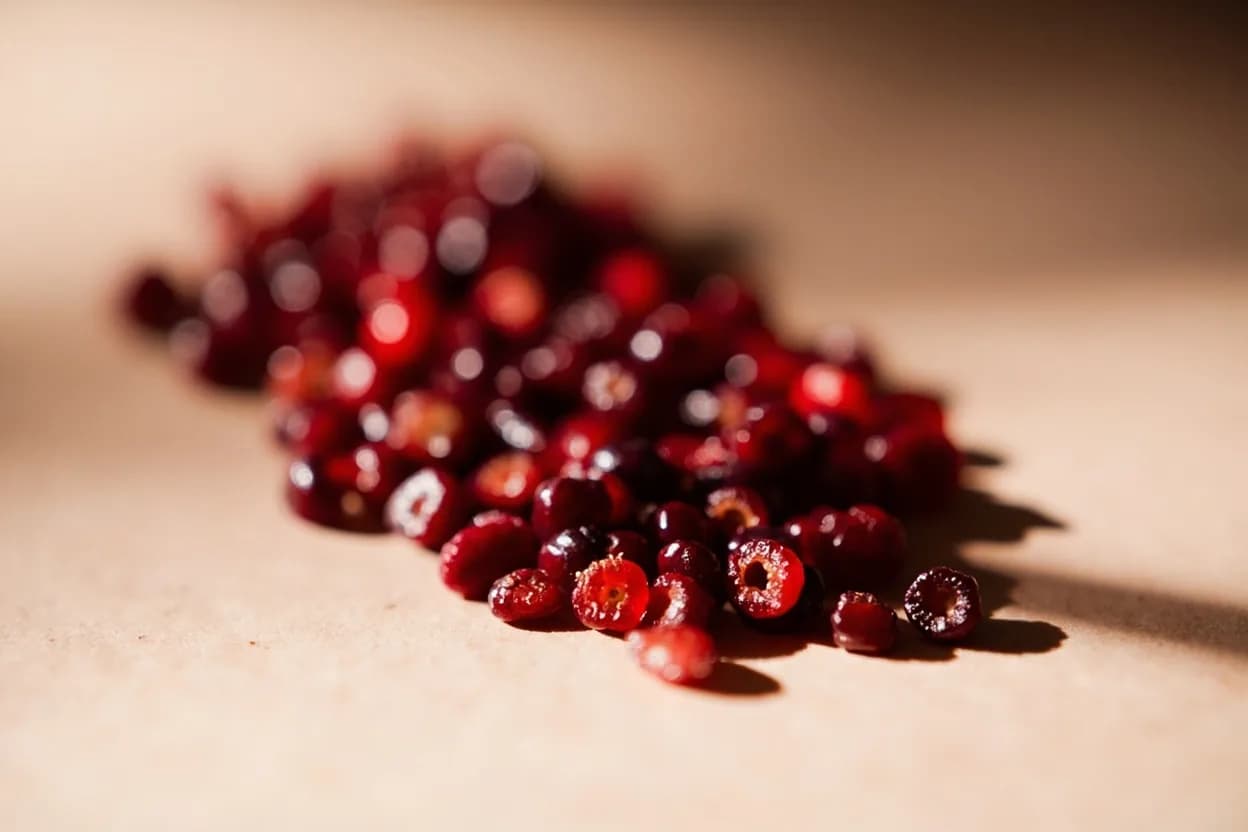
Barberries (Berberis vulgaris) are the dried fruit of a thorny shrub cultivated across Iran, particularly in Khorasan province. When dried, the small oblong berries—about the size of a pine nut—turn a vivid ruby-red and develop a pure, clean tartness from malic acid and citric acid, with no muddiness or bitterness. Unlike tamarind or kokum, barberries are almost entirely sour with minimal sweetness, making them function as tiny edible acid bursts rather than a souring liquid. In Persian cooking they are a finishing element: scattered over rice as both flavor and jewel-like garnish, or folded into chicken stuffings and stews. Their visual impact—crimson against white rice or golden saffron—is inseparable from their culinary role.
In photos
Flavour profile
Classic pairings
- Basmati rice (polo)Iranian (Persian)
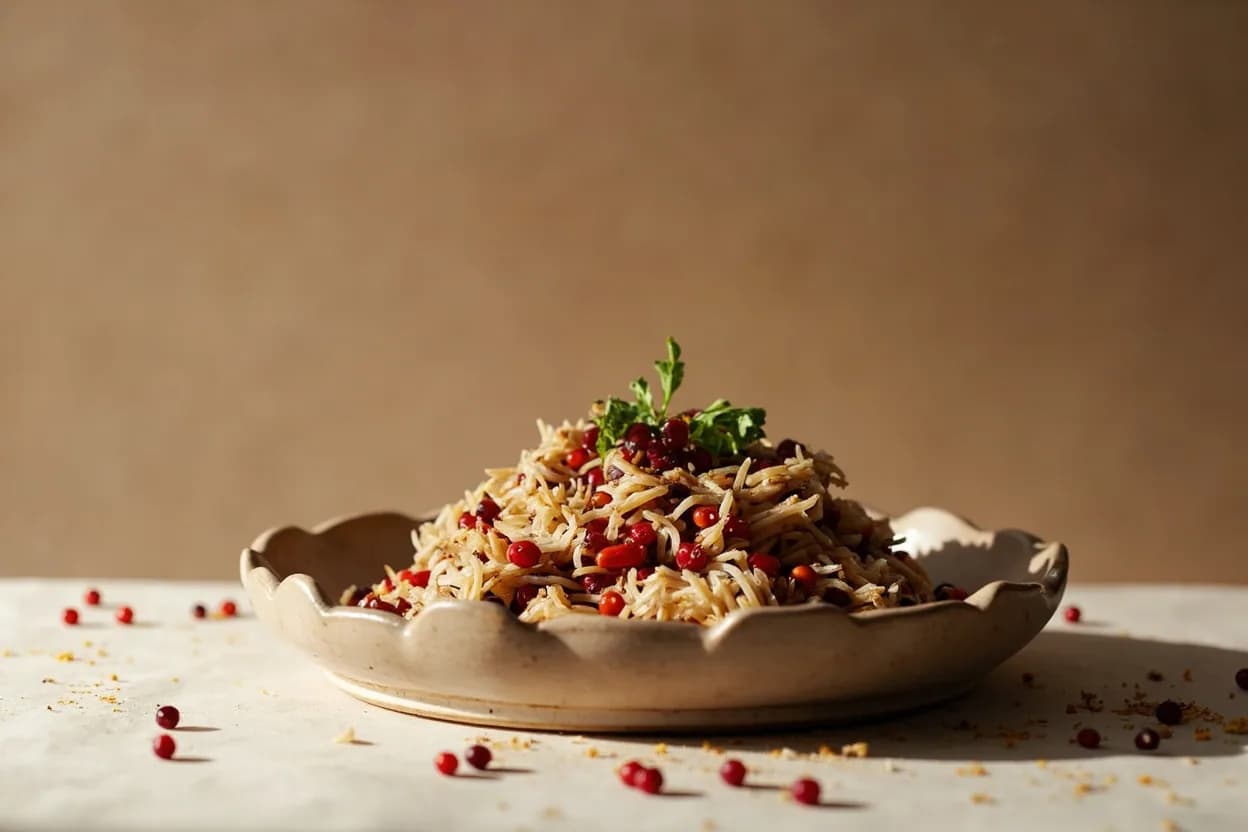
Zereshk polo—barberry rice—is one of Iran's most celebrated dishes; the sour berries sautéed in butter with a pinch of sugar are folded into the top layer of steamed rice, creating color contrast and acid punctuation.
- Chicken (joojeh and braised)Iranian (Persian)
Barberries in a chicken stew or stuffed inside a whole roast chicken provide tartness that cuts the richness of the meat; zereshk polo ba morgh is a national banquet dish.
- SaffronIranian (Persian)
Saffron-bloomed butter binds barberries when making the polo topping—the spice's golden hue and floral warmth harmonize with the berry's clean tartness to create the dish's signature color palette.
- Lamb (khoresh)Iranian (Persian)
Barberries folded into lamb stews (especially with spinach and prunes) add jewel-like pockets of tartness against the rich braise.
- PistachiosIranian (Persian)
A classic garnish pairing in Persian cooking—crimson barberries and green pistachios over white rice create the tricolor Iranian flag visually and balance buttery-nut richness with tartness.
- Dried fruit medleys (raisins, apricots, prunes)Iranian (Persian)
In khoresh-e fesenjān and similar stews, barberries among sweet dried fruits provide the essential sour counterpoint that prevents the dish from reading as dessert.
- ButterIranian (Persian)
Barberries are always sautéed in clarified butter (ghee) or regular butter—the fat carries their color and mellows their rawness before they meet the dish.
Adventurous pairings
- Duck breast
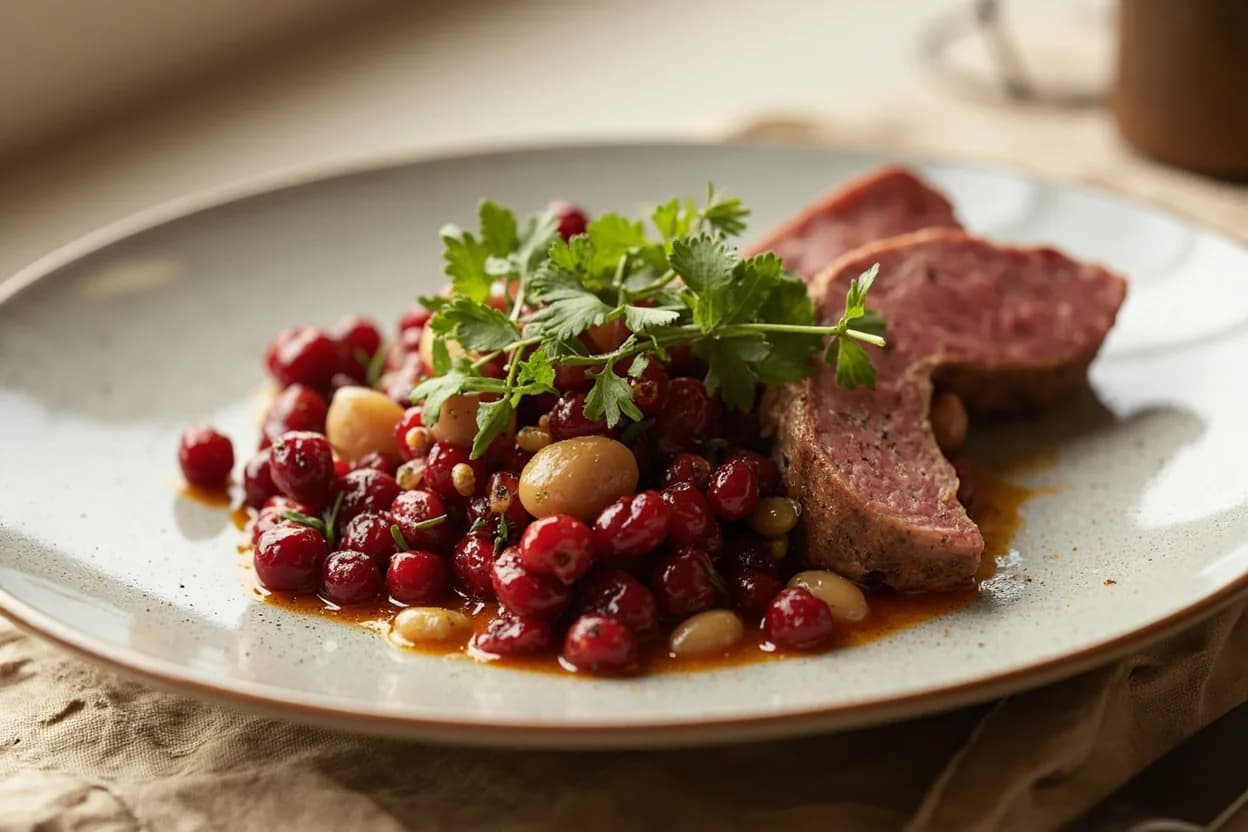
Barberries scattered over sliced rare duck breast act as an elegant souring garnish, replacing the classic orange sauce with something earthier and less sweet.
Rehydrated barberries spooned over thickened yogurt with olive oil and za'atar create a Levantine-Persian fusion spread—the acid cuts labneh's richness dramatically.
- Dark chocolate bark
Dried barberries pressed into 70%+ chocolate bark add tart pops and crimson color; the berry-acid plays against cocoa bitterness like dried cherries but sharper.
- Grain salads (farro, freekeh, bulgur)
Tossed into warm grain salads with herbs, toasted nuts, and olive oil, barberries serve as the acid-bright element that would otherwise be lemon juice.
- Champagne vinaigrette substitute
Rehydrated barberries blended and strained produce a vivid ruby souring liquid with no added harshness—a striking dressing for watercress or endive.
Tread carefully
- Subtly flavored white fishavoid
Their sharpness overwhelms the delicate flavor of sole or halibut; the visual red bleed also stains pale fish unattractively.
- Tomato-heavy saucesavoid
The tomato's own acidity makes barberries redundant, and the fruit's tannins add an unpleasant astringency against tomato's already acidic bite.
- Strong blue cheeseavoid
The pure tartness has no sweetness to balance blue cheese's ammonia sharpness—the result is unrelenting sourness without resolution.
How to use it
- Sauté in butter with a pinch of sugar for 2 minutes before folding into rice—this rounds their rawness and deepens the color
- Soak in cold water 10–15 minutes to rehydrate before adding to stuffings or grain salads
- Use dry directly scattered over a finished dish for textural pops of tartness and color
- Bloom in saffron water to marry the flavors before adding to polo
- Reduce in a small amount of water and sugar to make a ruby barberry glaze for poultry
Appears in
Related flavours
The defining color-and-flavor partner in Persian cuisine—golden saffron and ruby barberry are the visual and aromatic heart of zereshk polo.
In festive rice dishes, rose water's floral sweetness moderates barberry tartness and reinforces the Persian 'sweet-sour' aesthetic.
- Dried sour cherries
A close functional relative—both bring tart-fruity pops to grain and meat dishes; sour cherries are sweeter and less sharp.
Another pure-sour garnishing agent in Middle Eastern cooking—lemon-fruity where barberries are berry-fruity; they can collaborate on mezze spreads.
References
- 1.Najmieh Batmanglij: Food of Life — Najmieh Batmanglij
- 2.The New Persian Kitchen — Louisa Shafia
- 3.Persiana — Sabrina Ghayour
- 4.Flavor Bible — Karen Page & Andrew Dornenburg
Confidence: high
Notes
Sugar and the sauté step
Zereshk should almost always be sautéed in butter with a tiny pinch of sugar before use. Without this step, the berries are searingly sour and their color stays muted. The quick sauté—30 seconds to 2 minutes maximum—concentrates the color and knocks just enough edge off the acidity to bring the berries into balance. Over-cooking makes them bitter and ruins the jewel-like appearance.