Souring Agents
Sumac
Also: sumach, rhus coriaria, tart red spice, sour red powder
The Levant's secret souring agent — a deep burgundy powder ground from dried berries that delivers fruity, astringent tartness without citrus's sharpness.
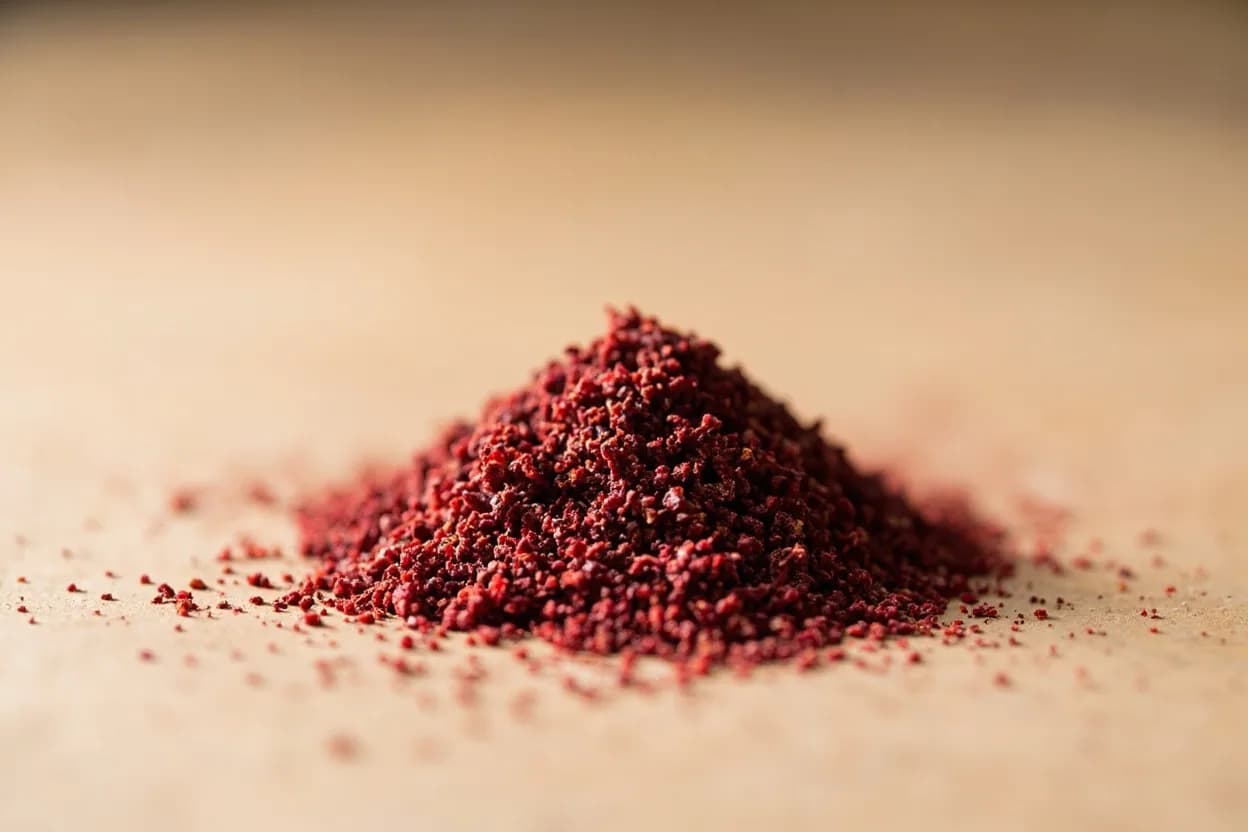
Sumac is the dried and coarsely ground berry of Rhus coriaria, a shrub native to the Middle East and Mediterranean. The berries concentrate malic and tartaric acids alongside anthocyanins (which produce their deep maroon colour) and tannins that lend a mild astringency. The flavour profile is distinctly sour-fruity — reminiscent of lemon with a berry-like depth and tannic grip — without the piercing sharpness of citric acid. It is used raw as a finishing spice, never cooked from the start, in Levantine, Persian, Turkish, and increasingly global kitchens as a lemon substitute or layered souring note.
In photos
Flavour profile
Classic pairings
- Lamb (grilled chops, kebabs, kofta)Levantine / Turkish
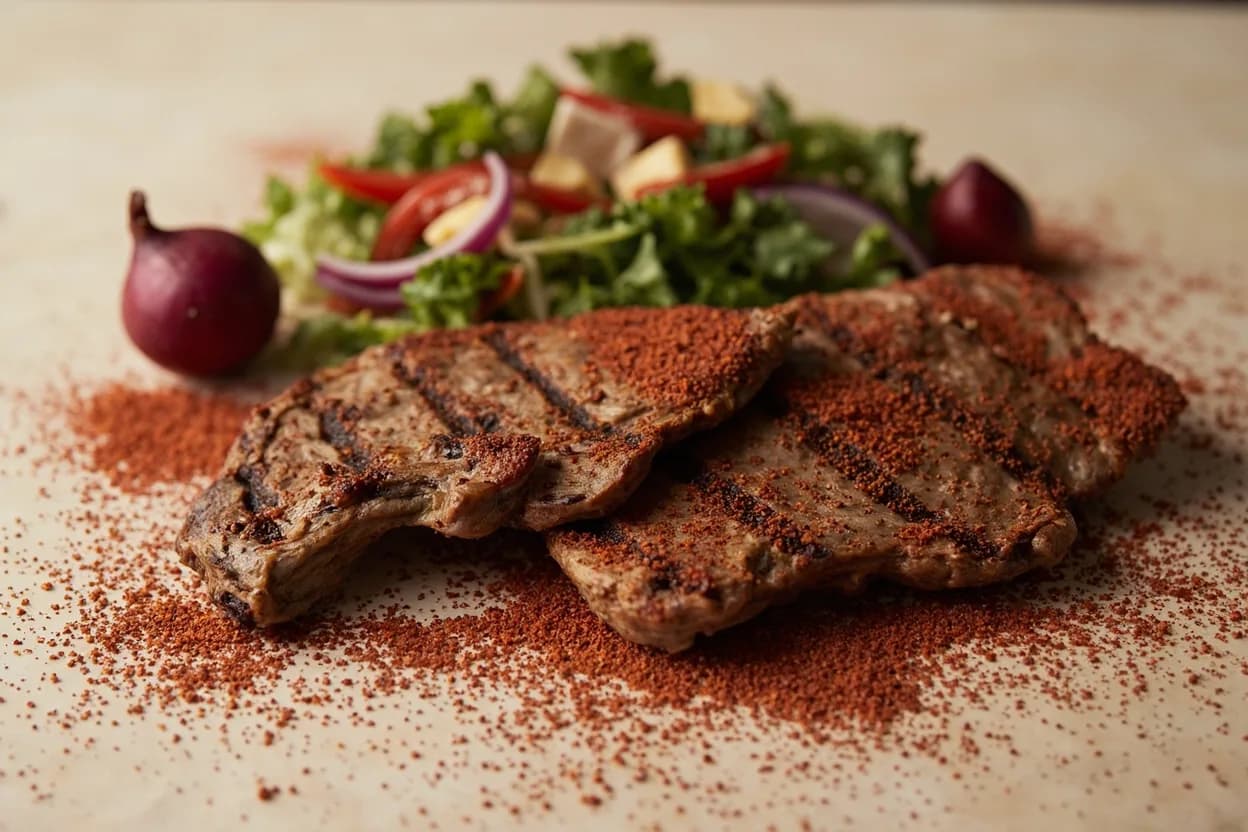
The most fundamental Middle Eastern application: sumac's tartness cuts lamb's fatty richness and complements its iron-mineral depth without overshadowing the meat.
- Fattoush saladLebanese
Sumac is dusted over this Lebanese bread salad alongside the dressing; its dry tartness concentrates where liquid acids would wilt the herbs.
- Red onionLevantine / Palestinian
Za'atar spice shops sell sumac-and-onion as a unit; rubbing sliced onions with sumac and salt for 10 minutes softens their bite and produces a tangy, lightly pickled condiment.
- HummusLevantine
A dusting of sumac over hummus adds visual contrast and a sour lift that balances the chickpea paste's earthiness.
- Chicken (roast or shawarma-marinated)Palestinian / Levantine
Sumac-rubbed chicken (musakhan) is the Palestinian national dish — its tartness penetrates poultry skin and perfumes the meat throughout.
- Feta cheeseLevantine / Greek
Sumac and feta appear together on meze platters; the fruit-acid tartness amplifies feta's own brine while the tannins balance its creaminess.
- Rice pilaf with caramelized onionsPersian
Sumac is stirred into Persian rice dishes (polo) as a finishing spice, particularly with zereshk (barberry); the two sour-fruit elements layer beautifully.
Adventurous pairings
- Grilled salmon
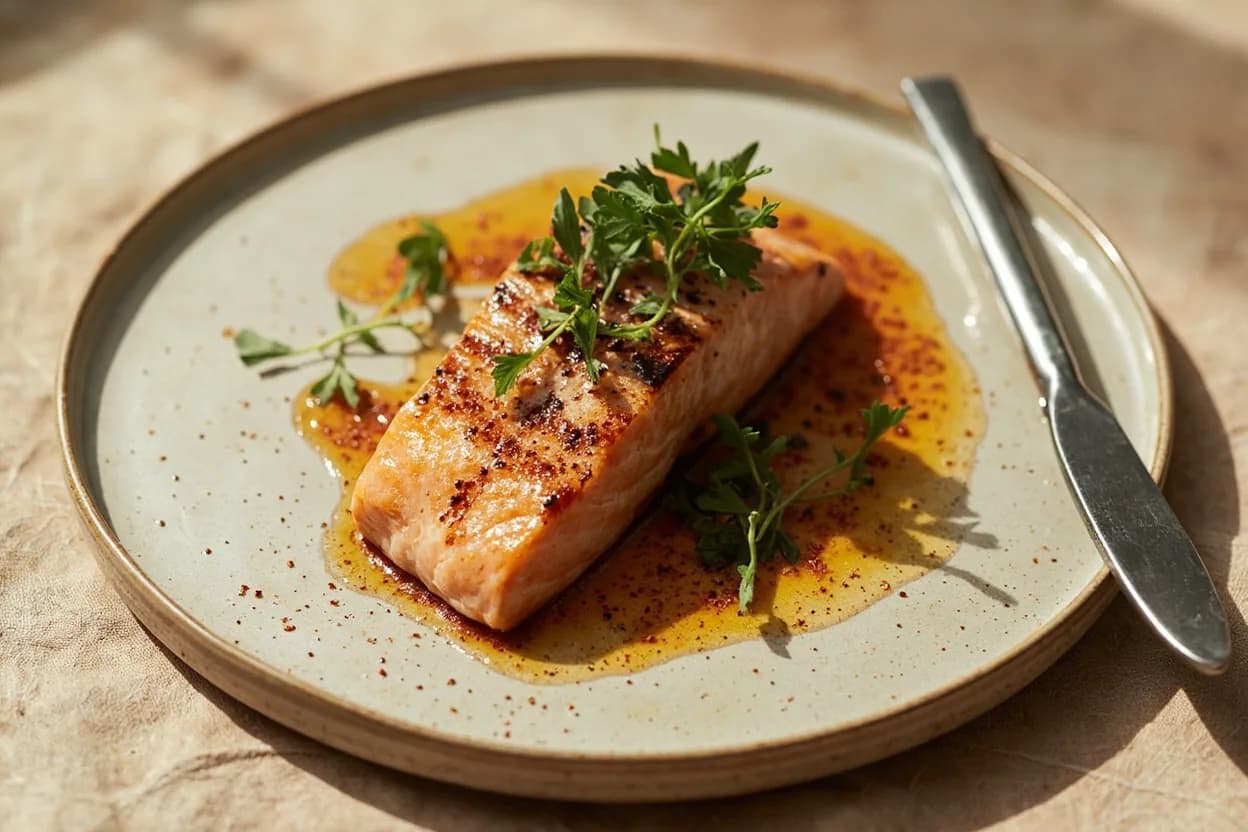
Sumac's fruity tartness and astringency work like a dry lemon — sprinkled on salmon skin before grilling it caramelises into a tangy crust.
- Dark berries (blackberry, blueberry)
In a vinaigrette or dessert sauce, sumac doubles down on berry's own fruity-acid character, concentrating it; use in a blueberry compote for duck breast.
- Labneh or strained Greek yoghurt
Sumac stirred into thick yoghurt creates a spread used as a sauce, dip, or taco topping — the tannins firm the texture while the acid amplifies tang.
- Roasted cauliflower
Cauliflower's nutty, sweet-bitter char pairs with sumac's fruity tartness better than lemon; a Middle Eastern treatment that has crossed into restaurant menus globally.
- Gin or vodka cocktails
A sumac-infused simple syrup (briefly simmered, strained) creates a tart, fruit-floral cocktail acid that replaces sour mix — especially effective in a spritz.
Tread carefully
- Dishes with already-heavy vinegar presenceavoid
Stacking sumac on top of a vinegar-dressed dish layers acids without distinction; choose one souring agent.
- Delicate cream-based saucesavoid
Sumac's tannins can curdle or grainy-split dairy proteins if stirred into hot cream — add after cooking or use as a garnish only.
- Long-cooked braisesavoid
Sumac's volatile aromatics fade with sustained heat and the colour leaches unappealingly into liquid — always add at the end.
How to use it
- Sprinkle raw as a finishing spice directly onto plated food — it never needs to be cooked
- Rub onto meat or onions with salt and let rest 10–20 minutes to draw out moisture and bloom the acids (a quick 'cure')
- Incorporate into spice blends: za'atar classically combines sumac, dried thyme, sesame seeds, and salt
- Steep in warm water briefly to produce a sour liquid for dressings when you want the flavour without the texture
- Press into flatbreads with olive oil before baking for a tangy sourdough-adjacent finish
Appears in
Related flavours
- Lemon
Sumac's most common substitute in Western kitchens — citric versus malic-tartaric acid; lemon is sharper and more one-dimensional; sumac has berry depth and tannin.
Another Middle Eastern souring agent — richer, more syrupy, deeper fruit; sumac is drier and more versatile as a finishing powder.
- Za'atar blend
Sumac is a primary component of za'atar; they share the same flavour ecology and are almost always deployed together in Levantine cooking.
References
- 1.Jerusalem: A Cookbook — Yotam Ottolenghi & Sami Tamimi
- 2.Zaitoun: Recipes from the Palestinian Kitchen — Yasmin Khan
- 3.The Complete Middle East Cookbook — Tess Mallos
- 4.Flavor Bible — Karen Page & Andrew Dornenburg
Confidence: high
Notes
Rhus coriaria vs. North American sumac
Culinary sumac (Rhus coriaria) is the Mediterranean species. North American staghorn sumac (R. typhina) is edible and similarly tart but is not the spice sold in Middle Eastern shops — it would need to be foraged and processed differently. Poison sumac (Toxicodendron vernix) is entirely unrelated and toxic; it has white berries, not red.
Quality indicators
Good sumac should be a deep burgundy-maroon, slightly moist to the touch (not bone-dry and powdery), and smell intensely fruity-sour. Pale, orange-tinged sumac is old or adulterated. Buy from Middle Eastern grocers with high turnover.