Spices & Dried Aromatics
Guajillo Chile
Also: chile guajillo, guajillo, mirasol (fresh), chile cascabel (sometimes confused)
Mexico's workhorse red chile — tangy, berry-bright, and moderately hot, the clean acidic backbone of salsas, adobos, and moles.
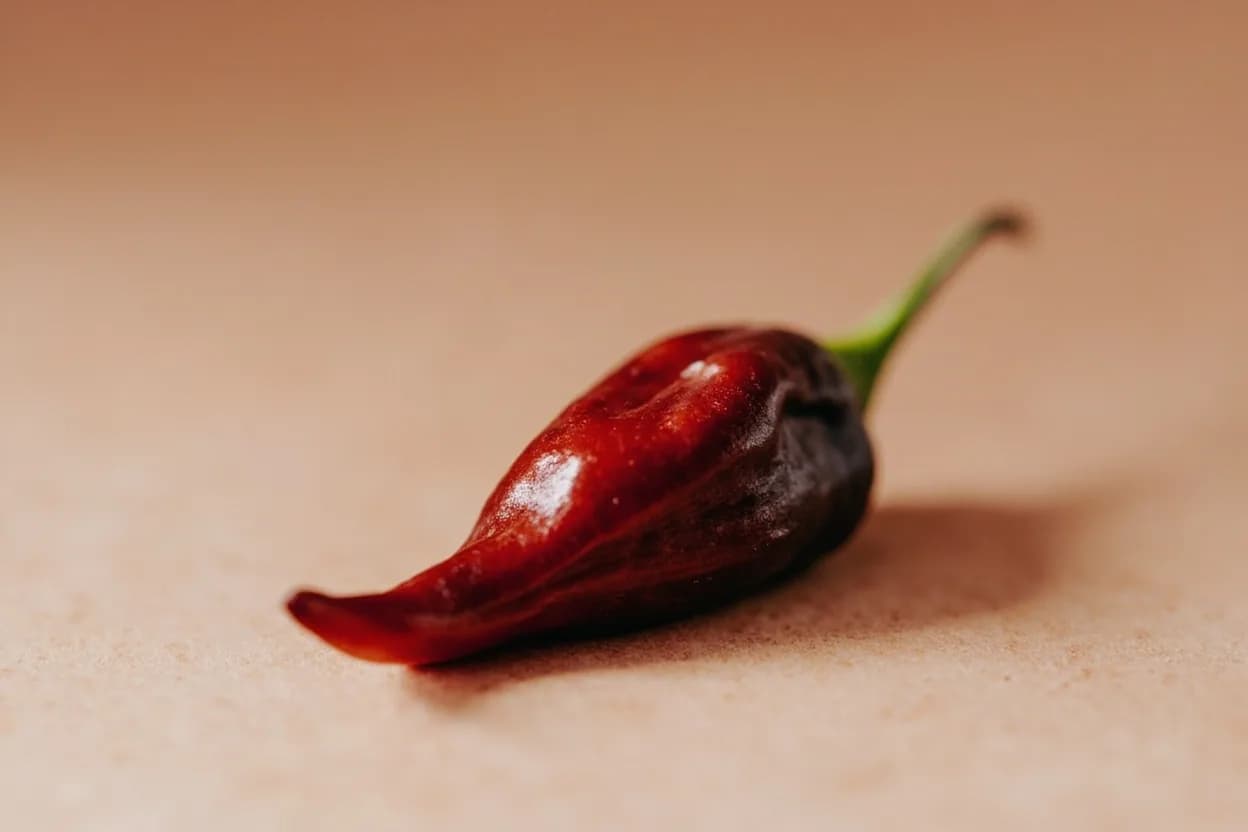
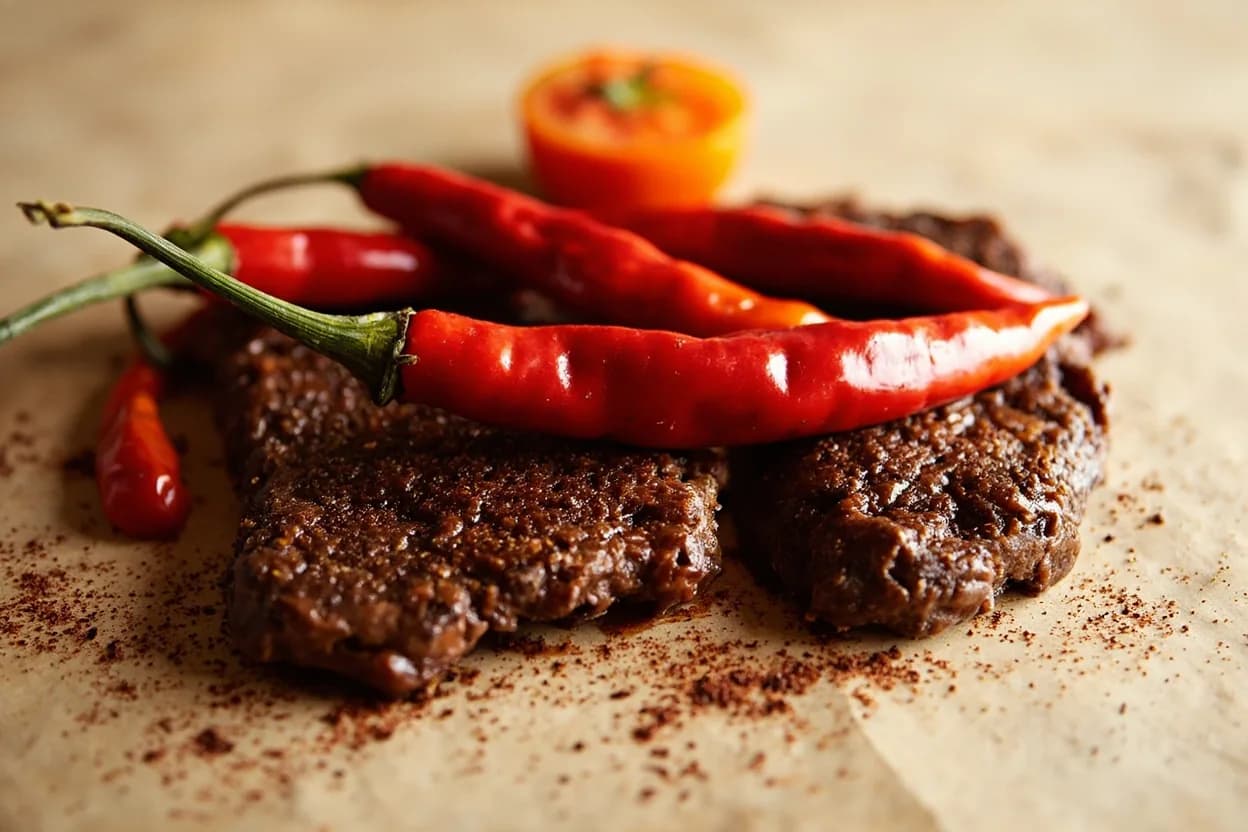
Guajillo (pronounced gwah-HEE-yo) is the dried form of the mirasol pepper (Capsicum annuum), one of the most widely used dried chilies in Mexican cooking after the ancho. Long (10–15 cm), smooth, and a deep brick-red with glossy skin, it carries 2,500–5,000 Scoville units — enough heat to register without overwhelming. The flavor is distinctly tangy with a cranberry or dried cherry fruitiness, mild tannins, and a gentle tea-like quality. This bright, clean acidity makes guajillo the go-to chile for red salsas and adobo marinades where a lighter, more vibrant profile is wanted, as opposed to the darker, chocolatey depth of the ancho. It is the red backbone of birria, enchilada sauce, and many regional moles.
In photos
Flavour profile
Classic pairings
- BeefMexican
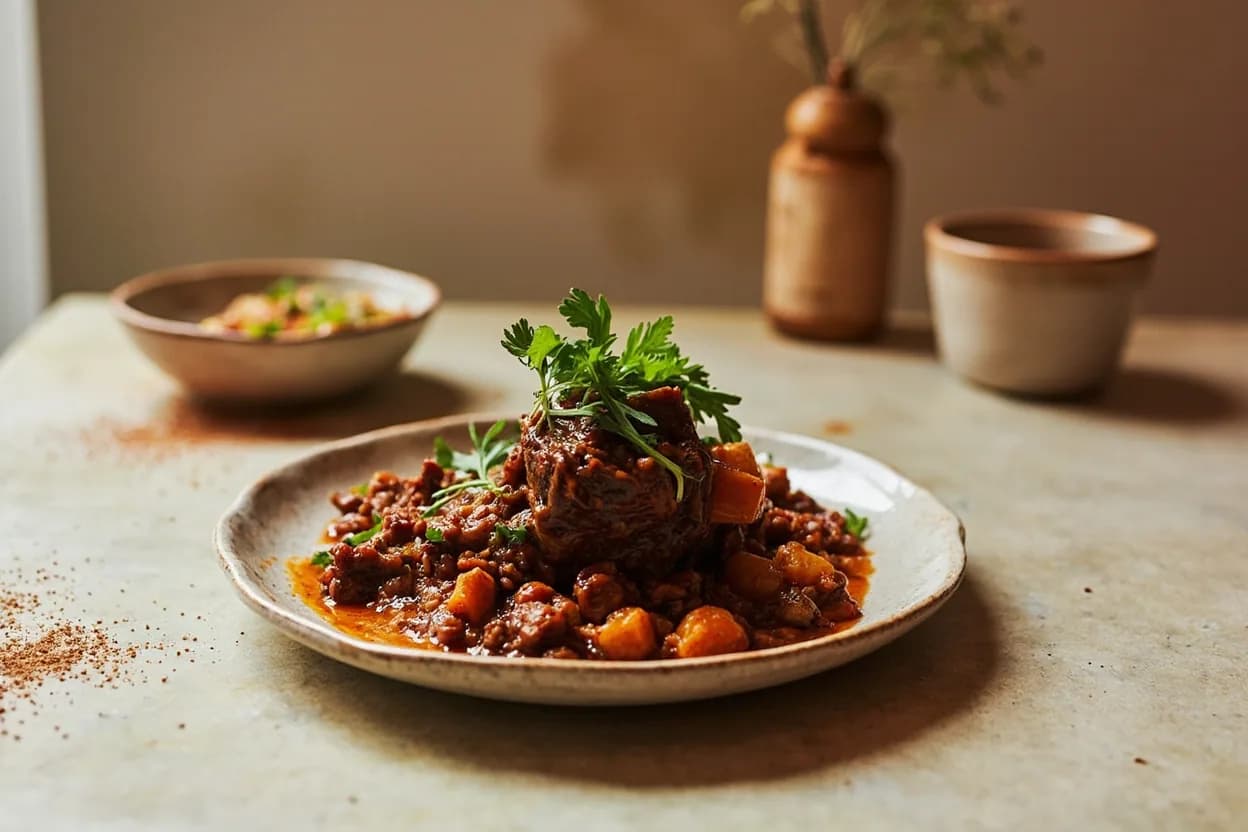
Birria de res (beef birria) and carne adovada are built on guajillo adobo — the chile's tangy acidity acts as a natural tenderizer and penetrates the beef during slow braising.
- Ancho chileMexican
The classic combination: guajillo's berry brightness lifts ancho's dark chocolate sweetness into a more complex, balanced red sauce used in enchiladas and moles.
- TomatoMexican
Roasted tomato amplifies guajillo's natural acidity while adding body; together they produce the tangy-red salsa base used in tamales, posole, and red rice.
- GarlicMexican
Essential pairing in every guajillo application — garlic's sharpness integrates with the chile's brightness and tempers the tannin in marinades and braises.
- Pork ribs and shoulderMexican
Guajillo adobo is the classic pork marinade — the tangy acidity cuts the fat and the red color stains the meat to a vivid brick-red before roasting or slow-braising.
- Dried oregano (Mexican)Mexican
Mexican oregano's citrusy resinousness pairs with guajillo's acidity to build the herbal-tangy backbone of authentic red enchilada sauce and pozole rojo.
- Apple cider vinegar or lime juiceMexican
Guajillo adobo is always brightened with acid — the chile's own tartness is enhanced by vinegar or citrus, creating a marinade bright enough to penetrate dense proteins.
Adventurous pairings
- Lamb
A Oaxacan tradition: guajillo-braised lamb (barbacoa) shows how the chile's tannin-and-acid profile handles fatty red meats beautifully, acting almost like a wine marinade.
- Orange zest and juice
Guajillo, orange, cumin, and garlic is the classic Yucatecan achiote-adjacent profile; substituting guajillo for achiote creates a simpler but deeply flavored citrus-chile marinade.
- Dark beer
Braising beef in guajillo sauce thinned with dark Mexican lager (Negro Modelo) or stout adds malty depth that parallels the chile's fruitiness.
- Blackberries
Guajillo's dried cherry fruitiness has a natural kinship with fresh blackberries; a guajillo-blackberry salsa with red onion and cilantro is a stunning accompaniment to duck or venison.
A Japanese-Mexican fusion move: blending guajillo paste with white miso, sesame oil, and ginger creates a savory, tangy glaze for salmon, grilled eggplant, or chicken thighs.
Tread carefully
- Skipping toasting and soakingavoid
Like all dried Mexican chilies, raw guajillo tastes flat and harsh; a 60-second dry toast (no burning) and 20-minute hot-water soak are non-negotiable for full flavor.
- Using stale, brittle guajilloavoid
Good guajillo should be leathery and pliable, not papery and brittle. Brittle chiles have lost volatile aromatics; the result is mostly heat and tannin without the fruity complexity.
- Expecting ancho-like richness aloneavoid
Guajillo is lean and tangy by nature; when deeper, sweeter complexity is needed, blend it with ancho or mulato rather than trying to coax sweetness from guajillo alone.
How to use it
- Toast in a dry comal or skillet over medium heat, pressing flat for 30–60 seconds per side until fragrant and slightly darker — watch carefully as guajillo burns faster than ancho
- Remove seeds and stems, then soak in very hot (not boiling) water for 20–30 minutes until pliable; reserve soaking liquid to thin sauces
- Blend with garlic, cumin, and vinegar, then strain for silky adobo marinades — the strain removes the tough skin and seeds
- Combine with ancho (1 guajillo : 1 ancho) for balanced red sauces where brightness and depth are both needed
- Use the soaking liquid in small amounts to add chile flavor to stocks and braises — it is bitter if used in large quantities
- Make guajillo oil by simmering rehydrated pureed chile in oil with garlic — drizzle over fish tacos, soups, or eggs
Appears in
Related flavours
The most common duo in Mexican cooking — guajillo's tangy brightness balances ancho's dark chocolatey sweetness to produce the signature layered red sauce of Mexican cuisine.
Functional parallel in Indian cooking — both are mild-to-moderate dried red chilies used primarily for vivid color and fruity pepper flavor rather than intense heat.
Korean counterpart with comparable fruitiness and moderate heat; gochugaru is brighter and sweeter where guajillo adds tartness and mild tannin.
References
- 1.Authentic Mexican — Rick Bayless
- 2.The Essential Cuisines of Mexico — Diana Kennedy
- 3.Mexico: The Cookbook — Margarita Carrillo Arronte
- 4.Chile Pepper Bible — Judith Finlayson
Confidence: high
Notes
Guajillo in moles
While ancho anchors the sweetness of mole negro, guajillo's role in mole rojo (particularly from Oaxaca and Veracruz) is to provide the bright red color and tangy freshness that prevents the sauce from becoming too heavy. The two chiles together, with their opposing flavor registers, create the balance that makes Mexican mole so complex.
The 'cascabel' confusion
Guajillo is sometimes incorrectly labeled or confused with cascabel chile in markets. True cascabels are round (like a rattle), much darker, and have a nuttier, earthier profile. Guajillo is elongated, pointed, and smooth-skinned with a distinctly tangy fruity character — visual inspection quickly tells them apart.